
Key Takeaways
-
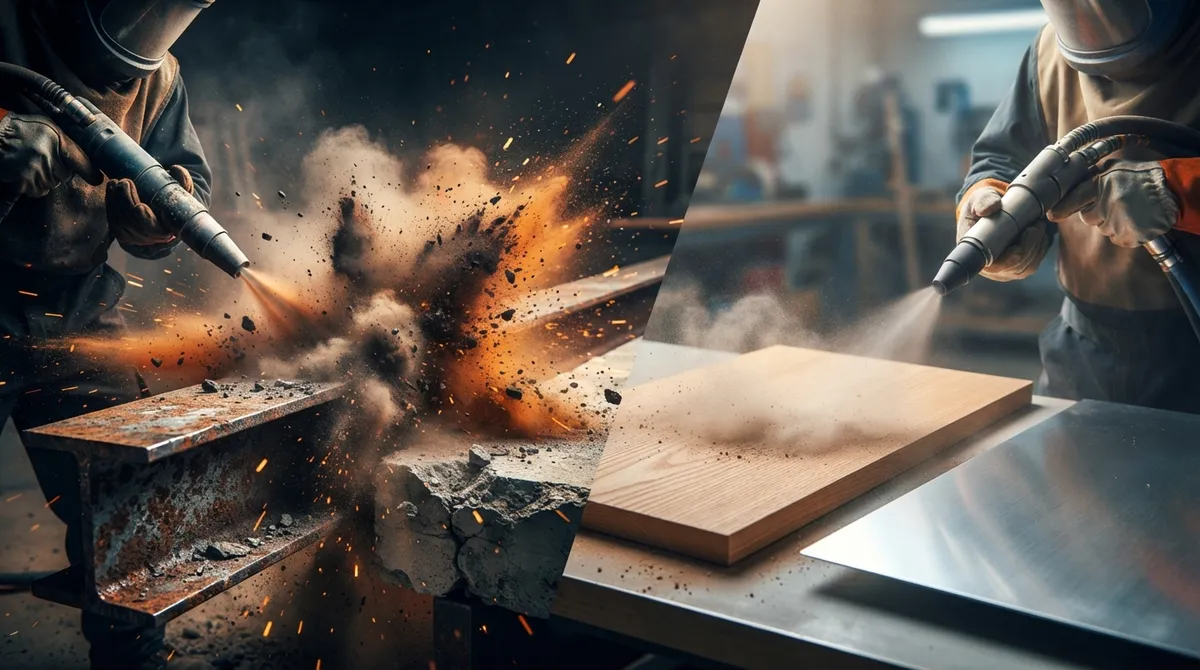
Different surfaces require different abrasive media and pressure levels; using one abrasive for every surface is the biggest mistake that causes gouged wood, warped metal, and eroded mortar.
-
Steel, iron, concrete, and brick are blast-friendly surfaces, while aluminum, fiberglass, vinyl, and historic masonry need extra care with soft media and lower pressure to prevent damage.
-
Always test a small area first before blasting the entire surface to confirm how the media and pressure will react and avoid costly mistakes.
-
Wood can be sandblasted to remove paint but requires soft media and low pressure to prevent gouging and grain raising that results in fuzzy, uneven finishes.
-
Match the blasting media to your surface type and desired finish: angular abrasives create rough texture for coatings, while softer media removes coatings with minimal surface change.
-
Hazardous dust from silica, lead, and other toxic materials poses serious health risks; professional crews use proper respiratory protection, dust control, and water-assisted blasting to ensure safety.
Here’s a question we hear all the time: “What surface can be sandblasted?” The short answer is a lot of them. Steel, iron, concrete, brick, and even some wood can all be blasted clean. But here’s the catch. Just because you can blast a surface does not mean you should blast it the same way as the next one.
The biggest mistakes happen when people treat every surface alike. Too much pressure, the wrong media, or the wrong surface choice can leave you with gouged wood, warped metal, or eroded mortar. The good news? Every one of these mistakes is easy to avoid once you know what to watch for.
At Blastworx, we come to you with a fully mobile and self-contained rig. We match the blast to your surface, not the other way around. In this guide, we’ll walk through what surface can be sandblasted, which ones need extra care, and the 10 mistakes that cost people the most. Think of us as the friendly neighbor who has seen it all and wants to save you a headache.
What Surface Can Be Sandblasted? The Quick Answer
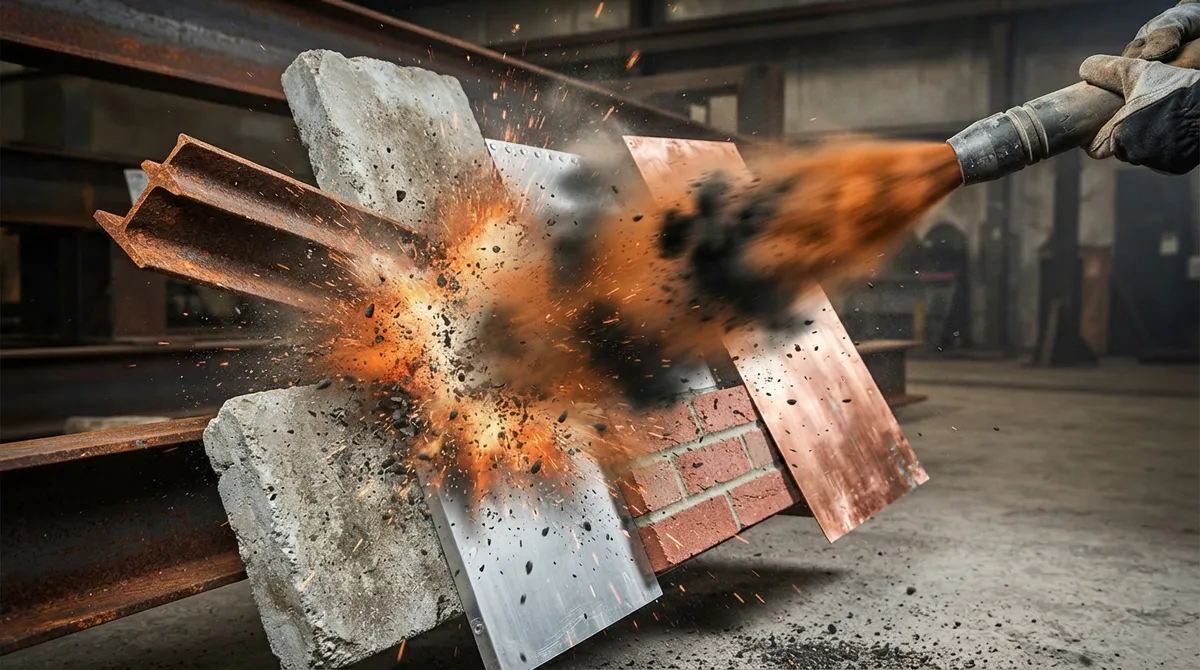
Mobile abrasive blasting works on many materials. According to OSHA’s guidance on abrasive blasting, the process directs abrasive at high speed to clean, deburr, texture, or prepare a surface for coatings. Whether a surface is a good fit depends on its strength, its condition, the coating you want gone, and the finish you want afterward.
If you want the basics first, here is a helpful look at what is sandblasting and how the process works. And if you are brand new to this, our post on what sandblasting is in Florida is a great starting point.
Surfaces That Blast Well
- Steel and iron: Strong enough for tough abrasives. Rust, mill scale, and old paint come off fast.
- Concrete: Great for removing stains, coatings, and buildup before resurfacing.
- Brick and pavers: Blastable with the right media and a careful hand.
- Heavy equipment and trailers: Built to take it.
- Some wood: Works with soft media and low pressure.
Surfaces That Need Extra Care
- Aluminum and thin-gauge metal: Can warp or pit if blasted too hard.
- Fiberglass and gelcoat: Need soft media like soda or walnut shell.
- Plastic and glass: Easy to damage. Many need a test area first, and some should not be blasted at all.
- Soft or historic masonry: Mortar joints can erode quickly.
Surface Compatibility at a Glance
| Surface | Blast-Friendly? | Best Approach |
|---|---|---|
| Steel and iron | Yes | Stronger abrasives for rust and paint |
| Concrete | Yes | Match media to the coating and depth wanted |
| Brick and pavers | Yes, with care | Conservative pressure, gentler media |
| Wood | With care | Soft media, low pressure |
| Aluminum | With care | Soft media, test area first |
| Fiberglass and gelcoat | With care | Soda or walnut shell |
| Vinyl fencing | No | Too delicate to blast |
10 Sandblasting Surface Mistakes to Avoid
Now let’s get to the part that saves you money. These are the mistakes we see most often, and how to dodge each one.
1. Using One Abrasive for Every Surface
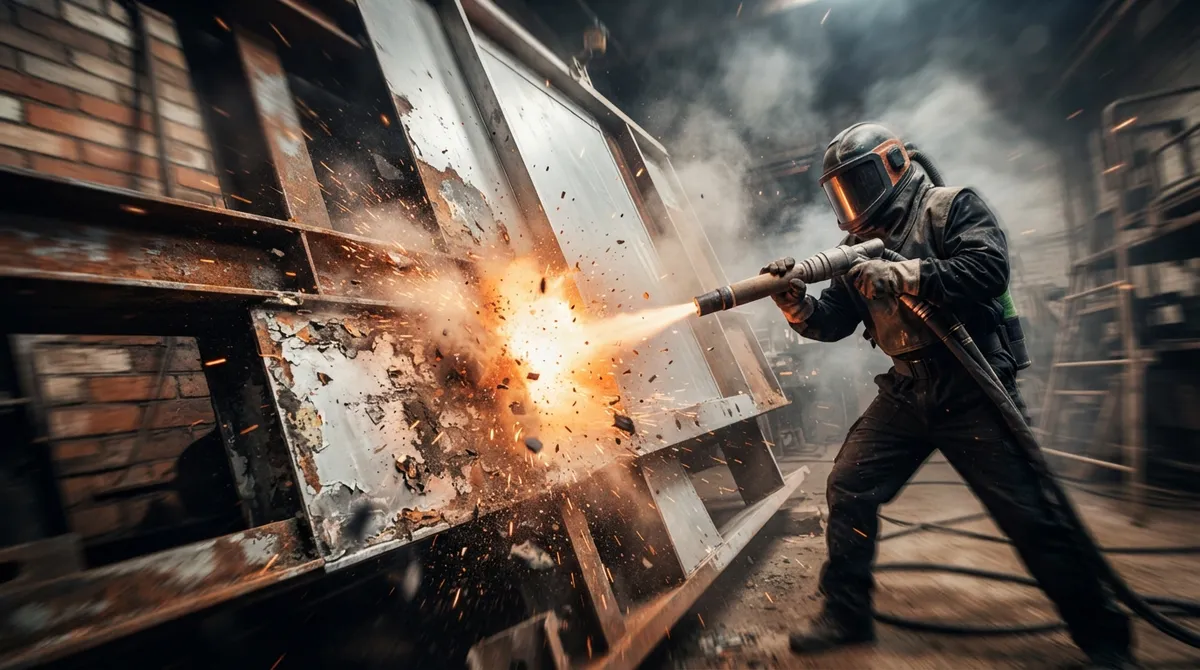
This is the big one. A hard abrasive that strips a steel gate in minutes can chew up a wood deck. The right media for the job changes with every material. OSHA lists many options, from steel grit and garnet to baking soda, nut shells, and corn cob. Each one has a place. The trick is picking the one that fits your surface.
2. Blasting Wood Too Aggressively
Wood can be blasted to remove paint or weathered fibers. But heavy media or high pressure can gouge the surface and raise the grain. That leaves a fuzzy, uneven finish that is hard to fix. Soft media and low pressure are the safer choice. Our post on whether sandblasting damages wood goes deeper, and we also cover how to blast a wood deck without damaging it.
3. Blasting Thin Metal Like It’s Thick Steel
Aluminum and thin-gauge metal can warp from heat and pressure. Body panels are a classic example. They need lower pressure and gentler media to help prevent warping. Heavy frames can take the stronger stuff. Always check the thickness before you pick a method. If you work with aluminum, see how aluminum surface prep works with mobile blasting.
4. Treating Fiberglass Like Metal
Fiberglass and gelcoat are easy to scar. Hard abrasives can leave deep pits and ruin the finish. For boat hulls and similar surfaces, softer media like soda or walnut shell protects the surface while still lifting old paint and buildup. This is a big deal for Florida boat owners. Take a look at our marine blasting services for more on this.
5. Ignoring Soft or Historic Masonry
Brick and masonry can be blasted. But soft, old, or worn brick and mortar joints can erode fast. Once mortar is gone, it is costly to repair. A good contractor will look at the material first and use a gentle method on anything fragile. Learn more in our guide to brick sandblasting facts and these safe ways to strip paint from brick or pavers.
6. Assuming Concrete Can Take Anything
Concrete is tough, but it is not bulletproof. Too much pressure or the wrong media can etch the surface deeper than you want. The goal is to clean it or open the pores for a coating, not wear it down. Check out whether sandblasting damages concrete and our concrete blasting mistakes to avoid.
7. Blasting Vinyl, Plastic, or Glass Without a Plan
These surfaces are delicate. Some may be treatable with soft media and tight control, but they need a test area first. Others should not be blasted at all. We do not blast vinyl fencing because it is too delicate. You can read why in our post on sandblasting a vinyl fence.
8. Skipping the Test Patch
A small test area tells you a lot. It shows how the surface reacts to the media and pressure before you commit to the whole job. Skipping this step is a gamble. A quick test can save you from a very expensive surprise.
9. Forgetting About Dust and Safety
Blasting can kick up hazardous dust from the abrasive, the surface, and the coating being removed. OSHA points to risks like respirable silica and toxic metals such as lead. For lead, OSHA’s construction standard sets a permissible exposure limit of 50 micrograms per cubic meter of air as an 8-hour average. NIOSH has also recommended since 1974 that silica sand, or any blasting material with more than 1% crystalline silica, not be used as an abrasive.
That is why a professional assesses the hazards, uses the right controls, and wears proper respiratory protection. Water-assisted blasting can cut airborne dust, but it does not remove the need for safety steps. Read more about how pros handle dust control safely and the safe blasting procedures every mobile crew follows.
10. Ignoring What Goes On Next
A coating is only as good as the surface underneath it. The media you choose changes the final surface profile. Angular abrasives create a rough texture that helps paint and coatings grip. Softer media removes coatings with less change to the surface. Always check your coating maker’s prep requirements before you blast. Our guide to surface prep steps before commercial coating walks through this well.
How to Pick the Right Media for Your Surface
Choosing media does not have to feel like guesswork. Here is a simple way to think about it.
- Identify the surface. Is it metal, concrete, brick, wood, or something delicate?
- Check the condition. Thin, old, soft, or damaged material needs a gentler approach.
- Name the coating. Rust, paint, powder coat, and graffiti all behave differently.
- Decide the finish. Do you want bare, smooth, or textured for a new coating?
- Test a small area. Confirm the media and pressure before the full blast.
Want to compare options? These posts help: soda blasting vs sandblasting, media blasting vs sandblasting, and the types of sandblasting Florida owners should know.
Common Surfaces We Blast on Site
Because we come to you, we see a wide range of jobs across Tampa Bay and central Florida. Here is a quick look at what we handle:
- Residential: Fences, railings, gates, pool decks, patios, pavers, and outdoor furniture. See our residential blasting page.
- Automotive: Frames, wheels, body panels, and full project vehicles. See our automotive blasting page.
- Industrial: Structural steel, tanks, and heavy equipment. See our industrial blasting page.
- Commercial: Concrete, parking areas, graffiti, and building exteriors. See our commercial blasting page.
For wrought iron, you might like how to restore wrought iron railings the right way. For graffiti, check graffiti removal blasting facts.
Why Mobile Blasting Makes Sense
Hauling a heavy gate, boat trailer, or steel beam to a shop is a hassle. With mobile blasting, we bring the work to you. Our rig is fully mobile and self-contained, so we work in a driveway, dockside, at a shop, or on a job site without needing your power or water. We contain the mess and protect the surrounding area, including landscaping, pools, and windows. If you are curious about the tradeoffs, read mobile vs. shop sandblasting and why Tampa businesses choose mobile sandblasting.
We also offer dustless blasting for indoor work or active job sites. Here is what makes dustless blasting in Tampa so effective.
Our Simple 4-Step Process
- Walkthrough. Send photos or we come look, and we figure out the right media for the surface.
- Free estimate. You get a clear, written estimate the same day. The price we give is the price you pay.
- Blast and strip. We protect the surrounding area, then blast the surface clean at your location.
- Ready to finish. The surface comes out clean and ready for the next step.
You talk to the people doing the work. We are fully insured, and we are happy to look at any surface you are unsure about. Want to see real results? Visit us on Google — see what our customers are saying about us. You can also browse our project gallery and check our service areas.
Ready to Blast the Right Way?
So, what surface can be sandblasted? Quite a few, from steel and concrete to brick and some wood. The key is matching the media and pressure to the material, and never skipping the safety steps. Avoid these 10 mistakes and your surface comes out back to clean, sound material, ready to prime and coat.
Not sure if your surface can handle blasting? We would love to help you figure it out. Get a free estimate today, or give us a call at 813-380-8092. You can text, too. We come to you.
FAQs
Q: What materials can be sandblasted?
A: Steel, iron, concrete, brick, masonry, and some wood all blast well when the right media is used. Softer surfaces like aluminum and fiberglass can be treated too, but they need gentle media and a test area first.
Q: Can you sandblast wood without damaging it?
A: Yes, but it takes a careful hand. Aggressive media or too much pressure can gouge wood and raise the grain, so we use soft media and low pressure to protect it.
Q: Can aluminum, fiberglass, or plastic be sandblasted?
A: Sometimes. Conventional aggressive blasting can damage them, but soft media and tight control can work on certain jobs. We always check the surface and test a small area before going further, and a few surfaces like vinyl just should not be blasted.
Q: What blasting media is safest for delicate surfaces?
A: Softer media like soda, walnut shell, or corn cob is usually the gentlest choice. The best pick depends on your surface and what you are removing, so we match the blast to your surface, not the other way around.
Q: Is mobile sandblasting safe around homes and landscaping?
A: It can be, when done by a pro who plans for it. We contain the mess, reduce dust, and protect landscaping, pools, and windows. We are also fully insured for your peace of mind.





