
Key Takeaways
-
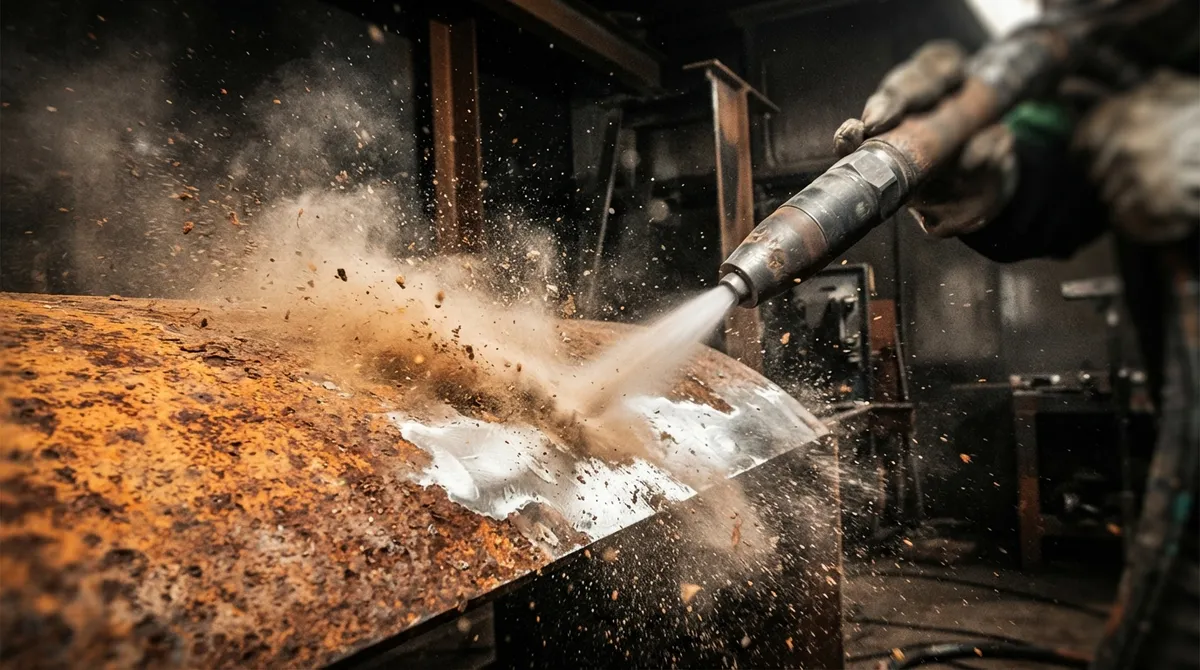
Sandblasting uses compressed air to shoot abrasive particles at surfaces, physically stripping rust, paint, and grime without harsh chemicals—making it faster and cleaner than hand-sanding or chemical strippers.
-
Different abrasive media (sand, soda, walnut shell, glass bead) serve different surfaces; using the wrong media can damage delicate materials or fail on heavy rust, so matching the blast type to your surface is critical.
-
Proper surface preparation through blasting is essential for coating longevity; EPA data shows it reduces coating failure risk and premature corrosion, while skipping prep typically leads to peeling or rust returning within months.
-
Mobile blasting services eliminate transport hassles for large items by bringing fully self-contained equipment to your property, protecting surrounding areas while delivering professional-grade surface prep on-site.
If you’ve ever seen an old fence go from rusty and peeling to bright, bare metal in what feels like minutes, you’ve probably watched sandblasting in action. But what is sandblasting, really, and why does it matter so much for homes, boats, and businesses across Florida? Let’s break it down together, in plain language, with zero confusing jargon.
At Blastworx, we get asked this question almost every week. Folks in Tampa, Ocala, Orlando, and Fort Myers want to know what we actually do before they invite us onto their property or job site. So we put together this friendly guide covering the basics, the different types of media, and why mobile blasting has become the go-to choice for surface prep across central Florida.
1. Sandblasting Is a Fast Way to Strip Surfaces Clean
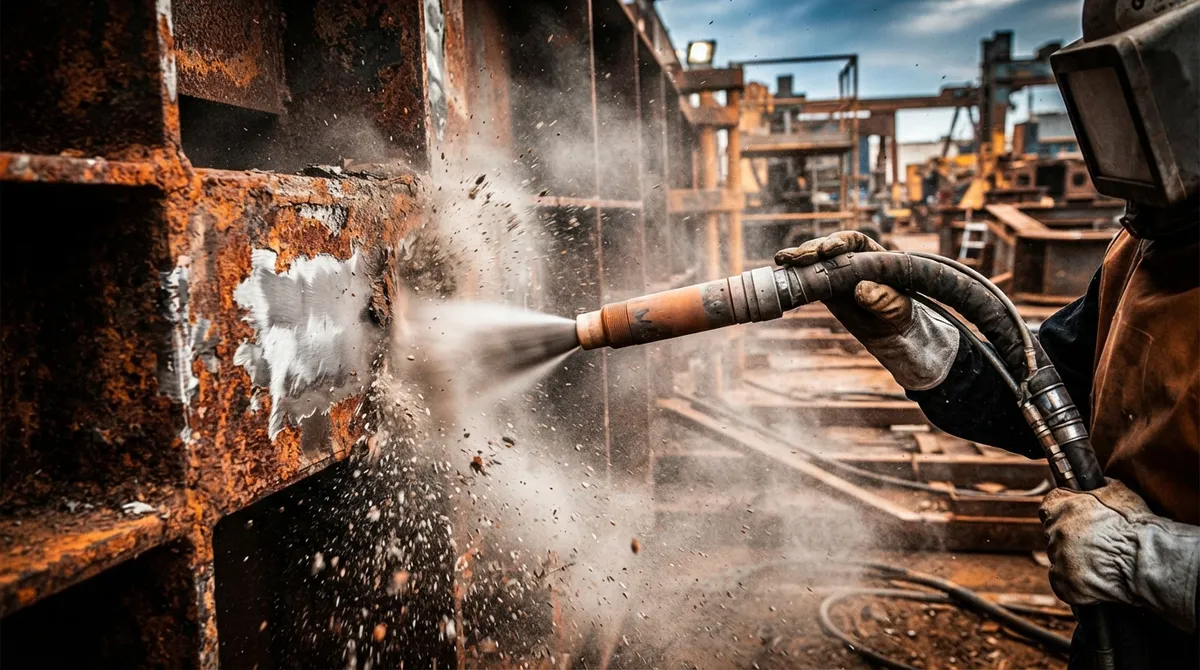
At its core, sandblasting means shooting abrasive material at a surface using compressed air. The pressure knocks off rust, old paint, grime, and coatings fast. According to what is sandblasting on Wikipedia, the process was patented back in the 1870s and has been refined ever since.
Today, most professionals call it “abrasive blasting” instead of sandblasting, since sand is rarely the actual media used anymore. But the name stuck, and most homeowners still search for it that way. Either way, the goal is the same: get down to clean, sound material fast, without hours of scraping or sanding by hand.
2. It Works by Force, Not Chemicals
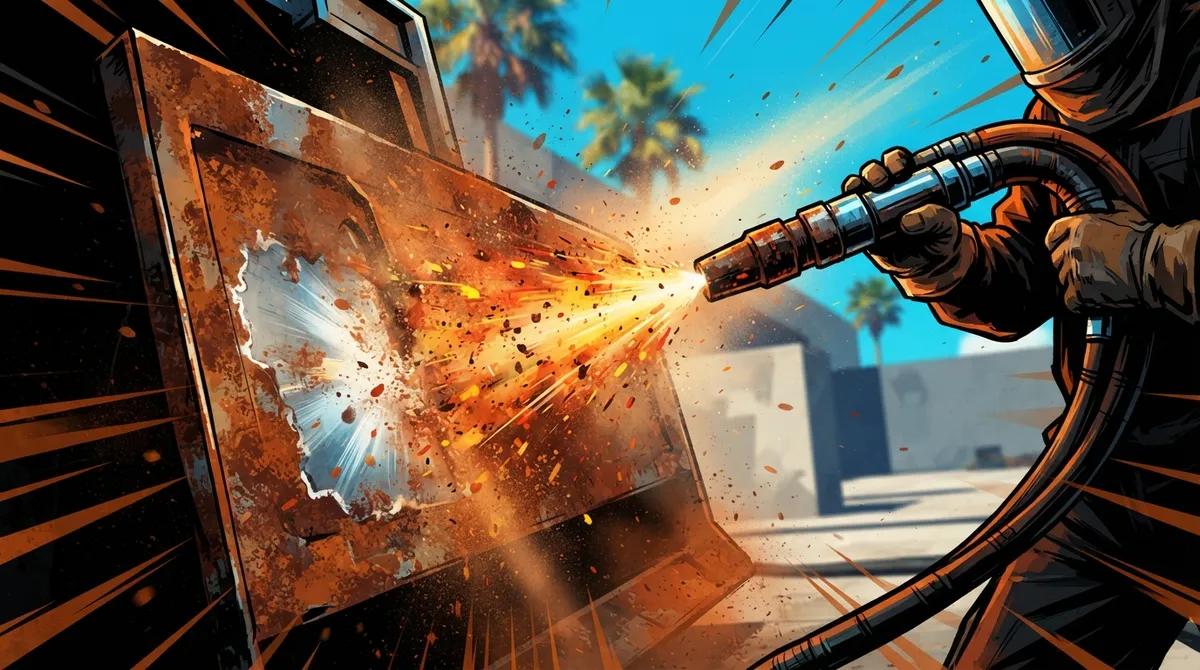
Sandblasting doesn’t rely on harsh solvents or chemical strippers. Instead, it uses physical force. Tiny particles hit the surface at high speed, breaking up rust and coatings on contact. This makes it a cleaner option for many jobs, especially outdoors where chemical runoff could be a concern.
Here’s a simple breakdown of how the process typically works:
- An air compressor builds pressure.
- Abrasive media gets loaded into a pressure tank or pot.
- The mix of air and media travels through a hose.
- A nozzle directs the blast onto the surface.
- The abrasive strips away rust, paint, or buildup on impact.
Simple in theory, but getting it right takes real experience. That’s why we always prepare each job the right way before we ever pull the trigger.
3. Not All Abrasive Media Are Created Equal
This is where things get interesting. “Sandblasting” is really an umbrella term. The media you choose changes everything about the outcome. Some media are gentle enough for wood and fiberglass. Others are tough enough to chew through heavy rust on steel.
Common Types of Blasting Media
| Media Type | Best For | Hardness Level |
|---|---|---|
| Sand | Heavy rust, concrete, steel | High |
| Baking Soda | Fiberglass, gelcoat, soft surfaces | Low |
| Walnut Shell | Wood, delicate marine surfaces | Low to Medium |
| Glass Bead | Aluminum, light rust removal | Medium |
| Dustless (Water-Injected) | Indoor work, dust-sensitive areas | Varies |
This is exactly why we always say we match the blast to your surface, not the other way around. Using the wrong media can damage delicate materials, while using media that’s too soft won’t get the job done on heavy rust.
4. Soda, Sand, and Dustless Blasting Each Serve a Purpose
Since we’re a mobile blasting company, we get asked constantly about the difference between soda blasting, sand blasting, and dustless blasting. Here’s the short version:
- Sand blasting is aggressive and best for heavy-duty metal, concrete, and structural steel.
- Soda blasting is gentle and ideal for fiberglass boat hulls, wood, and delicate trim. Curious why it’s such a popular pick? Here’s why soda blasting is Tampa’s gentlest cleaning fix.
- Dustless blasting mixes water with abrasive media to knock down airborne dust, which makes it great for job sites near other work. Want more detail? Check out what makes dustless blasting in Tampa so effective.
Choosing the right one depends on your surface, your location, and how much mess you’re willing to deal with afterward.
5. Sandblasting Isn’t Just for Metal
A lot of people assume sandblasting is only for rusty steel beams or old car frames. Not true. In central Florida, we use blasting techniques on all kinds of surfaces, including:
- Boat hulls and marine hardware
- Pool decks and pavers
- Wrought iron fences and railings
- Concrete sidewalks and parking lots
- Wood decks and outdoor furniture
- Graffiti-covered walls and storefronts
Each of these surfaces needs a different approach. For example, does sandblasting damage wood is a fair question, and the answer depends heavily on pressure and media choice. Softer media and lower pressure keep wood safe while still stripping old paint or stain.
6. Mobile Blasting Brings the Process to You
Here’s where things get especially useful for Florida homeowners and business owners. Traditional sandblasting often meant hauling your item to a shop. Mobile blasting flips that. We come to you, fully mobile and self-contained, whether that’s a driveway in Riverview, a dock in Clearwater, or a job site in Orlando.
This matters because:
- You save time and avoid transport hassles for large or heavy items.
- We bring our own power and water, so your site doesn’t need to provide anything.
- We contain the mess and protect the surrounding area with tarps and barriers.
- You get the same quality prep work without leaving your property.
If you’re curious why so many local businesses prefer this setup, take a look at why Tampa businesses choose mobile sandblasting. It’s become a favorite for good reason.
7. Good Prep Work Makes Coatings Last Longer
Here’s a truth that doesn’t get talked about enough: a coating is only as good as the surface underneath it. Paint, powder coat, and resurfacing jobs all depend on proper prep. Hand-sanding often misses rust hiding in seams and corners. Blasting takes the whole surface back to clean, sound material at once.
This is especially important in Florida, where heat, humidity, and salt air are brutal on anything painted or coated. According to the U.S. Environmental Protection Agency, proper surface prep also reduces the risk of coating failure and premature corrosion, which saves money long term. Skipping this step usually leads to peeling, bubbling, or rust returning within months.
Our simple four-step process keeps things easy for you:
- Walkthrough. We look at photos or visit in person to figure out the right media.
- Free estimate. You get a clear, written price the same day.
- Blast and strip. We protect the area, then blast the surface clean on-site.
- Ready to finish. Your surface comes out clean and ready to prime, coat, or refinish.
Want a closer look at how surface prep affects long-term durability for commercial projects? This guide on surface prep steps before commercial coating covers it in detail.
8. Choosing the Right Blasting Service Matters
Not every blasting job is the same, so it helps to know what to look for in a contractor. Here’s a quick comparison of what separates a reliable mobile blasting service from a risky one:
| What to Look For | Why It Matters |
|---|---|
| Fully insured company | Protects you if anything goes wrong on-site |
| Owner-operated crew | You talk to the people doing the work, not a call center |
| Same-day written estimate | No surprise costs after the job starts |
| Multiple media options | They can match the blast to your surface |
| Mobile, self-contained rig | No need for your power or water hookups |
These qualities separate the pros from the amateurs. For more on this, check out 7 local sandblasting contractor traits that matter.
Where Blastworx Fits Into the Picture
We serve homeowners, boat owners, mechanics, and businesses across the central Florida service area, including Tampa, Clearwater, Sarasota, Ocala, Orlando, and Fort Myers. Whether it’s marine blasting for a boat hull, automotive blasting for a rusty frame, industrial blasting for structural steel, commercial blasting for graffiti removal, or residential blasting for a pool deck, we bring the right equipment and the right media every time.
You can see examples of real projects in our project gallery, and if you want to hear from people who’ve already worked with us, feel free to see what our customers are saying about us on Google. We’re proud of the work we do, and we think it shows.
Final Thoughts on What Sandblasting Really Means for You
So, what is sandblasting? It’s a powerful, flexible way to strip rust, paint, and grime off almost any surface, using media that’s matched to the job. Whether you need soft soda blasting for a fiberglass boat or aggressive sand blasting for a steel beam, the right approach makes all the difference.
If you’re in Tampa Bay or anywhere along the central Florida corridor and you’re ready to get your project back to clean, bare metal or clean, sound material, we’d love to help. Get your free estimate today, or if you’d rather talk it through first, give us a call. We’re fully insured, easy to reach, and always happy to answer questions before we ever show up on-site.
FAQs
Q: What is sandblasting used for?
A: Sandblasting is used to strip rust, old paint, coatings, and grime off surfaces like metal, wood, concrete, and fiberglass. It’s a quick way to get things back to clean, bare material so they’re ready for the next step, whether that’s painting, coating, or refinishing.
Q: Is sandblasting the same as abrasive blasting?
A: Pretty much, yes! Most professionals today use the term abrasive blasting since sand is rarely the actual media used anymore. But folks still search for sandblasting because that’s the term everyone grew up hearing, so we use both interchangeably.
Q: Does sandblasting damage the surface underneath?
A: It depends on the media and pressure used. Soft media like soda or walnut shell protects delicate surfaces like fiberglass and wood, while stronger abrasives are saved for tough jobs like rusty steel. That’s why matching the blast to your surface really matters.
Q: Can sandblasting be done at my home or business?
A: Absolutely, that’s what mobile blasting is all about. We bring our fully self-contained rig right to your driveway, dock, or job site, so you don’t have to haul anything anywhere. We protect the surrounding area and handle the mess so you don’t have to worry about it.
Q: How do I know which blasting media is right for my project?
A: The best way is to have a quick walkthrough, either with photos or an in-person visit. We’ll look at your surface, figure out what it can handle, and recommend the right media so you get a clean result without any unnecessary damage.





