
Key Takeaways
-
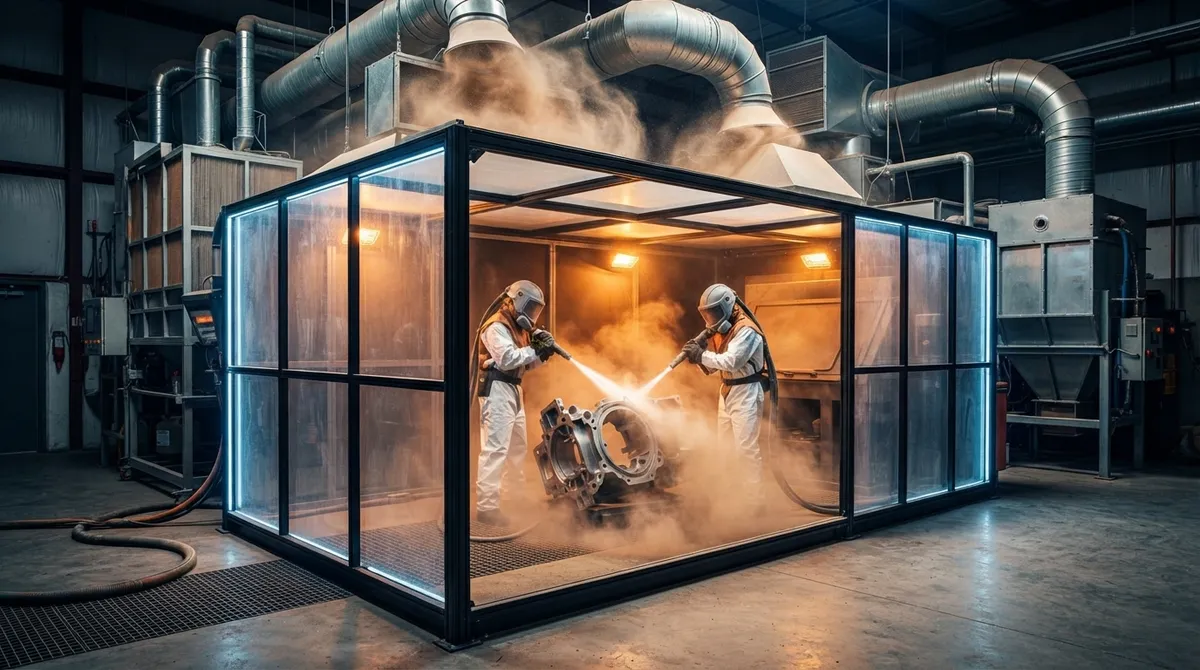
Indoor blasting is possible but requires proper sealed containment, engineered ventilation systems (300-500 feet per minute airflow), and dust collection before any work begins.
-
Avoid silica sand indoors due to serious health risks like silicosis and lung cancer; use safer alternatives like crushed glass, garnet, coal slag, or soda blasting media instead.
-
Lead paint must be professionally assessed and handled with lead-safe practices before disturbing any suspect coatings in older buildings to prevent contaminated dust spread.
-
Dustless or wet blasting reduces airborne dust significantly compared to dry blasting, but still requires proper containment, slurry collection, and disposal of contaminated water.
-
A professional site assessment evaluating access, drainage, electrical service, HVAC isolation, and waste disposal routes is essential before scheduling indoor blasting work.
-
Proper worker protection including supplied-air respirators, protective clothing, and hearing protection is critical since people are closer to indoor work, plus cleanup and hazardous waste disposal are non-negotiable final steps.
So, can you sandblast indoors? It’s one of the questions we hear most from folks in Tampa, Ocala, Orlando, and everywhere in between. Maybe you’ve got rusty steel beams in a warehouse, an old cast iron tub in a bathroom, or a garage floor that needs stripping before you move a business in. The good news is yes, indoor blasting is absolutely possible. But it takes a lot more planning than just rolling in with a hose and some grit.
At Blastworx, we get calls all the time asking if we can bring our mobile rig inside a building. The honest answer is: it depends on the setup. Containment, ventilation, media choice, and safety all matter just as much as the blasting itself. Let’s walk through everything you need to know before scheduling an indoor job, so you feel confident and informed from the very first phone call.
1. Yes, Indoor Blasting Is Possible, With the Right Setup
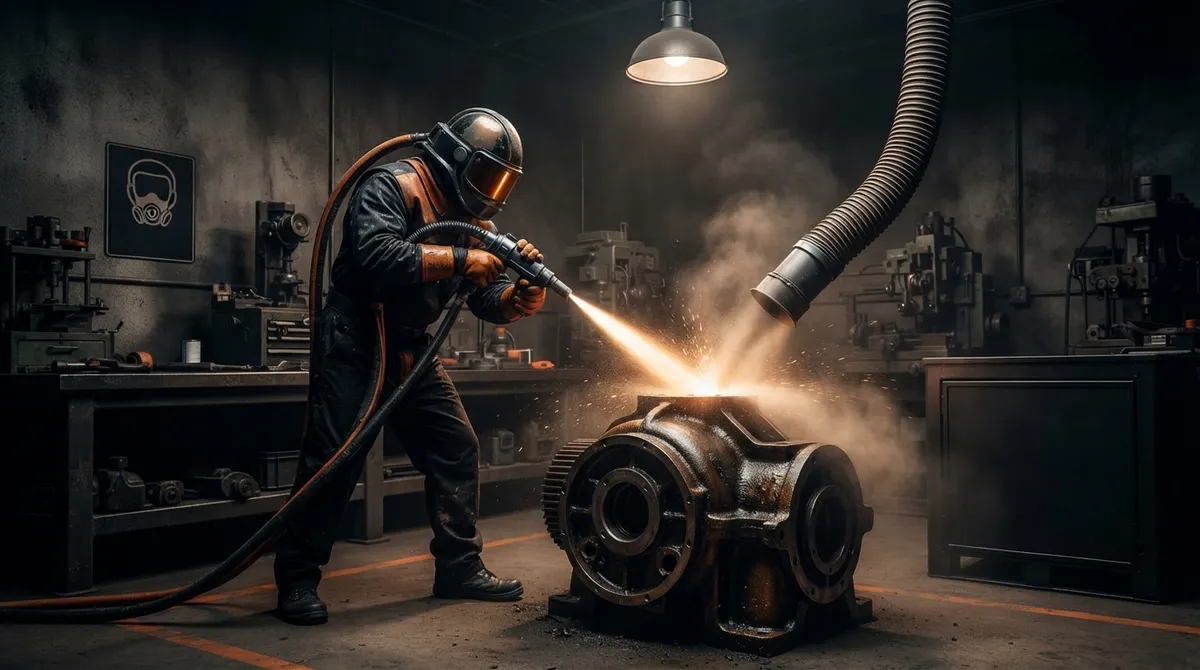
Can you sandblast indoors? Yes, but only when the space is properly sealed off, ventilated, and protected. This isn’t a job where you crack a window and hope for the best. A professional crew needs to control dust, protect nearby equipment, and keep everyone breathing clean air.
The method we use depends on the building itself. A warehouse with high ceilings and good drainage is a very different project than a tight residential bathroom. That’s why we always start with a walkthrough or photos before quoting anything. Get a free estimate and we’ll tell you honestly whether your space is a good fit.
2. Containment Comes First, Every Time
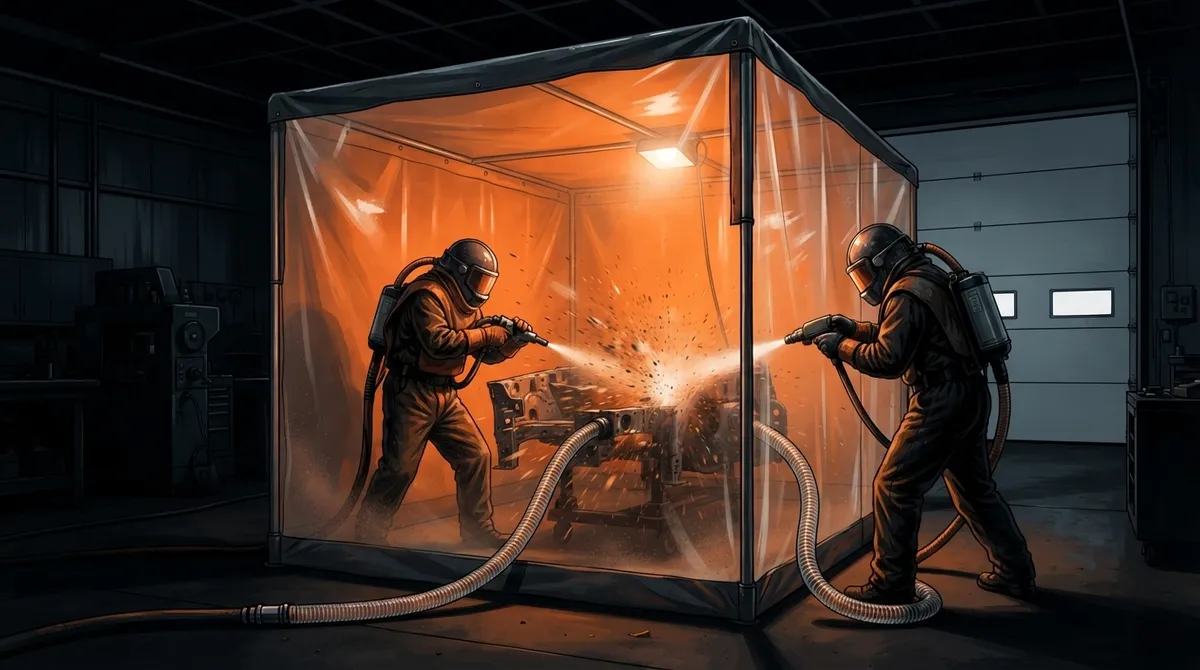
Before any indoor blasting starts, the work area needs to be sealed off. Think heavy plastic sheeting, sealed doorways, and barriers between the blasting zone and the rest of the building. This keeps dust, grit, and debris from traveling into hallways, offices, or living spaces nearby.
Good containment does three things:
- Keeps dust from spreading into adjacent rooms or equipment
- Protects floors, walls, and fixtures that aren’t part of the job
- Makes cleanup faster and far less messy
We always say we contain the mess and protect the surrounding area, and that’s especially true indoors where there’s nowhere for dust to go but into the building’s air.
3. Ventilation Is Non-Negotiable
This is where a lot of DIY attempts go wrong. Simply opening doors, using a box fan, or relying on your building’s regular HVAC system is not enough. OSHA’s rules under 29 CFR 1910.94(a) require enclosures to have real exhaust ventilation, strong enough to control dust, keep visibility clear, and stop contaminants from leaking outside the work zone.
Some state guidelines get specific. California’s blasting rules, for example, recommend airflow speeds around 300 feet per minute at room air inlets and up to 500 feet per minute at cabinet openings. These numbers show just how much air movement is actually needed, far more than a household fan can provide.
Exhaust air also needs to pass through a proper dust collection system before it’s released. Skipping this step lets fine particles escape into places they shouldn’t be, including your lungs.
4. Dustless Blasting Helps, But It’s Not a Free Pass
A lot of people ask if dustless or wet blasting solves the indoor dust problem completely. It helps a lot, but it’s not magic. Wet and dustless methods knock down airborne dust significantly compared to dry blasting, which makes some indoor jobs more practical than they used to be.
That said, wet blasting still creates slurry, contaminated water, and spent media that need to be collected and disposed of properly. Noise, rebound, and chemical exposure from old coatings don’t disappear just because water is involved. If you’re curious how this method stacks up for different projects, our article on what makes dustless blasting in Tampa so effective breaks it down further.
5. Choosing the Right Media Matters Indoors
Not all blasting media is created equal, and indoors is where this really matters. Silica sand should generally be avoided altogether. Breathing in silica dust is linked to silicosis, lung cancer, COPD, and kidney disease, according to research from what is sandblasting and various occupational health studies.
Safer alternatives for indoor work often include:
- Crushed glass, which cuts fast with lower dust output
- Garnet, a dense mineral abrasive good for tougher coatings
- Coal slag, common for structural steel prep
- Soda blasting media, gentle enough for delicate indoor surfaces
- Steel shot, ideal for certain metal surfaces
We match the blast to your surface, not the other way around. That means picking media based on what’s being cleaned, not just grabbing whatever’s on the truck. If you’re weighing your options, our guide on how to choose between soda blasting vs sandblasting is a great place to start.
6. Protecting Workers and Occupants
Indoor blasting means people are closer to the work than they would be outside. That raises the stakes for personal protection. Depending on exposure levels and the media used, crews may need supplied-air abrasive-blasting respirators, protective clothing, gloves, eye protection, and hearing protection.
OSHA’s silica standard sets a permissible exposure limit of 50 micrograms per cubic meter of air as an 8-hour average, with an action level of 25 micrograms triggering extra employer requirements. These aren’t just numbers on paper. They’re the difference between a safe job site and a health hazard that shows up years later.
Building occupants matter too. If people are working in other parts of the building, they need to be shielded from noise, dust, and any accidental breach in containment. This is why a solo DIY attempt indoors is rarely a good idea.
7. Lead Paint Changes Everything
Can you sandblast indoors if the building has lead paint? This is one of the most common questions we get, especially with older homes and commercial buildings around Tampa Bay. Buildings painted before lead restrictions took effect may still have lead-based coatings hiding under newer paint layers.
Before disturbing any suspect paint, it needs to be evaluated. Disturbing lead paint without the right precautions can spread contaminated dust throughout a building, which is a serious health risk. Lead-safe work practices, proper containment, and hazardous waste disposal rules all come into play here. This isn’t a step to skip, and it’s one reason we always recommend a professional assessment first.
8. Cleanup and Waste Disposal Aren’t Optional Extras
Once the blasting is done, the job isn’t over. Spent media, slurry, and contaminated wastewater all need proper collection and disposal. This is especially true if lead, old coatings, or other toxic materials were part of the mix.
A responsible mobile blasting crew will:
- Vacuum or sweep up all spent abrasive material
- Collect and properly dispose of contaminated wastewater from wet blasting
- Remove containment barriers without spreading leftover dust
- Leave the space clean and ready for the next step, whether that’s coating, refinishing, or moving equipment back in
This is part of why we always say the surface should come out ready to prime and coat, not just stripped and left messy.
9. A Site Assessment Tells You What’s Really Possible
Every building is different, and that’s why a proper site walkthrough matters so much before scheduling indoor work. Things we look at include:
| Factor | Why It Matters |
|---|---|
| Access and floor loading | Equipment needs a clear path and floors need to handle the weight |
| Electrical service | Some setups need power for lighting, fans, or collection systems |
| Drainage | Wet blasting needs somewhere for water and slurry to go |
| HVAC isolation | Prevents dust from traveling through shared ductwork |
| Ventilation routes | Determines how exhaust air will be captured and released safely |
| Waste disposal access | Spent media and wastewater need a clear removal plan |
Without this kind of assessment, it’s tough to know if indoor blasting is even practical for your specific space. Our team has handled plenty of interior industrial and commercial jobs throughout the central Florida corridor, and we always start with a look before we ever start blasting. Check out our industrial blasting services or commercial blasting services pages to see the kinds of projects we handle.
Indoor vs Outdoor Blasting: A Quick Comparison
| Factor | Indoor Blasting | Outdoor Blasting |
|---|---|---|
| Containment needed | Full sealed enclosure required | Perimeter protection, often lighter |
| Ventilation | Engineered exhaust system required | Natural airflow often sufficient |
| Dust management | Strict, dust collection mandatory | Managed but less critical |
| Typical timeline | Longer due to setup and cleanup | Often faster with less prep |
| Best media choices | Soda, dustless, low-dust abrasives | Wider range possible |
Common Indoor Blasting Projects We See
Across Tampa, Clearwater, Sarasota, and the rest of central Florida, indoor blasting requests tend to fall into a few categories. Warehouses and manufacturing facilities often need structural steel or equipment prepped without shutting down entire operations. Homeowners sometimes want interior fireplaces, old tubs, or garage floors stripped. Commercial buildings occasionally need graffiti or old paint removed from interior walls before a renovation.
Each of these projects has different containment and ventilation needs. That’s part of why we always say we come to you and figure out the right approach on-site, rather than applying a one-size-fits-all method. If your project involves rust or corrosion on interior metal, our piece on how mobile blasting fixes metal rust treatment covers the basics well.
Wrapping It Up
So, can you sandblast indoors? Absolutely, but it takes real planning, the right containment, proper ventilation, careful media selection, and a solid cleanup plan. Skipping any of these steps isn’t just risky, it can create health hazards that linger long after the job is done.
If you’re in Tampa Bay, Ocala, Orlando, Fort Myers, or anywhere along the central Florida corridor and wondering whether your indoor project is a good candidate for mobile blasting, we’re happy to talk it through. We’re fully insured, fully mobile, and self-contained, which means we bring everything needed to do the job safely at your location. You talk to the people doing the work, every single time.
Curious what past clients think? Feel free to visit us on Google and see what our customers are saying about us before you decide. And when you’re ready to talk specifics about your indoor project, get a free estimate or give us a call at 813-380-8092. We’ll help you figure out exactly what your space needs to get back to clean, sound material and ready for the next step.
FAQs
Q: Can you sandblast indoors in a garage or warehouse?
A: Yes, as long as the space can be properly sealed off and ventilated. Garages and warehouses often work great for indoor blasting because they usually have enough room for containment barriers and equipment. We always do a quick walkthrough first to make sure the space checks out.
Q: Is dustless blasting safe enough to use inside a home?
A: Dustless blasting is a wonderful option for indoor home projects because it cuts down airborne dust significantly. That said, it still needs proper containment and cleanup, since wet slurry and spent media have to go somewhere. We treat every indoor home job with the same care as a commercial site.
Q: What happens if the building has lead paint?
A: If there’s a chance of lead paint, we treat that area with extra caution and follow lead-safe work practices before touching anything. Older buildings, especially ones painted before certain restrictions took effect, often need this extra step. It’s better to catch this early than deal with it after the fact.
Q: How long does indoor blasting take compared to outdoor jobs?
A: Indoor jobs usually take a bit longer because of the setup and cleanup involved with containment and ventilation. Outdoor jobs can sometimes move faster since there’s more natural airflow and fewer barriers to build. Either way, we give you a clear timeline during your free estimate.
Q: Do I need to leave the building during indoor blasting?
A: In most cases, yes, at least for the area being worked on and nearby spaces affected by dust or noise. We’ll let you know exactly what to expect based on your specific building layout. Safety for everyone in the building is always our top priority.





