
Key Takeaways
-
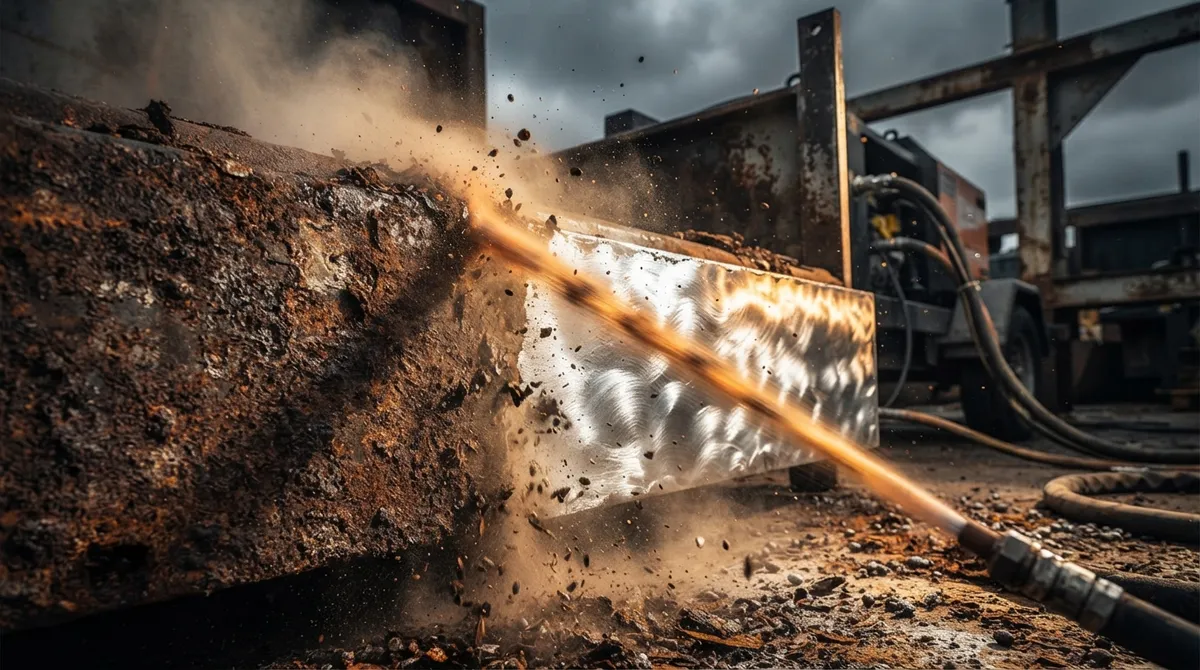
Prime or coat metal the same day after blasting to prevent flash rust, which can occur within hours in humid environments like Florida, undoing all surface preparation work.
-
Match the blasting media and pressure to your specific surface type—use gentler options like soda or glass media for thin sheet metal and aluminum, and aggressive steel grit for heavy structural steel to avoid damage.
-
Follow SSPC or NACE cleanliness standards before coating; the coating manufacturer’s product sheet determines which grade is needed, and guessing can result in early coating failure requiring expensive rework.
-
Hand tools like wire brushes and sanders miss rust hiding in seams, corners, and pits, leaving surfaces that only look clean from a distance; mobile blasting reaches every nook for true surface readiness.
-
Avoid plain silica sand for blasting due to dangerous fine dust exposure; use safer alternatives like garnet, soda, or specialty abrasives that work equally well while protecting worker health.
-
Mobile blasting eliminates the need to transport heavy or fixed items like boat hulls, structural steel, and railings, saving time and logistics costs by bringing equipment directly to your location.
Rust is sneaky. It starts small, maybe a little bubble under paint or a rough patch on a railing, and before you know it, it’s eaten through metal that used to look brand new. Here in Tampa Bay, our salt air and humidity make things worse, so metal rust treatment isn’t just a nice-to-have. It’s a must if you want your railings, boats, equipment, or steel structures to last. The good news? You don’t have to live with rust forever, and you don’t have to haul your project to a shop across town.
Mobile blasting brings the fix straight to you. Whether it’s a rusty gate in your backyard, a trailer frame, or structural steel at a job site, on-site abrasive blasting strips away rust, old paint, and grime down to clean metal. In this article, we’ll walk through how the process works, what makes it safe, and why getting it right the first time saves you money down the road.
What Is Metal Rust Treatment in Mobile Blasting?
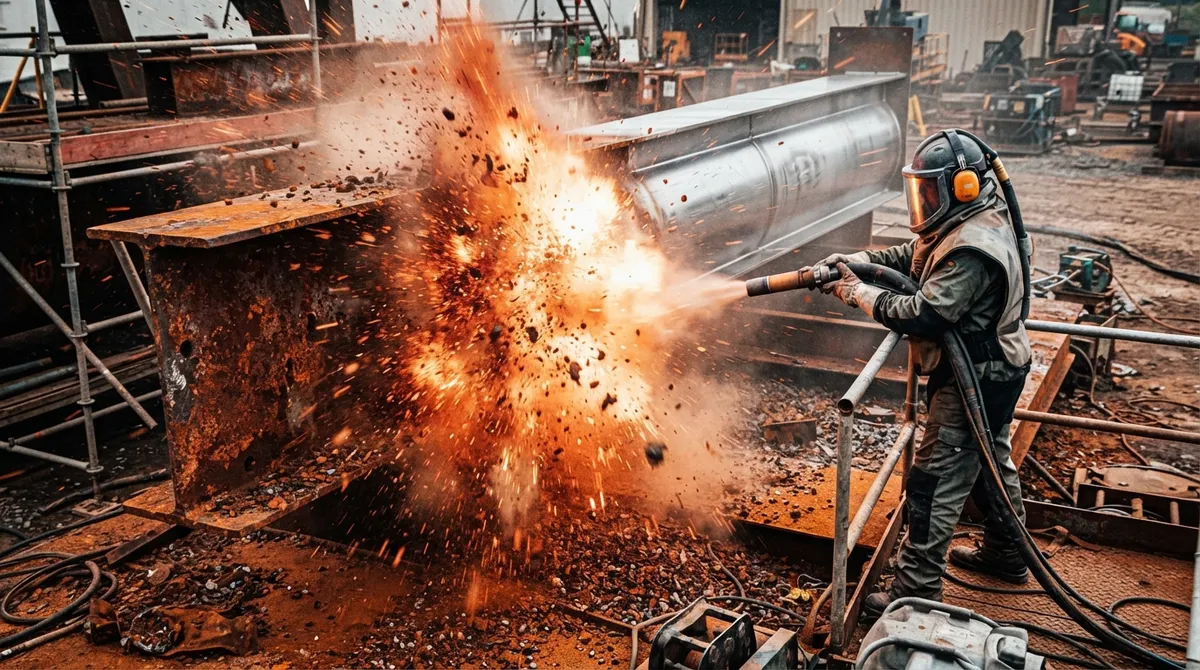
Metal rust treatment, in our world, means using pressurized abrasive media to remove rust, mill scale, and failed coatings right at your location. Think of it as a deep reset for metal surfaces. Instead of scrubbing or sanding by hand, we blast the surface clean using media like sand, soda, or specialty abrasives matched to the job.
This process is common on boats, trailers, farm equipment, fences, railings, tanks, and structural steel. It’s also a go-to step before any recoating job, because paint and powder coat only stick well to a clean, properly prepped surface. If you’ve ever wondered what is sandblasting and how it applies to rust removal, this is exactly it in action.
Why Hand Tools Fall Short
A lot of folks try wire brushes, sanders, or grinders first. We get it, they’re cheaper up front. But hand tools often miss rust hiding in seams, corners, and pits. Blasting reaches every nook, giving you a surface that’s actually ready for the next step, not just one that looks okay from a few feet away.
The Step-by-Step Rust Treatment Process
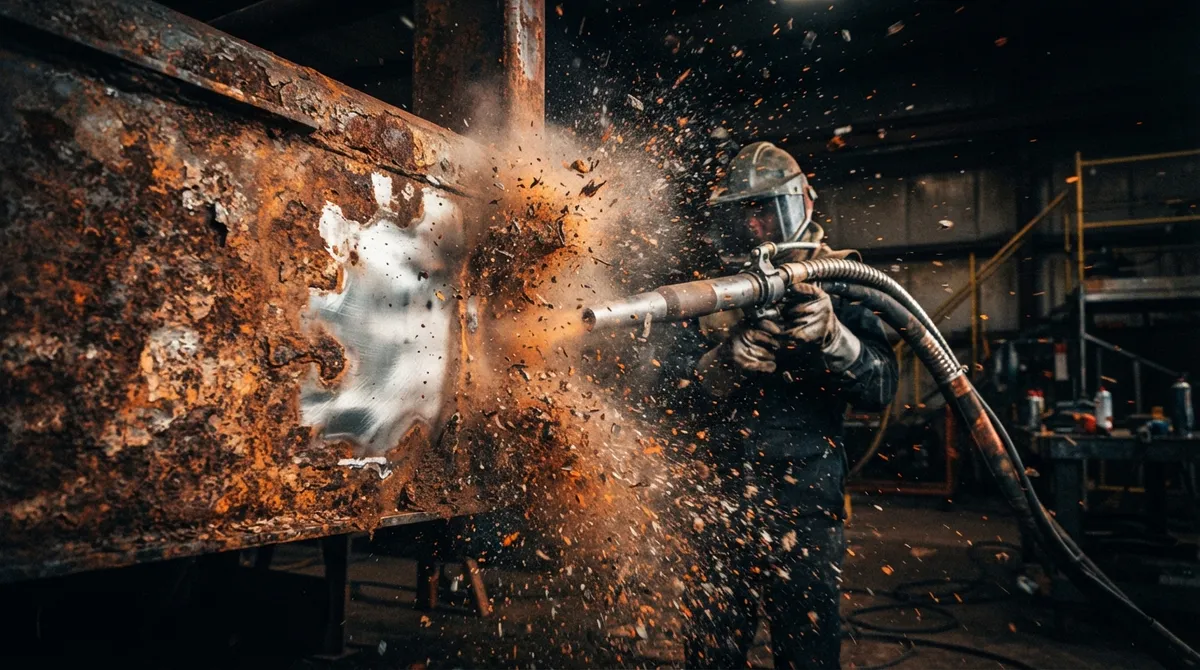
Good rust removal isn’t just pointing a blaster at metal and hoping for the best. It’s a real process, and skipping steps leads to problems later. Here’s how we approach it:
- Inspect the surface. We check for oil, grease, and the type of coating or rust present before touching anything.
- Clean off oil and grease. Abrasive media doesn’t cut through grease well, so this step comes first.
- Pick the right media and pressure. We match the blast to your surface, not the other way around. Thin sheet metal needs a gentler touch than heavy structural steel.
- Blast to the right cleanliness level. Different coatings need different levels of cleanliness, which we’ll cover next.
- Remove dust and leftover residue. A clean surface means no dust or grit left behind to interfere with primer.
- Inspect again. We check the surface profile and look for any spots that got missed.
- Prime or coat promptly. Fresh metal rusts fast, so timing matters here more than people expect.
Surface Cleanliness Standards Matter
Not every job needs the same level of cleaning. The coating going on afterward decides how clean the metal has to be. Industry standards, often called SSPC or NACE grades, break this down into categories.
| Cleanliness Grade | What It Means | Common Use |
|---|---|---|
| Brush-Off Blast Cleaning | Removes loose rust and loose paint, some staining remains | Light maintenance coatings |
| Commercial Blast Cleaning | Removes most rust and mill scale, light shadowing okay | General industrial coatings |
| Near-White Blast Cleaning | 99% of surface free of contaminants | High-performance coatings, marine use |
| White Metal Blast Cleaning | 100% clean, no stains or residue | Critical corrosion environments, tanks |
The coating manufacturer’s product sheet should always guide which grade you need. Guessing here can mean a coating that fails early, and nobody wants to redo a job twice.
Choosing the Right Abrasive for the Job
Not all blasting media are created equal. The choice affects speed, dust, surface texture, and how gentle or aggressive the process feels on your metal.
- Garnet: A solid all-around choice, often reused 6 to 7 times in controlled setups before it breaks down too much to use.
- Coal slag: Common for heavy-duty industrial jobs where reuse isn’t a priority.
- Steel grit: Great for aggressive rust removal on thick steel.
- Glass-based media: Gentler option for surfaces that can’t take heavy abrasion.
- Soda and agricultural media (like corn cob): Ideal for delicate surfaces such as fiberglass, aluminum, or thin sheet metal.
One thing we avoid is plain old silica sand for most jobs. It creates fine dust that’s dangerous to breathe, and safer alternatives like garnet or soda work just as well without that risk. If you want to dig deeper into how soda blasting vs sandblasting stacks up, that’s a great next read.
Getting the Surface Profile Right
Beyond cleanliness, coatings need the right texture, called a surface profile, to bond properly. A common target is around 2 to 2.5 mils, often achieved using 18 to 40 mesh grit. Too smooth, and paint won’t grip. Too rough, and you waste coating material trying to fill in the gaps.
Safety Comes First: Dust, Lead, and Silica
Rust treatment isn’t just about looks. Old coatings can hide lead or other hazardous materials, and blasting kicks up dust that needs to be controlled carefully. This is where working with a professional mobile blasting crew really pays off.
OSHA sets clear limits here. The action level for silica dust exposure is 25 micrograms per cubic meter over an 8-hour day, and the permissible exposure limit is 50 micrograms per cubic meter over that same period. These aren’t just numbers on paper, they represent real health protections for workers and anyone nearby.
According to OSHA’s guidance on respirable crystalline silica, engineering controls, restricted access, and proper respiratory protection are all part of doing this job the right way. We also lean on dustless and wet blasting methods when the situation calls for it, especially in tight spaces or near other equipment.
Lead Paint and Older Coatings
If your metal structure is older, there’s a real chance old coatings contain lead or other regulated substances. One EPA demonstration found that a dustless needle-gun system cut hazardous waste generation by 97.5% compared to traditional blasting when removing lead-based paint. That’s a huge difference, and it shows why choosing dustless methods matters for certain jobs.
We always evaluate coatings before starting work, set up proper containment, and follow disposal rules for anything that comes off contaminated. It’s part of what “we contain the mess” really means on a practical level.
Why Mobile Blasting Makes Sense for Rust Removal
Big, heavy, or awkward items are hard to move. Structural steel beams, boat hulls, farm equipment, and fixed railings often can’t be trailered to a shop easily. That’s where mobile blasting shines.
We bring the equipment, containment, and recovery systems to your location, whether that’s a driveway, dock, job site, or shop floor. We’re fully mobile and self-contained, so we don’t need your power or water hookups. This saves time, reduces hassle, and keeps your project moving without the logistics headache of transporting heavy metal.
Communities across Tampa, Clearwater, Sarasota, Ocala, Orlando, and Fort Myers rely on this kind of flexibility. Bay-area neighborhoods like Brandon, Riverview, Plant City, Lutz, and St. Pete see plenty of rust damage thanks to our humid, salty air, and on-site treatment keeps things simple. Check out our service areas page to see if we cover your location.
Preventing Flash Rust After Blasting
Here’s something people don’t always expect: freshly blasted metal can start rusting again within hours, especially in Florida’s humidity. This is called flash rust, and it’s a real threat to a clean prep job.
To prevent it, we recommend:
- Keeping the surface dry immediately after blasting
- Removing all dust and abrasive residue before coating
- Priming the same day whenever possible
- Following the coating manufacturer’s specific timing instructions
Waiting too long between blasting and priming undoes all the hard work. That clean, bare metal surface needs protection fast, or you’re back to square one.
Common Rust Treatment Applications We See
Every project is a little different, but certain jobs come up again and again in our line of work. Here are a few examples:
- Marine hardware and boat hulls. Salt water speeds up corrosion, so marine rust treatment is a big part of what we do.
- Automotive frames and panels. Classic car restorations and project vehicles often need full automotive rust removal before bodywork begins.
- Structural steel and tanks. Industrial clients count on us for weld prep and coating removal on heavy equipment.
- Railings and gates. Residential rust treatment on iron railings and fences is one of our most requested services.
- Commercial fleet vehicles and trailers. Businesses need rust and old paint stripped before repainting fleet assets.
For more on how we tackle rusted railings specifically, check out our guide on 14 proven ways to remove rust from railings. And if you’re dealing with an old iron fence, our post on restoring an old iron fence walks through the details.
Durability Depends on More Than Just Blasting
Here’s an honest truth: even a perfect blast job can fail early if other factors get ignored. Poor drainage, trapped moisture, galvanic corrosion between mismatched metals, and coatings applied too thin or too late can all cause rust to come right back.
That’s why we always talk through the full picture with clients, not just the blasting step. Getting the surface back to clean, sound material is the foundation, but what happens next matters just as much.
What to Expect When You Call Blastworx
Our process keeps things simple and honest from start to finish:
- Walkthrough. Send us photos or we’ll come take a look, and figure out the right media for your surface.
- Free estimate. You get a clear, written estimate the same day. The price we give is the price you pay.
- Blast and strip. We protect the surrounding area, then blast the metal clean at your location.
- Ready to finish. The surface comes out clean and ready for paint, primer, or whatever comes next.
We’re fully insured and small enough to give every job real attention. When you call, you talk to the people doing the actual work, not a call center reading from a script. Curious what past clients think? Visit us on Google — see what our customers are saying about us before booking your project.
Dust-Free Options for Sensitive Sites
If you’re working near other equipment, indoors, or in a busy area, dustless blasting is worth asking about. It keeps mess contained and reduces cleanup time significantly. Learn more about how this method compares in our article on what makes dustless blasting so effective.
Ready to Get Rid of That Rust for Good?
Rust doesn’t fix itself, and waiting only makes the job bigger and more expensive down the road. Whether it’s a boat trailer, a set of railings, or a full industrial structure, mobile blasting gets your metal back to clean, bare surface fast, without the hassle of hauling it anywhere.
We’ve helped homeowners, boat owners, and businesses across Tampa Bay and central Florida tackle rust head-on, and we’d love to help with yours too. Ready to see what your project could look like? Get a free estimate today, or if you’d rather talk it through first, give us a call and we’ll answer your questions directly.
FAQs
Q: What is the best way to remove heavy rust from metal?
A: Mobile abrasive blasting is really the gold standard here. It gets into every seam and corner that hand tools just can’t reach, giving you a truly clean surface in one pass instead of hours of scrubbing.
Q: How soon should metal be primed after abrasive blasting?
A: As soon as possible, ideally the same day! Florida humidity can cause flash rust within hours, so we always recommend priming right after blasting to lock in that clean surface.
Q: Is sandblasting safe for removing rust from vehicles and structural steel?
A: Absolutely, as long as it’s done with the right media and safety controls in place. We match the blast to your surface, use proper containment, and follow OSHA guidelines to keep everyone safe throughout the process.
Q: Can mobile blasting remove lead-based paint and rust safely?
A: Yes, with the right approach. We evaluate coatings before starting, use dustless methods when needed, and handle containment carefully so nothing hazardous spreads beyond the work area.
Q: Will abrasive blasting damage thin sheet metal or aluminum?
A: Not if it’s done right! We adjust pressure and choose gentler media, like soda or glass-based abrasives, for delicate surfaces so you get clean results without warping or damage.





