Key Takeaways
-
Wet sandblasting reduces airborne dust but does not eliminate it, and it does not make silica sand safe; NIOSH recommends against silica sand for abrasive blasting.
-
Old coatings may contain lead or other metals, so a hazard check of the surface and coating should happen before any blasting begins.
-
Wet blasting creates runoff and heavier wet debris that must be captured and disposed of lawfully, never allowed into storm drains or waterways.
-
Freshly blasted bare steel can flash rust quickly in Florida's heat and humidity, so plan for prompt drying or corrosion control before priming and coating.
-
Test a small area first to confirm cleanliness and surface profile before committing to the full job, since wet blasting can change the finish.
-
Choose wet blasting when dust control matters, such as occupied properties, active sites, or nearby neighbors and vehicles, and compare it against dry or dustless options for your surface.
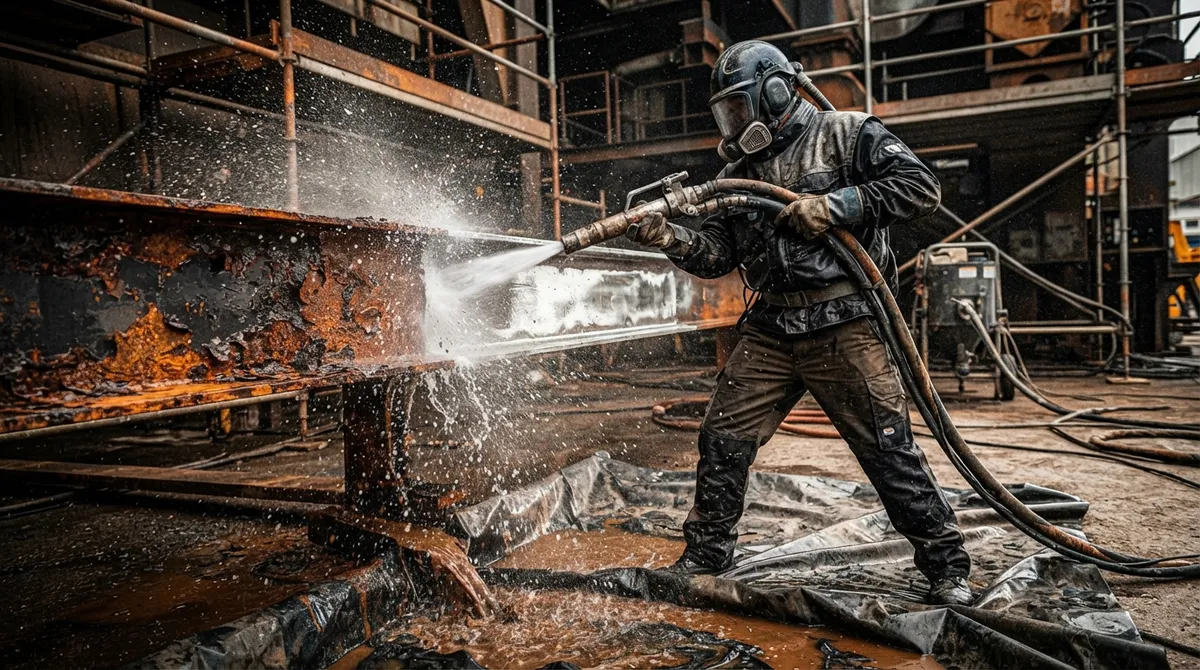
If you have ever watched a dry blast job, you know the cloud. Dust rolls off the surface, drifts across the yard, and settles on everything nearby. That is a big reason people start searching for wet sandblasting. They want the stripping power of blasting without the dust storm.
Here is the good news: wet sandblasting can be a smart choice for the right job. Here is the honest part: it is not magic, and the name can be a little misleading. At Blastworx, we get asked about it all the time, so we put together the five things we think every property owner should know before booking a job in 2026.
We are an owner-operated mobile blasting company based in Tampa, and we come to you. Our rig is fully mobile and self-contained, so we can work in a driveway, dockside, or on a job site. Let’s walk through what wet sandblasting really means and when it makes sense.
1. What Wet Sandblasting Actually Means
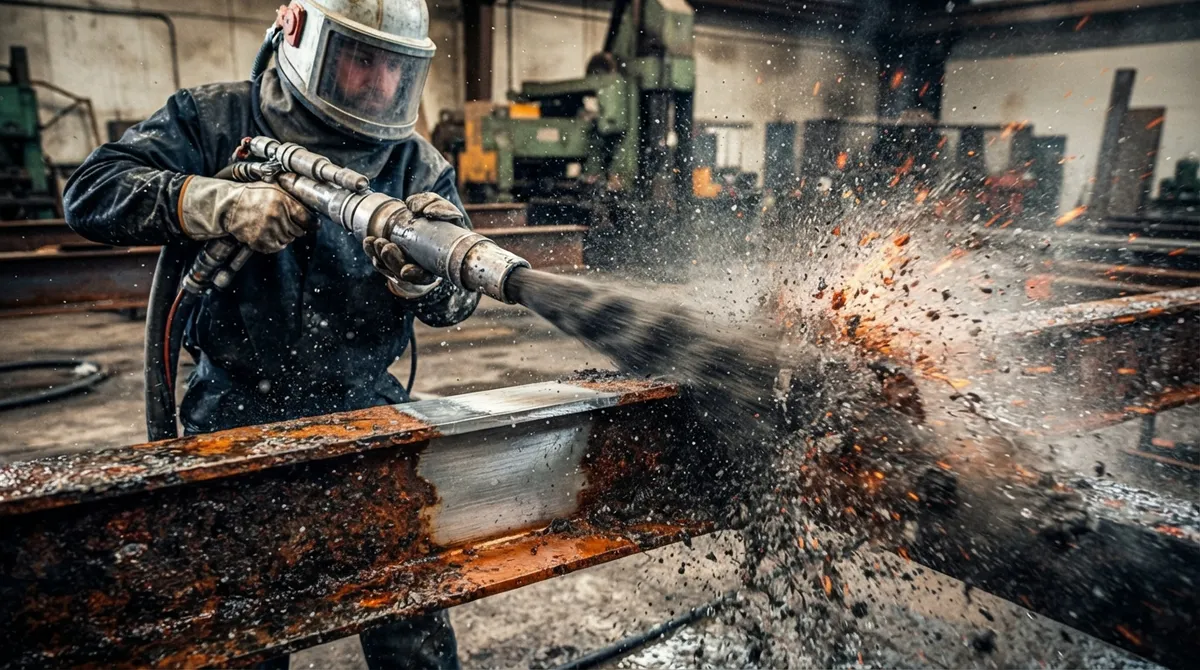
In the mobile blasting world, wet sandblasting usually means wet abrasive blasting. Compressed air pushes abrasive toward the surface, and water is added to the stream or at the nozzle. The water helps hold dust down so it does not spread as far.
Some systems work a little differently. They use high-pressure water to carry the abrasive in a slurry. OSHA’s Technical Manual describes this kind of water-pressure abrasive process as running at roughly 6,000 to 25,000 psi. These methods are related, but they are not identical.
It is also not the same as plain pressure washing. Water-only cleaning rinses off dirt, but it does not create the same surface profile that abrasive blasting does. If you want to learn the basics, here is a quick look at what is sandblasting in general.
One more thing. The word “sand” in the name does not mean sand is the media. Many wet blasting jobs use other abrasives. We match the blast to your surface, not the other way around, so we pick the right media for the job.
Quick Snapshot of the Method
- Air-propelled wet blasting: compressed air moves the abrasive, and water is added to cut dust.
- Slurry or water-pressure blasting: high-pressure water carries the abrasive.
- Water-only washing: cleans dirt but does not abrasively profile the surface.
2. How It Compares to Dry Blasting
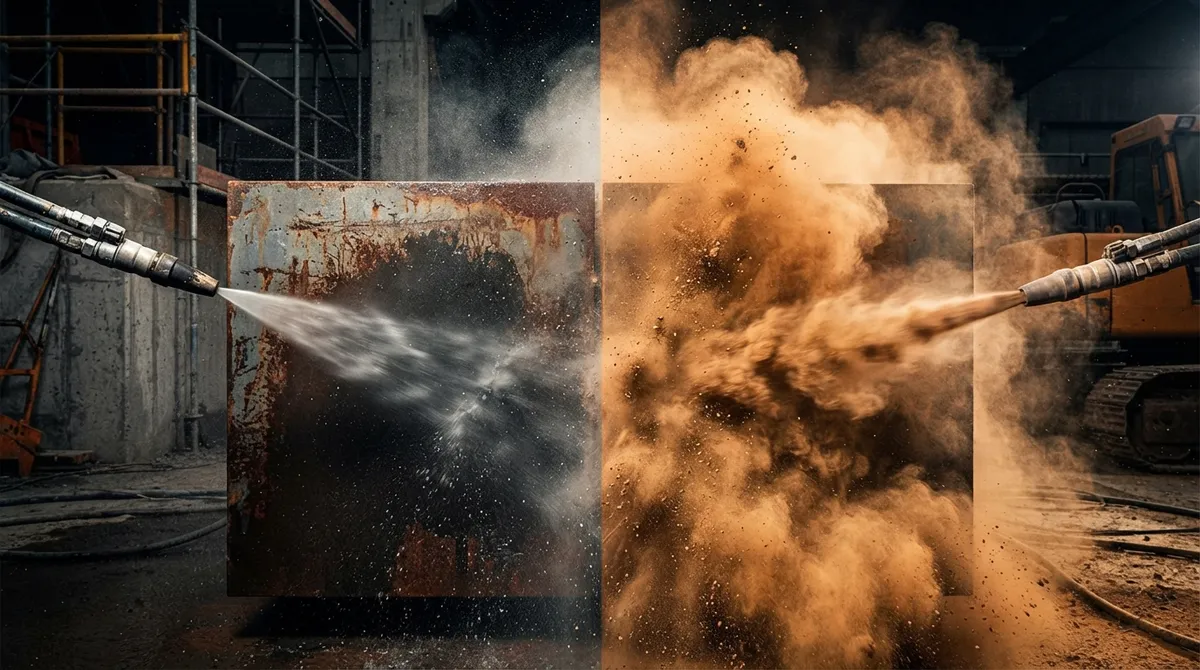
Dry blasting is fast and simple, but it creates a lot of dust. Wet blasting trades some of that dust for water, and water brings its own tradeoffs. Neither one is always better. The best pick depends on your surface, your site, and what comes next.
| Factor | Wet Blasting | Dry Blasting |
|---|---|---|
| Airborne dust | Reduced, not eliminated | Highest |
| Cleanup | Wet slurry, heavier to handle | Dry debris, easier to sweep or vacuum |
| Runoff | Must be captured and managed | Minimal |
| After-blast surface | May need quick drying or corrosion control | Dry and ready sooner |
| Best for | Dust-sensitive sites and nearby operations | Open areas with simple cleanup |
EPA background material for abrasive blasting reports wet-blasting control efficiencies of roughly 50% to 93% for emissions in the studies it cites. That is a wide range, and it depends on the process and the controls used. So it is a helpful guide, not a promise for any one job.
If you want a deeper side-by-side, we wrote a full guide on wet sandblasting vs dry and which one fits your job. It pairs nicely with this article.
3. Wet Does Not Mean Safe, and It Does Not Mean Silica Sand Is Okay
This is the big one, and we say it with a smile but a serious face. Water cuts dust, but it does not erase hazards. Dust and hazardous material can still come from the abrasive, the old coating, or the surface itself.
Silica sand is the biggest concern. OSHA and NIOSH both identify crystalline silica abrasive as a serious silicosis hazard, and NIOSH has recommended against using silica sand for abrasive blasting. So a wet system does not turn silica sand into a safe choice.
Old coatings can add risk too. Paint on older buildings, boats, and steel may contain lead or other metals. OSHA’s abrasive-blasting guidance calls for exposure controls, training, and respiratory protection where required.
That is why a good crew does a hazard check first. We choose safer media that fits your surface, and we are fully insured. If you want to learn more about how crews protect themselves and your property, read about the safe blasting procedures every mobile crew follows.
What Good Safety Looks Like
- The crew checks the surface and coating for possible hazards.
- They choose media that is safe and right for the substrate.
- They set up containment to protect the surrounding area.
- They use proper respiratory protection and training.
- They manage dust, runoff, and waste from start to finish.
For a closer look at dust management, our guide on how pros handle sandblasting dust control safely is a helpful read.
4. Where Mobile Wet Blasting Shines
Mobile blasting is a great fit when a blast room is not practical. You cannot roll a building, a dock, or a big tank into a shop. So we bring the compressor, the blast unit, water supply, media, containment, and cleanup gear to the worksite.
Wet blasting can be a good option when dust control matters. Think occupied properties, active job sites, or areas near other equipment. It can also help when you want to cut down on dust drifting toward neighbors, pools, or parked vehicles.
Here are a few places we see it come up in Tampa Bay and across central Florida:
- Marine: boat trailers, davits, docks, and metal hardware. Visit our marine blasting page to see what we cover.
- Industrial: structural steel, tanks, and heavy equipment. See our industrial blasting services for details.
- Commercial: concrete, graffiti, storefronts, and fleet trailers. Check out our commercial blasting services.
- Residential: fences, railings, pool decks, and pavers. Our residential blasting page has more.
- Automotive: frames, wheels, and project vehicles. Take a look at automotive blasting.
On concrete, brick, iron, and steel, wet or dustless methods can work well. For delicate surfaces like wood, we go with soft media and low pressure. And we do not blast vinyl fencing because it is too delicate.
Curious about a related dust-friendly option? Read what makes dustless blasting in Tampa so effective.
5. The Tradeoffs: Water, Runoff, and Flash Rust
Water is helpful, but it is not free of headaches. Wet debris is heavier and harder to handle than dry debris. Runoff has to be captured. And a freshly blasted steel surface can start to flash rust if it stays wet.
That last point matters in Florida. Heat and humidity speed up flash rust on bare metal. So a good plan covers prompt drying, or other corrosion-control steps, before the surface gets primed and coated. A coating is only as good as the surface underneath it.
Waste and Runoff Matter
Water, spent abrasive, paint chips, and other debris can carry contaminants. If the old coating had lead or other metals, that waste needs care. It should be contained, identified as required, and disposed of lawfully.
Blasting waste and wash water should never run into storm drains, soil, or surface waters. That is especially important near Florida waterways. We contain the mess and protect the surrounding area on every job.
Test Before Full Production
Wet blasting can change the finish and the cleaning process. So it is smart to test a small area first. Confirm the cleanliness and the surface profile you need before the full job and before any coating goes on.
Our guide on surface prep steps before commercial coating explains why this step pays off. We do strip and prep. Coating and refinishing are handled by you, your painter, or your coating crew, so we leave the surface ready for the next step.
How Blastworx Handles a Wet Blasting Job
We keep the process simple. You talk to the people doing the work, and you know what to expect.
- Walkthrough. Send photos or we come look, and we figure out the right media for the surface.
- Free estimate. You get a clear, written estimate the same day. The price we give is the price you pay.
- Blast and strip. We protect the surrounding area, then blast the surface clean at your location.
- Ready to finish. The surface comes out clean and ready for the next step.
Want to see results? Browse our project gallery for before and after work. You can also visit us on Google and see what our customers are saying about us.
We serve Tampa, Clearwater, Sarasota, Ocala, Orlando, and Fort Myers, plus bay-area towns like Brandon, Riverview, Plant City, Lutz, and St. Pete. Check our service areas page to see if we cover you. For the right job, we will travel anywhere in the state.
Ready for Clean, Sound Material?
Wet sandblasting can be a great tool, but it works best when the method fits the job. The right media, the right containment, and a smart plan for water and drying make all the difference. Our goal is simple: back to clean, bare metal, or back to clean, sound material, ready for what comes next.
Not sure whether wet, dry, or dustless is right for your project? We are happy to talk it through. You can get a free estimate today, or give us a call at 813-380-8092. You can text us too. We come to you.
FAQs
Q: What is wet sandblasting, and how does it work?
A: In mobile blasting, wet sandblasting usually means wet abrasive blasting. Compressed air pushes abrasive at the surface while water is added to help hold dust down. Some systems use high-pressure water to carry the abrasive instead, so it helps to ask your crew which method they use.
Q: Does wet sandblasting eliminate silica dust or make blasting safe?
A: No, and that is an important one to know. Water can reduce airborne dust, but it does not remove hazards from the abrasive, the old coating, or the surface. OSHA and NIOSH warn about silica sand, so we choose safer media and use proper containment and protection.
Q: Can wet blasting cause flash rust?
A: Yes, it can. Water on bare steel in Florida’s heat and humidity can lead to flash rust fast. A good plan includes drying the surface or using corrosion-control steps before priming and coating.
Q: Is wet blasting the same as pressure washing?
A: Not at all. Pressure washing uses water alone to rinse off dirt. Wet blasting adds abrasive to strip coatings, rust, and buildup and to prep the surface for the next step.
Q: How much does mobile wet sandblasting cost?
A: The price depends on the surface, the size of the job, the coating being removed, and how much containment and cleanup is needed. The easiest way to know for sure is to send us photos or let us take a look. We give a clear written estimate the same day, and the price we give is the price you pay.