
Key Takeaways
-
Conduct a job-specific hazard assessment before any blasting begins, examining the surface coatings, abrasive type, work location, nearby structures, and potential dust hazards; assign a knowledgeable person with authority to correct identified hazards.
-
Follow OSHA's hierarchy of controls by substituting safer abrasives first, isolating work with barriers, using ventilation or dust suppression, and only then relying on respirators and PPE as the final layer of protection.
-
Use NIOSH-approved abrasive-blasting respirators that protect the head, neck, and shoulders from rebounding media, and implement a complete respiratory-protection program including medical evaluation, fit testing, and proper training.
-
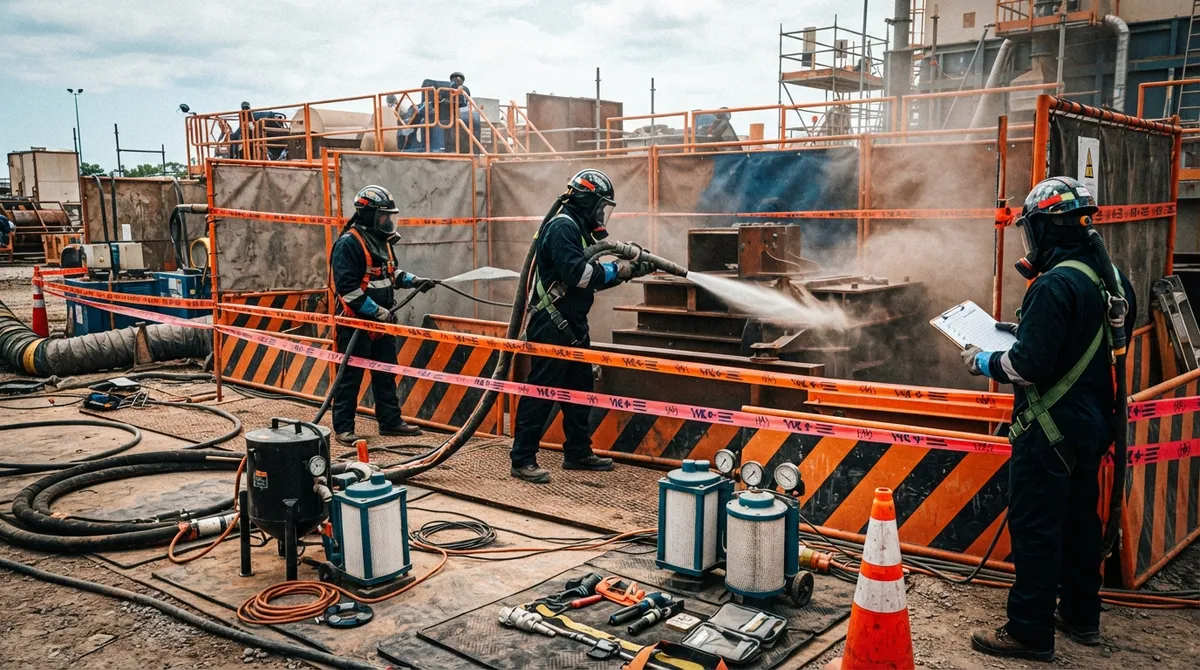
Establish a mobile work zone with clear restricted-area markings, physical barriers to contain media and debris, coordination with site owners, and protection for surrounding landscaping, pools, windows, and nearby equipment.
-
Inspect all equipment before each job including blast machine seals, hoses for cracks and loose fittings, nozzle attachment, and air supply; always depressurize and isolate systems before servicing or clearing blockages.
-
Use wet methods or HEPA-filtered vacuuming for cleanup rather than dry sweeping or compressed air; properly collect and dispose of spent abrasive and coating debris based on contaminants and local environmental regulations.
Blasting looks simple from the outside. A nozzle, some abrasive, and a surface that goes from rusty to clean in minutes. But anyone who has been on a real job site knows there is a lot going on behind the scenes to keep people safe. Dust, noise, flying media, hoses under pressure, and the surface itself can all cause trouble if nobody plans ahead.
That is why safe blasting procedures matter so much, especially for mobile work. When a crew shows up at your dock, driveway, or job site, there is no fixed shop with built-in walls and ventilation. The crew has to build that safety plan on the spot, every single time.
In this guide, we walk through five safe blasting procedures that guide how responsible mobile crews work in 2026. We lean on OSHA guidance throughout, and we share how we do things at Blastworx, an owner-operated crew based in Tampa. Whether you are hiring a pro or just curious, you will know what to look for.
1. Start With a Job-Specific Hazard Assessment
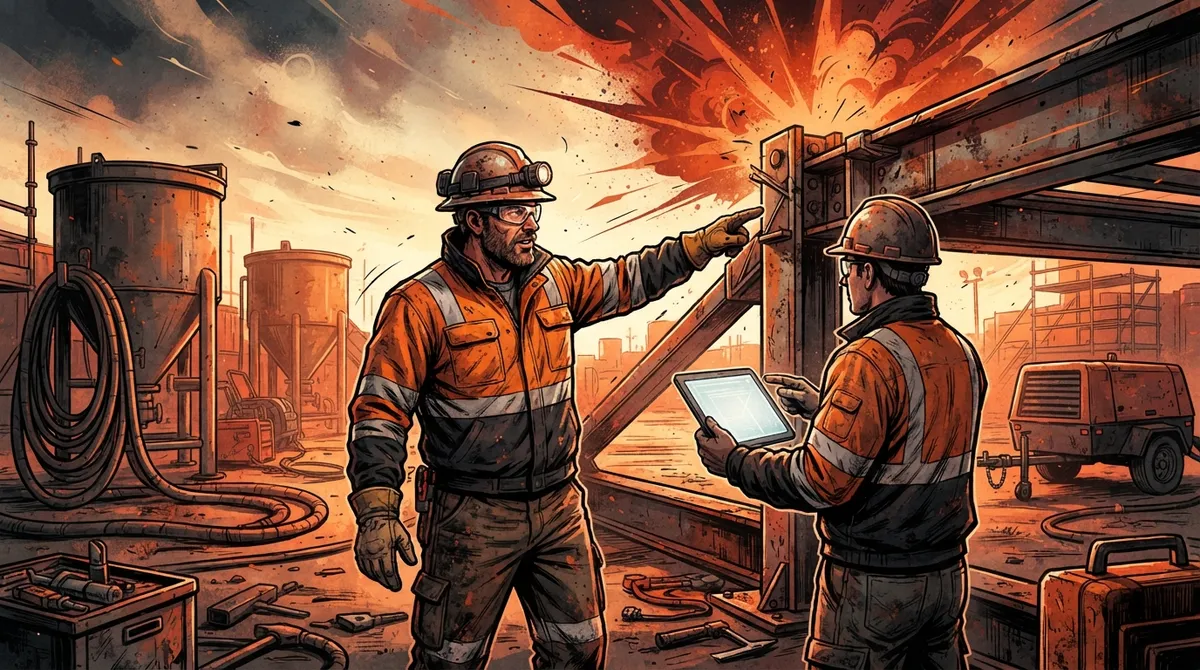
Every safe job starts before the rig is even turned on. OSHA recommends assigning a knowledgeable person with the authority to correct hazards before work begins. That is the foundation of safe blasting procedures, and it is not something to skip.
What the Assessment Should Cover
A good walkthrough looks at the whole picture, not just the thing being blasted. Here is what a careful crew checks:
- The surface and any coatings on it (rust, old paint, antifouling, powder coat)
- The type of abrasive or media being used
- The work location, including nearby buildings, water, and landscaping
- Other workers, customers, neighbors, and the public in the area
- Hazards from dust, noise, rebounding media, hoses, and equipment
This is why our process starts with a walkthrough. You send photos or we come look, and we figure out the right media for the surface. We match the blast to your surface, not the other way around.
Why You Cannot Judge by the Abrasive Alone
Here is a point that surprises many people. The dust created during blasting comes from two places: the abrasive and the material being blasted. Depending on the media, the surface, and the old coatings, that dust can contain respirable crystalline silica or toxic metals such as lead.
So a crew should never assume a job is safe just because the media seems mild. An older painted railing, for example, may carry coatings that need extra care. Exposure assessment is part of the plan when the situation calls for it.
2. Use the Hierarchy of Controls to Cut Dust at the Source
OSHA’s approach to abrasive blasting follows what is known as the hierarchy of controls. In plain words, you try the safest fixes first and use protective gear as a backup, not as the only plan.
Here is how that works in the field:
- Substitute a safer abrasive. Where it makes sense, choose a less hazardous media for the job.
- Isolate the work. Use barriers or containment so dust and debris stay in one place.
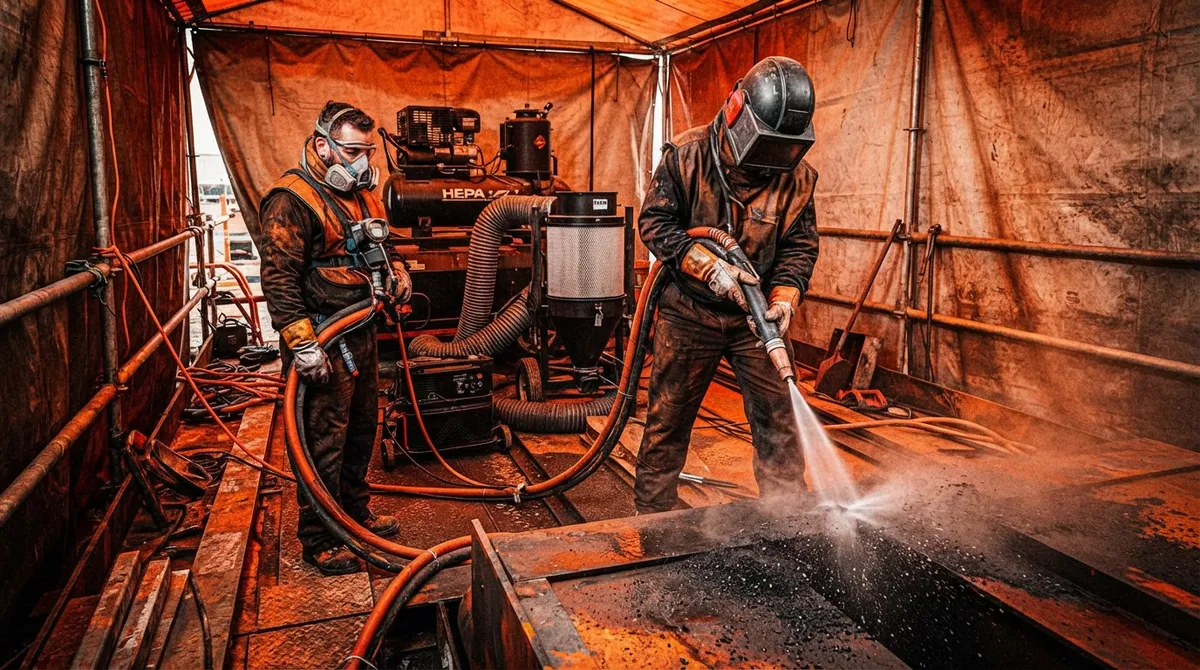
- Ventilate or suppress dust. Use proper ventilation or dust-suppression methods to keep the air cleaner.
- Protect the operator. Add the right respirator and personal protective equipment on top of the controls above.
Where Wet and Dustless Blasting Fit In
Wet and slurry blasting can cut down a lot of dust. That is one reason dustless blasting is so popular for homes, active job sites, and indoor work. If you want to know why it works so well, what makes dustless blasting in Tampa so effective is a good read.
But here is the honest part. Wet blasting does not automatically remove all exposure, and it does not automatically remove respirator requirements. Less dust is great, but it is not zero dust. A careful crew still checks the conditions and wears the right protection.
If you are weighing your options, our comparison of wet sandblasting vs dry breaks down which method fits which job. And for a broader look at safety trade-offs between media, see media blasting vs sandblasting and which is safer.
3. Wear the Right Respirator and PPE
Protective gear is the last line of defense, but it is a critical one. OSHA’s abrasive-blasting rules call for NIOSH-approved respiratory protection in specific conditions. Those include certain enclosed or confined-space work and blasting with silica sand. The exact respirator depends on the standard that applies, the exposure level, and the conditions on site.
Abrasive-Blasting Respirators Do More Than Filter Air
An abrasive-blasting respirator is built to protect the head, neck, and shoulders from rebounding abrasive, not just to clean the air. Think of it as a helmet and a filter in one. The media bounces back hard off a surface, so that extra protection matters.
When respirators are used, OSHA requires a respiratory-protection program. That program includes:
- Medical evaluation to confirm a worker can safely wear a respirator
- Fit testing where it applies
- Training on proper use and care
- Maintenance and program administration
The Rest of the PPE Kit
Respirators are not the whole story. OSHA lists high dust and noise as common blasting hazards, so a full kit usually includes:
- Hearing protection for the loud compressor and nozzle
- Heavy gloves and protective clothing
- Safety footwear
- Eye and face protection for anyone near the blast
It helps to know the numbers behind the rules. OSHA’s permissible exposure limit for respirable crystalline silica is 50 micrograms per cubic meter of air as an 8-hour time-weighted average. The action level is 25 micrograms per cubic meter. These limits are why exposure control and proper respiratory protection are taken so seriously.
4. Set Up the Work Zone and Inspect the Equipment
A mobile job lives or dies by its work zone. Safe blasting procedures protect not just the person holding the nozzle, but everyone and everything nearby.
Protect Bystanders and the Surrounding Area
OSHA’s guidance is clear: protect workers who are not running the nozzle, too. A solid work zone setup usually looks like this:
- Mark the restricted area so people know where the blast and dust zone begins and ends.
- Keep bystanders out of that zone, including customers, pets, and neighbors.
- Coordinate with the site owner so everyone knows the plan and the schedule.
- Use barriers or containment to keep media and debris away from people and property.
- Protect the surroundings such as landscaping, pools, windows, and nearby equipment.
This is the heart of our promise: we contain the mess and we protect the surrounding area. Homeowners see this most with fences, pool decks, and patios. If that is you, our guide on how to sandblast safely as a homeowner explains what to expect, and our residential blasting page covers the services we offer for homes.
Check the Gear Before Every Job
Equipment that fails under pressure can hurt someone fast. Before blasting begins, a careful crew inspects the key parts of the system and follows manufacturer instructions and applicable rules. Here is a quick checklist:
| Equipment | What to Check |
|---|---|
| Blast machine | Condition of the pot, valves, and seals |
| Hoses and couplings | Cracks, wear, loose fittings, and secure connections |
| Nozzle | Wear, damage, and proper attachment |
| Deadman control | Works correctly and shuts off flow when released |
| Air supply | Clean, adequate air, especially for supplied-air respirators |
| Protective equipment | Respirators, hoods, gloves, and hearing protection in good shape |
One more rule worth knowing: before servicing equipment or clearing a blockage, isolate and depressurize it first. Never try to fix a clog while the system is still under pressure.
5. Control Cleanup, Waste, and Special Conditions
The job is not done when the blasting stops. Cleanup is part of the safety plan, because settled dust can become airborne again in a hurry.
Smart Cleanup Methods
OSHA recommends wet methods or HEPA-filtered vacuuming to reduce dust during cleanup. It also warns against dry sweeping or using compressed air where that could spread hazardous dust. Spent abrasive and coating debris should be collected and disposed of based on what contaminants are in it and the environmental and waste rules that apply.
This matters even more on jobs involving old coatings. For tips on handling surfaces with a history, check out how pros handle sandblasting dust control safely and how to choose environmental sandblasting that is safe.
Confined Spaces and Indoor Work
Blasting inside tanks, vessels, or enclosed areas raises the stakes. Ventilation rules apply, and OSHA’s ventilation standard requires that airborne respirable dust or fume in a worker’s breathing zone stay below applicable exposure limits. Respirator needs can also change in confined spaces.
Curious about indoor options? Our post on whether you can sandblast indoors goes deeper. For heavier jobs, our industrial blasting services are built for tanks, structural steel, and facilities where dust control matters most.
Quick Safety Comparison by Media Type
| Approach | Dust Level | Safety Notes |
|---|---|---|
| Dry blasting | Higher | Needs strong containment and proper respiratory protection |
| Wet or dustless blasting | Lower | Cuts dust but does not erase respirator needs |
| Soft media (soda, walnut shell) | Varies | Gentler on surfaces; still assess the coating underneath |
How to Spot a Crew That Takes Safety Seriously
Now you know what safe blasting procedures look like. When you are comparing crews, watch for these signs:
- They ask about the surface, its coatings, and the surroundings before quoting
- They explain how they will contain the work area
- They wear proper respirators and PPE, not just a dust mask
- They are fully insured
- You can talk to the people actually doing the work
It also helps to understand the basics of the craft itself. If you want a quick refresher, here is a plain overview of what is sandblasting. For safety guidance straight from the source, OSHA publishes detailed material on protecting workers from the hazards of abrasive blasting, and its ventilation standard at 29 CFR 1910.94 lays out the dust limits for blasting operations.
We would love to hear how your project goes. You can Visit us on Google — see what our customers are saying about us and read what neighbors across Tampa Bay have shared about working with us.
Final Thoughts: Safe Work Is Good Work
Safe blasting procedures are not red tape. They are what keep people healthy, protect your property, and make sure the finished surface is clean and ready for the next step. A job-specific hazard assessment, the hierarchy of controls, the right respirator and PPE, a well-built work zone with inspected equipment, and careful cleanup all work together.
At Blastworx, we come to you. Our rig is fully mobile and self-contained, we contain the mess, and we are fully insured. Our four-step process (walkthrough, free estimate, blast and strip, ready to finish) keeps everything clear and simple, from Tampa to Orlando, Ocala, Fort Myers, and beyond.
Ready to talk about your project? Get a free estimate today, or give us a call at 813-380-8092. You can even text. You will talk to the people doing the work, and we will make sure it is done safely and done right.
FAQs
Q: What PPE is required for mobile abrasive blasting?
A: A full kit usually includes a NIOSH-approved abrasive-blasting respirator, hearing protection, heavy gloves, protective clothing, and safety footwear. The exact gear depends on the job, the media, and the conditions on site. A good crew sets this up before the first blast.
Q: Does wet blasting eliminate the need for a respirator?
A: Not automatically. Wet and dustless blasting cut down a lot of dust, but they do not always remove exposure or respirator requirements. A careful crew checks the surface, the coatings, and the conditions to decide what protection is needed.
Q: How can mobile blasting crews control silica and lead dust?
A: Crews follow the hierarchy of controls: pick a safer abrasive where possible, contain the work area, and use ventilation or dust suppression. They also assess the surface, since old coatings may carry lead. Respirators and careful cleanup, like HEPA vacuuming, round out the plan.
Q: How should a mobile blasting work zone be set up?
A: Mark a restricted area, keep bystanders out of the blast and dust zone, and coordinate with the site owner. Use barriers or containment to stop media and debris from reaching people and property. We also protect landscaping, pools, and windows nearby.
Q: How should spent abrasive and blasting debris be cleaned up?
A: Use wet methods or HEPA-filtered vacuuming, and skip dry sweeping or compressed air that could spread dust. Collect spent media and coating debris, then dispose of it based on the contaminants and local environmental rules.





