
Key Takeaways
-
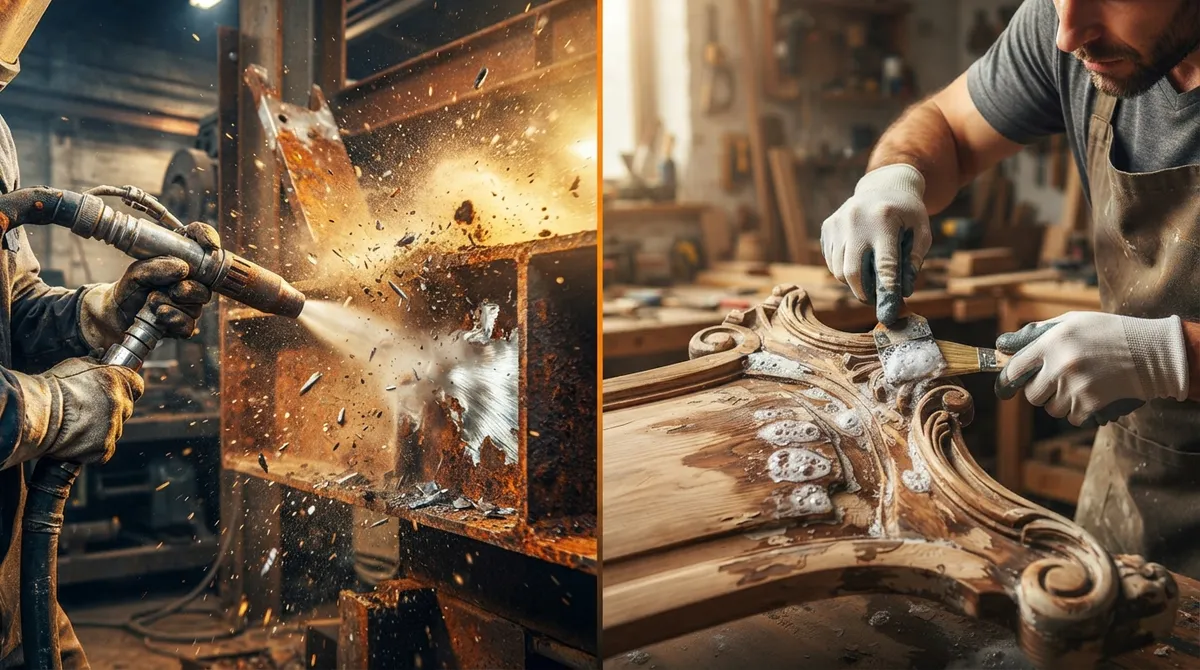
Abrasive blasting works best for large, durable surfaces with heavy rust and leaves a profile for new coatings to bond, while chemical stripping suits small, delicate, or detailed items that could be damaged by impact.
-
The surface material is the biggest decision factor: aggressive blasting can warp thin metal, damage wood grain, or erode masonry, so contractors should test a small area first and match media to the material.
-
On large fixed items like fences, trailers, or railings, abrasive blasting is more practical than chemical stripping because chemical work is mostly manual application and scraping that can take days on big jobs.
-
Test old paint for lead before removal starts using a home kit or lab test, since lead dust from blasting creates serious OSHA exposure risks; avoid dry-scraping suspect paint and plan for containment and proper waste handling.
-
Chemical stripping removes paint but may leave deep rust in pits and seams untouched and won't create the surface profile required by many coating manufacturers, so additional prep steps may be needed afterward.
-
Mobile blasting crews eliminate the need to haul heavy items by bringing fully self-contained equipment to your location, protecting surrounding areas like pools and landscaping while leaving the surface clean and ready for the next coating step.
You have an old gate, a rusty trailer, or a boat hull with years of paint on it. Now you are staring at it, asking, “should I sandblast or paint strip?” Good news: you are not alone, and the answer is not as scary as it sounds.
Both methods can take old coatings off. But they work in very different ways. One uses abrasive media to knock paint and rust off a surface. The other uses chemicals to soften the coating so it can be scraped away. The right pick depends on what you are stripping, what is under the paint, and what you plan to do next.
In this guide, we walk through five simple questions that help you choose. We keep the language plain and the advice honest. Neither method wins every time, and a good contractor will tell you so. At Blastworx, we match the blast to your surface, not the other way around. Let’s get you to the right answer.
First, What Do These Two Methods Actually Mean?
Before we dive in, let’s clear up the words. People say “sandblasting” for almost any kind of abrasive blasting. In real life, pros use several media and methods. If you want the basics, here is a quick explainer on what is sandblasting.
Modern mobile crews may use dry blasting, wet or dustless blasting, or softer media like soda or walnut shell. You can read more in our guide to 6 types of sandblasting every Florida owner should know.
Chemical paint stripping is different. A stripper is applied to the surface. It softens the coating. Then someone scrapes, scrubs, or rinses the mess away. It often needs cleanup and sometimes neutralizing, based on the product instructions.
Here is a quick side-by-side look:
| Factor | Abrasive Blasting | Chemical Paint Stripping |
|---|---|---|
| How it works | Media hits the surface and removes coating and rust | Chemicals soften the coating for scraping |
| Best for | Large, durable surfaces; heavy rust; surface prep | Delicate, detailed, or heat-sensitive items |
| Speed on big jobs | Usually faster | Usually slower and more hands-on |
| Main concerns | Dust, noise, spent media, surface damage if done wrong | Vapors, skin irritation, residue cleanup |
| Leaves a profile for new coating | Yes, when the right media is used | Usually no; may need extra prep |
1. What Surface Are You Working On?
This is the biggest question. The surface decides almost everything. A thick steel frame can take a lot. A thin body panel or an old wood deck cannot.
Here is how it usually shakes out:
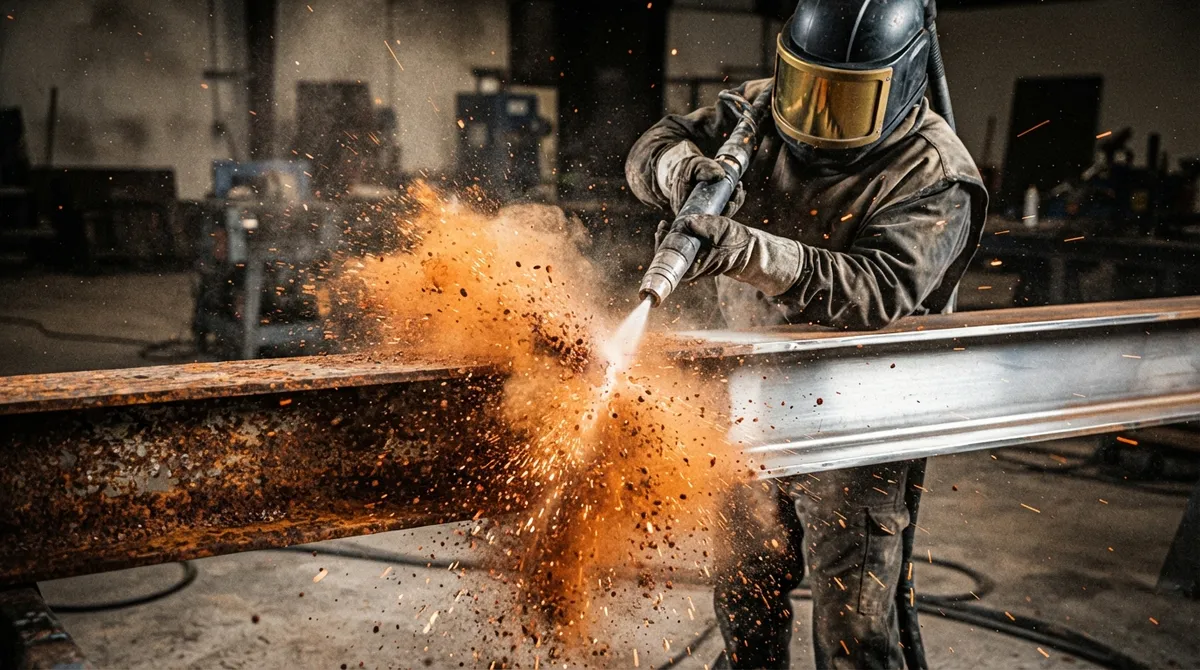
- Steel, iron, and heavy metal: Abrasive blasting is often a great fit. It clears rust, scale, and paint at once.
- Thin sheet metal: Aggressive blasting can warp or pit it. Softer media or chemical stripping may be safer.
- Wood: Hard media can dig into the grain. Soft media and low pressure are key, or chemicals may be the better choice.
- Brick, pavers, and concrete: Blasting works well when the media and pressure are matched to the material.
- Fiberglass and gelcoat: Softer media like soda or walnut shell protects the hull while removing old coatings.
- Delicate or detailed items: Chemical stripping can protect fine detail that impact might alter.
If you are working on wood, our breakdown of whether sandblasting damages wood is worth a read. For masonry, see 3 safe ways to strip paint from brick or pavers.
The big takeaway? Aggressive blasting can erode or deform thin metal and damage wood or masonry. A good contractor tests a small area first and picks the media to fit. That is how we do it at Blastworx.
2. How Big Is the Job?
Size matters more than most people think. Chemical stripping is mostly manual work. You apply, wait, scrape, and repeat. On a small chair or cabinet door, that is fine. On a long fence, a boat trailer, or a whole set of railings, it can eat up days.
Abrasive blasting shines on bigger, tougher jobs. Mobile blasting is even better here because the equipment comes to the job. You do not need to haul a heavy gate or a big trailer anywhere. We come to you, fully mobile and self-contained, so we can work in a driveway, at a dock, or on a job site without needing your power or water.
Think about it this way:
- Small, detailed pieces (a single decorative item): chemical stripping may make sense.
- Medium pieces (a gate, outdoor furniture, a wheel set): either method can work. Surface and finish decide it.
- Large or fixed items (fences, railings, trailers, pool decks, structural steel): abrasive blasting is often the more practical route.
For fence and gate projects, see how to strip paint from a metal fence or gate fast.
3. What Finish Do You Want When You Are Done?
Here is a point many people miss. A coating is only as good as the surface underneath it. Paint, powder coat, resurfacing, and antifouling all depend on good prep.
Abrasive blasting does more than strip. It can leave a clean surface with a profile, which helps new coatings bond. That matters in Florida, where heat, humidity, and salt air test every finish. Blasting takes the whole surface back to clean, sound material at once, so rust hiding in seams and corners does not get left behind.
Chemical stripping removes paint well. But it may not remove deep rust. It also may not give the surface profile a coating manufacturer asks for. You may need extra steps after stripping.
Ask yourself:
- Will I be priming and painting right after?
- Does the coating maker require a specific surface profile?
- Is there rust in pits, seams, or corners?
If you said yes to any of those, blasting often earns its keep. If you want to understand why prep matters so much, check out 14 surface prep steps before commercial coating.
One note: at Blastworx, we strip and prep. For most jobs, the final coating is handled by you or your painter, so we leave the surface ready for the next step.
4. What About Safety, Mess, and Waste?
Let’s be real. Neither method is automatically safer or cleaner. Both need proper controls, training, and protective gear.
Here is what each one can bring:
- Blasting: dust, noise, rebound hazards, and spent media that needs collecting. Dry blasting can create a lot of dust and be hard to contain, according to Illinois EPA guidance. Wet methods cut dust but make liquid waste that must be managed.
- Chemical stripping: hazardous vapors and corrosive or irritating liquids can expose workers. Residue and rinse water need proper handling too.
Dustless blasting is one option when you want less airborne dust, such as near pools, cars, or active job sites. It is not magic, but it can make a big difference. Learn more in what makes dustless blasting in Tampa so effective.
Either way, a pro should have a plan. We contain the mess and protect the surrounding area, including landscaping, pools, windows, and nearby equipment. Our crew follows a set of habits you can read about in 5 safe blasting procedures every mobile crew follows.
Here is a good checklist to ask any contractor:
- What process and media will you use on my surface?
- How will you protect nearby people and property?
- Is containment and cleanup included?
- How will you handle spent media and paint residue?
- Will the finished surface meet my coating’s prep requirements?
- Are you fully insured?
5. Could the Paint Contain Lead?
This question matters most on older homes, old fences, and vintage equipment. If paint was applied decades ago, it may contain lead. Lead is not something to guess about.
OSHA notes that blasting can create dust and toxic metals from the coating, the substrate, or the abrasive. OSHA’s construction lead standard (29 CFR 1926.62) sets a permissible exposure limit of 50 micrograms per cubic meter of air as an 8-hour time-weighted average. OSHA also links crystalline silica exposure during abrasive blasting to silicosis. That is one reason media choice matters so much.
What does that mean for you?
- Test old paint before any removal starts. Home test kits or a lab test can help.
- Do not dry-scrape or dry-sand suspect paint yourself.
- Plan for containment and careful waste handling. Local, state, and federal rules may apply.
- Bring in a qualified contractor early if lead is possible.
Chemical strippers can reduce dust in some cases, but they bring their own hazards and waste. The right call depends on the project. When lead is in the picture, planning comes first, no matter which method you pick.
So, Which One Should You Pick?
Here is a simple way to think about it. This quick guide covers the most common situations we see in Tampa Bay and across central Florida:
| Your Project | Often the Better Fit | Why |
|---|---|---|
| Rusty steel trailer or frame | Abrasive blasting | Removes rust and leaves a profile for coating |
| Wrought iron fence or railings | Abrasive blasting | Reaches seams and scrollwork fast |
| Boat hull (fiberglass) | Soft media blasting | Protects gelcoat while removing bottom paint |
| Pool deck or pavers | Blasting with matched media | Handles large flat areas well |
| Thin, delicate body panel | Soft media or chemical | Lower risk of warping |
| Small ornate piece | Chemical stripping | Protects fine detail |
| Old wood deck | Soft media or chemical | Prevents grain damage |
Notice how often the answer depends on the surface and the goal. That is why a quick walkthrough beats guessing. You can also see our work in the project gallery to get a feel for what different media can do.
How Mobile Blasting Makes the Choice Easier
One big perk of mobile blasting is simple: we come to you. No loading a heavy gate onto a truck. No dragging a boat trailer across town. We bring a fully mobile, self-contained rig to your driveway, dock, shop, or job site.
Here is how our process works:
- Walkthrough. Send photos or we come look, and we pick the right media for your surface.
- Free estimate. You get a clear, written estimate the same day. The price we give is the price you pay.
- Blast and strip. We protect the surrounding area, then blast the surface clean at your location.
- Ready to finish. The surface comes out clean and ready for the next step.
We serve homes, boats, vehicles, shops, and businesses. Depending on your project, you may want to check our pages for residential blasting, marine blasting, automotive blasting, or industrial blasting.
Curious about costs? Our post on how much sandblasting estimates really cost breaks it down in plain terms. And if you want to see what real customers say, you can Visit us on Google — see what our customers are saying about us.
A Few Friendly Mistakes to Avoid
Whichever way you lean, steer clear of these common slip-ups:
- Picking by price alone. The cheapest option can leave rust behind or damage the surface.
- Skipping the test patch. A small test area shows how the surface reacts before you commit.
- Ignoring waste. Spent media and paint chips need a real plan.
- Forgetting about the next coat. Prep should match what the coating needs.
For more on the pitfalls, see 10 paint removal sandblasting mistakes costing you.
Ready to Choose? Let’s Make It Easy
So, should you sandblast or paint strip? If your surface is tough, your job is big, or you need a clean, profiled surface for new coating, abrasive blasting is often the smart move. If your piece is small, delicate, or full of fine detail, chemical stripping may be the gentler path. And when lead or odd materials are involved, planning comes before anything else.
The best part is you do not have to decide alone. Send us a few photos, and we will tell you what we would use and why. You talk to the people doing the work, and we are fully insured. Ready to get started? Get a free estimate today, or give us a call at 813-380-8092. We come to you, and we will have your surface back to clean, sound material and ready for the next step.
FAQs
Q: Should I sandblast or chemically strip paint?
A: It depends on your surface and goal. Abrasive blasting is often best for large, tough surfaces with heavy rust or when you need a clean profile for new coating. Chemical stripping can suit small, delicate, or detailed items that impact might damage.
Q: Is sandblasting safe for wood, brick, or thin metal?
A: It can be, but only with the right media and pressure. Aggressive blasting can damage wood, erode masonry, or warp thin metal, so a pro should test a small area first and use softer media where needed.
Q: How do I know if my old paint has lead in it?
A: You can’t tell by looking, and older paint is the biggest concern. Use a test kit or lab test before any removal, avoid dry sanding or scraping, and bring in a qualified contractor who can plan containment and waste handling.
Q: Can mobile blasting remove paint and rust on site?
A: Yes! A mobile rig comes to your driveway, dock, shop, or job site, so you don’t have to haul heavy items anywhere. We still protect the surrounding area and contain the mess, then leave your surface ready for the next step.
Q: What happens to the paint chips and spent blasting media?
A: They need to be collected and handled properly, since waste can contain old coating and other materials. A good contractor will explain their cleanup and disposal plan before the job starts.





