
Key Takeaways
-
Choosing the wrong sandblasting method can damage delicate surfaces like wood or thin metal; match both the delivery method and abrasive media to your specific surface type, not the other way around.
-
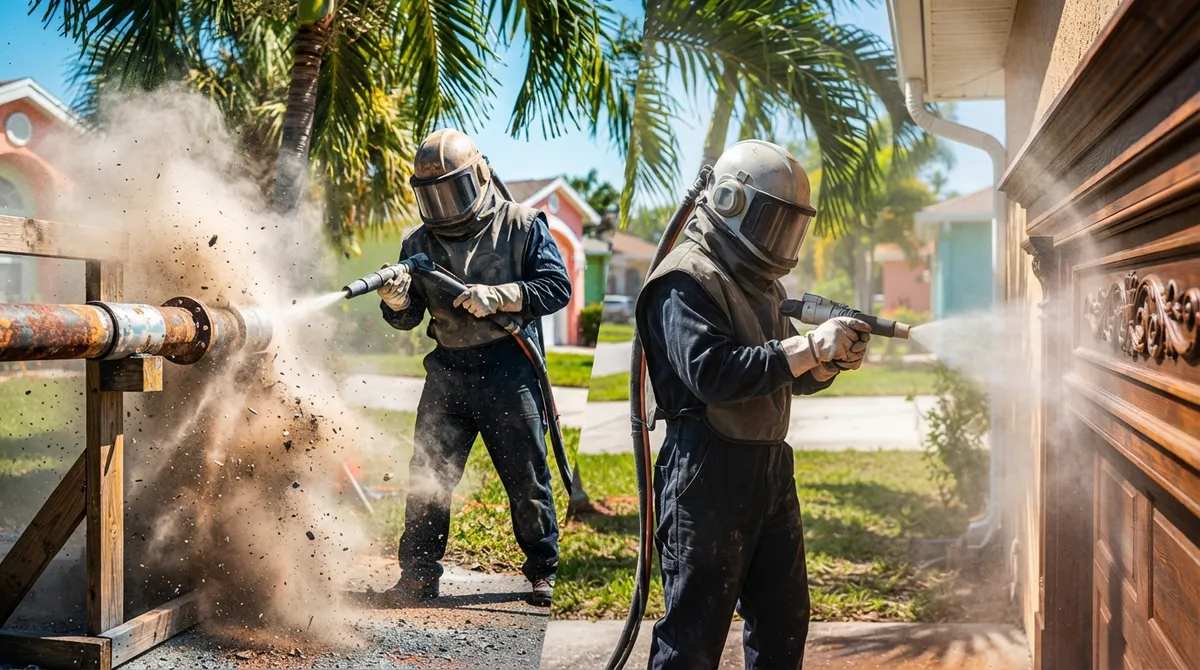
Dry blasting removes rust and heavy coatings fastest but creates significant dust requiring proper containment; wet and dustless blasting are better for exterior work near neighbors or occupied buildings.
-
Soda blasting with sodium bicarbonate or walnut shell media is the gentlest option for fiberglass boat hulls and delicate trim, stripping paint without surface damage that aggressive abrasives cause.
-
Traditional silica sand is dangerous and outdated; modern professionals use safer alternatives like garnet, aluminum oxide, glass, and organic media to prevent silicosis and respiratory illness.
-
Old paint and coatings may contain lead or chromium requiring special hazardous waste handling; always evaluate the coating first to determine the correct containment, media, and disposal plan.
-
Vacuum blasting keeps mess contained at the source with 95%+ filtration, making it ideal for spot repairs and occupied buildings where dust control is non-negotiable.
So you’ve got rust, old paint, or graffiti on something you love, and someone told you “just sandblast it.” Easy, right? Well, not so fast. There isn’t just one kind of sandblasting. There are several types of sandblasting, and each one works better on different surfaces, coatings, and situations. Pick the wrong one and you could damage wood, warp thin metal, or make a bigger mess than you started with.
Here at Blastworx, we’ve spent years matching the right blasting method to the right job across Tampa, Clearwater, Sarasota, Ocala, Orlando, and Fort Myers. We come to you, and we match the blast to your surface, not the other way around. In this guide, we’ll walk you through the main types of sandblasting, the abrasive media that go with them, and how to pick the right combo for your project. No jargon overload, just plain talk from people who do this work every day.

What Does “Types of Sandblasting” Actually Mean?
When people say “sandblasting,” they usually mean any process that shoots material at high speed to clean or strip a surface. But there are really two layers to this. First, there’s the method, meaning how the abrasive gets delivered. Second, there’s the media, meaning what material actually hits the surface.
Understanding what is sandblasting at a basic level helps explain why one method won’t work for every job. A wood deck needs a gentler touch than a rusted steel beam. A boat hull needs different care than a concrete driveway. That’s why professionals think about both the delivery method and the abrasive together, not one or the other.
6 Main Types of Sandblasting Methods
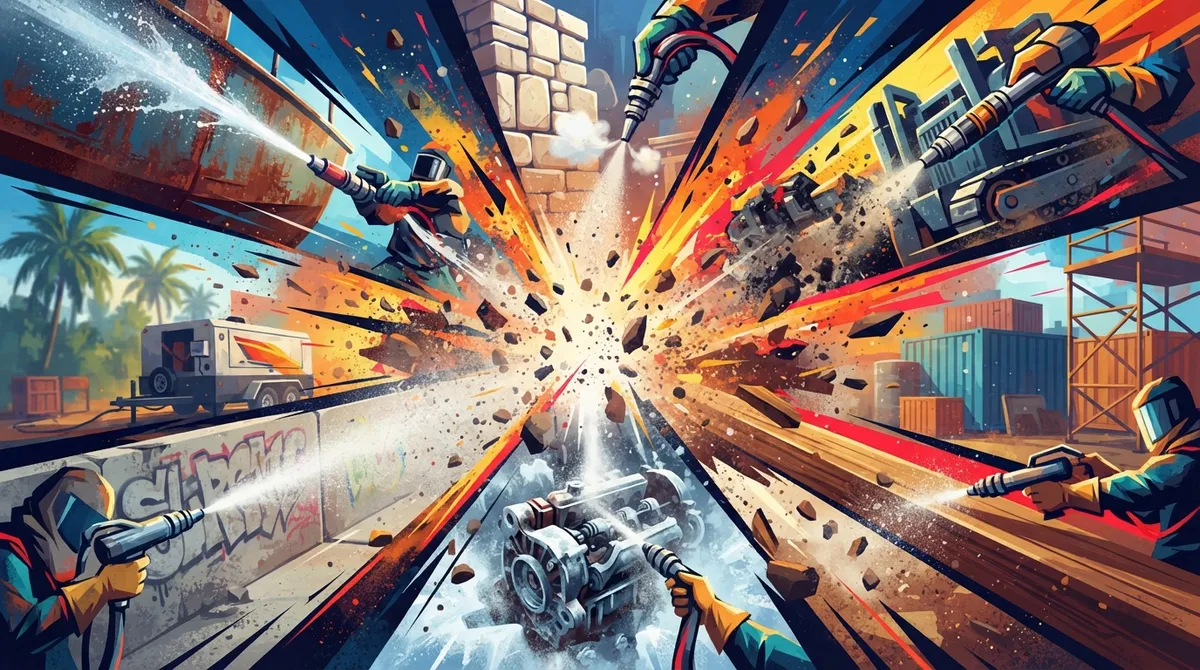
Let’s break down the core methods used across mobile blasting work today. These are the techniques that determine how the abrasive reaches your surface and how much dust, water, or mess comes with it.
1. Dry Abrasive Blasting
Dry blasting is the classic method. Compressed air shoots abrasive media straight at the surface with real force. It’s great for removing rust, mill scale, old coatings, and stubborn corrosion fast.
The tradeoff is dust. Dry blasting can kick up a lot of it, so proper containment, respiratory protection, and cleanup matter a lot. This is one reason we always protect the surrounding area before we start any dry blasting job.
2. Wet Abrasive Blasting
Wet blasting adds water into the abrasive stream. This helps knock down the dust cloud, which makes it a popular choice for exterior work, automotive projects, and jobs near neighbors or businesses.
It won’t eliminate every bit of airborne particulate, and containment is still smart practice. But for reducing visible dust on a driveway, fence, or storefront job, wet blasting is often the better pick.
3. Hydroblasting
Hydroblasting uses high-pressure water as the main cleaning force, often with little or no abrasive mixed in. It’s useful when you want to remove coatings, dirt, or grease without leaving abrasive residue behind.
One thing to know: hydroblasting alone doesn’t create the same rough surface profile that grit blasting does. If you need that profile for a new coating to stick well, abrasive may need to be added to the water stream.
4. Vacuum Blasting
Vacuum blasting keeps a tight seal around the nozzle while a vacuum system immediately sucks up spent media, dust, and removed coating. This keeps the mess contained right at the source.
It’s a smart option for spot repairs, indoor work, or jobs near occupied buildings where dust control is non-negotiable. Many vacuum systems use filtration rated at 95% or higher to keep particulate from escaping into the air.
5. Soda Blasting
Soda blasting uses sodium bicarbonate, which is much gentler than traditional grit. It’s a favorite for fiberglass boat hulls, delicate trim, and surfaces where you want to strip paint without damaging what’s underneath.
We often lean on soda blasting for marine work and residential projects where the surface just can’t take an aggressive abrasive. Curious why so many homeowners like this option? Check out our post on why soda blasting is Tampa’s gentlest cleaning fix.
6. Dustless Blasting
Dustless blasting blends water with abrasive media in a controlled system, similar to wet blasting but often refined for tighter dust control on active job sites. It’s ideal for commercial properties, occupied buildings, and spaces where you can’t afford a big dust cloud.
Want to see this in action? We covered the details in what makes dustless blasting in Tampa so effective.
Comparing the Blasting Methods
Here’s a quick side-by-side look to help you understand the differences at a glance.
| Method | Dust Level | Best For | Water Needed |
|---|---|---|---|
| Dry Blasting | High | Heavy rust, mill scale, steel prep | No |
| Wet Blasting | Low to Medium | Exteriors, automotive, masonry | Yes |
| Hydroblasting | Low | Grease, dirt, light coatings | Yes, high pressure |
| Vacuum Blasting | Very Low | Spot repairs, occupied areas | No |
| Soda Blasting | Low to Medium | Fiberglass, delicate trim | Optional |
| Dustless Blasting | Very Low | Commercial sites, occupied buildings | Yes |
Abrasive Media: The Other Half of the Equation
Picking a method is only half the job. The abrasive itself makes a huge difference in how aggressive the blast is and what kind of surface profile it leaves behind.
- Garnet: Hard, angular, and great for cutting through tough coatings and rust
- Aluminum Oxide: Very aggressive, often used on hard metals needing a heavy profile
- Steel Grit or Shot: Durable and reusable, common in industrial steel prep
- Glass Beads: Rounded and gentle, good for cleaning or light peening
- Crushed Glass: A recyclable option that balances cutting power with lower cost
- Walnut Shell: Soft and organic, safe for fiberglass and delicate surfaces
- Sodium Bicarbonate: Gentle enough for gelcoat and wood without gouging
One thing worth mentioning: traditional silica sand has fallen out of favor across the industry. OSHA’s historical data reported 1,005 silicosis deaths in the U.S. between 1976 and 1980, largely tied to unrestricted silica exposure. That’s exactly why modern mobile blasting companies use safer alternatives like garnet, aluminum oxide, glass, and organic media instead.
How to Match Media to Your Surface
Choosing the right abrasive isn’t guesswork. It comes down to a few key questions every time.
- What is the surface made of? Metal, wood, concrete, fiberglass, or brick all respond differently.
- What’s currently on it? Paint, rust, powder coat, or graffiti each need different treatment.
- What surface profile do you need afterward? A rough profile helps new coatings bond, while a smooth finish suits cosmetic cleanup.
- How much dust control does the site require? Occupied buildings and tight neighborhoods often call for wet or vacuum methods.
- What happens to the used media? Recyclable options like steel grit or crushed glass can reduce waste and cost.
This is exactly the kind of evaluation we walk through with every customer, whether it’s a rusted wrought iron railing or a full commercial sandblasting project in Tampa Bay.
Types of Sandblasting by Project
Different jobs call for different combinations of method and media. Here’s how we typically approach the most common project types.
Marine Projects
Boat hulls, docks, and trailers need careful handling. Soda or walnut shell media protects fiberglass and gelcoat, while stronger abrasives handle metal hardware and trailers. Learn more about our approach on our marine blasting page.
Automotive Restoration
Frames and heavy rust call for aggressive media, while thin body panels need lower pressure and cooler abrasives to avoid warping. Check out our automotive blasting services for classic car and restoration work.
Industrial and Structural Steel
Tanks, vessels, and structural steel often need dry or dustless blasting depending on the site. Our industrial blasting team brings its own power and water to handle these jobs on-site.
Commercial Properties
Graffiti, storefronts, and parking areas benefit from methods that control dust and reduce disruption to nearby businesses. Explore our commercial blasting options for these needs.
Residential Work
Fences, pool decks, and patios need gentler care to avoid damaging landscaping or nearby windows. Our residential blasting service protects the surrounding area while getting surfaces back to clean, sound material.
Health and Environmental Considerations
It’s worth knowing that not every blasting job is as simple as pointing and shooting abrasive. Old paint and coatings can contain lead, chromium, or other hazardous materials. When that happens, the spent media and debris may need special handling, even if the abrasive itself was safe to begin with.
According to OSHA’s guidelines on respirable crystalline silica, exposure limits are strict for a good reason. This is one of many rules mobile blasting companies need to understand before starting any project, since local air-quality and waste-disposal rules vary quite a bit.
We always evaluate the coating and surface first, which helps us figure out the right containment, media, and disposal plan before we ever start blasting. For a deeper look at how site prep and process work together, our post on how metal surface preparation blasting really works covers it well.
Common Mistakes to Avoid
- Using the wrong media on delicate surfaces like wood or fiberglass
- Skipping containment near neighbors, pools, or landscaping
- Ignoring weather conditions that affect dust and cleanup
- Assuming all abrasives create the same surface profile
- Forgetting to check whether old paint contains hazardous materials
These mistakes are surprisingly common, even among experienced DIYers. If you want to dig deeper into these pitfalls, our article on abrasive blasting mistakes that cost you has more detail worth reading before you start any project.
Why the Right Type Matters for Florida Conditions
Florida’s heat, humidity, and salt air are tough on any surface. A coating is only as good as the prep underneath it, and that prep depends heavily on choosing the right blasting method. Hand-sanding might miss rust hiding in tight seams, but blasting takes the whole surface back to clean, sound material all at once.
Whether you’re prepping a pool deck, restoring an old fence, or stripping years of buildup off structural steel, the goal is always the same: get the surface ready for the next step, whether that’s priming, coating, or refinishing. We take pride in leaving every surface ready to prime and coat, not just clean on the surface.
Our Simple 4-Step Process
We keep things straightforward so you always know what to expect.
- Walkthrough: Send us photos or let us come take a look, so we can figure out the right media for your surface.
- Free Estimate: We provide a clear, written estimate the same day. The price we quote is the price you pay.
- Blast and Strip: We protect the surrounding area, then blast the surface clean right at your location.
- Ready to Finish: The surface comes out clean and ready for whatever comes next.
Because we’re fully mobile and self-contained, we don’t need your power or water to get the job done. That means less hassle for you and a faster path to a finished project.
Ready to Get Started?
Choosing between all these types of sandblasting doesn’t have to be overwhelming. That’s exactly why we’re here. When you call Blastworx, you talk to the people doing the work, and we’ll help you figure out the right method and media for your specific surface.
If you’re anywhere in Tampa Bay, Clearwater, Sarasota, Ocala, Orlando, or Fort Myers, we’d love to help bring your project back to clean, bare metal or sound material. Don’t just take our word for it, either. You can visit us on Google and see what our customers are saying about us before you decide.
Ready to see what the right blasting method can do for your project? Get a free estimate today, or give us a call to talk through your project with our team.
FAQs
Q: What are the main types of sandblasting used by mobile blasting companies?
A: The main methods are dry blasting, wet blasting, hydroblasting, vacuum blasting, soda blasting, and dustless blasting. Each one handles dust and surface damage differently, so we pick based on your specific project and surface.
Q: Which abrasive media is best for removing rust from steel?
A: Garnet, aluminum oxide, and steel grit are all great choices for stripping rust off steel because they’re hard and aggressive. We’ll pick the exact one based on how thick the rust is and what finish you need afterward.
Q: Is garnet safer than sand for abrasive blasting?
A: Yes, garnet is a much safer choice than traditional silica sand, which can cause serious respiratory issues when it becomes airborne. Most professional mobile blasting companies, including us, have moved away from silica sand entirely.
Q: What type of blasting is safest for wood or delicate surfaces?
A: Soda blasting and low-pressure dustless blasting tend to be the gentlest options for wood, fiberglass, and delicate trim. We always match the pressure and media to the surface so we don’t cause any unwanted damage.
Q: Does wet blasting completely eliminate the need for containment?
A: Not quite. Wet blasting cuts down on visible dust a lot, but we still protect the surrounding area to catch overspray, debris, and water runoff. Containment is just good practice no matter which method we use.





