
Key Takeaways
-
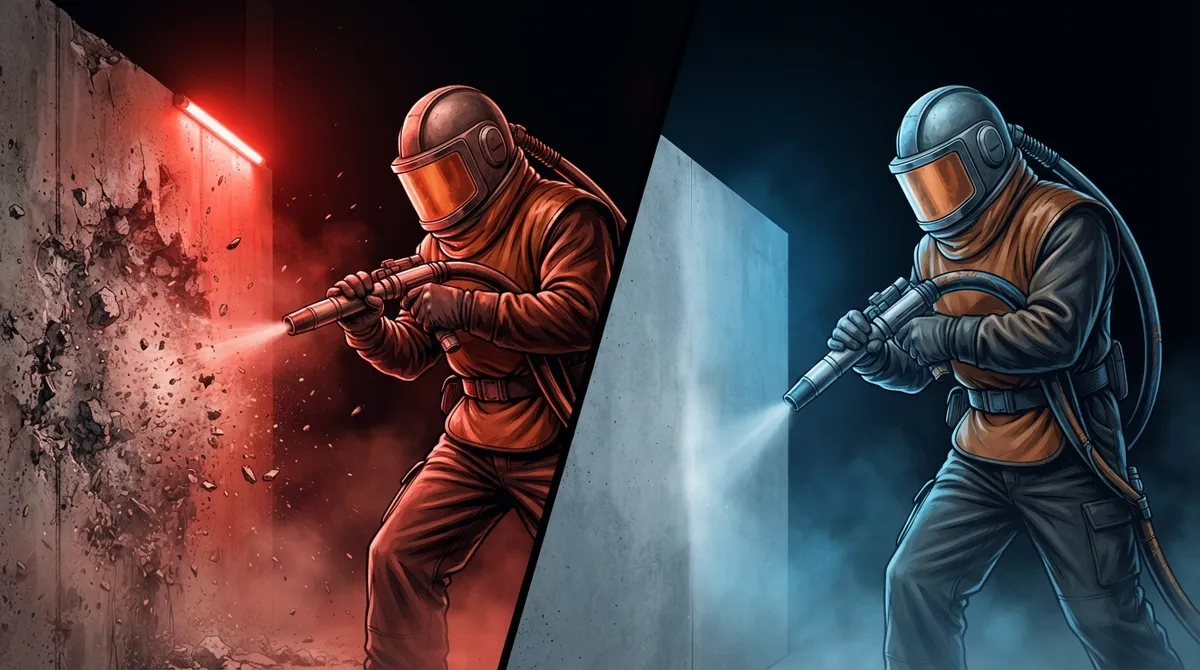
Excessive pressure is the primary cause of concrete damage during sandblasting; experienced operators adjust pressure based on concrete age and condition rather than using maximum force throughout the job.
-
Finer abrasives like crushed walnut shells cause significantly less pitting than coarse sand, and wet blasting systems reduce dust by up to 95% compared to dry methods, making them safer and more effective.
-
Proper technique including maintaining 8-16 inches nozzle distance, testing on hidden areas first, and moving in even overlapping passes prevents almost all damage and preserves structural integrity.
-
Sandblasting does not weaken concrete's structural core in normal applications; damage occurs only from improper technique, wrong media selection, or excessive pressure applied by inexperienced operators.
If you’ve got a concrete driveway, pool deck, or patio covered in old paint, algae, or stains, you’ve probably wondered: does sandblasting damage concrete? It’s a fair question, and honestly, one we hear all the time from folks around Tampa Bay. The good news is that sandblasting doesn’t have to hurt your concrete at all when it’s done the right way. But if it’s done wrong, yeah, it can leave you with pits, grooves, and a surface that looks worse than when you started.
We’ve spent years working on concrete surfaces throughout central Florida, and we want to walk you through exactly what can go wrong, what goes right, and how to protect your investment. Think of this as your friendly, no-nonsense guide to understanding what is sandblasting and how it interacts with concrete. By the end, you’ll know exactly what questions to ask before hiring anyone to blast your concrete.
1. Too Much Pressure Is the Number One Culprit
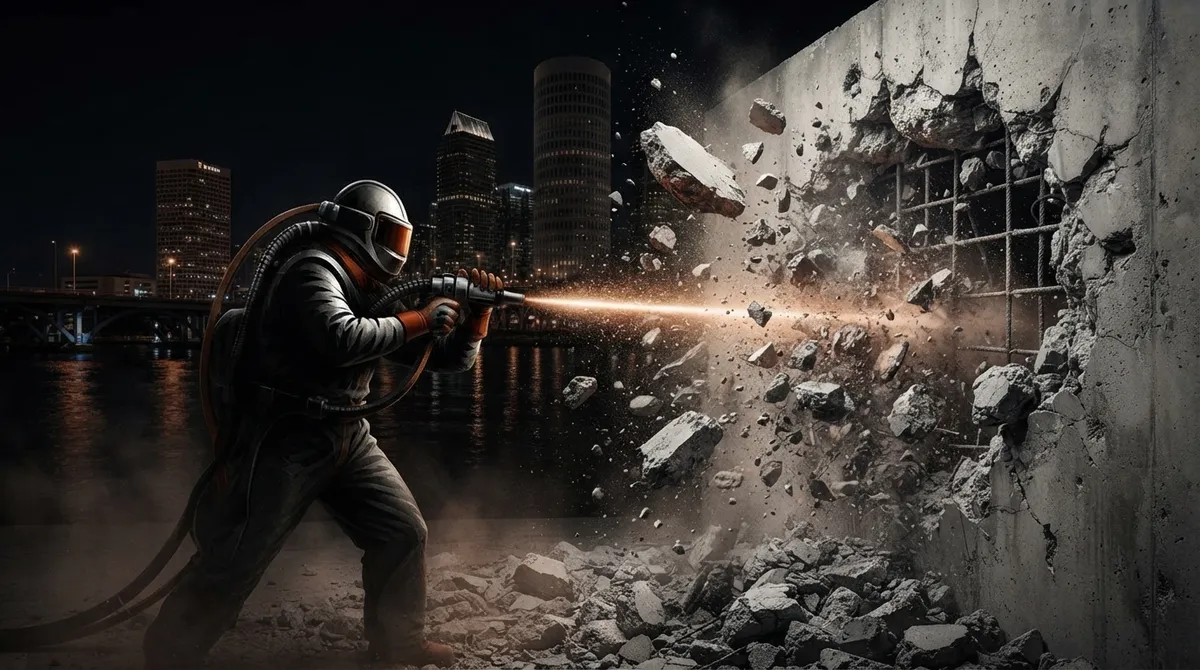
Concrete damage from blasting almost always comes down to pressure. When the pressure is cranked too high, the blast media chews into the surface instead of gently lifting away grime and coatings. This creates deep grooves and an uneven finish that’s tough to fix.
The fix is simple in theory but takes real experience to execute. A skilled operator adjusts pressure based on the concrete’s age, condition, and what needs to come off. Older, softer concrete needs a gentler touch than newer, denser slabs.
2. Coarse Abrasives Cause More Harm Than Good
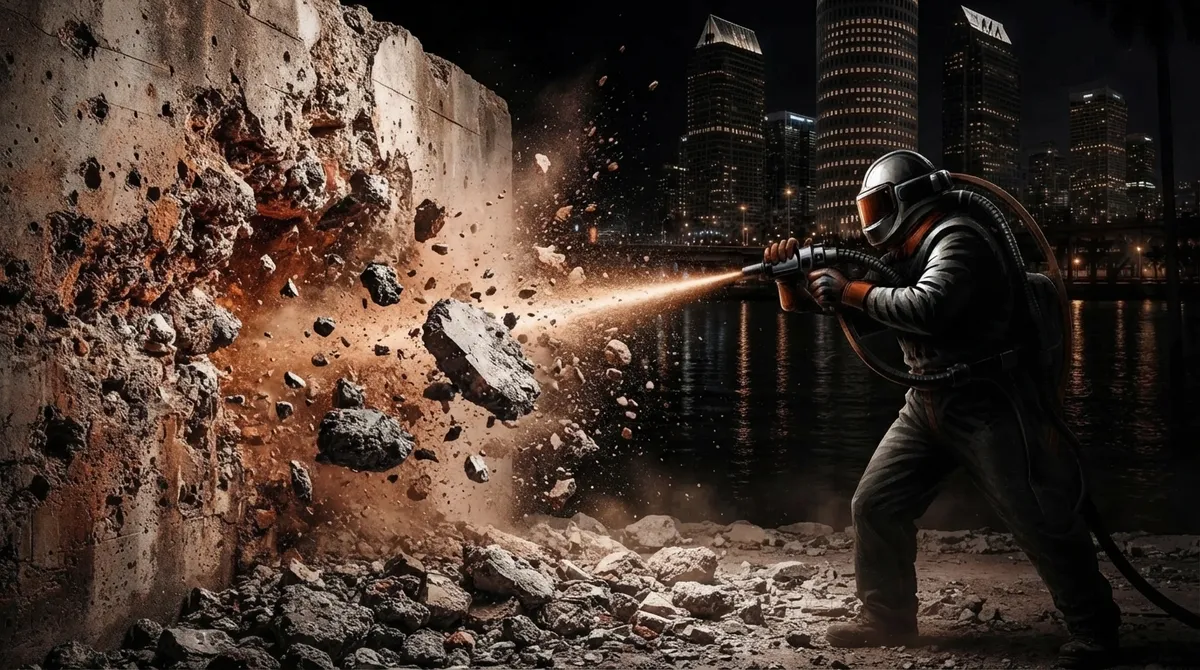
Not all blasting media is created equal. Coarse materials rip into concrete surfaces, leaving pitting and rough patches behind. This is one of the most common mistakes we see from inexperienced blasting jobs.
Finer abrasives, like crushed walnut shells, are gentler on concrete while still doing the job of stripping away contaminants. They reduce pitting significantly compared to traditional coarse sand, which is part of why so many professionals have moved away from sand entirely.
Popular Blasting Media Compared
| Media Type | Hardness | Best Use | Concrete Risk |
|---|---|---|---|
| Coarse Sand | High | Heavy rust, thick coatings | High – pitting likely |
| Crushed Walnut Shell | Low-Medium | Light coatings, finishing | Low |
| Baking Soda | Low | Delicate surfaces, gentle cleaning | Very Low |
| Crushed Glass | Medium | General purpose stripping | Low-Medium |
3. Cement Removal Happens Even With Light Blasting
Here’s something a lot of homeowners don’t realize. Concrete is made of cement paste and aggregate rocks. Sandblasting removes the softer cement layer first, which naturally exposes the harder rocks underneath.
This means some texture change is unavoidable, even with a light touch. It’s not necessarily damage, though. Many people actually want this exposed aggregate look for a decorative sandwash finish on patios and pool decks.
4. Nozzle Distance Matters More Than You’d Think
Keeping the nozzle at the right distance is one of those small details that makes a big difference. Experts recommend holding the nozzle 8 to 16 inches from the surface for even, controlled results.
Get too close, and you risk digging into the concrete unevenly. Stay too far away, and the blast won’t clean effectively, leading to spots where the operator has to go back over the same area repeatedly, which increases wear.
5. Outdoor Weather Exposure Can Compound Damage
Some experts caution against aggressive outdoor sandblasting because it can chip the surface just enough to let water sneak into tiny cracks. Once water gets in, Florida’s heat and humidity cycles can accelerate deterioration over time.
This is especially relevant here in Tampa Bay, where afternoon storms are practically a daily event. A professional crew knows how to blast surfaces so they seal up nicely afterward, rather than becoming a magnet for moisture problems.
6. Sand Itself Is Falling Out of Favor
It might surprise you, but traditional sand is becoming less common as a blasting medium. Two big reasons: health risks and surface control.
- Sand creates fine crystalline silica dust that’s linked to silicosis with long-term exposure
- It’s harder to control consistently across large surfaces
- Alternatives like crushed glass and walnut shells offer better results with less risk
- Wet blasting systems cut dust dramatically compared to dry sand methods
This shift towards safer, smarter media is part of why so many Tampa businesses choose mobile sandblasting over old-school dry sand rigs.
7. Wet Blasting Systems Change the Game
Wet abrasive blasting, using systems that mix water with the media, has become a favorite for good reason. These systems can reduce dust by up to 95% compared to dry sandblasting, which protects both the surface and the people nearby.
Less dust means better visibility during the job, easier cleanup, and reduced risk of silica exposure for the crew and anyone nearby. It’s a win for safety and for the concrete itself, since the water helps cushion the impact slightly.
Dry vs. Wet Blasting for Concrete
| Factor | Dry Sandblasting | Wet/Dustless Blasting |
|---|---|---|
| Dust Levels | High | Reduced up to 95% |
| Surface Control | Harder to manage | Smoother, more even |
| Health Risk | Higher silica exposure | Much lower |
| Best For | Heavy-duty stripping | Finishing, sensitive areas |
If you’re curious how these two methods stack up more broadly, our post on sandblasting vs. pressure washing for concrete breaks it down further.
8. The Right Steps Prevent Almost All Damage
Here’s a simple sequence that keeps concrete blasting safe and effective:
- Inspect the concrete for cracks, age, and existing damage
- Choose the gentlest media that will still get the job done
- Test the pressure setting on a small, hidden section first
- Maintain consistent nozzle distance throughout the job
- Move in even, overlapping passes rather than lingering in one spot
- Rinse and inspect the finished surface before wrapping up
Following steps like these is exactly how a professional crew avoids the pitting, gouging, and weakening that gives sandblasting a bad reputation in the first place.
9. Concrete Structural Strength Usually Isn’t at Risk
A common worry is whether sandblasting weakens concrete’s structural integrity. In most cases, surface-level blasting only affects the top layer, not the structural core. Real structural weakening usually comes from years of water damage, rebar corrosion, or poor original mixing, not a single blasting job.
That said, extremely aggressive blasting over and over on the same spot could thin out a surface over time. This is why controlled technique matters so much, especially on older concrete that’s already lost some strength.
10. Every Surface Gets a Custom Approach
We always say we match the blast to your surface, not the other way around. That mindset applies directly to concrete work. A pool deck gets treated differently than a commercial parking area, and a decorative patio gets treated differently than a plain sidewalk.
Some jobs call for soda blasting for a gentler touch. Others need a stronger abrasive to cut through years of buildup. This is also why we contain the mess and protect the surrounding area on every job, whether it’s a backyard patio or a busy storefront sidewalk.
Common Concrete Surfaces We Prep
- Pool decks and surrounding patios
- Driveways and walkways
- Commercial sidewalks and parking areas
- Building foundations and exterior walls
- Pavers and decorative concrete features
If you’re planning a pool deck project specifically, check out our guide on how to prep a pool deck for resurfacing the right way, or see real results from past jobs like pool deck blasting projects around Florida.
11. Hiring Experienced Pros Is the Best Insurance Against Damage
At the end of the day, the biggest factor in whether sandblasting damages concrete isn’t the equipment. It’s the person holding the nozzle. Experience matters because every slab of concrete is a little different, and knowing how to read that surface takes real time in the field.
We’re fully mobile and self-contained, which means we bring the right gear straight to your property in Tampa, Clearwater, Sarasota, Ocala, Orlando, Fort Myers, or anywhere in between. You talk to the people doing the work, every single time, and we’re fully insured so you can relax knowing the job is in good hands.
Curious what folks in the area are saying about their experience with us? Visit us on Google — see what our customers are saying about us before you make your decision. We think it says a lot about how we treat every property like it’s our own.
Quick Comparison: Signs of Good vs. Bad Concrete Blasting
| Sign | Good Blasting Job | Bad Blasting Job |
|---|---|---|
| Surface Texture | Even, consistent | Patchy, uneven grooves |
| Pitting | Minimal or none | Deep, noticeable pits |
| Color | Uniform after cleaning | Blotchy or discolored |
| Dust Control | Contained, minimal mess | Dust everywhere |
Ready for the Next Step?
So, does sandblasting damage concrete? Only when it’s rushed, done with the wrong media, or handled by someone without the right experience. When it’s done properly, with the right pressure, the right media, and a careful hand, sandblasting is one of the best ways to strip old coatings, remove stains, and get concrete ready to prime and coat again.
If you’ve got a concrete surface in Tampa Bay or anywhere along the central Florida corridor that needs some attention, we’d love to help. Whether it’s a small paver patio or a full commercial parking lot, we bring the right media for the job straight to you. Get a free estimate today, or if you’d rather talk it through first, give us a call and we’ll walk you through what your project might need. Your concrete deserves to look its best, and we’re genuinely excited to help make that happen.
FAQs
Q: Does sandblasting weaken concrete structurally?
A: In most cases, no. Sandblasting typically only affects the surface layer, not the structural core of your concrete. Real weakening usually comes from years of water damage or rebar corrosion, not a single properly done blasting job.
Q: What is the best abrasive media for sandblasting concrete without damage?
A: Crushed walnut shells and other finer abrasives tend to be gentler on concrete than traditional coarse sand. They still strip away grime and old coatings but leave much less pitting behind, which is why so many pros have shifted away from sand entirely.
Q: How much PSI should be used for sandblasting concrete?
A: There’s no one-size-fits-all number since it depends on the concrete’s age and condition, but the key is starting low and testing on a small hidden area first. An experienced operator adjusts pressure as they go rather than blasting at full force the whole time.
Q: Is wet sandblasting better than dry sandblasting for concrete?
A: For most projects, yes. Wet or dustless blasting systems can reduce dust by up to 95%, which protects both your surface and the crew working on it, while also giving a smoother, more even finish.
Q: Why is sand no longer recommended as a blasting medium for concrete?
A: Traditional sand creates a lot of fine silica dust, which isn’t great for anyone breathing it in over time. It’s also harder to control consistently, so a lot of professionals have moved to gentler, safer alternatives like crushed glass or walnut shells instead.





