
Key Takeaways
-
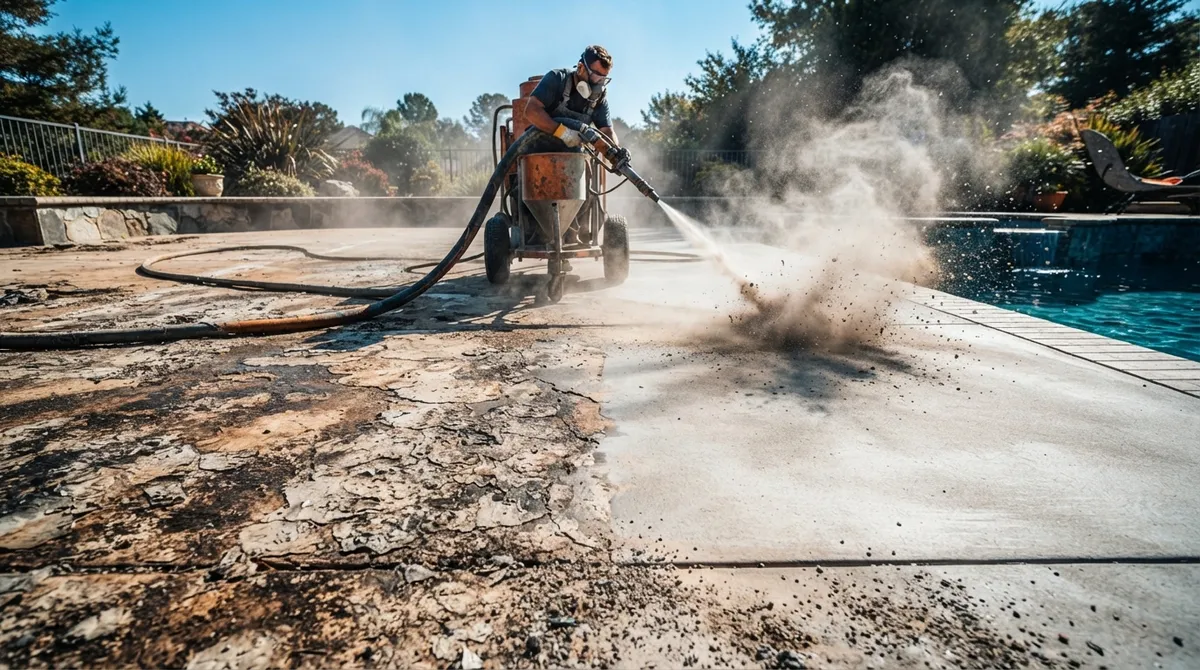
Proper surface preparation accounts for up to 80% of long-term resurfacing success; skipping this step causes new coatings to bubble, peel, or flake within a season or two.
-
Mobile abrasive blasting removes up to 99% of old coatings in one pass and creates a proper bonding profile, showing 30-50% higher bond strength compared to acid etching alone.
-
Abrasive blasting physically strips away contaminated layers and mold completely, while pressure washing often pushes contaminants deeper into concrete pores where they regrow.
-
Choose blasting media based on deck age and coating history: sand for heavy coatings, soda for delicate finishes, and garnet for dense commercial decks.
-
Blasting exposes weak spots and spalling before resurfacing so contractors can patch properly, rather than coating over hidden damage that causes failures later.
-
Mobile blasting prep typically takes 1-3 days for residential pool decks including cleanup, with crews handling dust containment and surrounding area protection throughout the process.
If you’re staring at an old, cracked, peeling pool deck and dreaming about a fresh new finish, we get it. That’s a fun project. But here’s the honest truth: the prep work matters way more than the pretty topcoat. In fact, proper surface preparation accounts for up to 80% of the long-term success of any pool deck resurfacing job. Skip this step, or do it halfway, and your beautiful new coating will bubble, peel, or flake off within a season or two.
That’s where mobile blasting comes in. At Blastworx, we prep pool decks all over Tampa Bay and central Florida using abrasive blasting instead of pressure washing or chemical etching. It’s faster, it’s more thorough, and it gets your concrete ready to actually hold a new finish. Let’s walk through exactly how it works, why it beats the old-school methods, and what to expect when you book a mobile blasting crew for your pool deck.
Why Pool Deck Prep Matters So Much
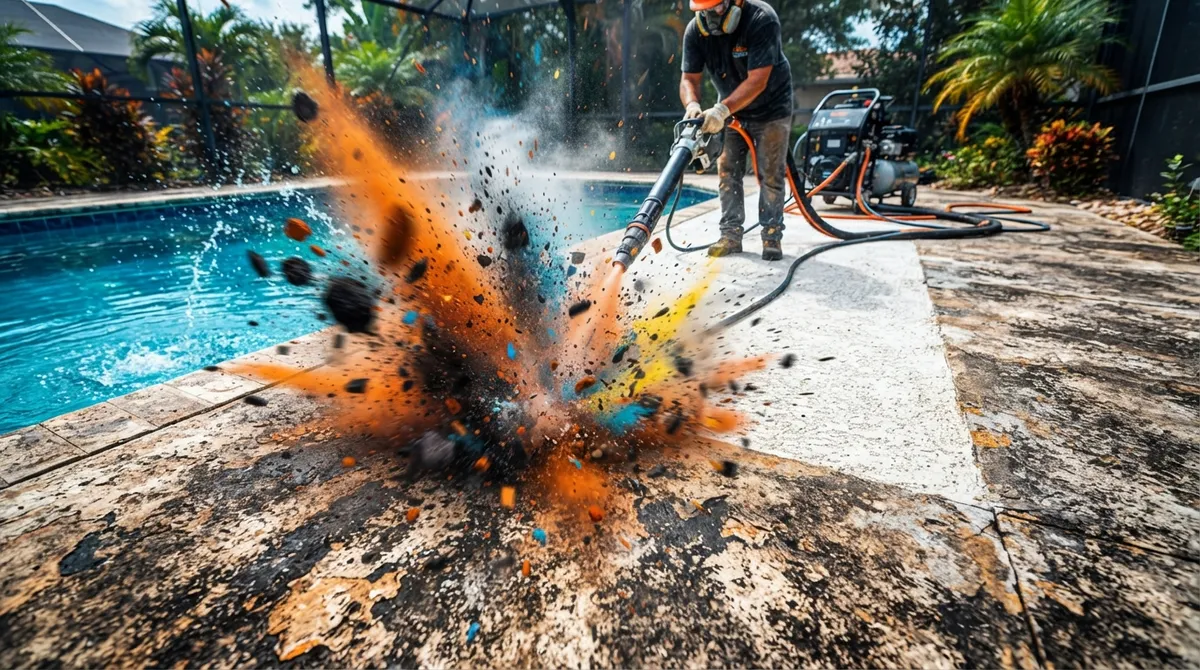
A pool deck takes a beating. Sun, chlorine, pool chemicals, foot traffic, and Florida’s brutal humidity all work together to break down concrete and old coatings. By the time most homeowners think about resurfacing, the deck already has mold, mildew, oil stains, cracks, and weak or crumbling spots called spalling.
If you just pressure wash that surface and slap on a new coating, you’re basically painting over problems. The new material won’t bond right, and moisture trapped underneath can cause bubbling and peeling fast. This is exactly why what is sandblasting matters as a concept here. Abrasive blasting physically removes the old layer and roughens the surface at a microscopic level, giving the new coating something to actually grip onto.
What Happens When Prep Is Skipped
We’ve seen it too many times. A homeowner pays for a nice new pool deck coating, only to watch it fail within a year. Here’s what usually goes wrong:
- Old sealer or paint wasn’t fully removed, so the new coating never bonded
- Mold and mildew were pressure washed but not eliminated, so it grew back underneath
- Cracks and spalling were coated over instead of repaired first
- Moisture was trapped in the slab, causing bubbles and blisters later
- The surface was too smooth for the new material to mechanically lock in
Every one of these problems traces back to prep. This is why we always tell folks: the blasting step isn’t optional if you want your resurfacing job to actually last.
How Mobile Blasting Preps a Pool Deck for Resurfacing
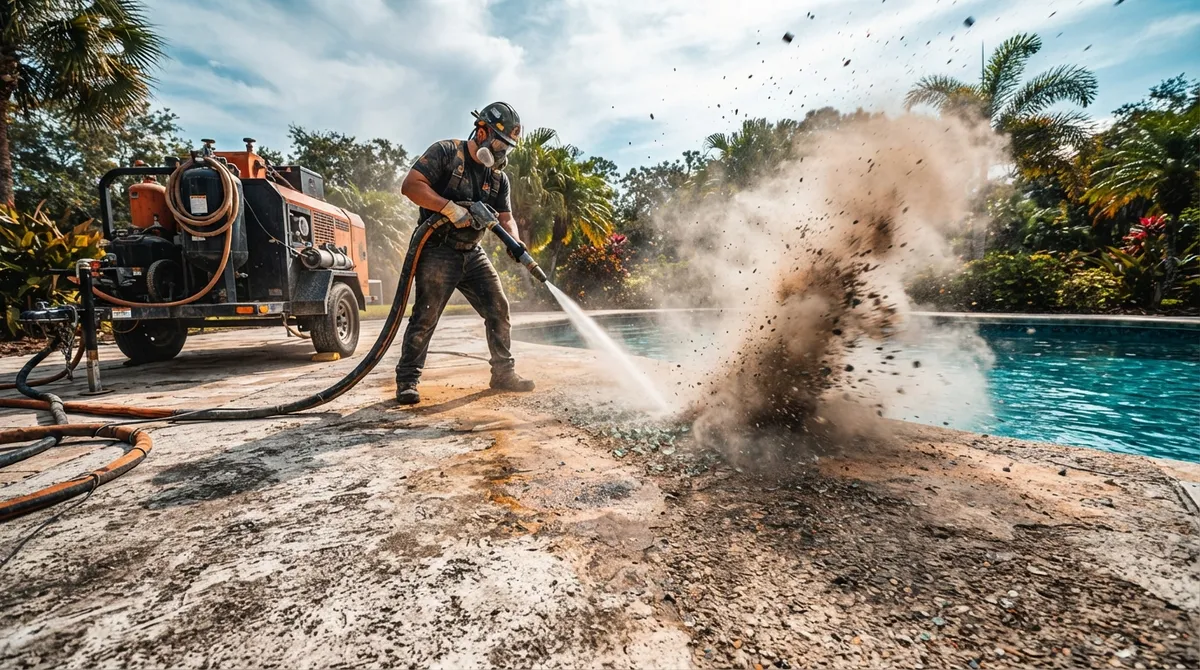
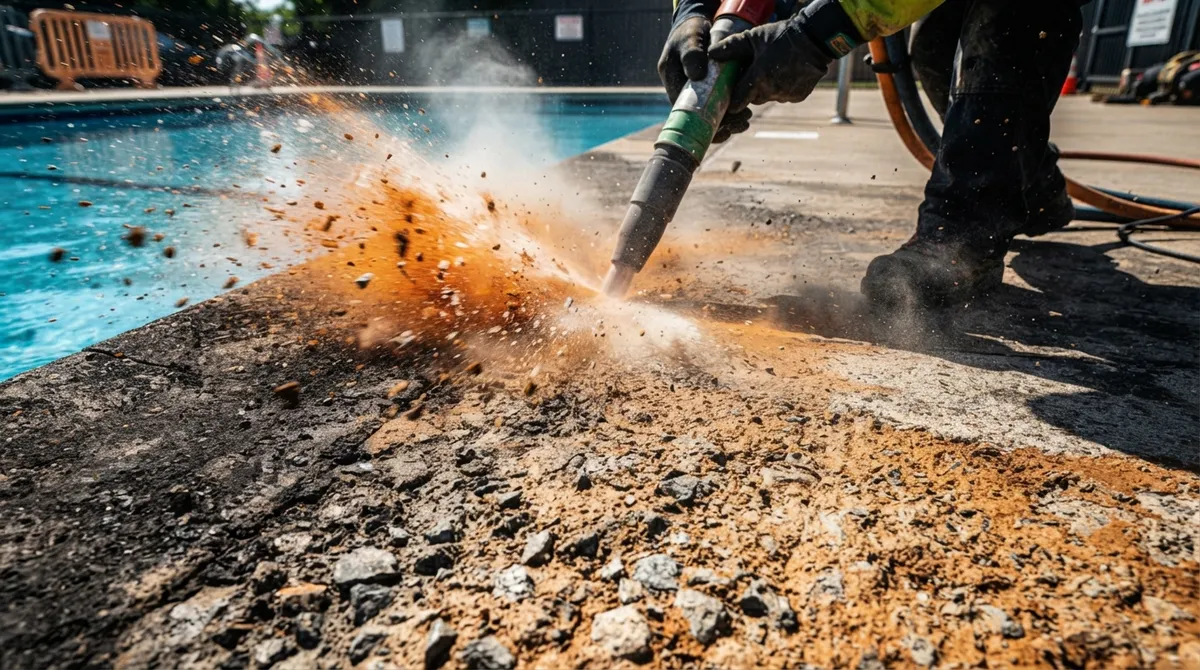
Mobile blasting uses pressurized abrasive media, things like sand, soda, or garnet, to strip away old coatings and create the right texture for bonding. Unlike pressure washing, which just blasts water at the surface, abrasive blasting actually removes material and profiles the concrete underneath.
Here’s the step-by-step process we follow on most residential pool deck jobs:
Our Step-by-Step Prep Process
- Walkthrough and evaluation. We look at the deck (or you send us photos) to check for cracks, spalling, moisture issues, and old coating type. This tells us the right media for the surface.
- Free written estimate. We give you a clear price the same day. No surprises, no upselling once we’re on site.
- Protect the surrounding area. We tarp off pool equipment, landscaping, windows, and anything nearby that shouldn’t get dusty or scratched.
- Blast the deck. We match media and pressure to your concrete, stripping old paint, sealer, mold, and buildup back to clean, sound material.
- Clean up all residue. Air blowers and vacuums remove abrasive dust and loose debris so the surface is spotless.
- Final inspection. We check the surface profile and flag any remaining cracks or weak spots for repair before resurfacing begins.
Once we’re done, your deck is ready to prime and coat. That’s the whole goal, a clean, stable, properly profiled surface that gives your new finish the best possible shot at lasting for years.
Blasting vs. Pressure Washing vs. Acid Etching
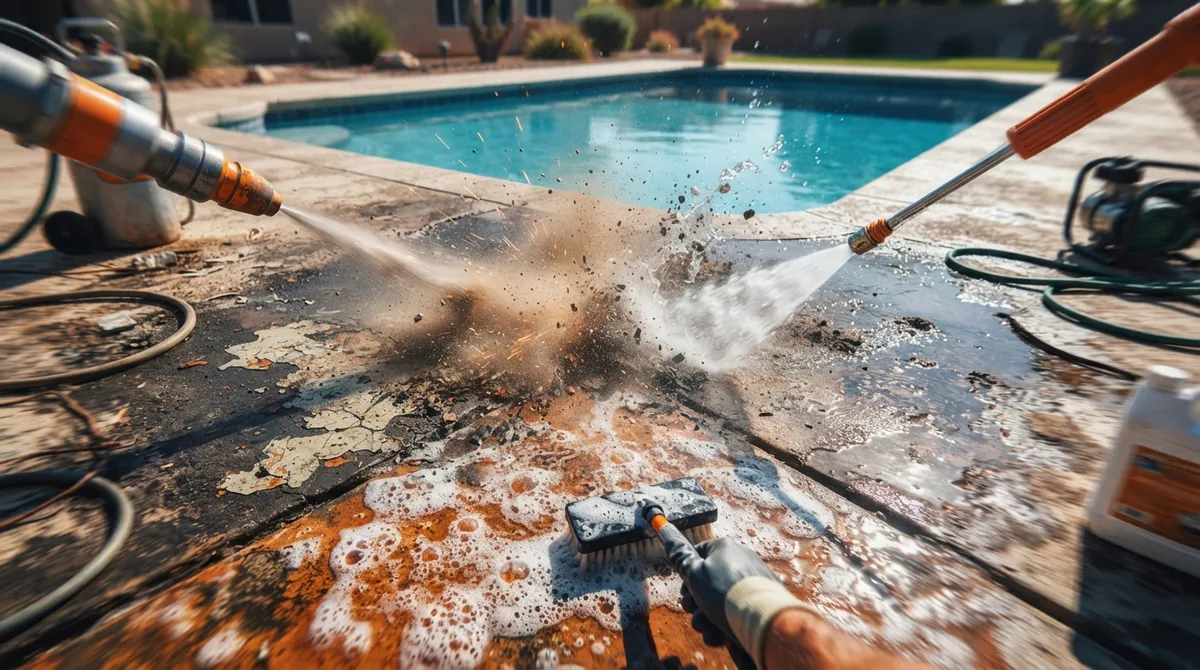
People often ask us why they should pay for blasting when pressure washing seems cheaper, or why not just use acid etching like the old-school method. Here’s how they stack up.
| Method | Removes Old Coatings | Creates Bonding Profile | Handles Mold/Mildew | Moisture Risk |
|---|---|---|---|---|
| Pressure Washing | Partial, often incomplete | No | Poor, tends to spread it | Low |
| Acid Etching | Light coatings only | Minimal, inconsistent | Fair | High, needs neutralizing |
| Mobile Abrasive Blasting | Up to 99% in one pass | Yes, precise CSP profile | Excellent | Low, dry process |
That difference in bond strength isn’t just talk either. Surfaces prepped with abrasive blasting show 30-50% higher bond strength for new overlays compared to acid etching alone. And since blasting is a dry process, there’s no need for neutralizing chemicals afterward, which also means less risk of moisture getting trapped in your slab.
Why Blasting Handles Contaminants Better
Oil stains, mold, mildew, and old rubberized coatings are stubborn. Pressure washing might knock the surface stain down, but it often pushes contaminants deeper into the pores of the concrete. Blasting physically strips that top layer away completely, taking the problem with it.
What Surface Profile Actually Means for Your Deck
You might hear us talk about “surface profile” or CSP (Concrete Surface Profile). This is basically how rough or textured the concrete is after prep. Think of it like sandpaper grit, but for your pool deck.
Too smooth, and the new coating slides right off over time. Too rough, and it can telegraph through thin coatings or waste material. Our job is finding that sweet spot so your resurfacing material locks in mechanically instead of just sitting on top.
Common Surface Profile Goals by Coating Type
- Thin decorative overlays typically need a light to medium profile
- Thick structural overlays need a more aggressive profile for grip
- Epoxy or urethane coatings usually want a moderate, consistent texture
- Cool deck or textured acrylic finishes need enough roughness to hold the texture material
We adjust our media and pressure based on what your resurfacing contractor plans to apply. This is part of what we mean when we say we match the blast to your surface, not the other way around.
Handling Cracks, Spalling, and Weak Spots
Every old pool deck has a few problem areas. Spalling looks like flaking or crumbling concrete, usually caused by moisture and freeze-thaw cycles, or in Florida’s case, chemical exposure and heat stress.
Blasting actually helps here too. It removes the top layer of weak, damaged concrete, exposing the sound material underneath. This lets your resurfacing contractor see exactly what needs patching before the new coating goes on, instead of guessing what’s hiding under old paint.
Why This Step Can’t Be Skipped
- Weak spots get exposed instead of hidden under new coating
- Contractors can patch and level before the finish coat, not after
- Moisture testing becomes accurate since the true surface is exposed
- The final coating adheres evenly across the whole deck, not just the solid areas
For commercial pool decks especially, we recommend a moisture vapor transmission (MVT) test after blasting and before resurfacing. This step catches hidden moisture problems that could otherwise ruin a brand new coating job within months.
What Media Is Best for Pool Deck Blasting
Not all abrasive media is created equal, and picking the right one matters for both results and safety. Here’s a quick breakdown of what we typically use on residential and commercial pool decks.
| Media Type | Best For | Surface Impact |
|---|---|---|
| Sand | Heavy coatings, thick paint, deep stains | Aggressive, fast removal |
| Soda | Delicate concrete, decorative finishes | Gentle, low-damage risk |
| Garnet | Dense concrete, commercial pool decks | Moderate to aggressive, reusable |
| Dustless Media | Enclosed or occupied areas | Controlled, minimal airborne dust |
We choose media based on your deck’s age, coating history, and how aggressive the profile needs to be. It’s part of why we always start with a walkthrough instead of guessing over the phone.
How Long Does Pool Deck Prep Take
This is one of the most common questions we get, and the answer depends on square footage and how many coatings need to come off. As a general guide, mobile blasting crews can typically prep around 2,000 square feet of pool deck, including cleanup and minor repairs, in about three days.
Smaller residential decks often move faster since there’s less material to remove. Commercial pool decks with multiple coating layers or heavy contamination take a bit longer. Either way, we always give you a realistic timeline upfront as part of your free estimate.
Factors That Affect Prep Time
- Total square footage of the deck
- Number of old coating layers
- Amount of cracking or spalling present
- Access to the site, tight spaces slow things down
- Weather conditions on blasting day
Because we’re fully mobile and self-contained, we don’t need your power or water hookups to get started. That alone saves time compared to setups that require running extension cords or hoses across your yard.
Why Homeowners and Contractors Trust Mobile Blasting
We’ve worked on pool decks across Tampa, Clearwater, Sarasota, and out toward Orlando and Fort Myers, and the story is usually the same. Homeowners want their pool area looking fresh again, but they don’t want to pay for a resurfacing job that fails in a year.
Our crew shows up, protects your landscaping and pool equipment, and gets straight to work. You’re not stuck explaining the job twice to a salesperson and then a crew, because you talk to the people doing the work from the very first call. If you’re curious what past clients think, feel free to see what our customers are saying about us on Google.
For homeowners weighing blasting against other prep methods, our article on sandblasting vs. pressure washing for concrete breaks down the differences even further. And if you’re dealing with a driveway or patio alongside your pool deck, check out our guide on concrete sandblasting done right.
Getting Ready for Your Pool Deck Blasting Appointment
A little prep on your end helps things go smoothly on blasting day. Here’s a simple checklist:
- Clear furniture, planters, and toys off the deck surface
- Cover or remove pool accessories like ladders and skimmers if possible
- Let us know about any pets or kids’ play areas nearby
- Point out any known cracks, soft spots, or previous repairs
- Confirm gate or side yard access for our equipment
We’ll handle the rest, including containing dust and protecting nearby surfaces like windows, siding, and landscaping. This is standard for every job, whether it’s a small residential deck or a larger commercial pool area. You can browse examples of past work in our project gallery to see the kind of transformation we’re talking about.
Ready to Get Your Pool Deck Prepped Right
Resurfacing your pool deck is a great investment, but only if the prep work is done properly first. Mobile abrasive blasting strips away old coatings, mold, and weak concrete, and leaves behind a surface that’s actually ready for a new finish to bond and last. Skip the guesswork and the temporary fixes, and start your project off on solid ground.
If you’re in Tampa Bay, Orlando, Ocala, Fort Myers, or anywhere along the central Florida corridor, we’d love to take a look at your project. Reach out today to get a free estimate for your pool deck prep, or give us a call to talk through your specific situation. We’re fully insured, fully mobile, and ready to get your deck back to clean, sound material and ready for the next step.
FAQs
Q: How does abrasive blasting improve the bond of new pool deck coatings compared to pressure washing?
A: Great question, and it’s one we hear a lot! Pressure washing just rinses the surface, but blasting actually removes old material and roughens the concrete so new coatings can grip on tight. That extra bite is why blasted surfaces show significantly stronger adhesion down the road.
Q: What is the ideal surface profile created by mobile blasting for pool deck resurfacing?
A: It depends on the coating you’re planning to apply, but most resurfacing jobs want a light to moderate texture, kind of like fine sandpaper. We adjust our media and pressure to hit that sweet spot every time, so nothing’s too smooth or too rough.
Q: Can mobile blasting remove old epoxy or rubber coatings from a pool deck without damaging the concrete?
A: Yes, absolutely! We pick media and pressure based on your deck’s specific coating and condition, so we strip the old stuff without chewing into good concrete underneath. It’s all about matching the blast to the surface, not blasting everything the same way.
Q: Is abrasive blasting a better option than acid etching for removing mold and mildew from pool decks?
A: In most cases, yes. Acid etching can leave residue behind and needs neutralizing afterward, while blasting physically removes the contaminated layer completely. It’s a cleaner, drier process with a lot less risk of trapped moisture.
Q: How long does it take to prep a standard residential pool deck using mobile blasting services?
A: For a typical residential pool deck, we’re often looking at one to a few days depending on size and how many old coatings need to come off. We’ll always give you a clear timeline as part of your free estimate, so there are no surprises.





