
Key Takeaways
-
Aluminum is softer than steel and requires gentler blasting settings—avoid heavy pressure, wrong media, or aggressive techniques that can gouge, warp, or contaminate the surface with foreign particles.
-
Never use ferrous abrasives like steel grit, steel shot, or coal slag on aluminum, as they embed iron particles that cause contamination and galvanic corrosion, especially critical for boats and outdoor equipment.
-
Angular abrasives like garnet and aluminum oxide create proper coating profiles (2-4 mil), while softer media like soda or walnut shell work only for light cleaning; match media to your alloy, thickness, and coating requirements.
-
Adjust pressure, nozzle distance, media size, travel speed, and angle together rather than following a single pressure number; start low and test a small hidden area first to verify profile and avoid damage.
-
Coat aluminum within the manufacturer's recommended window after blasting, since bare aluminum rapidly re-oxidizes; remove all blast dust, avoid touching with bare hands, and ensure the surface reaches the target profile specified by your coating maker.
-
Blasting removes oxidation layers, oil, salt, and old coatings while creating the light texture needed for coating adhesion; proper prep is essential because coatings only bond as well as the surface underneath them.
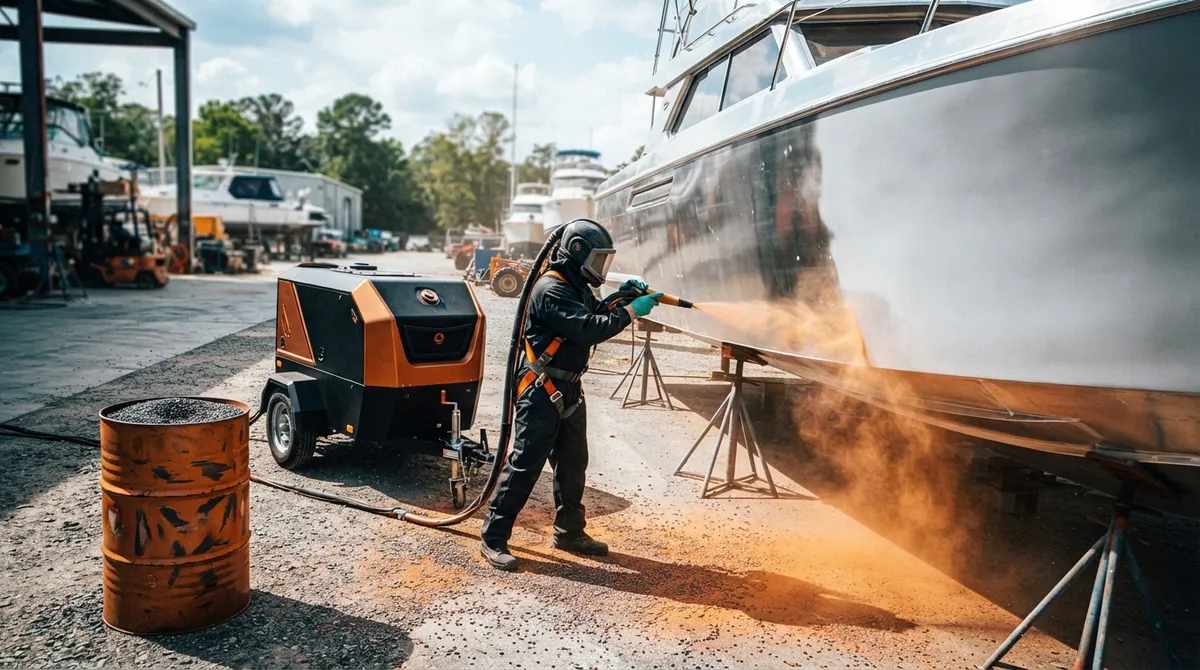
Aluminum looks tough, but it’s actually a soft metal. That’s why aluminum surface prep takes a lighter touch than steel. Blast it too hard or with the wrong media, and you can gouge it, warp it, or leave bad particles stuck in the surface. Do it right, and your paint, powder coat, or marine coating bonds tight and lasts through Florida’s heat, humidity, and salt air.
If you have an aluminum boat, trailer, railing, or equipment that needs to be stripped and prepped, you’re in the right place. In this guide, we’ll walk through what good aluminum surface prep looks like, which media work best, what to avoid, and how the whole process goes when we bring the blasting to you. Grab a coffee, and let’s dig in.
Why Does Aluminum Need Special Care Before Coating?
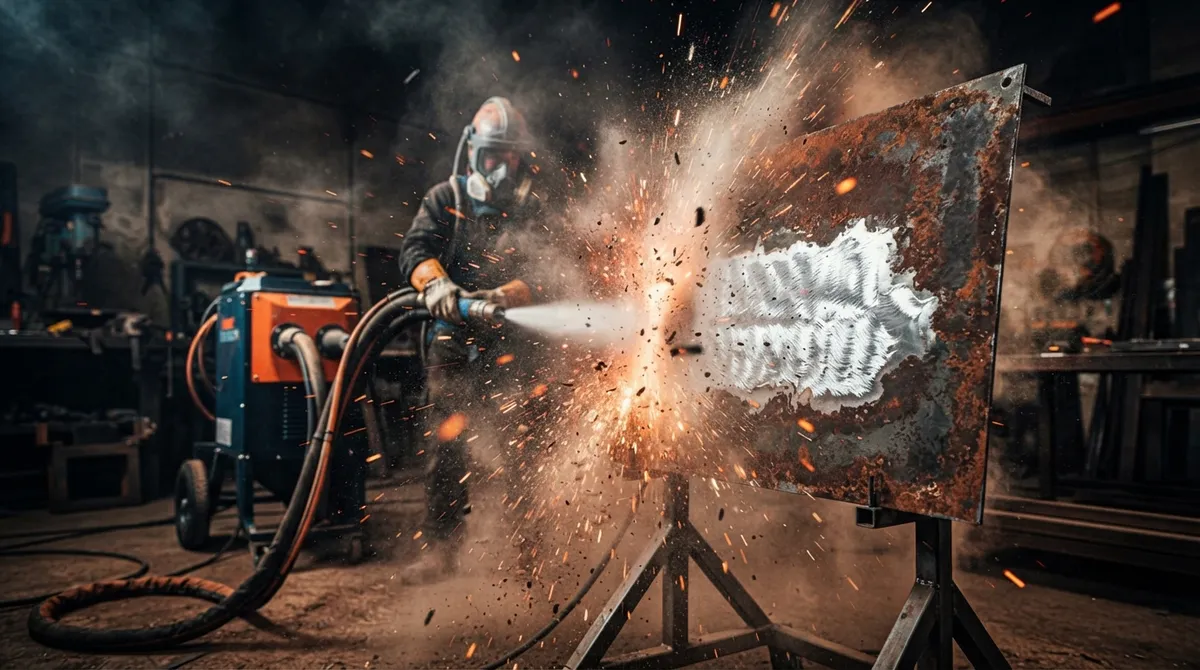
Aluminum is softer than steel. It also reacts to things that steel shrugs off. A heavy hand can leave dents, deep scratches, or warped panels. The wrong abrasive can leave tiny bits of foreign metal behind, and that can cause corrosion later.
A coating is only as good as the surface underneath it. Paint and powder coat need a clean, lightly textured surface to grab onto. Aluminum also grows a thin oxide layer that can get in the way of a good bond. Proper aluminum surface prep removes that layer, along with old coatings, oil, salt, and buildup.
Here’s what good prep needs to deliver:
- Clean metal: free of oil, grease, salts, dirt, and loose coating.
- The right surface profile: a light texture that helps the coating grip.
- No damage: no gouges, warping, or excess metal removal.
- No contamination: no embedded particles that cause corrosion.
We match the blast to your surface, not the other way around. That’s the whole idea behind aluminum work.
What Blasting Media Works Best for Aluminum?
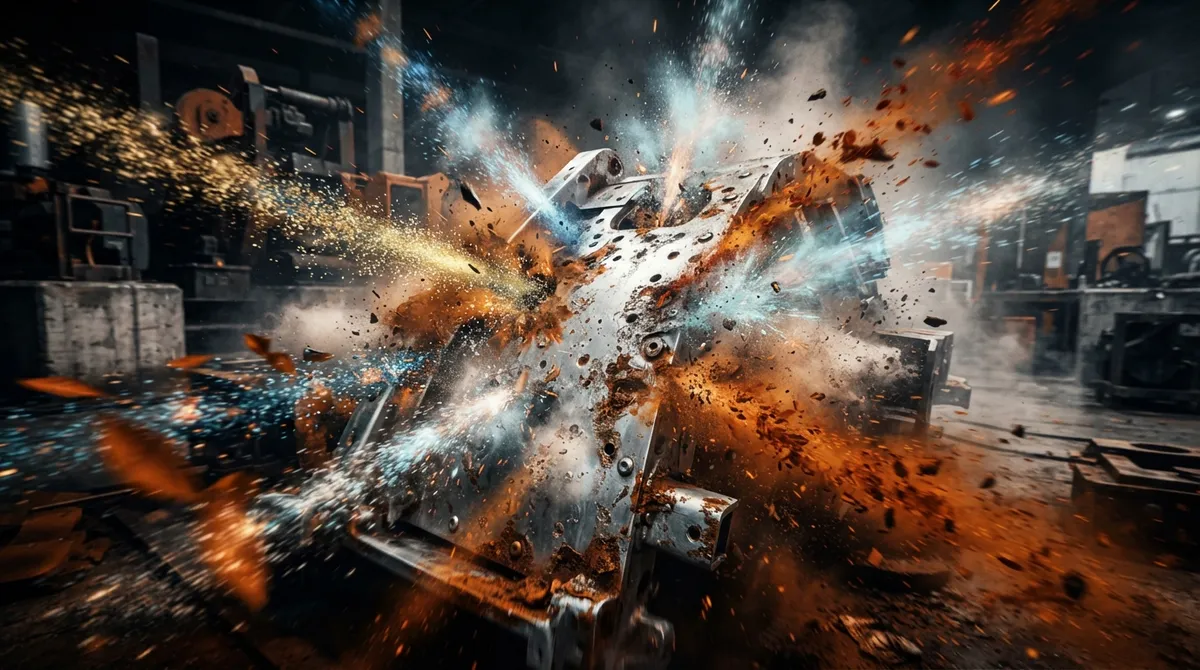
The right media for the job depends on the alloy, the thickness, and what you’re removing. A technical review of aluminum preparation points to angular abrasives like garnet and aluminum oxide as common choices for creating a coating anchor profile. Softer media, like soda or walnut shell, work well when you only need to clean or remove light coatings.
| Media | Best For | Things to Watch |
|---|---|---|
| Garnet | Creating a profile for paint or powder coat | Choose the right grit and test first |
| Aluminum oxide | Coating removal and profile on sturdier parts | Can be aggressive on thin panels |
| Soda (sodium bicarbonate) | Gentle cleaning and light paint removal | Won’t create much profile |
| Walnut shell | Delicate parts and light cleaning | Limited for heavy coatings |
| Glass beads | Cleaning and a peened, satin finish | Round shape may not give the profile your coating needs |
If you want to compare abrasives more closely, our post on aluminum oxide blasting vs. sand breaks down how each one behaves. For delicate jobs, take a look at how to choose between soda blasting and sandblasting.
What Surface Profile Should Aluminum Have?
Surface profile is the tiny peak-and-valley texture blasting leaves behind. Coatings grip that texture. Too smooth, and the coating can peel. Too rough, and you’ve removed more metal than you needed to.
One technical review reports that 30/40 mesh garnet or aluminum oxide can produce roughly a 2 to 4 mil profile in some applications. That’s an example, not a rule for every job. Your coating maker’s data sheet and your project spec should set the target.
For nonferrous metals like aluminum, AMPP/SSPC SP 16 covers brush-off blast cleaning. AMPP summarizes it as calling for a minimum profile of 0.75 mil (19 micrometres). Whether that standard fits your job depends on your project specification and the coating manufacturer’s requirements. Always confirm the current edition.
The takeaway is simple. Get the profile your coating asks for, and no more.
How Much Pressure Is Safe for Aluminum?
This is the question we hear most, and the honest answer is: it depends. Published guidance varies. One naval reference cited in a technical review reports 80-grit aluminum oxide or garnet at 65 psi, while other sources suggest different pressures and standoff distances. There’s no one-size-fits-all recipe.
Instead of chasing a magic number, a careful blaster adjusts these things together:
- Pressure: start low and work up only as needed.
- Nozzle distance: back off to soften the impact.
- Media size: finer media is gentler on thin metal.
- Travel speed: keep moving so heat and impact don’t build in one spot.
- Angle: a lower angle can reduce peening and distortion.
Thin panels, like boat skins, tanks, or sheet-metal trim, need the most caution. Thicker castings and extrusions can usually take a bit more.
What Should You Never Blast Aluminum With?
Some media just don’t belong on aluminum. Ferrous abrasives, like steel grit or steel shot, and coal slag can leave iron-bearing particles embedded in the surface. Those particles can create contamination and contribute to galvanic corrosion, which is the last thing you want on a boat or outdoor railing.
Here’s a quick list of things to steer clear of:
- Steel grit and steel shot: can embed iron in the surface.
- Coal slag: may leave contaminants behind.
- Reused or dirty media: can compromise the whole prepared surface.
- Overly aggressive media on thin panels: risks gouging and warping.
Glass beads deserve a special note. They clean well and leave a nice peened finish. But their round shape may not create the angular profile your coating spec calls for. Crushed glass results can vary, too. We verify the finished surface rather than assuming any glass media will work.
Steel is a different story, where stronger abrasives are often the right call. If you’re curious, see our guide on steel shot blasting to understand why it fits steel and not aluminum.
What Are the Steps for Aluminum Surface Prep?
Blasting is only one part of good aluminum surface prep. Cleaning before and after matters just as much. Here’s the general flow we follow:
- Walkthrough: we look at the alloy, condition, and coating you plan to apply. Photos work too.
- Pre-clean: remove oil, grease, salt, and dirt so they don’t get driven into the metal.
- Test patch: we blast a small, hidden area to check the profile and look for damage.
- Blast and strip: we remove old coatings and oxidation using the chosen media and settings.
- Remove dust: we clear all blast residue from the surface.
- Inspect: we check the surface for cleanliness, profile, and any low spots or damage.
- Ready to coat: the surface is clean and ready for the next step.
Timing matters, too. Bare aluminum starts forming oxide again quickly, so plan to prime or coat soon after blasting. Your coating manufacturer can tell you the recommended window.
For a deeper look at how blasting fits into a bigger prep plan, check out 14 surface prep steps before commercial coating.
Where Does Aluminum Blasting Come Up in Florida?
Florida is rough on aluminum. Salt air, sun, and humidity all take a toll. That’s why we see so many aluminum jobs around Tampa Bay and central Florida. Common projects include:
- Boats and trailers: aluminum hulls, jon boats, trailers, rails, and marine hardware. See our marine blasting services.
- Automotive parts: wheels, rims, intake parts, and trim. Learn more about automotive blasting.
- Fences, gates, and railings: aluminum fencing with flaking paint or oxidation. See our residential blasting page.
- Equipment and fabrication: tanks, panels, and weld prep. Check our industrial blasting services.
Since we come to you, you don’t have to haul a big trailer or a full boat to a shop. Our rig is fully mobile and self-contained, so we work dockside, in a driveway, at a shop, or on a job site without needing your power or water. Want to compare the two approaches? Read mobile vs. shop sandblasting.
How Do We Keep Mobile Aluminum Blasting Safe and Clean?
Blasting on-site means we think about dust, debris, and the people and property around the job. OSHA recommends safer media substitution where it makes sense, along with isolation or containment, ventilation, good work practices, and proper PPE. It also notes that alternative abrasives can still create hazardous dust or contaminants, so safe media isn’t a free pass.
Here’s how that plays out on our jobs:
- We contain the mess: we protect the surrounding area from overspray and debris.
- Dustless options: dustless blasting cuts airborne dust for tight or occupied spaces.
- Right gear: proper PPE for the crew and safe practices for everyone nearby.
- Fully insured: so you can relax while we work.
To understand how dust is handled, read our post on sandblasting dust control, or learn what makes dustless blasting so effective. If you’re new to the basics, here’s a quick overview of what is sandblasting.
Can You DIY Aluminum Surface Prep?
You can hand-sand small pieces, and sometimes that’s fine. But hand-sanding tends to miss oxidation and old coating in seams, corners, and pitted spots. It’s also slow on anything big, like a boat hull or a long fence.
Blasting takes the whole surface back to clean, sound material at once. The key is doing it with the right media and settings so the aluminum stays healthy. A pro who tests first, adjusts on the fly, and inspects the finished surface saves you from costly rework.
If cost is on your mind, our guide on how much sandblasting estimates really cost can help you plan. You can also see examples of finished work in our gallery.
Why Choose Blastworx for Aluminum Prep?
We’re an owner-operated mobile blasting company serving Tampa Bay and the central Florida corridor, including Tampa, Clearwater, Sarasota, Ocala, Orlando, and Fort Myers. When you call, you talk to the people doing the work. We give you a clear, written estimate the same day, and the price we give is the price you pay.
Curious what neighbors think? Visit us on Google — see what our customers are saying about us. You can also check our service areas to see if we cover your town.
One quick note: we strip and prep only on most jobs, so your painter, coating crew, or shop handles the final coat. That way you get a clean surface, ready to prime and coat.
Ready to Get Your Aluminum Back to Clean, Bare Metal?
Good aluminum surface prep comes down to a few simple ideas: use the right media, keep the settings gentle, avoid contamination, and inspect before you coat. Do that, and your finish bonds tight and lasts. Skip it, and you’ll be redoing the job sooner than you’d like.
Have an aluminum boat, trailer, fence, or piece of equipment that needs prep? Get a free estimate today, or give us a call at 813-380-8092. You can text too. We come to you, and we’ll match the blast to your surface.
FAQs
Q: Can aluminum be abrasive blasted without damaging it?
A: Yes, it can, as long as the media and settings are matched to the alloy and thickness. Aluminum is softer than steel, so we start gentle, test a small area first, and adjust pressure, distance, and speed. That keeps gouging and warping off the table.
Q: What blasting media is best for aluminum before painting or powder coating?
A: Angular abrasives like garnet and aluminum oxide are commonly used to create the profile coatings need. Softer media like soda or walnut shell work for cleaning and light stripping. The best choice depends on your alloy, your coating, and the profile your spec calls for.
Q: Can you use steel grit, coal slag, or glass beads on aluminum?
A: Steel grit and coal slag are best avoided because they can embed iron-bearing particles that lead to contamination and corrosion. Glass beads can clean and leave a satin finish, but their round shape may not give you the profile a coating needs. We always check the finished surface before calling it ready.
Q: What is AMPP/SSPC SP 16 and does it apply to aluminum?
A: SP 16 is a brush-off blast cleaning standard for nonferrous metals, and AMPP summarizes it as calling for a minimum 0.75 mil profile. Whether it applies to your job depends on your project specification and your coating manufacturer’s instructions. When in doubt, check the current edition and ask your coating maker.
Q: How should aluminum be handled after blasting and before coating?
A: Remove all dust, inspect the surface, and coat it soon, since bare aluminum starts to oxidize again quickly. Skip touching it with bare hands, since skin oils can hurt adhesion. Your coating manufacturer can tell you the best window for priming.





