
Key Takeaways
-
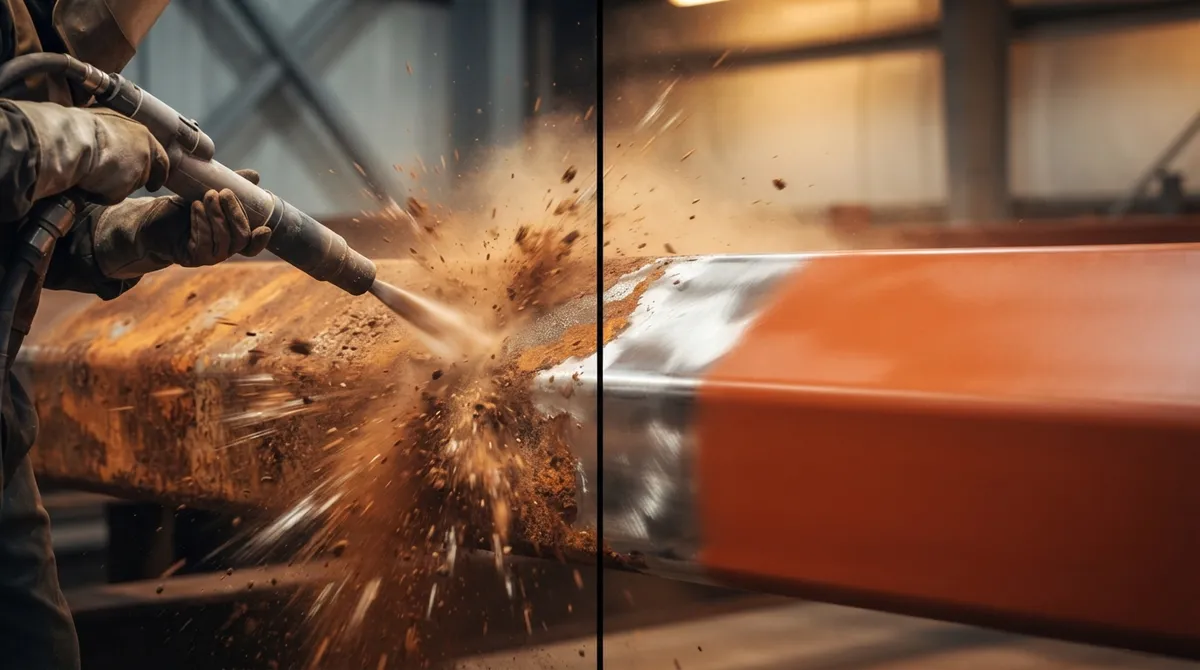
Choose the correct blasting media for your rust type—steel grit for heavy rust, aluminum oxide for tough coatings, garnet for general removal, and softer media like soda for delicate surfaces—to avoid surface damage and achieve proper coating adhesion.
-
Mobile blasting eliminates hauling costs and downtime by bringing fully self-contained equipment to your location for on-site work on structural steel, trailers, gates, and equipment that cannot be moved.
-
Not all jobs require bare metal; match your surface cleanliness grade (like SSPC-SP 10 or SP 5) to your coating requirements and painter's specifications before blasting begins.
-
Prevent flash rust after blasting by applying primer or coating quickly, using compatible rust inhibitors, and managing water control—prompt finishing is more critical than the blasting method itself.
Rust is one of those problems that never takes a day off, especially here in Florida. The heat, the humidity, and the salt air all team up to chew through metal faster than most people expect. If you have a rusty trailer, gate, boat hardware, or piece of equipment, you have probably wondered what the best fix really is.
That is where rust removal blasting comes in. It sounds simple, but a few smart choices make the difference between a finish that lasts and one that peels in a year. In this guide, we walk you through seven facts that help you plan the job the right way.
At Blastworx, we are an owner-operated crew based in Tampa. We come to you, and our rig is fully mobile and self-contained. So whether you are in Tampa, Orlando, Ocala, or Fort Myers, this guide will help you know what to ask for and what to expect.
1. Rust Removal Blasting Comes to You
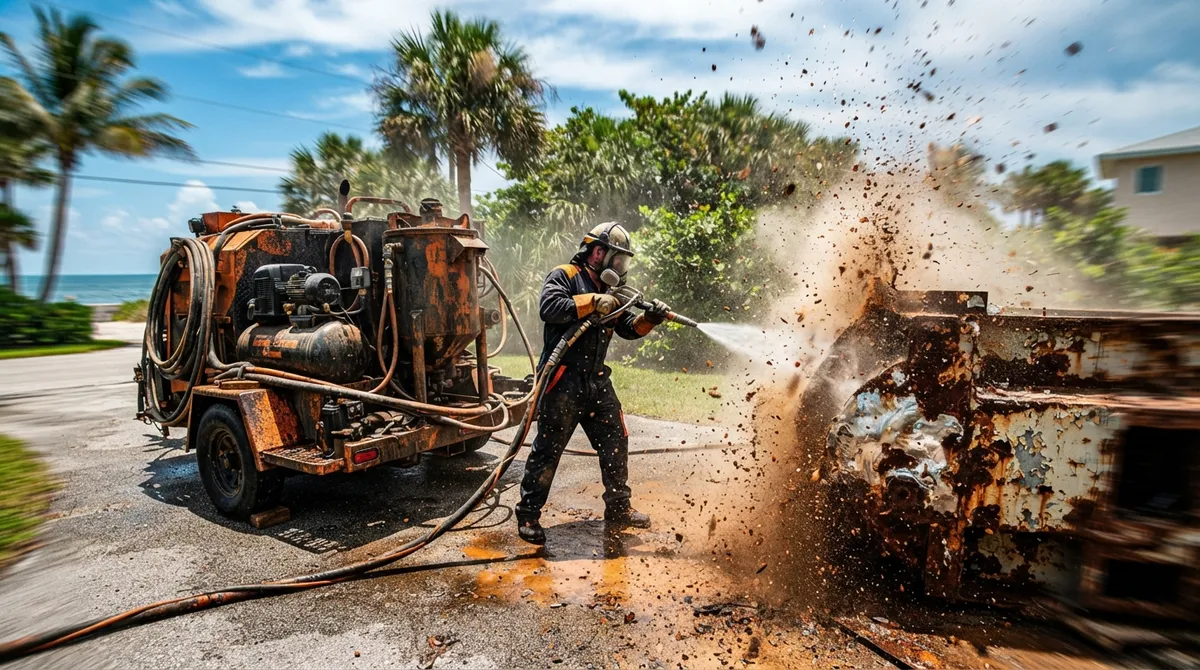
Mobile rust removal blasting brings the equipment to your location. You do not need to haul a big gate, tank, or trailer to a shop. We work dockside, in a driveway, at a shop, or on a job site without needing your power or water.
This matters most for items that cannot move. Think of structural steel, fixed railings, large equipment, and vehicles that do not run. On-site work saves time, saves hauling costs, and keeps your project moving.
Here are some of the things a mobile crew can blast on site:
- Structural steel and fabricated frames
- Trailers, boat hardware, davits, and rails
- Fences, gates, and wrought iron railings
- Tanks, vessels, and heavy equipment
- Vehicle frames, wheels, and undercarriages
Curious how this compares to hauling parts to a shop? Our guide on mobile rig vs. drop-off shop breaks it down nicely.
2. The Right Media Makes All the Difference
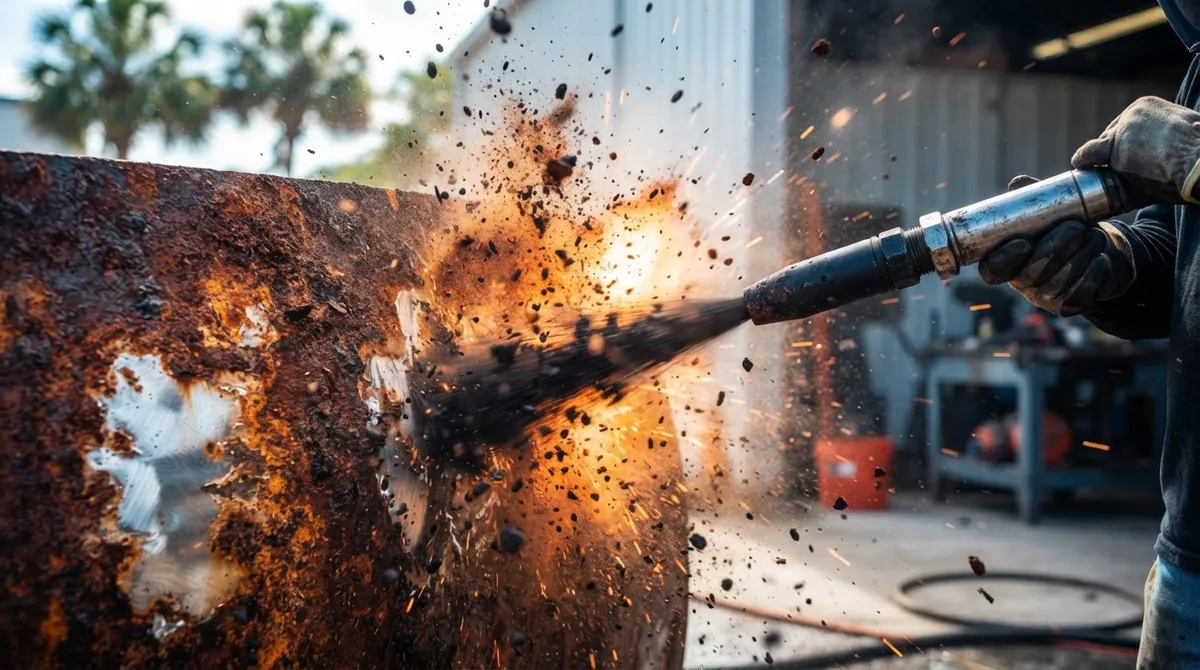
Not every blast is the same. The abrasive you choose changes how fast rust comes off and how the metal looks afterward. We match the blast to your surface, not the other way around.
Harder, coarser media removes thick rust and mill scale quickly. Softer media is gentler on delicate parts. Picking wrong can damage the surface or leave it too rough.
| Media Type | Best For | Things to Know |
|---|---|---|
| Steel grit or shot | Heavy rust, mill scale, structural steel | Fast and aggressive, leaves a strong profile |
| Aluminum oxide | Tough coatings and hard metals | Cuts quickly, good for a clean finish |
| Garnet | General rust and paint removal | Balanced cutting power |
| Crushed glass | Moderate rust on steel | Clean-cutting with a moderate profile |
| Soda or walnut shell | Fiberglass, gelcoat, thin or delicate surfaces | Gentle, but not for heavy rust |
Want to dig into the differences? Check out aluminum oxide blasting vs. sand and our rundown on steel shot blasting for more detail.
3. You Do Not Always Need Bare Metal
Here is a fact that surprises many people. Not every job needs the metal taken all the way down to shiny bare steel. The right level of cleanliness depends on the coating that goes on next.
Industry standards describe different cleanliness grades. For example, SSPC-SP 10/NACE No. 2 is called near-white metal and allows a little light staining. SSPC-SP 5/NACE No. 1 is white metal and requires removing all visible rust, mill scale, and coatings.
These are defined grades, not a simple percentage of rust removed. Your project spec and the coating maker’s instructions decide the target. If you are working with a painter or coating crew, ask them what grade they need before we start.
For a deeper look at this topic, read how metal surface preparation blasting really works.
4. Blasting Beats Hand Tools for Serious Rust
Wire brushes and sanders have their place. But they often miss rust hiding in seams, corners, welds, and pits. A coating is only as good as the surface underneath it.
Blasting takes the whole surface back to clean, sound material all at once. That helps the next coat bond properly. It also holds up better against Florida’s heat, humidity, and salt air.
Here is why many owners choose blasting over hand work:
- It reaches into tight corners and pitted areas.
- It cleans large areas far faster than sanding.
- It creates a consistent surface profile for coatings to grip.
- It saves labor hours on big or complex parts.
We cover this in more depth in blasting vs. hand tools: best steel prep method.
5. Wet and Dustless Blasting Help, But Watch for Flash Rust
Wet or dustless blasting mixes water with the abrasive. This helps suppress airborne dust compared with dry blasting. That makes it a great fit for indoor work, active job sites, and areas near other equipment.
There is one catch. Water and bare steel do not mix well for long. Freshly blasted metal can develop a light orange haze called flash rust, sometimes within hours in humid air. Wet blasting does not automatically prevent it.
A good operator manages the water and the spent abrasive. Compatible rust inhibitors and quick drying or coating can also help. Prompt finishing is the real key.
Not sure which method fits your job? Our comparison of wet sandblasting vs. dry can help, and you can learn why dustless blasting is so effective too.
6. Safety and Cleanup Are Part of the Job
Blasting creates dust, and that dust can be harmful. OSHA notes that both the abrasive and the surface being blasted can add hazardous contaminants. Old coatings may also contain toxic materials like lead.
OSHA points to several key controls:
- Substituting safer abrasives where possible
- Containing the work area
- Using ventilation and dust control
- Assessing exposure to workers
- Wearing the right respiratory protection
For context, OSHA reports that about 2.3 million U.S. workers are exposed to silica on the job. That is a broad figure, not just blasters, but it shows why dust control matters. Silica-free media and smart containment go a long way.
We contain the mess and protect the surrounding area. That means landscaping, windows, pools, and nearby equipment stay safe. Learn more in how pros handle sandblasting dust control.
If you want a general background on the process itself, this overview of what is sandblasting is a handy read.
7. Prep and Timing Decide How Long Your Finish Lasts
Blasting alone does not remove everything. Oil, grease, and salts can stay on the metal, and they can ruin a new coating. These contaminants should be dealt with before the blast starts.
After blasting, the dust and spent abrasive need to be cleared away. The surface should be checked against the cleanliness and profile you specified. Then the coating should go on quickly, before flash rust or new dirt shows up.
Our simple four-step process keeps this smooth:
- Walkthrough. Send photos or we come look, and we pick the right media for the surface.
- Free estimate. You get a clear, written estimate the same day. The price we give is the price you pay.
- Blast and strip. We protect the surrounding area, then blast the surface clean at your location.
- Ready to finish. The surface comes out clean and ready for the next step.
We handle strip and prep, and your painter or coating crew handles the finish in most cases. Want a checklist for what comes next? Read 14 surface prep steps before commercial coating and 9 steps to prepare for sandblasting the right way.
Where Rust Removal Blasting Fits Best
Rust shows up everywhere in Florida, so the uses are wide. Here is a quick look at how it applies across our service types.
| Service | Typical Rust Jobs |
|---|---|
| Marine | Trailers, props, cleats, rails, davits, and hardware |
| Automotive | Frames, wheels, body panels, and undercarriages |
| Industrial | Structural steel, tanks, and heavy equipment |
| Commercial | Fleet vehicles, trailers, enclosures, and steel |
| Residential | Fences, gates, railings, and outdoor furniture |
Homeowners will also like our guides on removing rust from a wrought iron fence and removing rust from railings. If you run a business, our structural steel blasting facts are worth a look.
What Affects the Price?
People always ask about cost, and that is fair. Price depends on the size of the job, how thick the rust is, and the media needed. Access, containment needs, and travel also play a part.
The best way to get a real number is a quick look at photos or a site visit. Our guide on how much sandblasting estimates really cost explains what to expect, and you can find our service areas across Tampa Bay and central Florida.
Want to see the results for yourself? Browse our project gallery, or visit us on Google and see what our customers are saying about us.
Ready to Take Rust Back to Clean Metal?
Rust does not fix itself, and painting over it only hides the problem for a little while. Good rust removal blasting gets you back to clean, sound material so your next coat can do its job. Pick the right media, set the right cleanliness target, control the dust, and coat quickly.
We are fully insured, and you talk to the people doing the work. Ready to get started? Get a free estimate today, or give us a call at 813-380-8092. You can text us too. We come to you.
FAQs
Q: What is mobile rust removal blasting and how does it work?
A: It is on-site abrasive blasting that shoots media at a surface to strip rust, mill scale, and old paint. Since the rig comes to you, there is no need to haul big or fixed items to a shop. We match the media and pressure to your surface so it comes out clean and ready for the next step.
Q: Which blasting media is best for removing rust from steel?
A: It depends on the rust and the metal. Steel grit, aluminum oxide, garnet, and crushed glass are common picks for steel, while softer media like soda suits delicate surfaces. We match the blast to your surface, not the other way around.
Q: How do you prevent flash rust after blasting?
A: The best defense is speed. Dry the surface, clear away dust, and get primer or coating on quickly. In humid Florida air, a compatible rust inhibitor can help, but prompt finishing matters most.
Q: Is dustless blasting better than dry blasting for rust removal?
A: Dustless blasting cuts down airborne dust, which makes it great for indoor work and busy job sites. It still needs good water and cleanup control, and flash rust can appear if you wait too long to coat. The best pick depends on your surface, your site, and your finish plan.





