
Key Takeaways
-
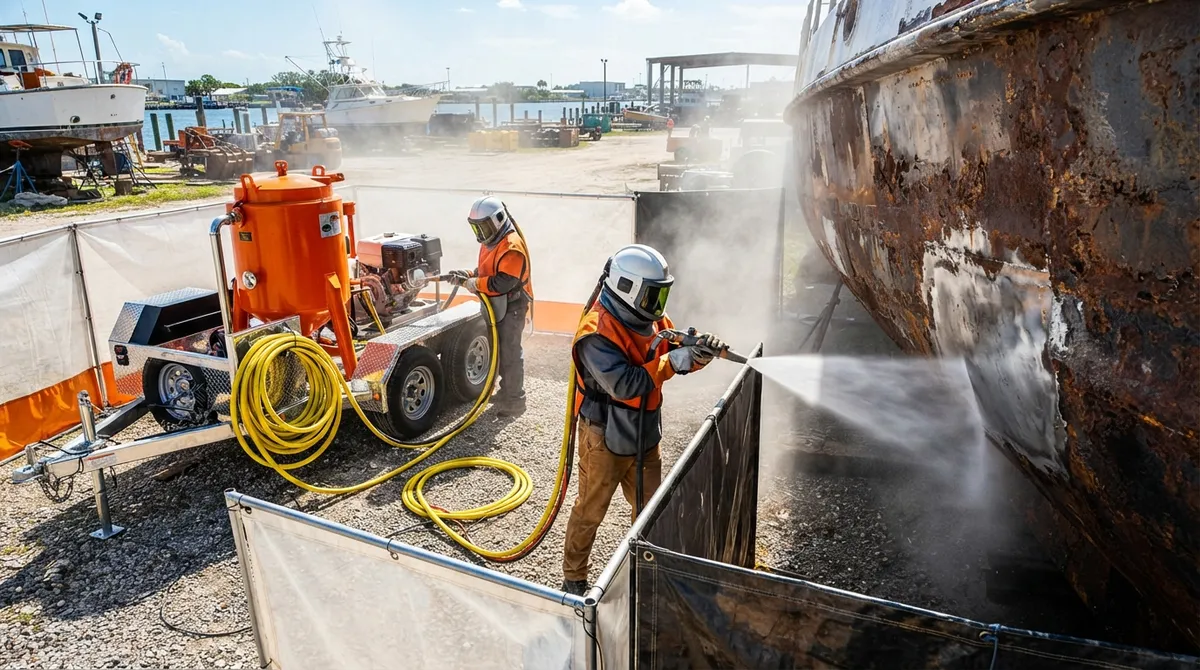
Mobile sandblasting eliminates the need to transport items to a shop; crews bring trailer-mounted equipment directly to your location, saving time and enabling service for large, fixed items like boat hulls, pool decks, and structural steel.
-
Dustless blasting reduces airborne dust by over 90% compared to traditional dry blasting, making it essential for residential areas, HOA communities, and projects near pools or finished surfaces to avoid neighbor complaints.
-
Mobile sandblasting costs $75–$150 per hour for a two-person crew plus a $150–$500 mobilization fee, with larger surfaces priced at $1.50–$7.00 per square foot; always request a written estimate before work begins.
-
Book mobile blasting services at least two weeks in advance for mid-size jobs and three to four weeks for large industrial projects, as crews get heavily booked during Florida’s dry season.
-
Proper surface prep is critical for coating longevity; blasting removes rust and buildup completely from seams and corners, ensuring paint, powder coat, or marine coatings bond properly in Florida’s heat and salt air.
-
Mobile crews typically serve a 50 to 150 mile radius from their base and can handle diverse projects from fleet trailers and automotive restoration to industrial tanks and commercial graffiti removal.
Searching “sandblasting services nearby” usually means one thing: you have rust, paint, or grime that needs to go, and you want it gone without a hassle. But here’s a question most people don’t think to ask first. Do you actually need to haul your item to a shop, or can someone bring the blasting rig straight to you? That single choice affects your price, your timeline, and how much of a headache the whole project becomes.
We’re Blastworx, and we’ve spent years answering this exact question for folks across Tampa Bay and central Florida. Spoiler alert: for most jobs, mobile blasting wins. But let’s walk through the real differences so you can make the right call for your project, not just take our word for it.
What Does “Sandblasting Services Nearby” Really Mean Today?
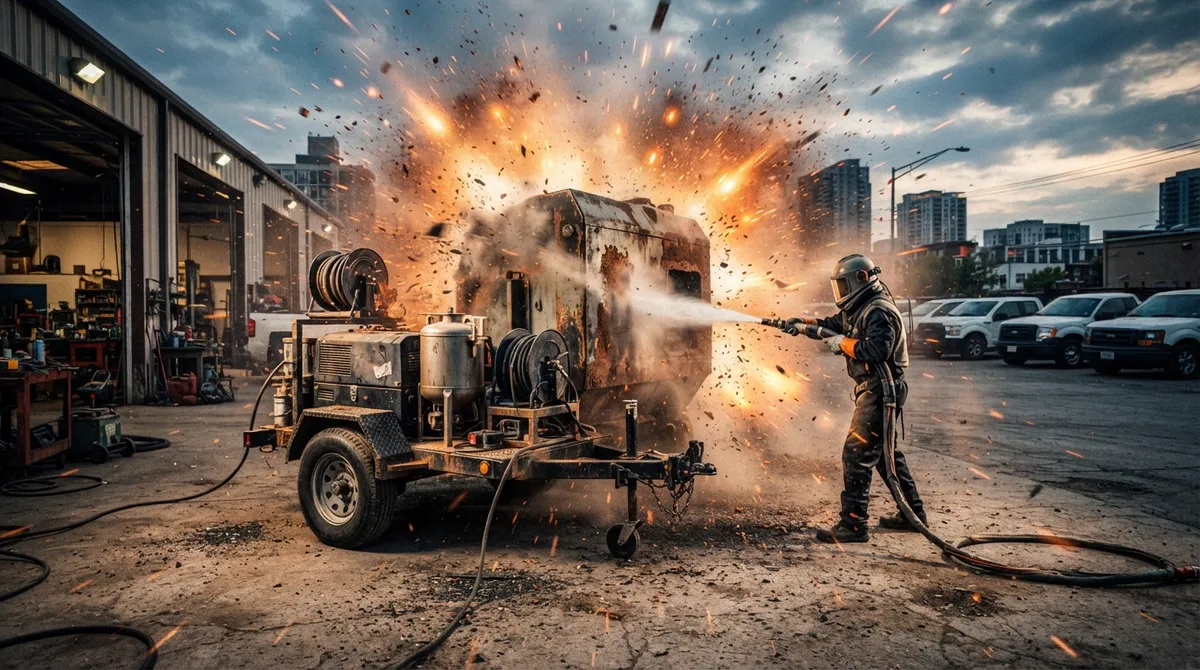
A few years back, this search mostly pointed you to a shop with a bay door and a drop-off counter. These days, it more often leads to a mobile crew with a trailer-mounted rig ready to come to your driveway, dock, or job site. Both options still exist, and both have their place.
The core process is the same either way. What is sandblasting? It’s the use of high-pressure air to fire abrasive media at a surface, stripping away rust, paint, and buildup down to clean material. What changes is where that process happens and who does the traveling.
The Two Main Options You’ll Find
- Traditional shop-based blasting, where you drop off your item and pick it up later
- Mobile blasting, where the crew brings the equipment to your location
- Hybrid setups that offer both, depending on the job size
- DIY rental equipment, which we won’t cover here since it’s a different animal entirely
Mobile Blasting vs. Shop-Based Blasting: The Real Comparison
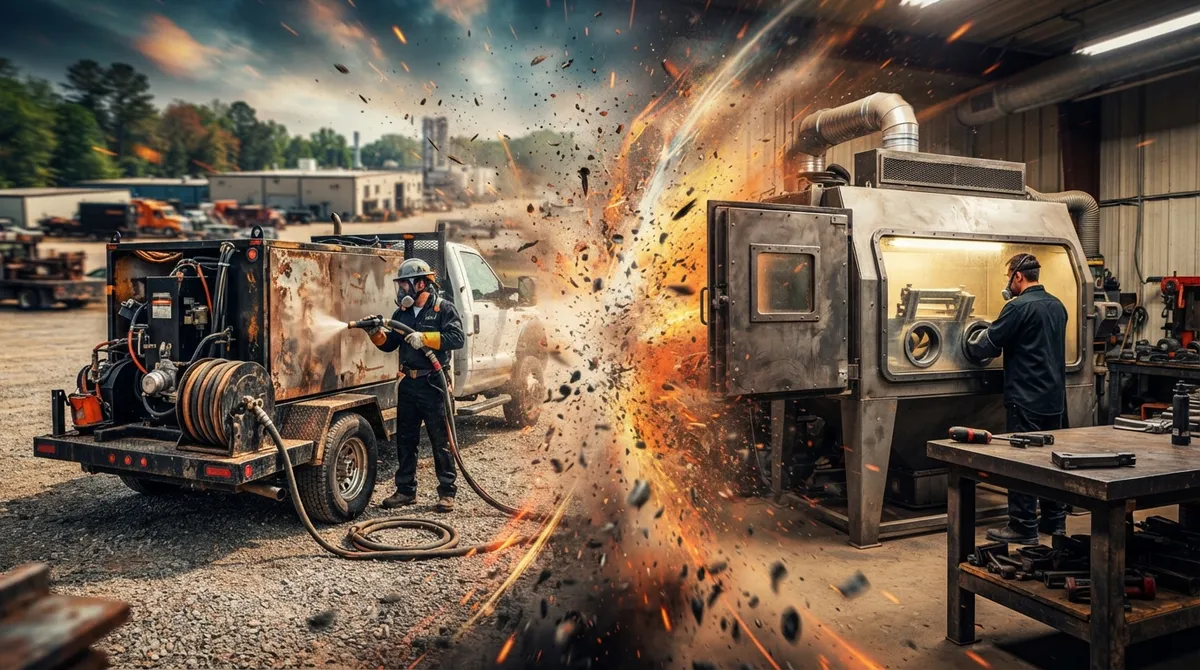
Let’s break this down honestly. Neither option is perfect for every situation, so here’s how they stack up on the things that actually matter to you.
| Factor | Mobile Blasting | Shop-Based Blasting |
|---|---|---|
| Convenience | Crew comes to you, no transport needed | You haul the item, arrange pickup |
| Large or fixed items | Ideal (docks, pool decks, structural steel) | Often impossible to move |
| Dust control | Dustless options reduce airborne dust 90%+ | Varies by shop equipment |
| Turnaround time | Often same-day or next-day for smaller jobs | Can involve wait times in a queue |
| Mobilization fee | $150–$500 depending on distance | Usually none, but transport costs apply |
| Best for | On-site items, homes, boats, fleets, structures | Small parts you can easily transport |
Notice a pattern? If your project involves anything too big, too fragile, or too fixed in place to move, mobile blasting is really your only practical choice. That covers a lot more ground than people expect, from boat hulls and trailers to pool decks and fences.
What a Mobile Blasting Rig Actually Looks Like
People sometimes picture a guy with a hose and a bag of sand pulling up in a pickup truck. The reality is more impressive. A proper mobile rig is a trailer-mounted setup built for serious work.
- A blast pot sized anywhere from 6.5 to 20 cubic feet
- A compressor running between 375 and 1150 CFM depending on the job
- Multiple types of abrasive media for different surfaces
- Hoses, nozzles, and full PPE for the crew
- Containment materials to protect the surrounding area
This is exactly why we say we’re “fully mobile and self-contained.” We bring everything we need, including our own power setup, so your site doesn’t have to supply much beyond access and a level spot for the trailer.
What You Need to Have Ready
- Clear access to the work area for the trailer and crew
- A reasonably level staging spot to park and set up
- Access to a standard 20-amp outlet for lights and small tools
- Any pets, vehicles, or valuables moved clear of the containment zone
- Landscaping or windows nearby flagged so we can protect them
We handle the rest. That’s part of what makes mobile service so much less stressful than a shop drop-off, where you’re often the one figuring out logistics on both ends.
Dustless Blasting: The Residential Game-Changer
If you live in a neighborhood with an HOA or close neighbors, dust matters. Traditional dry blasting can send clouds of abrasive and old paint chips into the air, which nobody wants drifting onto their lanai or into their pool.
Dustless blasting mixes water into the media stream, cutting airborne dust by more than 90% compared to traditional methods. It’s gentler, quieter, and a lot more neighbor-friendly. We cover exactly why this matters so much for local homes in our post on what makes dustless blasting in Tampa so effective.
When Dustless Makes the Most Sense
- Homes in tight residential lots or HOA communities
- Pool decks and patios where overspray could contaminate water
- Jobs near other finished surfaces like siding or landscaping
- Noise-sensitive areas where lower-pressure work is preferred
- Projects requiring extra care around wood trim or delicate materials
How Far Will a Mobile Crew Actually Travel?
This is one of the most common questions we get, and it’s a fair one. Most mobile blasting crews serve a 50 to 150 mile radius from their home base. Beyond that, you’ll usually see a per-mile surcharge or a lodging fee tacked on for multi-day jobs.
We’re based in Tampa and regularly work the whole central Florida corridor, including Ocala, Orlando, and Fort Myers. For the right job, we’ll travel statewide. Check our service areas page to see if we already cover your town, and if you’re not sure, just give us a call to ask.
Bay Area Communities We Frequently Serve
- Tampa and surrounding neighborhoods
- Clearwater and the beaches corridor
- Brandon, Riverview, and Plant City
- Lutz and northern Hillsborough County
- St. Petersburg and Pinellas County
- Sarasota and points south
What Does It Actually Cost?
Pricing depends heavily on the size of the job, the coating being removed, and how tricky the site access is. Here’s a general breakdown based on typical mobile blasting rates.
| Pricing Method | Typical Range | Best For |
|---|---|---|
| Hourly rate (2-person crew) | $75–$150 per hour | Smaller jobs, spot repairs |
| Mobilization fee | $150–$500 | Covers travel and setup, charged once |
| Square-foot pricing | $1.50–$7.00 per sq ft | Larger surfaces like decks, walls, hulls |
Site access, coating thickness, and substrate material all shift where you land in that range. A simple fence strip costs a lot less than heavy rust removal on structural steel. We always walk the job first and provide a written number before anything starts, so there are no surprise line items later. You can read more about how estimates work in our guide on how much sandblasting estimates really cost.
What Kind of Projects Can Mobile Crews Handle?
People often assume mobile blasting is only for small stuff. Not true at all. Mobile rigs handle everything from a single porch railing to full industrial tanks.
Common Jobs We See Across Florida
- Fleet trailer refinishing and rust removal
- Structural steel prep before coating, covered in our structural steel blasting facts article
- Tank and vessel cleaning at industrial sites
- Pool deck restoration and resurfacing prep
- Brick, paver, and stone cleaning
- Automotive frame and body panel stripping
- Graffiti removal from commercial storefronts
For heavy-duty and large-scale needs, our industrial blasting and commercial blasting services cover tanks, steel, fleets, and building exteriors. On the lighter end, our automotive blasting work handles frames and panels for restoration projects, and marine blasting takes care of hulls, trailers, and dock hardware without damaging gelcoat or fiberglass.
Our Simple Four-Step Process
We keep things straightforward because nobody wants a confusing quote process on top of an already messy project.
- Walkthrough: You send photos, or we come look, and figure out the right media for your surface
- Free estimate: A clear, written number the same day, and the price we give is the price you pay
- Blast and strip: We protect the surrounding area, then blast the surface clean on-site
- Ready to finish: The surface comes out clean and ready for the next step, whether that’s paint, primer, or a coating crew
We match the blast to your surface, not the other way around, which is a big part of why our results hold up. You can browse real before-and-after results in our project gallery.
Booking Timeline: Don’t Wait Too Long
Here’s something a lot of people don’t realize until it’s too late. Mobile blasting crews get heavily booked during Florida’s dry season, especially for larger commercial and industrial jobs. If you’re planning something sizable, try to book at least two weeks out.
- Small residential jobs: usually scheduled within a few days
- Mid-size commercial projects: plan for one to two weeks lead time
- Large industrial jobs: book three to four weeks ahead when possible
- Seasonal rush periods: expect longer waits during peak dry months
Why Surface Prep Quality Actually Matters
A coating is only as good as what’s underneath it. Paint, powder coat, resurfacing, marine antifouling, none of it lasts if the prep work is weak. Hand-sanding misses rust hiding in seams and corners every single time. Blasting takes the entire surface back to clean, sound material all at once, so whatever goes on next actually bonds and survives Florida’s heat, humidity, and salt air. Groups like the U.S. Environmental Protection Agency also note the importance of proper surface prep to reduce repeat coating failures and material waste.
If you want a deeper look at why local businesses lean on this approach, check out our post on why Tampa businesses choose mobile sandblasting.
Ready to Find Sandblasting Services Nearby That Come to You?
At the end of the day, the best “sandblasting services nearby” search result is the one that saves you time, protects your property, and gets the job done right the first time. For most homeowners and businesses across Tampa Bay and central Florida, that means a mobile crew, not a shop drop-off. We’re fully insured, we contain the mess, and you talk to the people actually doing the work, not a call center.
Curious what past customers have to say? Feel free to visit us on Google — see what our customers are saying about us before you decide. When you’re ready to get your project moving, get a free estimate today, or just give us a call and we’ll figure out the right plan for your surface together.
FAQs
Q: How far do mobile sandblasting crews typically travel?
A: Most crews cover a 50 to 150 mile radius from their home base, and we’re no different, working all through Tampa Bay and central Florida. For jobs outside that range, we’re happy to travel further for the right project, just give us a shout to check availability.
Q: Is dustless blasting really better for homes and neighborhoods?
A: In most residential settings, yes, absolutely. Dustless blasting cuts airborne dust by more than 90% compared to traditional dry blasting, which keeps your neighbors happy and your HOA off your back.
Q: What do I need to prepare before a mobile crew arrives?
A: Just clear access to the work area, a level spot for the trailer, and a standard 20-amp outlet nearby. We bring everything else, including our own equipment and containment materials to protect your property.
Q: How much should I expect to pay for mobile sandblasting?
A: Hourly rates usually run $75 to $150 for a two-person crew, plus a mobilization fee between $150 and $500. Larger surfaces are often priced per square foot, typically $1.50 to $7.00 depending on the coating and site conditions.
Q: Can mobile blasting handle big industrial jobs like tanks or steel beams?
A: Definitely. Mobile rigs are built for serious work, with compressors running up to 1150 CFM and blast pots as large as 20 cubic feet. We regularly handle structural steel, tanks, and vessels right on-site at industrial facilities.





