
Key Takeaways
-
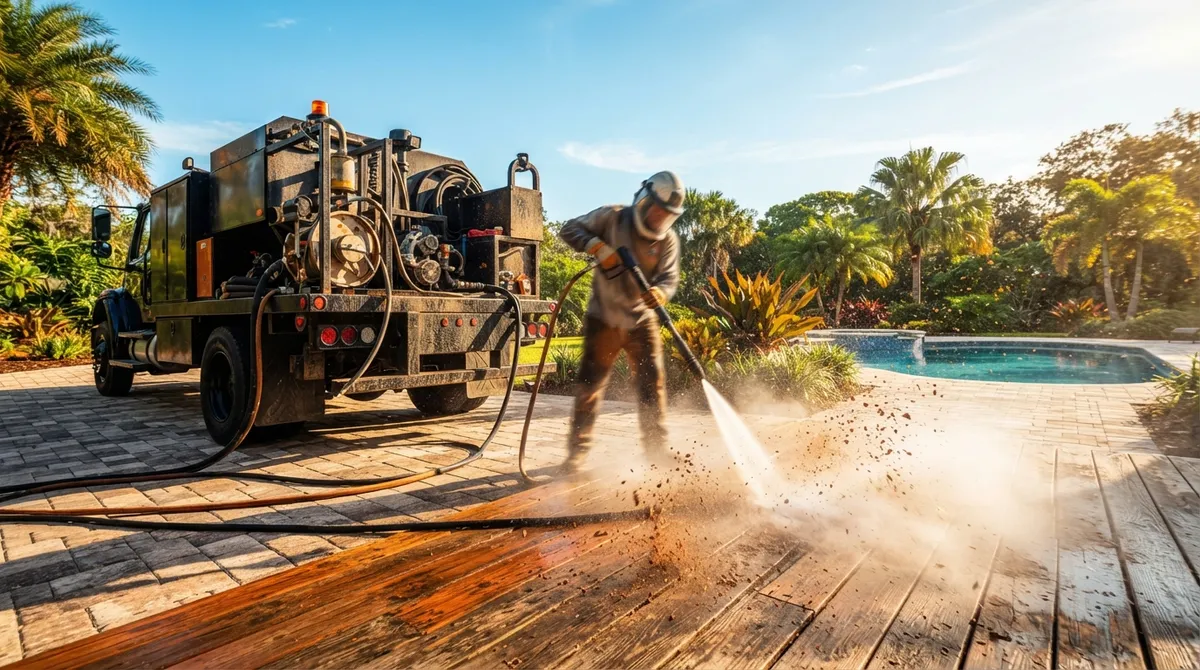
Mobile blasting rates typically range $150-$275 per hour for standard jobs, with per-square-foot pricing ($1.50-$7.00) preferred for larger surfaces like decks and walls to provide upfront cost certainty.
-
Mobilization fees ($150-$500) are non-negotiable industry standard covering fuel, equipment setup, and travel time; minimum job charges ($350-$750) apply even for small projects due to setup and media costs.
-
Dustless blasting costs 20-30% more than standard dry blasting but protects landscaping, pools, and windows through water and rust inhibitor additives, making it worth the premium for residential areas.
-
Lead paint, epoxy coatings, heavy rust, difficult access, and nearby pools significantly increase costs; getting a walkthrough or clear photos before quoting prevents surprise pricing and ensures accurate estimates.
Trying to figure out mobile blasting rates can feel like a guessing game. One company quotes you an hourly number, another gives you a flat price, and suddenly you’re not sure what’s fair. You are not alone in this, and honestly, it’s a great question to ask before you hire anyone. Understanding what drives the price helps you budget smart and spot a fair deal right away.
Here at Blastworx, we work on boats, cars, homes, and job sites across Tampa Bay and central Florida every week. We’ve put together this friendly breakdown so you know exactly what to expect. Let’s walk through the seven biggest factors behind mobile blasting rates in 2026, so you can plan your project with confidence.

1. Understand the Typical Hourly Rate Range
Most mobile blasting crews charge somewhere between $75 and $300 per hour. That’s a wide range, we know. The reason it swings so much comes down to crew size, equipment, and how tricky the job is.
For a straightforward job with a clear scope, you’ll usually land in the $150 to $275 range. Jobs with lots of unknowns, like old paint layers or rusted-out metal, tend to sit at the higher end. A skilled crew will look at your project first and give you a number that actually makes sense for the work involved.
- Small detail jobs (patio furniture, small gates): $50–$150 per hour
- Standard residential or automotive work: $150–$275 per hour
- Complex industrial or multi-coat jobs: $250–$300+ per hour
Many companies, including ours, prefer flat project pricing over strict hourly billing. That way, you know your total cost upfront, no surprises at the end.
2. Square Footage Pricing Explained
For larger surfaces like walls, decks, or concrete slabs, pricing often shifts to a per-square-foot model. This makes it easier to compare quotes and understand what you’re really paying for.
| Job Type | Price Per Square Foot | Notes |
|---|---|---|
| Standard surface, single coat | $1.50–$7.00 | Most residential and commercial jobs |
| Multi-coat or lead paint removal | $12–$16+ | Requires extra passes and safety steps |
| Concrete and pavers | $2–$8 | Depends on sealant buildup and texture |
| Structural steel | $3–$10 | Varies with rust severity |
If you’re prepping concrete before a resurfacing project, check out our guide on how to prep a pool deck for resurfacing the right way for more detail on what drives those numbers up or down.
3. Why Dustless Blasting Costs a Bit More
Dustless mobile blasting typically runs 20 to 30 percent higher than standard dry blasting. It sounds like a lot, but there’s a good reason behind it.
Dustless rigs use water and rust inhibitors mixed with the media. This keeps dust down, protects nearby landscaping, pools, and windows, and it’s much friendlier for neighborhoods or job sites near other work. The extra cost covers water usage, inhibitor chemicals, and the added cleanup afterward. Want to see how it works in real projects? Our post on what makes dustless blasting in Tampa so effective breaks it down nicely.
Standard Blasting vs. Dustless Blasting Costs
- Standard dry blasting: Lower base cost, more airborne dust
- Dustless blasting: 20–30% higher cost, minimal dust, safer for occupied areas
- Soda blasting: Gentle option for delicate surfaces, priced similarly to dustless
4. Mobilization and Travel Fees Are Real
Here’s something a lot of folks don’t expect. Mobile blasting companies almost always charge a mobilization fee, sometimes called a travel or setup fee. This covers fuel, equipment loading, and the time it takes to get your rig on-site and ready to go.
- Local jobs: $150–$250 mobilization fee
- Jobs 30+ miles from base: $250–$400
- Remote or multi-day jobs: $400–$500+
This fee is pretty standard across the industry and it’s non-negotiable in most cases. We travel throughout Tampa, Ocala, Orlando, and Fort Myers regularly, and for the right project, we’ll go just about anywhere in Florida. The mobilization fee simply reflects the real cost of bringing a fully equipped rig to your driveway, dock, or job site.
5. Vehicle and Marine Project Costs
Automotive and marine work has its own pricing patterns, since these jobs often need specialized media to avoid warping thin metal or damaging fiberglass.
| Project Type | Estimated Cost |
|---|---|
| Full vehicle paint strip | $600–$1,400 |
| Undercarriage only | $200–$450 |
| Boat hull bottom paint removal | $800–$2,500+ |
| Trailer or hardware blasting | $300–$700 |
For fiberglass hulls, we use gentler media like soda or walnut shell to protect the gelcoat. Metal trailers and hardware can handle stronger abrasives. If you’re restoring a classic car or prepping a boat for the season, check out our Automotive and Marine service pages to see what’s involved.
6. Minimum Job Charges You Should Know
Small jobs still take setup time, media, and travel, so most companies set a minimum charge. This typically falls between $350 and $750, even if the actual blasting only takes an hour.
Here’s why this matters for your budget:
- Setup and breakdown time counts, even for tiny jobs
- Media costs don’t scale down much for small surfaces
- Travel time is the same whether you’re blasting one railing or a whole fence
If you’ve got a small project, like a single gate or a set of railings, bundling it with other work can sometimes bring the per-item cost down. Our article on how to strip paint from a metal fence or gate fast covers what a typical small job looks like.
7. Factors That Push Rates Higher or Lower
Not every job costs the same, even if the square footage looks similar on paper. Here are the biggest factors that swing your final price:
- Coating type: Lead paint, epoxy, and marine antifouling take longer to remove than basic latex paint
- Substrate material: Soft wood and fiberglass need gentler media, which can take more passes
- Surface condition: Heavy rust or years of buildup means more time and media
- Access and location: Tight spaces, ladders, or hard-to-reach areas add labor time
- Containment needs: Jobs near pools, landscaping, or busy sidewalks need extra protection setup
- Urban vs. rural location: Coastal and city markets often run 20–40% higher than average
Every job we take on starts with a walkthrough, so we can match the blast to your surface, not the other way around. That’s how we keep pricing fair and avoid surprise costs once we start.
How Mobile Blasting Compares to Shop-Based Blasting
A lot of people ask if mobile blasting costs more than hauling equipment to a shop. In most cases, mobile blasting actually saves money once you factor in transport costs, especially for large or heavy items like boat hulls, trailers, or structural steel beams.
Mobile service also means less downtime for your business. A commercial property doesn’t have to shut down operations, and a boat owner doesn’t need a trailer or a tow. We come to you, fully mobile and self-contained, without needing your power or water. That convenience factor is often worth more than the small premium some mobile services charge over drop-off shops.
Getting an Accurate Estimate
The best way to get a true number for your project is a simple walkthrough or a few clear photos. Reputable companies won’t guess over the phone with big price swings. Here’s a good process to expect:
- Send photos or schedule a visit so the crew can see the surface and coating type
- Receive a written estimate the same day, with a clear final price
- Confirm scheduling and any prep needed on your end
- Blasting happens on-site, with the area protected and contained
- Surface comes out clean and ready for the next step, whether that’s paint, primer, or resurfacing
This kind of process protects you from bait-and-switch pricing. If a company won’t give you a number in writing, that’s a red flag. Learn more about what a fair estimate should include in our post on how much do sandblasting estimates really cost.
Real Numbers From Recent Florida Projects
To give you a sense of what real quotes look like around Tampa Bay, here’s a quick sample based on common project types:
| Project | Typical Range |
|---|---|
| Small residential fence or railing | $400–$900 |
| Pool deck resurfacing prep | $800–$2,500 |
| Commercial graffiti removal | $500–$1,800 |
| Industrial tank or vessel prep | $1,500–$15,000+ |
These numbers move based on size, coating, and access, but they give you a solid starting point for budgeting. The process of what is sandblasting hasn’t changed much over the decades, but the media and equipment options today let crews match the technique precisely to your surface.
Final Thoughts on Mobile Blasting Rates
Mobile blasting rates aren’t one-size-fits-all, and that’s actually a good thing. It means you’re paying for exactly what your project needs, not a generic package that doesn’t fit. Whether you’re stripping a boat hull, prepping a commercial building, or restoring old railings at home, understanding these seven pricing factors puts you in a great position to make a smart choice.
We’re proud to serve homeowners, boat owners, and businesses throughout Tampa, Clearwater, Sarasota, Ocala, Orlando, and Fort Myers. Fully insured, and when you call, you talk to the people actually doing the work. You can see what our customers are saying about us on Google to get a feel for how we handle projects big and small.
Ready to get a clear, honest number for your project? Request your free estimate today or give our team a call to talk through your job. We’ll match the blast to your surface and get it back to clean, ready for whatever comes next.
FAQs
Q: How much does mobile sandblasting cost per square foot in 2026?
A: Most standard jobs run $1.50 to $7.00 per square foot, but tricky surfaces like multi-coat paint or lead paint can push that up to $12 to $16 or more. It really depends on the coating and how many passes the crew needs to make. Getting a walkthrough or photos reviewed first gives you the most accurate number for your specific surface.
Q: What is the average hourly rate for a mobile blasting crew?
A: You’re typically looking at $75 to $300 per hour, with most standard jobs landing between $150 and $275. Smaller detail work can dip toward the lower end, while complex industrial jobs sit higher. Many crews, ourselves included, prefer flat project pricing so you know your total cost before work even starts.
Q: Why is dustless mobile blasting more expensive than standard sandblasting?
A: Dustless blasting mixes water and rust inhibitors into the media, which controls dust and protects everything nearby, like pools, landscaping, and windows. That extra water, chemical cost, and cleanup time bumps the price up 20 to 30 percent over standard dry blasting. Many folks find it worth the extra cost for the cleaner, safer process, especially in tight residential spaces.
Q: Do mobile blasting companies charge mobilization fees?
A: Yes, almost every mobile blasting company charges a mobilization or travel fee, usually $150 to $500 depending on distance. This covers fuel, loading the rig, and travel time to get everything set up at your location. It’s a standard part of mobile service pricing, not a hidden add-on.
Q: Is mobile blasting cheaper than taking equipment to a shop?
A: In many cases, yes, especially for large or heavy items like boat hulls, trailers, or structural steel. You skip transport costs and avoid downtime since the crew comes directly to your location. Mobile service also means your business or property doesn’t have to shut down while the work gets done.





