
Key Takeaways
-
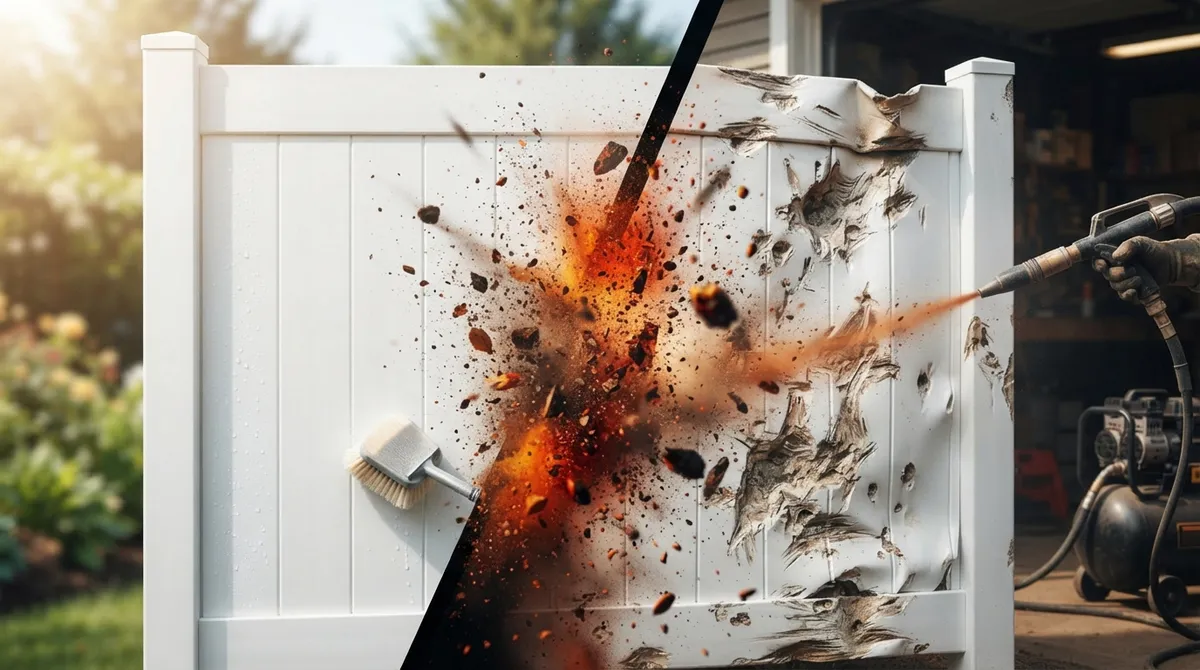
Sandblasting will permanently damage vinyl fences because vinyl is soft plastic that cannot withstand abrasive media—causing pitting, gouging, warping, and weakening that requires costly panel replacement.
-
Clean vinyl fences safely using warm water with mild dish soap and a soft-bristle brush, or use low-pressure washing with gentle settings to avoid chipping or cracking the material.
-
Sandblasting works effectively on metal, wood, brick, concrete, and masonry fences, which are durable enough to handle abrasive media and typically cost $300–$700 for residential jobs.
-
Avoid common vinyl fence cleaning mistakes like stiff wire brushes, full-strength bleach, maximum pressure washer settings, and circular scrubbing motions that leave visible damage.
-
A responsible blasting contractor should refuse to sandblast vinyl and offer safer alternatives instead; hiring a company that agrees without hesitation is a red flag for poor workmanship.
-
Modern sandblasting uses soda, walnut shell, or dustless media instead of silica sand due to health concerns, but none of these alternatives are safe enough for delicate vinyl surfaces.
If you’ve got a dingy, stained, or algae-covered vinyl fence in your yard, you’ve probably wondered about the fastest way to clean it up. Maybe you’ve heard about sandblasting and thought, “Could that blast the grime right off?” It’s a fair question, especially if you live around Tampa Bay, where humidity and pollen turn white vinyl fences green in no time. We get calls about this all the time here at Blastworx, and we want to give you a straight, honest answer.
The short version? No, you should not sandblast a vinyl fence. Vinyl is a soft plastic, and abrasive blasting is simply too aggressive for it. But don’t worry, we’re not just here to say no and leave you hanging. In this article, we’ll walk you through exactly why sandblasting and vinyl don’t mix, what actually works for cleaning vinyl fencing, and where mobile blasting shines instead. By the end, you’ll know exactly what to do with your fence, no guesswork needed.
1. Why Sandblasting a Vinyl Fence Is a Bad Idea
Let’s start with the basics. What is sandblasting? It’s a process that uses compressed air to shoot abrasive media at high speed onto a surface. That media scrapes away rust, paint, and grime. It works wonders on metal and concrete, but vinyl is a different animal entirely.
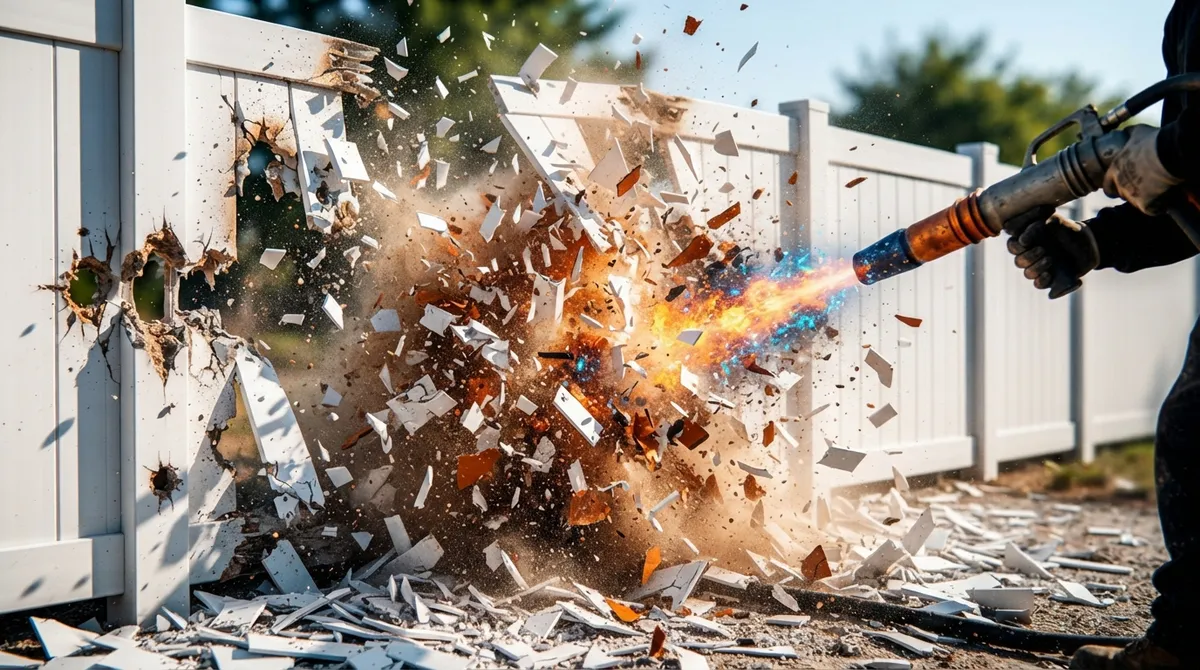
Vinyl fencing is made from PVC, a lightweight plastic. It’s just not built to handle the kind of force sandblasting throws at it. Here’s what typically happens when abrasive media hits vinyl:
- The surface gets pitted, gouged, or scratched permanently
- Thin panels can warp or bow from the pressure
- The glossy finish gets dulled or stripped away unevenly
- Small holes or weak spots can form over time
- The overall structure of the fence can weaken
Once vinyl is damaged this way, there’s no fixing it. You can’t sand it smooth or repaint it like you might with wood or metal. A ruined panel usually means a full replacement, and that’s a costly mistake to make over what should have been a simple cleaning job.
2. What Surfaces Mobile Sandblasting Actually Works Best On
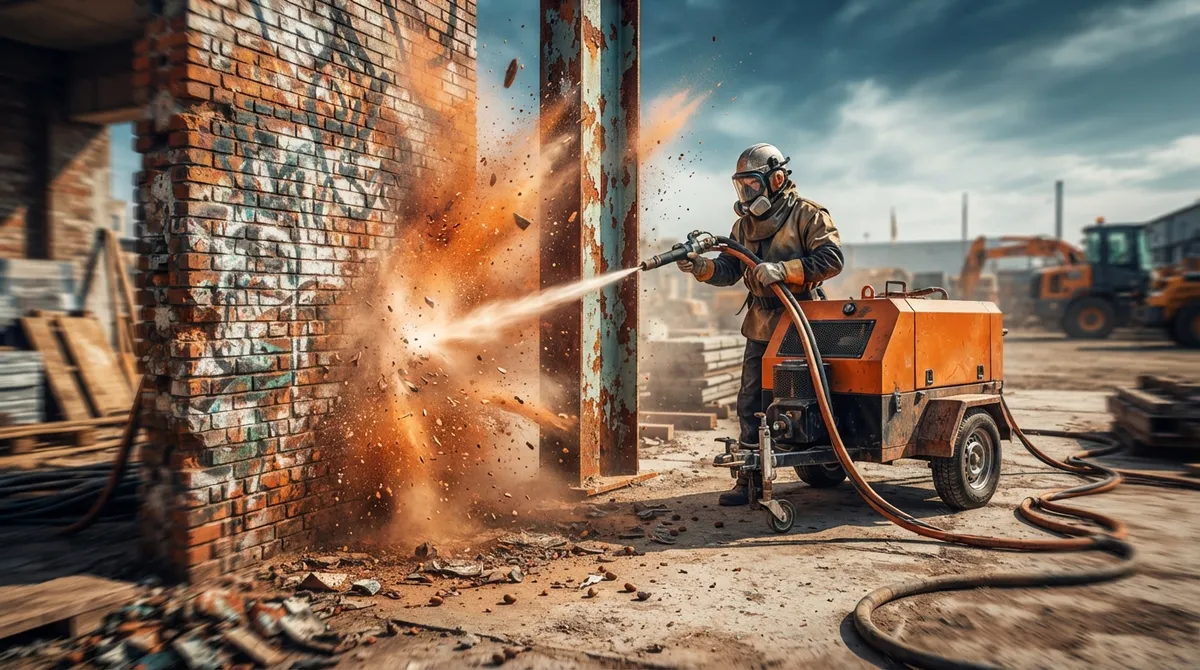
At Blastworx, we always say we match the blast to your surface, not the other way around. That’s the whole philosophy behind good mobile blasting work. Some materials can take a beating from abrasive media and come out looking brand new. Vinyl just isn’t one of them.
Here’s a quick look at what holds up well versus what doesn’t:
| Surface Type | Good Candidate for Sandblasting? | Why |
|---|---|---|
| Metal fences and gates | Yes | Withstands abrasive media, great for rust removal |
| Wood fences | Yes, with soft media | Softer blasting media strips paint without gouging wood |
| Brick and masonry | Yes | Durable surface, handles moderate pressure well |
| Concrete and pavers | Yes | Extremely tough, ideal for prep work |
| Vinyl fencing | No | Soft plastic, damages easily under abrasive force |
This is why we offer different services depending on the job. Check out our residential blasting services to see the range of surfaces we handle around homes, from pool decks to wrought iron railings. If you’re curious about how blasting handles other tricky materials, our article on whether you can sandblast a wood deck without damaging it covers a similar theme.
3. What Happens If You Try It Anyway
We’ve heard stories of folks renting equipment or hiring a contractor who didn’t know better, and the results are never pretty. Let’s walk through what typically unfolds when someone sandblasts a vinyl fence:
- The blaster starts at what feels like a low setting, but even light abrasive pressure is too much for vinyl.
- Within seconds, the surface starts to look frosted, scratched, or pitted.
- The operator backs off, but the damage is already done and visible in the sunlight.
- Attempts to fix the area with cleaners or polish don’t restore the original finish.
- The homeowner ends up replacing entire panels, costing far more than a proper cleaning would have.
This is exactly why any experienced blasting company should tell you no upfront. A responsible contractor evaluates the material first, every time. If a company agrees to blast vinyl without hesitation, that’s a red flag worth paying attention to.
4. The Right Way to Clean a Vinyl Fence
So if blasting is off the table, what actually works? Good news: vinyl fences are pretty easy to clean once you know the right approach. Here’s a simple step-by-step method that works for most residential vinyl fencing:
- Rinse the fence with a garden hose to remove loose dirt and debris.
- Mix warm water with a mild dish soap or a vinyl-safe cleaner.
- Scrub gently with a soft-bristle brush or sponge, working in sections.
- Rinse thoroughly to remove all soap residue.
- For tough stains like mildew, use a diluted vinegar solution or a specialty vinyl cleaner.
- Let the fence air dry completely before touching it again.
Low-pressure washing can also help for larger fences, as long as you keep the pressure setting gentle and the nozzle at a safe distance. High pressure can chip or crack vinyl just like abrasive blasting can, so moderation is key.
Common Cleaning Mistakes to Avoid
While cleaning vinyl seems simple, a few habits can cause more harm than good:
- Using stiff wire brushes that scratch the surface
- Applying bleach at full strength, which can discolor vinyl over time
- Cranking a pressure washer to max settings
- Scrubbing in circular motions that leave visible swirl marks
- Ignoring manufacturer cleaning guidelines for colored or textured vinyl
5. When Mobile Blasting Makes Sense Around Your Property
Just because vinyl is off-limits doesn’t mean mobile blasting has no place at your home. In fact, plenty of surfaces around a typical Florida property benefit hugely from professional blasting work. Here are some great candidates:
- Wrought iron fences and gates covered in rust
- Wood decks with peeling stain or weathered gray wood
- Concrete pool decks and patios stained with algae or mildew
- Brick walkways with old paint or buildup
- Pavers that need a deep clean before sealing
- Soda blasting: Gentle enough for delicate surfaces like fiberglass and older wood
- Walnut shell media: Soft and biodegradable, great for boat hulls and trim
- Sand or garnet: Aggressive enough for heavy rust and thick coatings on metal
- Dustless blasting: Combines water and media to reduce airborne dust, ideal for tight spaces
- We come to you, fully mobile and self-contained, no need for your power or water
- We give honest advice about what should and shouldn’t be blasted
- We protect your landscaping, pool, and windows during every job
- We provide a clear, written estimate the same day, and the price we quote is the price you pay
- You talk directly to the people doing the work, not a call center
If you’ve got a metal fence or gate nearby that’s seen better days, our guide on how to strip paint from a metal fence or gate fast is a great next read. We’ve also covered pool deck prep in detail in our post about how to prep a pool deck for resurfacing the right way.
Typical Costs for Residential Fence Blasting
For fences made of appropriate materials, mobile blasting is often more affordable than people expect. Here’s a general pricing snapshot for common residential fence jobs:
| Fence Material | Typical Cost Range | Notes |
|---|---|---|
| Wood fence | $300–$700 | Soft media prevents wood damage |
| Metal or wrought iron fence | $300–$700 | Removes rust down to bare metal |
| Vinyl fence | Not recommended | Alternative cleaning methods used instead |
Pricing always depends on fence size, condition, and location, but this gives you a ballpark idea. If you want an exact number for your property, it’s easy to get a free estimate from our team.
6. Choosing the Right Media for Every Job
One thing we say a lot at Blastworx is that we use the right media for the job. Not every blasting project calls for traditional sand. In fact, silica sand has fallen out of favor across the industry due to health concerns around silicosis, so many contractors now lean toward soda blasting, walnut shell media, or dustless blasting systems instead.
Here’s a breakdown of common media types and what they’re good for:
You can learn more about how these methods compare in our article on why soda blasting is Tampa’s gentlest cleaning fix. Even with all these options, vinyl fencing still isn’t a good match for any abrasive blasting method. It’s simply too delicate for the process, no matter which media you choose.
7. Why Hiring a Mobile Blasting Pro Still Pays Off
Even though we won’t blast your vinyl fence, working with a mobile blasting company still has real value for your property. Here’s why homeowners across Tampa, Clearwater, Brandon, and the surrounding areas keep coming back to us:
We’re proud to serve the central Florida corridor, from Tampa and Ocala to Orlando and Fort Myers, and we’ll travel anywhere in the state for the right job. Take a look at our before-and-after gallery to see the kind of transformations we’ve handled on decks, fences, and patios. And if you’re curious what our neighbors think, feel free to visit us on Google — see what our customers are saying about us.
What a Responsible Blasting Contractor Should Tell You
A trustworthy contractor will always walk you through the pros and cons before starting a job. According to guidance shared by the Environmental Protection Agency, surface preparation methods should always match the material being treated to avoid unnecessary damage or health risks. That same logic applies here. If a fence, deck, or wall isn’t a good fit for blasting, the right move is to say so and offer a safer alternative.
For homeowners weighing their options, our post on mistakes to avoid with residential sandblasting in Riverview is worth a look too. It covers several situations where blasting isn’t the right call, much like vinyl fencing.
Final Thoughts on Vinyl Fences and Mobile Blasting
So, can you sandblast a vinyl fence? No, and now you know exactly why. Vinyl is too soft, too delicate, and too easy to damage permanently with abrasive media. The good news is that a simple wash with soap and water, or a gentle vinyl cleaner, will usually bring your fence right back to looking fresh and bright.
But if you’ve got metal railings, a tired wood deck, a stained pool patio, or any other surface around your home that needs a serious refresh, mobile blasting might be exactly what you need. We’d love to help you figure out the best approach for your property. Feel free to give us a call and we’ll talk through your project, no pressure, just honest advice from people who do this work every day.
FAQs
Q: Can you sandblast a vinyl fence without damaging it?
A: Unfortunately, no. Vinyl is a soft plastic, and even light abrasive blasting can scratch, pit, or warp the surface permanently. We always recommend gentler cleaning methods for vinyl fencing to keep it looking its best.
Q: What is the best way to clean a vinyl fence?
A: A simple mix of warm water and mild dish soap, applied with a soft brush, works wonders on most vinyl fences. For tougher stains, a diluted vinegar solution or a vinyl-safe cleaner can help without risking any damage.
Q: Is pressure washing safe for vinyl fencing?
A: Yes, as long as you keep the pressure on a low or moderate setting. Cranking it too high can crack or chip vinyl, so it’s best to test a small area first and keep the nozzle at a safe distance.
Q: What surfaces can mobile sandblasting be used on?
A: Mobile blasting works great on metal, wood, brick, concrete, and masonry. These materials can handle the abrasive process and come out clean and ready for the next step, which is why we love working on fences, decks, and pool areas.
Q: How much does mobile fence sandblasting cost?
A: For wood or metal fences, most jobs run between $300 and $700, depending on size and condition. Since vinyl isn’t a good candidate for blasting, we’ll always recommend the right cleaning method instead and can give you a free estimate for any surface you’re curious about.





