Key Takeaways
-
Blasting gets into seams, welds, and corners that wire brushes and sandpaper miss, leaving clean bare metal that primer can bond to rather than rust that spreads under new paint.
-
Prime bare steel quickly after blasting, since it can start flash rusting within hours in Florida's humid air.
-
Match the abrasive to the surface: soda or walnut shell for thin or delicate metal, aluminum oxide for moderate rust, and steel grit for heavy structural rust, to avoid warping or damage.
-
Before blasting, have old coatings assessed for lead, and avoid silica sand, since OSHA treats crystalline silica as a serious inhalation hazard.
-
Ask your painter what surface cleanliness and profile they need before blasting starts, since different coating systems require different results.
-
Confirm the crew's dust control, debris disposal, insurance, and a written estimate before hiring, and ask whether they need power or water on site.
Rust has a way of sneaking up on you. One day it is a small orange spot on a gate. A few months later, it is flaking, bubbling, and creeping under the paint. In Florida, with our heat, humidity, and salt air, rust moves fast. That is why so many people search for sandblasting for rust removal when they need a real fix instead of a quick cover-up.
Here is the good news. You do not have to haul that big trailer, steel beam, or boat hardware to a shop. Mobile blasting brings the work to you. A trained crew shows up with a self-contained rig, strips the rust away, and leaves the surface clean and ready for the next step.
In this guide, we will walk through how blasting removes rust, which media works best, how crews keep dust under control, and what to do after the blasting is done. Whether you own a fence, a frame, or a piece of heavy equipment, you will know what to expect. Let’s dig in.
What Is Sandblasting for Rust Removal?
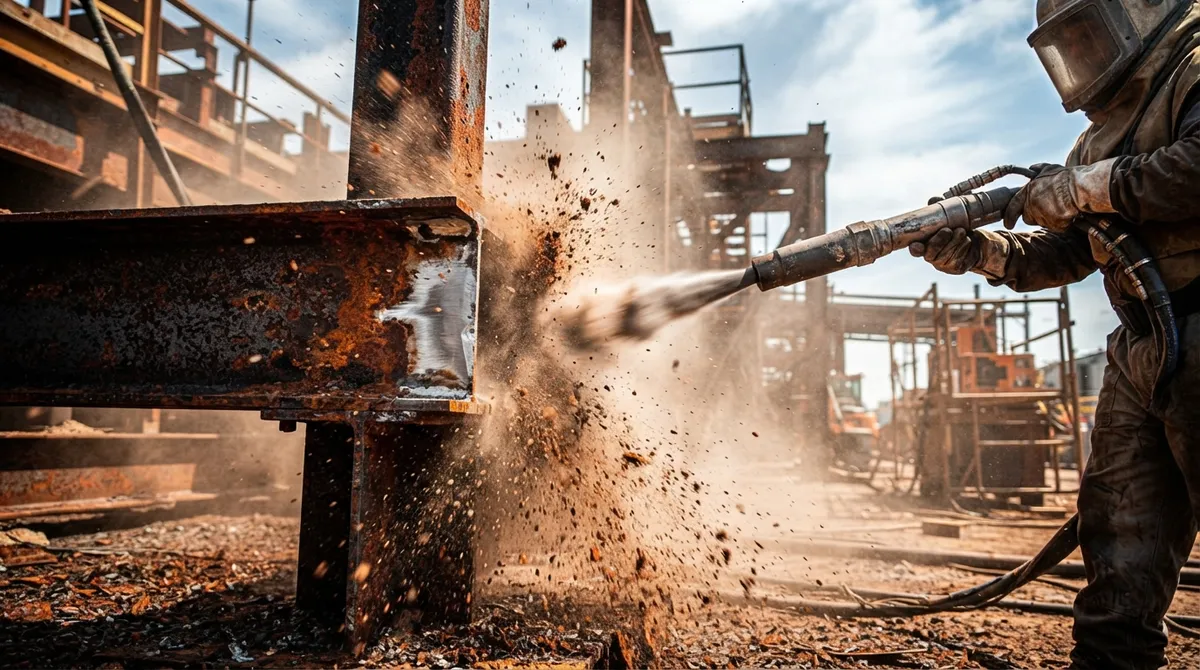
Sandblasting is a process that shoots abrasive material at a surface using compressed air. The abrasive knocks off rust, old paint, and other buildup. If you want the textbook version, here is a quick explainer on what is sandblasting.
Today, the word “sandblasting” is often used for all kinds of abrasive blasting, not just jobs that use sand. Pros pick from many media types, including soda, walnut shell, glass bead, aluminum oxide, and steel grit. The right choice depends on the surface you are cleaning.
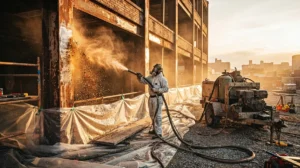
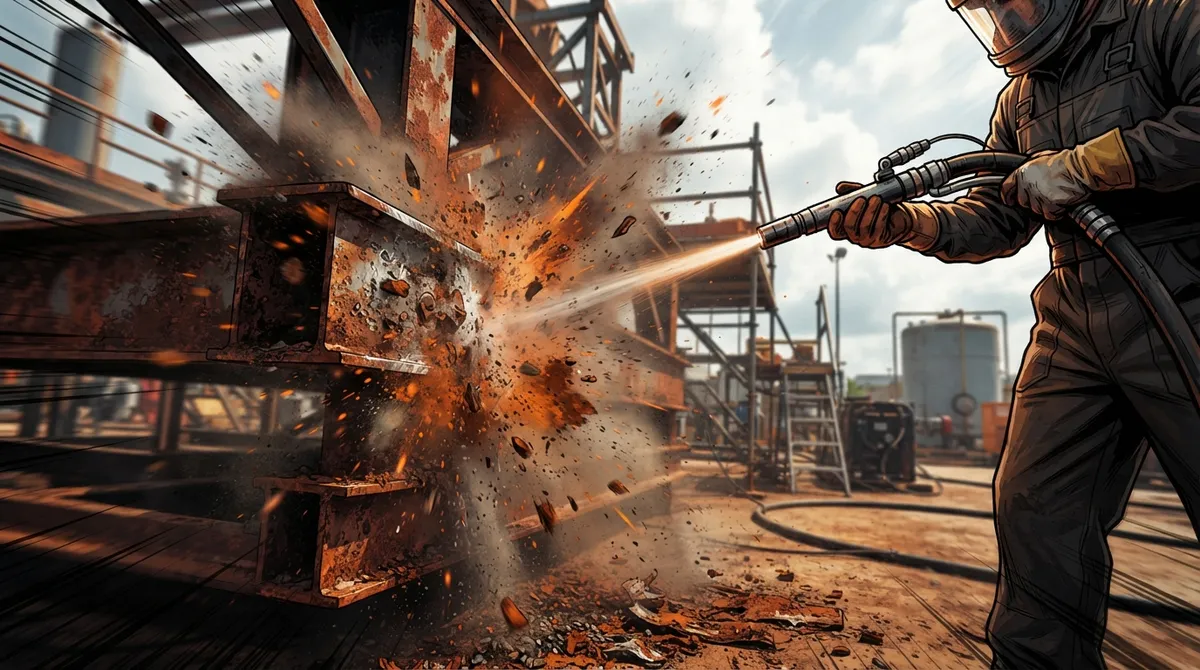
Mobile blasting simply means the equipment travels to your location. The rig is fully mobile and self-contained, so the crew can work in a driveway, at a dock, inside a shop yard, or on a job site. It is a great fit for large, fixed, or hard-to-move items.
How Does Blasting Actually Remove Rust?
Rust is a layer of corroded metal. It does not just sit on top. It grows into the surface and can hide in seams, welds, and tight corners. Hand tools like wire brushes and sandpaper often miss those spots.
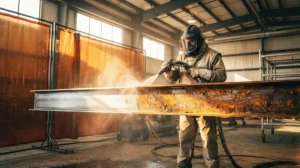
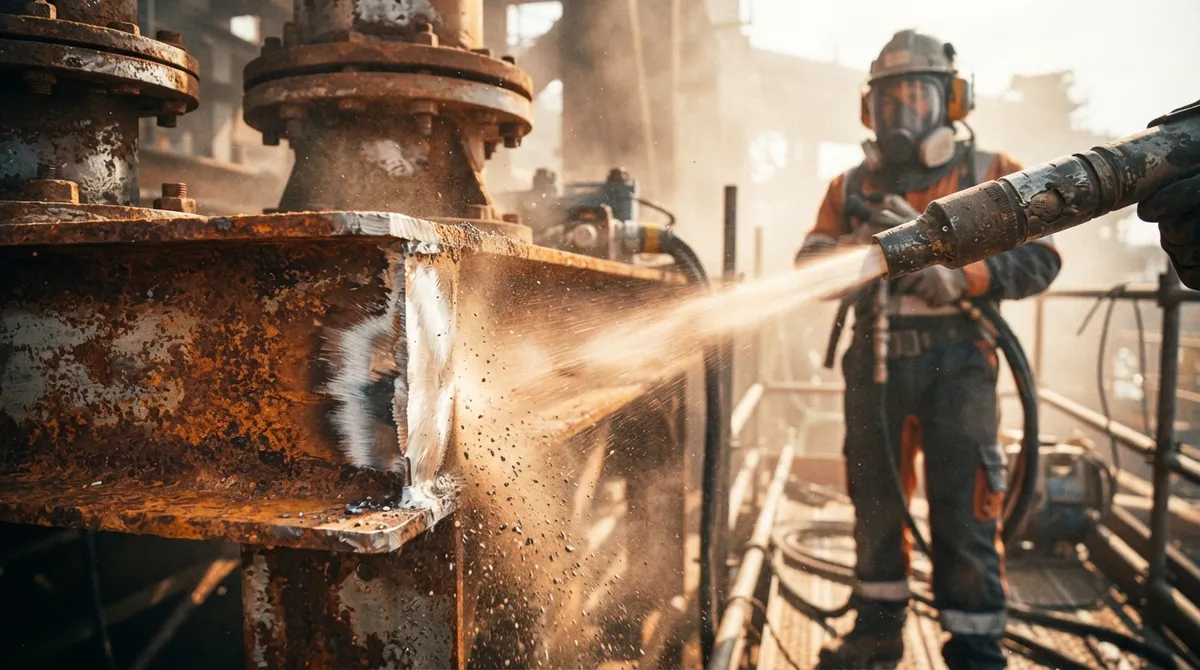
Abrasive blasting works differently. Tiny particles hit the surface at high speed. Each hit chips away a bit of rust or coating. Run that across the whole area, and you get back to clean, bare metal in a fraction of the time hand work would take.
The goal is not just to look clean. It is to create a surface that a primer or coating can grip. A coating is only as good as the surface underneath it. If rust is left behind, it keeps spreading under the new paint. For more on this idea, take a look at Blasting vs. Hand Tools: Best Steel Prep Method?
Why Surface Profile Matters
Blasting also leaves a light texture on the metal. Pros call this the surface profile. Think of it like the tooth on fine sandpaper. Paint and primer hold on much better to a lightly textured surface than to a slick one.
The profile and cleanliness level you need depend on the coating system and the project specs. A powder coater, a marine painter, and a structural steel crew may all want slightly different results. That is why it pays to ask your painter or coating maker what they need before blasting starts.
Which Blasting Media Is Best for Rust?
This is where a good crew earns its keep. We match the blast to your surface, not the other way around. Using the right media for the job keeps the metal strong and the finish clean.
Here is a simple comparison to help you picture it:
| Media | Best For | Aggressiveness | Notes |
|---|---|---|---|
| Baking soda | Light rust, delicate surfaces, fiberglass | Very gentle | Great for thin or sensitive items |
| Walnut shell | Soft cleaning, light coatings | Gentle | Safe on many materials |
| Glass bead | Light rust, cleaning and finishing | Mild to moderate | Leaves a smoother finish |
| Aluminum oxide | Moderate to heavy rust | Moderate to strong | Cuts fast, good profile |
| Steel grit | Heavy rust, thick coatings | Strong | Best for tough structural steel |
Not sure how the options stack up? Our posts on Aluminum Oxide Blasting vs. Sand and 6 Glass Bead Blasting Facts Tampa Owners Should Know go deeper on each one.
Thin Metal Needs a Soft Touch
Thin panels, like car body panels, can warp if the blast is too hot or too harsh. In that case, a crew uses lower pressure and gentler media. Heavy frames, thick steel, and chunky hardware can take a stronger abrasive. This is exactly why one-size-fits-all blasting does not work.
What Can Mobile Blasting Clean Rust Off Of?
Quite a lot, actually. Because the rig comes to you, almost any rusty metal item that is too big, too heavy, or too awkward to move is a good candidate. Common jobs include:
- Fences, gates, and railings: Wrought iron and steel fences rust at the base and welds. Blasting gets into the scrollwork. See How to Restore Wrought Iron Railings the Right Way for more.
- Vehicles and frames: Classic cars, trucks, and project builds can go back to clean bare metal. Check out 5 Automotive Sandblasting Facts Florida Owners Need.
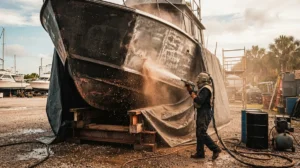
- Boat trailers and marine hardware: Salt water is brutal on steel. Trailers, davits, cleats, and rails all benefit from blasting.
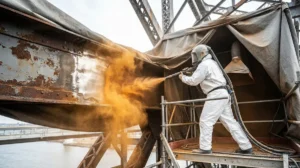
- Structural steel and tanks: Beams, vessels, and tanks can be cleaned right where they stand.
- Heavy equipment: Machinery can be prepped on-site, which saves downtime. Read Equipment Blasting: On-Site Rust and Paint Removal.
If you want a closer look at different service types, you can browse our industrial blasting services, automotive blasting services, and marine blasting services.
Is Sandblasting Safe? Dust, Silica, and Lead Explained
This is a big question, and it deserves a straight answer. Blasting can be done safely, but only when the crew plans for the hazards. Dust is the main concern. Blasting creates dust from the abrasive itself and from whatever is being removed.
Two hazards come up the most:
- Crystalline silica: OSHA warns that silica is a serious inhalation hazard and advises avoiding silica sand where possible. Safer substitutes are the better pick. Blasting can also release silica from the surface itself, such as concrete or masonry.
- Lead and other hazardous coatings: Older paint may contain lead or other harmful substances. The coating should be assessed before work begins so the crew can plan containment, cleanup, and waste handling.
For context, OSHA’s permissible exposure limit for respirable crystalline silica is 50 micrograms per cubic meter of air, measured as an 8-hour average. The action level is 25 micrograms per cubic meter. These numbers come from OSHA’s silica standard for construction, 29 CFR 1926.1153.
How Pros Control the Risks
OSHA points to three main exposure controls for abrasive blasting: substitution, isolation or containment, and ventilation. Respirators and other protective gear are used when needed, and they come with their own program requirements.
In plain terms, a careful crew will:
- Pick a safer abrasive instead of silica sand.
- Check the existing coating for lead or other hazards.
- Set up containment to keep dust and debris in one place.
- Use proper protective gear for the crew.
- Clean up spent media and rust debris at the end of the job.
You can read more about this in How Do Pros Handle Sandblasting Dust Control Safely? and 5 Safe Blasting Procedures Every Mobile Crew Follows.
Dustless Blasting: A Cleaner Way to Remove Rust
If dust worries you, dustless blasting is worth a look. It mixes water with the abrasive, which keeps airborne dust way down. It is popular for jobs near homes, businesses, active job sites, and indoor areas.
Because water is part of the process, there is one thing to know. Freshly blasted bare steel can flash rust quickly, especially in Florida humidity. A good crew plans for that, and your painter should be ready to prime soon after. We cover this topic in What Makes Dustless Blasting In Tampa So Effective? and Wet Sandblasting vs Dry: Which One Fits Your Job?
How Do Mobile Crews Protect Your Property?
Nobody wants to find rust dust on their patio furniture or pool deck. A solid mobile crew plans ahead so your property stays safe. Here is what good site planning looks like:
- Walk the site and note nearby people, cars, plants, windows, and pools.
- Check wind and weather, since gusts can carry dust and debris.
- Cover or shield nearby items that could be damaged.
- Set up containment where it makes sense for the job.
- Collect spent abrasive, rust flakes, and old coating at the end.
We contain the mess and protect the surrounding area on every job. Our rig is self-contained, so we do not need your power or water. That makes it easy to work in a tight driveway or at a busy dock.
What Happens to the Spent Media and Rust Debris?
Cleanup is a part of the job that people often forget to ask about. After blasting, there will be used abrasive, rust particles, and bits of old paint. How that waste is handled depends on what is in it.
Disposal rules depend on the makeup of the waste and on federal, state, and local requirements. If the old coating contains lead, the debris may need special handling. That is one more reason to test or assess old paint before the work starts. Ask any contractor you are thinking about hiring how they plan to collect and dispose of the debris.
What to Do After Blasting: Getting Ready to Coat
Blasting is only half the story. The next step is what protects your investment. Bare steel is clean, but it is also exposed. In humid Florida air, it can start to flash rust within hours.
Here is a simple order of events that works well for most jobs:
- Confirm what you need. Ask your painter or coating maker what surface cleanliness and profile they want.
- Blast the surface. The crew takes it back to clean bare metal.
- Remove leftover dust. Wipe or blow off loose residue so the coating can bond.
- Prime quickly. Apply primer as soon as it is practical to stop new rust.
- Add the topcoat. Finish with paint, powder coat, or the system your project calls for.
At Blastworx, we strip and prep, then leave the surface ready to prime and coat. For many jobs, refinishing is handled by you or your painter. Our guide 10 Sandblast Painting Prep Steps That Make Paint Last walks through this in more detail.
Sandblasting vs. Other Rust Removal Methods
Blasting is not the only way to tackle rust, but it is often the fastest and most thorough for big or detailed jobs. Here is a quick look at how the options compare:
| Method | Speed | Gets Into Seams | Best For |
|---|---|---|---|
| Wire brush / sandpaper | Slow | Poorly | Tiny spots |
| Chemical rust removers | Moderate | Fairly well | Small parts, soak jobs |
| Power tools (grinder, wheel) | Moderate | Poorly | Flat areas |
| Abrasive blasting | Fast | Very well | Large, detailed, or heavily rusted items |
Hand work is fine for a small spot. But for fences, frames, trailers, and structural steel, blasting takes the whole surface back to clean, sound material at once. That means what goes on next bonds properly and holds up in Florida’s heat, humidity, and salt air. For an example, see 7 Ways to Remove Rust From a Wrought Iron Fence.
What to Ask Before You Hire a Mobile Blasting Crew
A little homework goes a long way. Before you book, ask these questions:
- What media will you use on my surface, and why?
- How will you control dust and protect the area around the job?
- Will you check old coatings for lead or other hazards?
- How will you collect and dispose of the spent material?
- Are you fully insured?
- Will I get a written estimate before work starts?
You can find more ideas in 5 Questions to Ask Before You Sandblast or Paint Strip and What Should You Know Before Hiring Sandblasting Services?
How Our Mobile Process Works at Blastworx
We keep it simple. Blastworx is an owner-operated mobile blasting company serving Tampa Bay and the central Florida corridor. When you call, you talk to the people doing the work. Here is how a job goes:
- Walkthrough. Send photos or we come look, and we figure out the right media for the surface.
- Free estimate. You get a clear, written estimate the same day. The price we give is the price you pay.
- Blast and strip. We protect the surrounding area, then blast the surface clean at your location.
- Ready to finish. The surface comes out clean and ready for the next step.
We work in Tampa, Clearwater, Sarasota, Ocala, Orlando, Fort Myers, and towns like Brandon, Riverview, Plant City, Lutz, and St. Pete. You can see the full list on our service areas page, and browse real jobs in our project gallery. If you want to hear from past customers, Visit us on Google — see what our customers are saying about us.
Curious about timing and cost? Our posts on how long sandblasting takes and how much sandblasting estimates really cost are a good place to start.
Ready to Say Goodbye to Rust?
Rust does not go away on its own. It spreads, weakens metal, and ruins coatings. Blasting stops it at the source by taking the surface back to clean, bare metal so your next coat can do its job. With a fully mobile crew, you do not have to move a thing. We come to you, we contain the mess, and we leave the surface ready for the next step.
If you have a rusty fence, trailer, frame, or piece of equipment, we would love to help. Get a free estimate today, or give us a call at 813-380-8092. You can text too. Let’s get that metal back to clean and sound.
FAQs
Q: Can sandblasting remove all the rust from metal?
A: Yes, abrasive blasting is one of the most thorough ways to take rust off, even in seams and corners that hand tools miss. The goal is clean, bare metal with a light surface texture so primer and paint can grip. Very deep pitting may still need repair, but the rust itself comes off.
Q: Will blasting damage thin metal like car panels?
A: It can if the wrong media or pressure is used, which is why the choice matters so much. For thin panels, a good crew uses lower pressure and gentler media like soda to avoid warping. Thick frames and heavy steel can handle stronger abrasives.
Q: How soon should I paint after rust blasting?
A: As soon as you reasonably can. Bare steel can start to flash rust quickly in Florida’s humid air, so priming soon after blasting keeps your clean surface protected. Talk to your painter ahead of time so the schedule lines up.
Q: Is sandblasting for rust removal safe for my yard and family?
A: It can be, when the crew plans for it. That means using safer media instead of silica sand, checking old paint for lead, containing the work area, and cleaning up debris afterward. Always ask your contractor how they handle dust and protect the area around the job.
Q: Do I need to provide power or water for mobile blasting?
A: Not with Blastworx. Our rig is fully mobile and self-contained, so we can work in a driveway, at a dock, or on a job site without using your power or water. We just need access to the item and a safe place to set up.