Key Takeaways
-
Sandblasting removes rust and old coatings while creating a rough surface profile that lets new paint bond; without this prep, even high-quality coatings tend to fail early.
-
Test existing coatings for lead before blasting, since older bridge paint can release hazardous lead dust that requires a job-specific health and safety plan and containment.
-
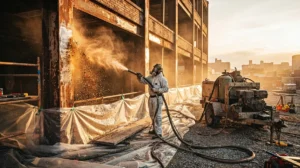
Use containment systems such as ground tarps or negative-pressure enclosures to protect traffic, water, soil, and workers from dust and spent abrasive during blasting.
-
Full blasting is not always necessary; maintenance overcoating that keeps sound existing coating can produce less lead-containing waste when the old paint is still in good condition.
-
Follow the project's surface specification for cleanliness, profile, and soluble salts, especially in coastal Florida where salt can remain on steel that looks clean.
-
Schedule coating soon after blasting, because bare steel can flash rust quickly in humid conditions, and confirm current waste rules since lead-contaminated waste has time limits on site.
Bridges carry a lot of weight, both literally and figuratively. They connect roads, communities, and businesses. When steel starts to rust, the whole structure pays the price. That is where sandblasting bridge restoration comes in.
Here is the simple version. Abrasive blasting strips away rust and failing paint. It leaves clean steel with a texture that a new coating can grip. Without that step, even the best paint will fail early.
In Florida, the stakes are higher. Heat, humidity, and salt air attack steel all year long. Good prep is the difference between a coating that lasts and one that peels in a few seasons.
In this guide, we will walk through how bridge blasting works, what safety rules matter, and when blasting is not the right answer. We will also cover how mobile blasting fits in. At Blastworx, we come to you, and we know how much planning a job like this needs.
What Sandblasting Does in Bridge Restoration
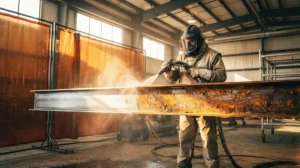
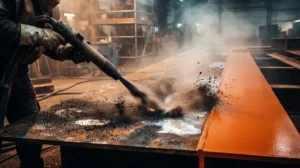
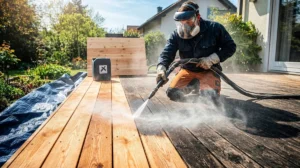
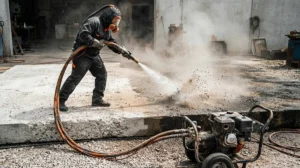
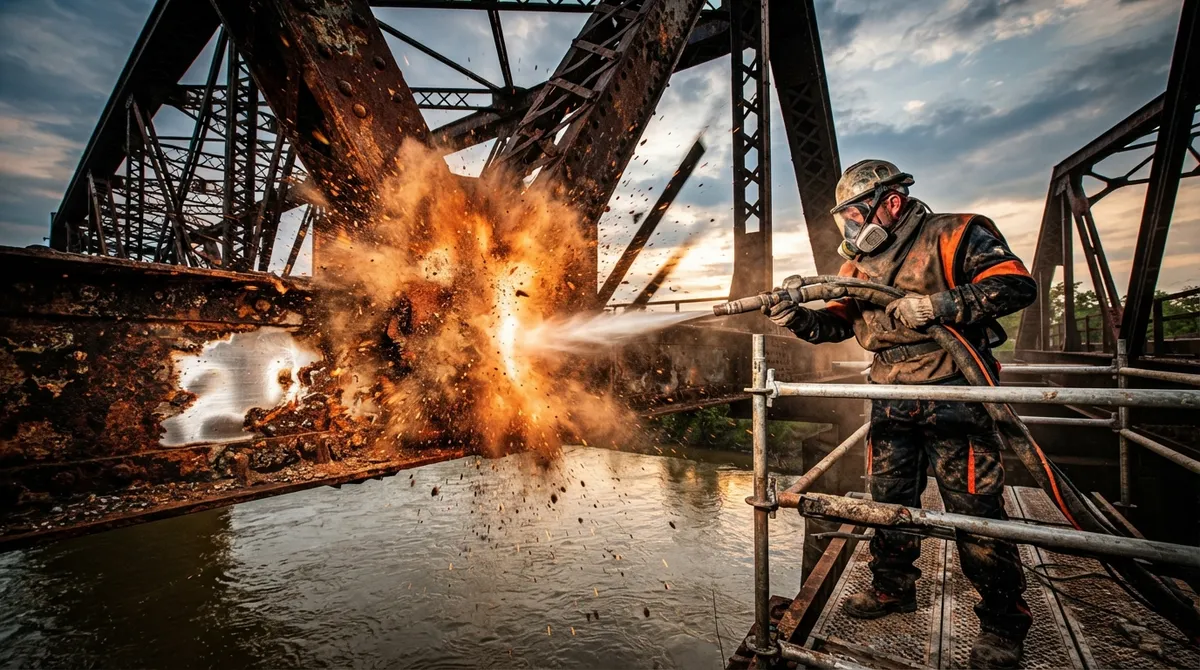
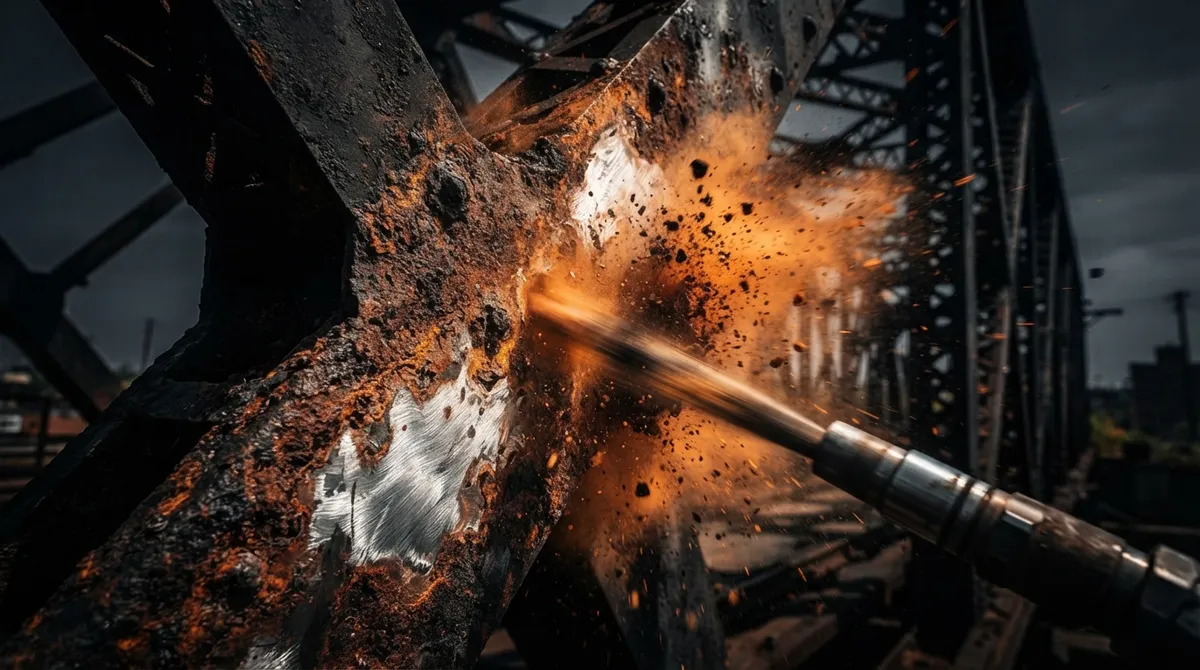
Sandblasting, more precisely called abrasive blasting, is a surface-prep method. It does two main jobs. It removes corrosion and old coatings, and it creates a rough profile on the steel so new paint can bond.
That second job matters more than most people think. A coating is only as good as the surface underneath it. Paint on slick or rusty steel will not hold. Paint on clean, properly textured steel can last for years.
If you want a quick background on the method itself, here is a helpful overview of what is sandblasting. For a closer look at how this connects to bridge work, see our post on what bridge painting preparation really requires.
Common Bridge Parts That Get Blasted
- Steel girders and beams
- Bearings and connection plates
- Rivets, bolts, and gusset plates
- Railings and guardrails
- Pedestrian bridge frames
- Steel supports and bracing
Each part has its own shape and its own trouble spots. Seams and corners hold moisture and rust. Hand tools often miss them. Blasting reaches them all at once.
Why Bridge Steel Needs Proper Prep
Bridges are everywhere, and many are aging. A Congressional Research Service summary of 2025 National Bridge Inventory data reports about 272,000 public-road bridges in good condition (44%), 310,000 in fair condition (50%), and 42,000 in poor condition (7%). Percentages are rounded.
The same summary notes that about 3,600 public-road bridges were closed in 2025, and about 62,000 had weight restrictions. Those numbers show why upkeep matters. Rust that goes untreated can shorten a bridge’s useful life.
Federal bridges tell a similar story. FHWA’s 2025 data lists 14,143 bridges in the federal and tribal ownership category, and 485 of them were rated poor. That is just one ownership group, not the national total. It still shows that even well-managed inventories need steady care.
Preventing rust is far cheaper than fixing the damage it causes. A solid blast-and-coat job is one of the best tools for that.
The Surface Standard Matters
Not every bridge needs the same level of cleaning. The right level comes from the project documents and the coating system. It should never be a guess.
For steel that needs near-white-metal preparation, AMPP’s dry abrasive-blast standard sets the required visual cleanliness. It also explains how to reach and check that level. That standard covers what you can see on the steel.
Good specifications go further. They also address:
- Surface profile, or how rough the steel should be
- Soluble salts left on the metal
- Dust and leftover abrasive
- Any other needs from the coating maker
This is a big deal in coastal Florida, where salt can hide on steel even after it looks clean. The owner’s inspector and the coating spec set the rules. A good blasting crew follows them closely.
Lead Paint: The Big Safety Issue
Older bridges often carry lead-containing paint. Blasting that paint can throw lead dust into the air. That is a serious health and environmental concern, and it shapes the whole job.
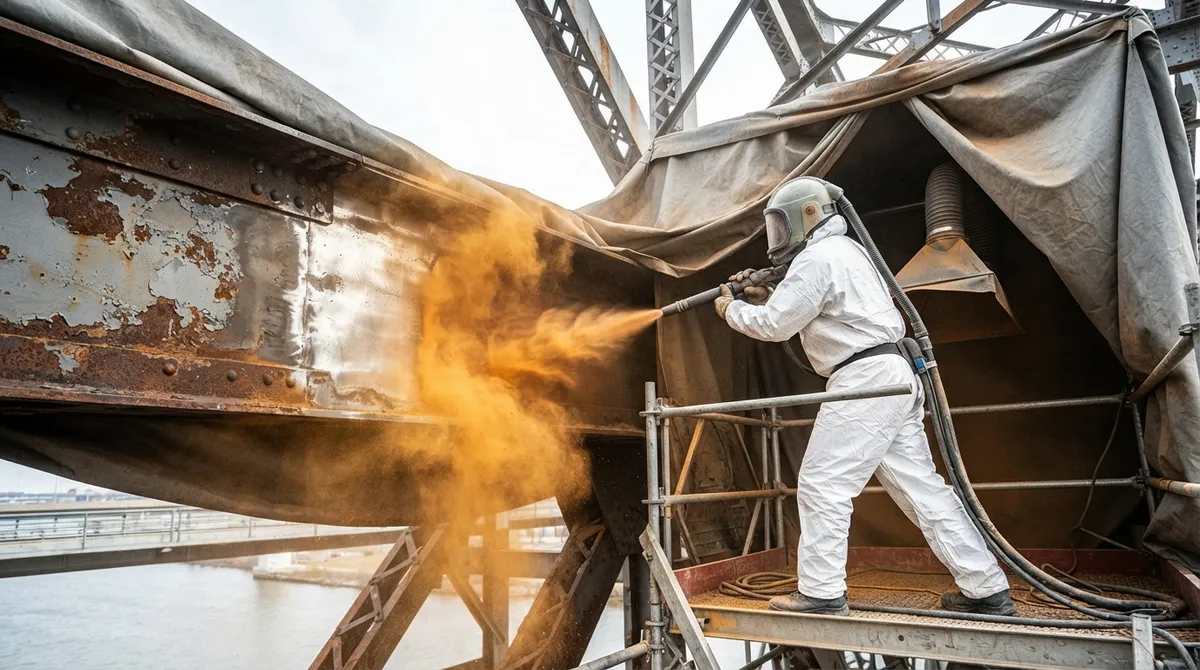
FHWA guidance calls for a job-specific worker health and safety plan. It also calls for exposure controls and containment that catches debris. The goal is to keep dust and spent abrasive away from the public, the soil, and the water.
OSHA’s construction lead standard sets a permissible exposure limit of 50 micrograms per cubic meter of air, averaged over eight hours. Always confirm the current rule and monitoring needs for each project. Source: OSHA 29 CFR 1926.62.
Should You Test for Lead First?
Yes, testing the existing coating before work starts is a smart move. The results shape the safety plan, the containment design, and the waste plan. Skipping this step is a risk no owner should take.
Containment: Keeping the Mess Where It Belongs
Containment is the system that traps dust and debris during blasting. It is one of the most important parts of a bridge job. FHWA describes a range of systems, from simple ground tarps for light scraping to engineered enclosures with negative-pressure ventilation for blasting.
The plan has to account for several things:
- Structural support for the enclosure itself
- Wind loads on tarps and panels
- Worker access and safety
- Weight of collected abrasive
- Protection for traffic, water, and soil below
We believe in the same idea on every job: we contain the mess and protect the surrounding area. On a bridge, that promise carries even more weight. If you are curious about dust control basics, read how pros handle sandblasting dust control safely.
Blasting vs. Overcoating: Which Fits?
Here is something many people do not expect. Full abrasive blasting is not always the best answer. Sometimes a lighter approach makes more sense.
FHWA notes that maintenance overcoating may use washing and mechanical prep. The crew removes loose paint and rust but keeps sound existing coating in place. That can produce less lead-containing waste than a full blast. The removed chips and wash water still need proper collection and disposal, though.
| Factor | Full Abrasive Blasting | Maintenance Overcoating |
|---|---|---|
| Existing coating | Removed down to steel | Sound coating stays |
| Best for | Failed or heavily rusted coatings | Coatings still mostly in good shape |
| Surface result | Clean steel with a profile | Cleaned and spot-prepped surface |
| Waste volume | Higher | Often lower |
| Containment needs | Usually heavy | Depends on method and site |
The right pick depends on the bridge’s condition, the coating spec, and the site. An honest assessment up front saves money and headaches later. Our post on when blasting beats hand prep covers a similar decision.
Where Mobile Blasting Fits In
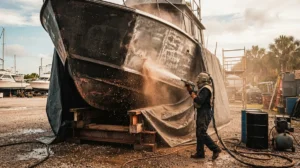
Mobile blasting brings the equipment and crew to the bridge. That can cut down on hauling parts to a fixed shop. For railings, small steel structures, and on-site components, that is a real advantage.
Our rig is fully mobile and self-contained. We bring our own power and water, so we do not rely on yours. We work dockside, at a shop, or on a job site. If you want to see how our approach works, read about mobile versus shop sandblasting.
Even so, mobile work still needs careful planning. Every site has its own limits. Before the first blast, the team should sort out:
- Access to the steel and staging areas
- Traffic control and public safety
- Weather and wind conditions
- Containment and waste handling
- Coordination with the owner’s inspector and coating crew
A note on scope: at Blastworx, we do the strip and prep work. We do not apply marine coatings, and on commercial and structural jobs, recoating is handled by the coating crew or general contractor. Our industrial blasting services and commercial blasting services cover the prep side. We also have a guide on structural steel blasting facts for Florida owners.
Choosing the Right Blast Method
We match the blast to your surface, not the other way around. The right media for the job depends on the steel, the coating, and the finish you need.
| Method | Good For | Notes |
|---|---|---|
| Dry abrasive blasting | Heavy rust and thick coatings on steel | Common for spec-driven bridge work |
| Dustless (wet) blasting | Areas needing less dust | Handy near active sites or equipment |
| Soda blasting | Delicate or lightly coated surfaces | Gentler, not for heavy rust |
Dry blasting often fits tough steel prep. Dustless blasting helps where dust is a concern. For a deeper comparison, see wet sandblasting versus dry and what makes dustless blasting so effective.
Keep in mind that bridge specs may limit which method is allowed. Always follow the project documents first.
A Typical Bridge Blasting Process
Every project is different, but most follow a similar path. Here is a simple look at the steps.
- Assess the structure. Review the steel, the existing coating, and the project spec.
- Test the coating. Check for lead and other hazards.
- Build the safety and waste plan. Cover worker protection, containment, and disposal.
- Set up containment. Protect traffic, water, soil, and nearby areas.
- Blast the steel. Remove rust and coating to the specified level.
- Clean the surface. Remove dust and leftover abrasive.
- Inspect. The owner’s inspector checks cleanliness and profile.
- Hand off for coating. The steel is ready to prime and coat.
Timing matters here. Steel that sits too long after blasting can flash rust, especially in humid Florida air. Good crews plan their schedule so coating follows soon after prep.
What Happens to the Waste
Waste is a big part of the job. Spent abrasive and paint debris must be collected and managed with care. This is even more important when lead is present.
FHWA notes that lead-contaminated debris must be collected, characterized, and managed under the rules that apply. Disposal duties and local environmental rules can vary. Confirm current federal, state, and local requirements, plus the project’s approved waste plan, before work starts.
FHWA’s bridge-painting inspection guidance also says lead-contaminated waste generally cannot sit on site for more than 90 days. Still, verify project-specific rules and waste classification before you rely on that number.
What Affects Cost and Schedule
No two bridge jobs cost the same. Several factors move the price and the timeline.
- Size and shape of the steel
- Type and thickness of the existing coating
- Presence of lead or other hazards
- Containment complexity
- Access, traffic, and weather limits
- Waste testing and disposal needs
- Required cleanliness level and inspections
Bigger and trickier jobs take more time and planning. Lead work adds steps. If you want to learn more about price drivers, check out how much sandblasting estimates really cost. For smaller steel items like railings, our guide on removing rust from railings may help.
Working With Blastworx in Central Florida
We are an owner-operated mobile blasting company based in Tampa. We serve Tampa Bay and the central Florida corridor, including Orlando, Ocala, and Fort Myers. For the right job, we will travel anywhere in the state. You can see our full service areas and browse our project gallery to get a feel for our work.
Here is how we keep things simple:
- Walkthrough. Send photos or we come look, and we pick the right media.
- Free estimate. A clear, written estimate the same day. The price we give is the price you pay.
- Blast and strip. We protect the surrounding area, then blast the surface clean at your location.
- Ready to finish. The surface comes out clean and ready for the next step.
We are fully insured, and you talk to the people doing the work. We would love to hear what you need. You can also Visit us on Google — see what our customers are saying about us.
Final Thoughts
Sandblasting bridge restoration is really about prep. Clean steel, the right profile, and a careful safety plan set up everything that comes after. Skip any of those, and the new coating will not last.
Remember that blasting is not the answer for every bridge. Sometimes overcoating is a better fit. The project spec, the coating condition, and the site all play a role. Lead safety, containment, and waste handling must be part of the plan from day one.
If you have steel that needs to go back to clean, bare metal, we are happy to talk it through. We come to you, and we will be honest about what makes sense. Ready to get started? Get a free estimate today, or give us a call at 813-380-8092. You can text too.
FAQs
Q: What is sandblasting used for in bridge restoration?
A: Sandblasting, or abrasive blasting, removes rust and old coatings from bridge steel. It also gives the metal a rough profile so a new protective coating can bond well. That prep step is what helps the new coating last.
Q: How is abrasive blasting different from bridge overcoating?
A: Abrasive blasting strips the steel down to clean metal, while overcoating keeps sound existing paint and only removes loose paint and rust. Overcoating can create less lead-containing waste, but it only works when the old coating is still in decent shape. The right choice depends on the bridge’s condition and the project spec.
Q: How do contractors contain lead paint during bridge blasting?
A: They use containment systems designed to catch dust, debris, and spent abrasive. These range from simple ground tarps to engineered enclosures with negative-pressure ventilation. A job-specific worker health and safety plan and a waste plan go along with it.
Q: Does a bridge need to be tested for lead paint before blasting?
A: Yes, testing the existing coating first is a smart and widely recommended step. The results guide worker protection, containment design, and how waste is handled. Always confirm the current federal, state, and local rules for your project.
Q: What factors affect the cost and schedule of mobile bridge blasting?
A: Size, coating type, lead presence, containment needs, site access, weather, and waste disposal all play a part. Required cleanliness levels and inspections can also add time. A walkthrough is the best way to get an accurate estimate.