Key Takeaways
-
Silica sand is a hazardous blasting media linked to silicosis, so choose safer abrasives; concrete itself also contains crystalline silica that needs dust controls.
-
Always request a test patch before a full job to see how the stain or coating comes off and how much the surface texture will change.
-
Wet blasting methods can cut dust emissions substantially, with cited control efficiencies of roughly 50% to 93%, though results vary by job.
-
Abrasive blasting wears away a thin layer of cement paste and can expose small stones, so expect a lighter, rougher surface, which suits new coatings.
-
Blasting works best for paint, failed sealers, and stubborn stains; for light surface dirt, pressure washing may be enough and cheaper.
-
Vet contractors by asking how they control dust, protect nearby property, collect spent abrasive and wastewater, and whether they are insured.
Concrete looks tough, but in Florida it takes a beating. Heat, humidity, rain, algae, oil drips, and old paint all leave their mark. If you’ve scrubbed a stained driveway until your arms ached and the spots still stared back at you, you’re not alone. That’s usually when people start looking into sandblasting for concrete cleaning.
Here’s the good news: mobile blasting can take concrete back to clean, sound material without you hauling anything anywhere. We come to you. But there’s a lot to understand first. Silica dust, surface texture, cleanup, and the right media all matter. And a lot of what people call “sandblasting” today isn’t really sand at all.
This friendly guide walks through 15 things worth knowing before you book a job. Whether it’s a driveway, a sidewalk, a pool deck, or a commercial parking area, you’ll know what to ask and what to expect. Let’s dig in.
1. “Sandblasting” Usually Means Abrasive Blasting
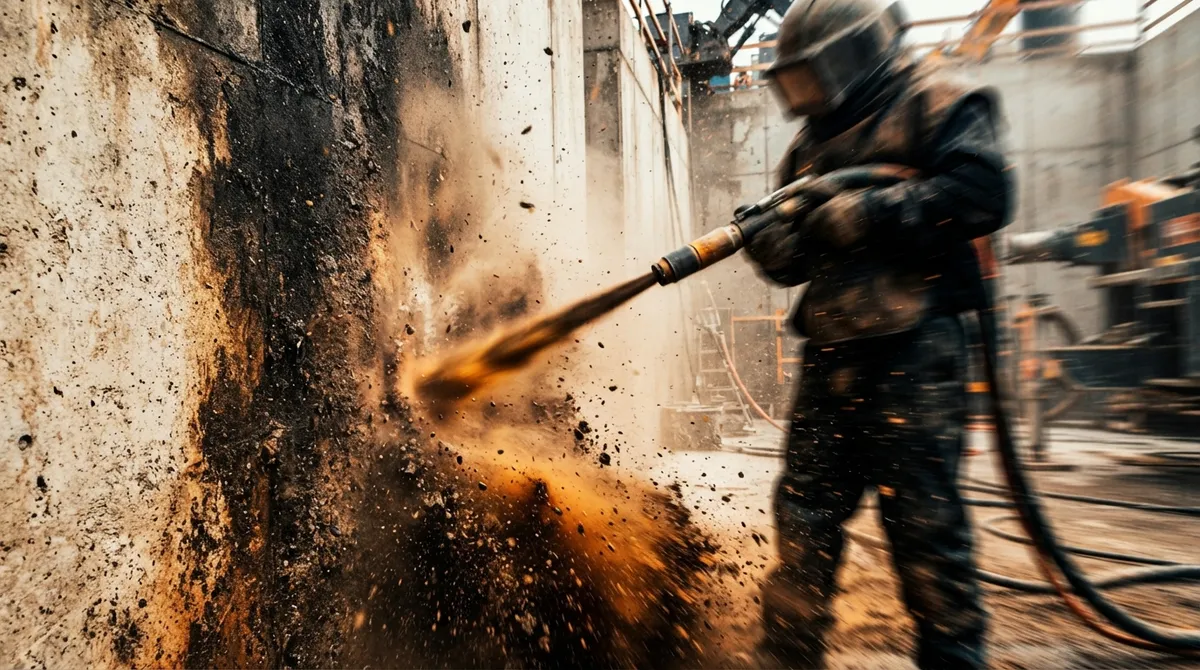
Most folks say “sandblasting” when they mean any kind of abrasive blasting. That’s okay! The term has stuck around for decades. If you want the background, here’s a quick explainer on what is sandblasting.
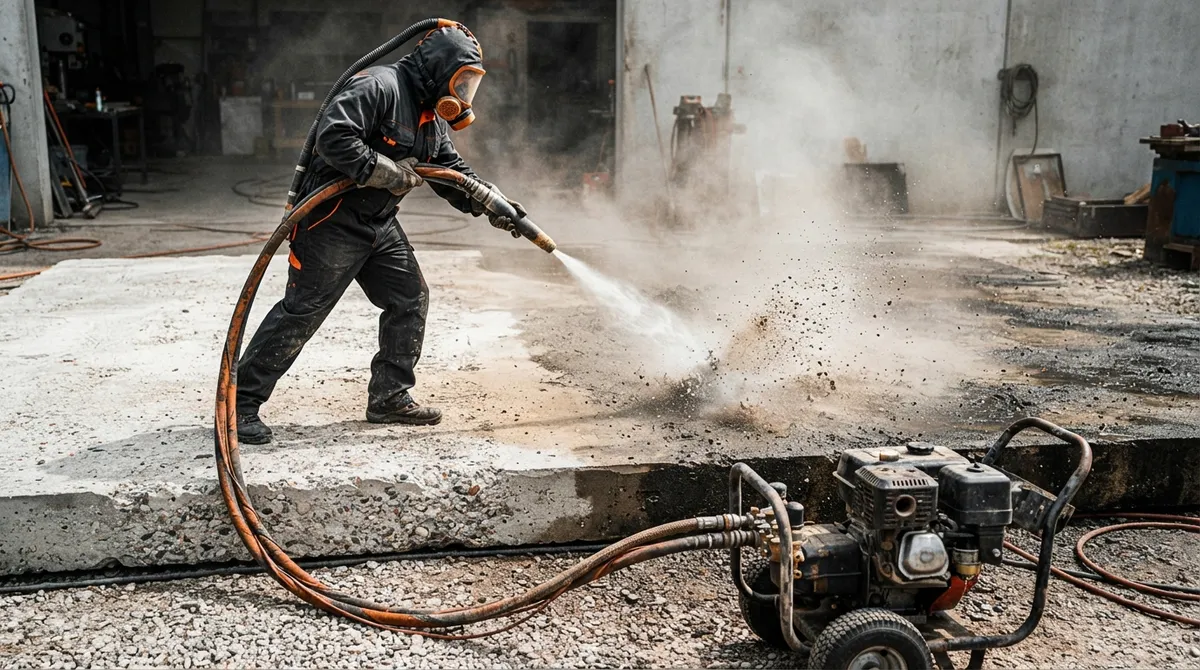
In practice, a mobile blasting crew pushes an abrasive against a surface to clean or prep it. The abrasive might be soda, a mineral grit, or another media. The real skill is picking the right one. We match the blast to your surface, not the other way around.
If you’re curious about the bigger picture, our guide on 6 types of sandblasting every Florida owner should know breaks down the options.
2. Mobile Blasting Brings the Work to Your Concrete
Concrete is heavy and fixed in place. You can’t load a sidewalk onto a trailer. That’s why mobile work makes so much sense for driveways, patios, sidewalks, building fronts, and parking areas.
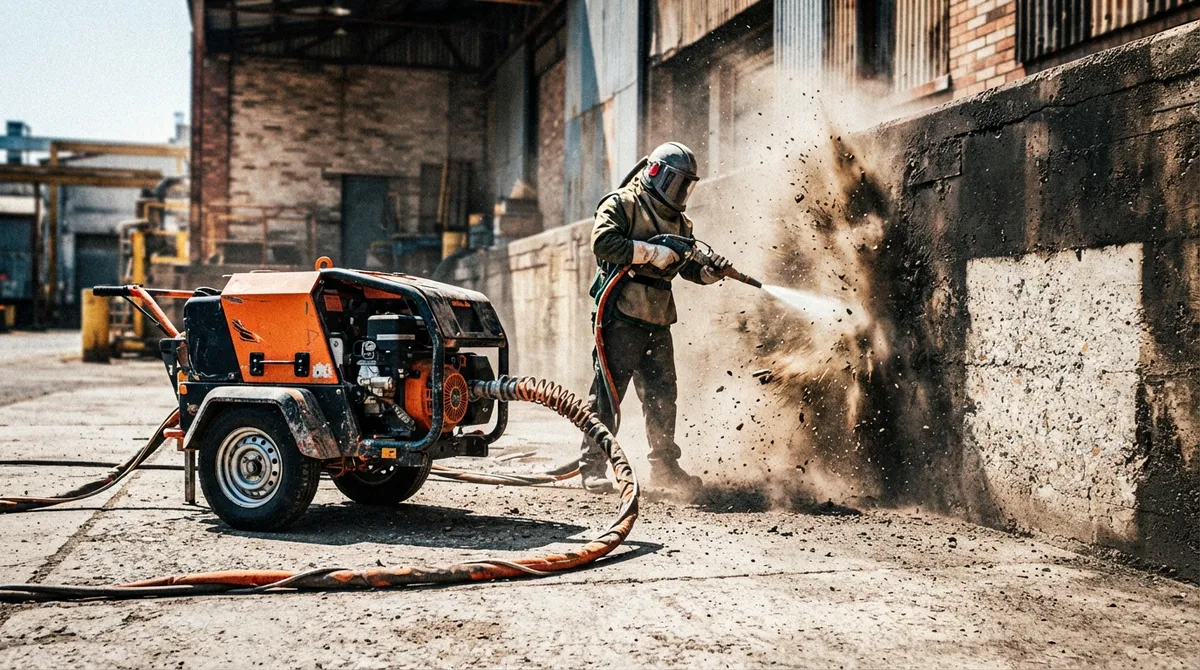
Our rig is fully mobile and self-contained. We work in a driveway, at a shop, or on a job site without needing your power or water. You can read more about why this approach works in why Tampa businesses choose mobile sandblasting.
3. Blasting Can Remove More Than Dirt
Plain dirt is the easy part. Abrasive blasting can also lift paint, sealer remnants, graffiti, oil-darkened spots, rust stains, and stubborn buildup. It can also rough up the surface for the next step.
Common things blasting can tackle on concrete include:
- Old paint and traffic striping
- Failed coatings and sealers
- Graffiti and spray paint
- Rust and mineral staining
- Algae, mildew, and grime
- Tire marks and surface buildup
Some deep oil stains soak into the pores of concrete. Blasting can improve them, but we’ll be honest if a stain may never vanish completely.
4. Blasting Changes the Concrete Surface
This one surprises people. Abrasive blasting works by wearing away material. That means it can remove a thin layer of the cement paste, and sometimes expose the small stones in the mix. The surface can end up lighter, rougher, or more textured than before.
That’s not always bad. Sometimes it’s exactly what you want, like when you need a good surface for a new coating. But it’s something to plan for. Our article 11 facts: does sandblasting damage concrete? goes deeper on this.
5. Always Ask for a Test Patch
A test patch is a small trial area, usually in a spot that’s hard to see. It shows you how the concrete reacts before the whole job begins. This matters most on decorative, stamped, exposed-aggregate, or older concrete.
A good test patch helps you decide:
- Whether the stain or coating actually comes off
- How much the surface texture changes
- Which media and pressure work best
- Whether you like the final look
It takes a few minutes and can save a lot of regret.
6. Real Silica Sand Is Not the Safe Choice
Here’s an important safety fact. Silica sand is a hazardous blasting media. OSHA and NIOSH both warn that breathing crystalline silica dust can cause silicosis and other serious lung disease.
That’s why modern crews lean on safer abrasives instead of plain silica sand. It’s one of the big reasons “the right media for the job” is more than a slogan for us. It’s a safety decision too.
7. Concrete Itself Can Make Silica Dust
Even if the abrasive is safe, the concrete may not be. Concrete contains crystalline silica. When you blast it, tiny respirable particles can get kicked into the air.
OSHA sets the permissible exposure limit for respirable crystalline silica at 50 micrograms per cubic meter of air, averaged over 8 hours. The action level is 25 micrograms per cubic meter. These numbers exist because the risk is real, and they apply to workers on the job. Dust control isn’t optional on concrete work.
8. Wet Methods Cut Down Dust Big Time
Dry blasting throws a lot of dust. Wet methods help a great deal. The EPA’s abrasive-blasting emission materials describe wet methods as producing substantially lower dust emissions than dry blasting. Cited wet-blasting control efficiencies run from roughly 50% to 93% depending on the application.
That’s a wide range, and it’s not a promise for every job. But it shows why wet and dustless approaches are so popular. Learn more in wet sandblasting vs dry: which one fits your job? and what makes dustless blasting in Tampa so effective.
9. Compare Your Main Method Options
Not every method fits every slab. Here’s a simple side-by-side to help you think it through.
| Method | Dust Level | Best For | Things to Watch |
|---|---|---|---|
| Dry abrasive blasting | High | Open areas, heavy coatings | Needs strong containment and respiratory protection |
| Wet abrasive blasting | Much lower | Driveways, sidewalks, patios, paint removal | Wet slurry needs cleanup |
| Dustless blasting | Low | Active sites, near homes and cars | Slurry and residue still need collection |
| Hydroblasting (water only) | Low dust | Light dirt and loose material | May not remove tough coatings or stains |
Each has trade-offs. The best pick depends on the concrete, the contaminant, and where the job sits.
10. Dust Control Still Doesn’t Replace Worker Protection
Here’s something many people miss. Even with wet methods, crews still need proper protection. OSHA points to engineering controls first, such as substitution, isolation, containment, ventilation, and wet methods. Respiratory protection comes in where it’s needed.
OSHA also notes that abrasive blasting can create high dust and high noise. And both the abrasive and the surface being blasted can add hazardous contaminants. If a crew tells you dust isn’t a concern because they use water, that’s a red flag. We cover this more in how pros handle sandblasting dust control safely.
11. Protecting Your Property Matters
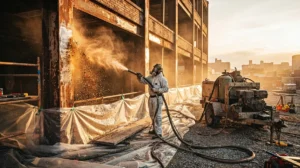
Mobile work happens right next to people, cars, plants, and drains. A good crew treats that like a big deal. We contain the mess and protect the surrounding area.
Here’s what site protection should look like:
- Covering or masking nearby windows, doors, and fixtures
- Shielding landscaping and pool areas
- Keeping spray and dust from reaching neighbors
- Blocking storm drains where needed
- Moving or covering vehicles and furniture
Ask your contractor how they’ll handle each of these before any work starts.
12. Cleanup and Waste Need a Plan
After blasting, there’s leftover abrasive, concrete residue, old coating bits, and possibly wastewater. That all needs to be collected, not just rinsed into the yard or the street.
Local rules about debris and wastewater vary. Old paint can also contain hazardous materials, so what’s on the concrete matters. A good contractor will tell you how the residue gets collected and handled. If they can’t explain it, keep looking.
13. Know What a Job Can Realistically Cost
Price depends on a handful of things. Here’s what moves the number most:
- The size of the area
- What you’re removing (light grime versus thick paint)
- The method and media used
- Site access and setup needs
- Containment and cleanup requirements
- Travel distance and how many surfaces are involved
We give a clear, written estimate the same day, and the price we give is the price you pay. To learn why quotes can differ, read why sandblasting service quotes vary so much or how much sandblasting estimates really cost.
14. Blasting Isn’t Always the Right Answer
We love blasting, but we won’t pretend it’s right for every slab. Light surface dirt might clean up fine with pressure washing. Blasting usually wins when you have paint, stubborn stains, or a coating to remove. Our comparison of sandblasting vs. pressure washing for concrete can help you decide.
If you’re getting ready to coat or seal, blasting often makes the most sense. A coating is only as good as the surface underneath it. Weak prep means peeling, bubbling, and doing the job twice. Check out how to prep a pool deck for resurfacing the right way for a real-world example.
15. Choose a Contractor Who Answers the Hard Questions
Before you hire anyone, get clear on the details. A good mobile blasting contractor should be able to answer all of these:
- What is the cleaning goal, and is blasting the right method?
- Which abrasive and method will you use?
- What will the surface look and feel like afterward?
- How will you control dust and contain the work?
- How will you protect nearby surfaces, plants, and drains?
- How will spent abrasive, residue, and wastewater be handled?
- Do you offer a test patch and a final walkthrough?
Also make sure they’re insured and that you talk to the people doing the work. That’s how we run things at Blastworx. For commercial sites like parking lots and storefronts, see how to clean a concrete parking lot or sidewalk fast.
How a Typical Mobile Concrete Job Works
Wondering what it looks like from start to finish? Here’s our four-step process:
- Walkthrough. Send photos or we come look, and we pick the right media for the surface.
- Free estimate. You get a clear, written estimate the same day.
- Blast and strip. We protect the surrounding area, then blast the concrete clean at your location.
- Ready to finish. The surface comes out clean and ready for the next step.
We strip and prep. Sealing, painting, or resurfacing is handled by you or your painter. That keeps things simple and clear. You can also browse our residential blasting services and commercial blasting services to see what fits your property. Want to see real results? Take a look at our project gallery.
We serve Tampa Bay and the central Florida corridor, and our service areas include Tampa, Clearwater, Sarasota, Ocala, Orlando, and Fort Myers. You can also visit us on Google and see what our customers are saying about us. And if your job is part of a bigger property project, local partners like Healthcare Solutions Team Brandon are good examples of the kind of Brandon-area businesses we’re happy to support with clean, ready-to-go surfaces.
Ready to Get Your Concrete Back to Clean?
Sandblasting for concrete cleaning can be a fantastic fix when scrubbing just isn’t cutting it. The key is the right media, the right dust controls, and a crew that protects your property and cleans up after itself. Ask questions, request a test patch, and don’t be shy about wanting details. A good contractor will welcome it.
We’re fully insured, owner-operated, and happy to chat. When you’re ready, get a free estimate for your concrete project, or give us a call at 813-380-8092. You can text too. We come to you, and you talk to the people doing the work.
FAQs
Q: What is sandblasting for concrete cleaning?
A: It’s a way of cleaning concrete by pushing an abrasive against the surface to lift dirt, paint, stains, and old coatings. Most mobile crews today use safer media than true silica sand, and many use wet or dustless methods. The crew comes to your location, so you don’t have to move anything.
Q: Does sandblasting damage or roughen concrete?
A: It can change the surface, since blasting wears away a thin layer of cement paste and can expose small stones. The change depends on the media, pressure, and how the concrete was made. That’s why a small test patch is a smart first step, especially on decorative or older slabs.
Q: Is sandblasting concrete safe?
A: It can be when it’s done right. Concrete can release respirable crystalline silica, so crews need dust controls, wet methods, containment, and proper respiratory protection. Choosing a safer abrasive than silica sand also makes a big difference.
Q: Can blasting remove paint, sealer, or stains from concrete?
A: Yes, it’s very good at removing paint, graffiti, failed sealers, and surface buildup. Deep oil stains that soaked into the pores may only lighten. A test area will show you what to expect before the full job.
Q: How should leftover abrasive and wastewater be handled?
A: A good crew collects spent abrasive, concrete residue, and slurry instead of letting it wash into yards or storm drains. The right disposal depends on local rules and on what was on the surface, such as old paint. Ask your contractor for their cleanup plan up front.