Key Takeaways
-
Sandblasting warehouse cleaning is targeted surface prep for tough jobs like rusted steel, failing coatings, and stained concrete, not a replacement for regular housekeeping like sweeping or dusting.
-
Blasting gives coatings a clean, sound surface to bond to, which matters most in humid, salty environments like Florida where rust returns fast if not fully removed.
-
Traditional silica sand is a hazardous choice; OSHA's silica limits (25 and 50 micrograms per cubic meter as an 8-hour TWA) mean safer abrasives, containment, ventilation, and respirators should be part of the plan.
-
For occupied warehouses, dustless (wet) blasting cuts airborne dust and is often the better fit, while soda blasting suits grease and delicate surfaces near machinery.
-
Before hiring, check for lead or other hazards in old coatings, confirm insurance, and ask how dust will be contained and how spent media and debris will be collected and disposed of.
-
Schedule blasting during shutdowns, nights, or weekends, and get a written estimate based on a walkthrough, since price depends on area, surface, coating, media, access, and containment needs.
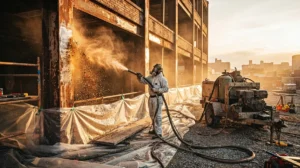
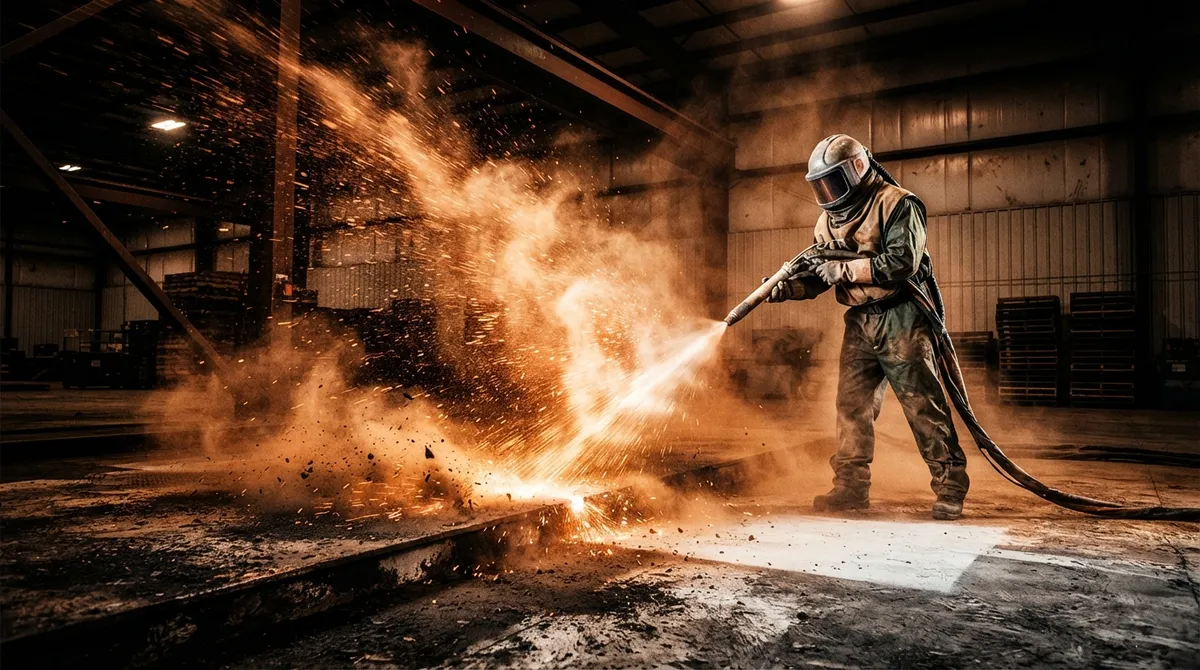
Say “warehouse cleaning” and most people picture mops, brooms, and pallet jacks. Say “sandblasting warehouse cleaning” and the picture changes fast. You are talking about bringing a blasting rig into the building to deal with the stuff a broom can never fix. Think rusted steel beams, peeling coatings, baked-on grime, and stained floors.
So what does sandblasting warehouse cleaning actually mean? In plain terms, it is surface cleaning and prep done on site. Trained operators bring abrasive blasting equipment to your warehouse and clean selected surfaces. It is not a replacement for regular housekeeping. It is a specialized fix for the tough jobs.
At Blastworx, we come to you. Our rig is fully mobile and self-contained, so we do not need your power or water. In this guide, we will walk through what the work covers, which surfaces make sense, how we handle dust and safety, and what to ask before you book. Let’s dive in!
What Does Sandblasting Warehouse Cleaning Include?
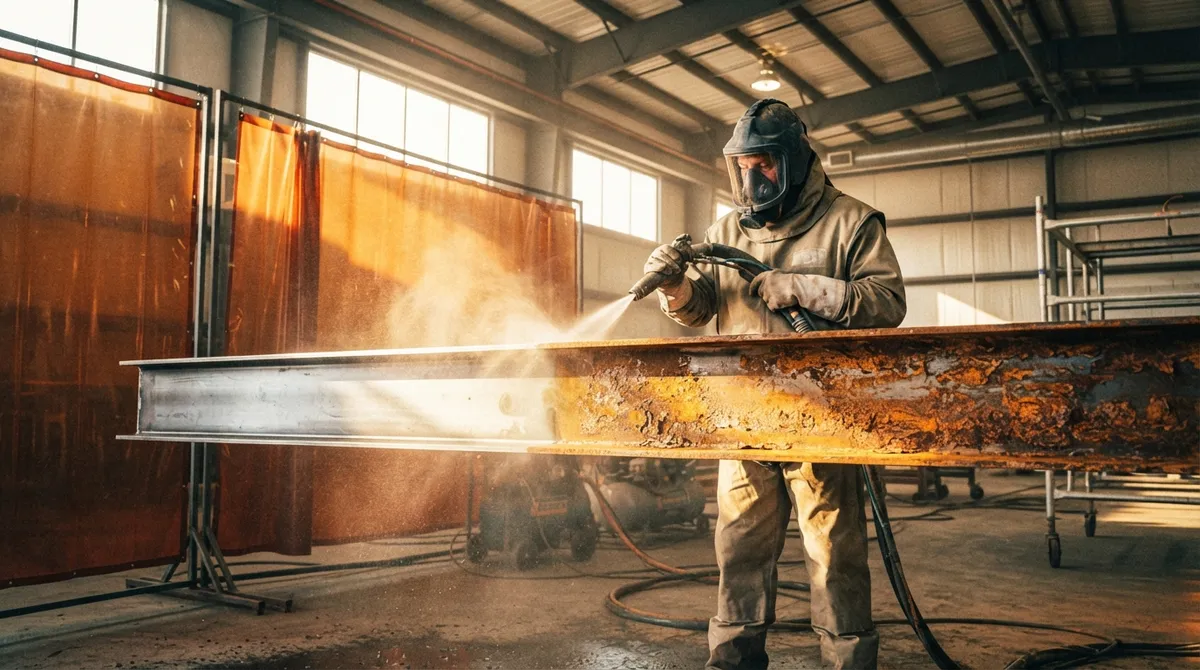
Here is the short answer. Sandblasting warehouse cleaning is the on-site use of abrasive media to remove rust, old paint, coatings, and heavy buildup from selected warehouse surfaces. The goal is a clean, sound surface that is ready for the next step.
If you want a quick background on the process itself, here is a good overview of what is sandblasting. The short version: abrasive media is propelled at a surface to remove what does not belong there.
A typical job might include:
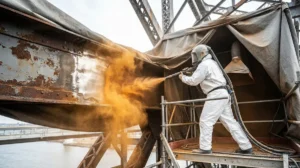
- Rusty structural steel beams, columns, and joists
- Loading dock rails, bollards, and guard posts
- Racking uprights and steel frames
- Tanks, vessels, and steel equipment
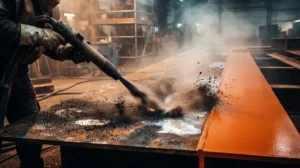
- Concrete floors with stains, old coatings, or sticky residue
- Exterior walls, dumpster enclosures, and fences
What it does not include is sweeping, dusting shelves, or washing windows. Blasting is a surface-treatment method, not general housekeeping. That is an important difference to understand before you call anyone.
Why Do Warehouse Owners Choose Blasting?
A coating is only as good as the surface underneath it. Paint, epoxy, and protective coatings will not last if the prep is bad. Hand-sanding and wire brushing miss rust hiding in seams, welds, and corners. Blasting takes the whole surface back to clean, sound material at once.
That matters even more in Florida. Heat, humidity, and salt air are hard on bare steel. Rust returns fast when it is not fully removed. For more on that point, see our post on blasting vs. hand tools.
Here are the big reasons owners go this route:
- Better coating bond. Fresh paint and coatings stick better to a properly blasted surface.
- Faster results. Blasting covers large areas much faster than hand work.
- Safer structures. Removing rust early helps you spot real damage before it gets worse.
- Cleaner look. Tired, stained surfaces look like new again.
- Less downtime. Mobile work means no hauling equipment off site.
Which Warehouse Surfaces Can Be Blasted?
Not every surface likes the same treatment. We match the blast to your surface, not the other way around. The right media for the job depends on what is underneath the mess.
| Surface | Common Problem | Typical Approach |
|---|---|---|
| Structural steel | Rust, failing paint | Stronger abrasive for clean, bare metal |
| Concrete floors | Stains, old coatings, residue | Abrasive matched to the finish you need |
| Equipment and machinery | Grease, rust, buildup | Soda or dustless methods near moving parts |
| Dock rails and bollards | Rust, impact scrapes | Abrasive blasting, then ready to coat |
| Exterior walls and enclosures | Graffiti, paint | Low pressure, evaluated in person first |
Some surfaces need an in-person look first. Painted walls, glass, and delicate finishes can be damaged by the wrong media. If you are unsure, send us photos. We will tell you honestly what will work and what will not.
For heavier steel work, our guide on structural steel blasting covers the details. You can also explore our industrial blasting and commercial blasting services.
Is Sandblasting Safe Inside a Working Warehouse?
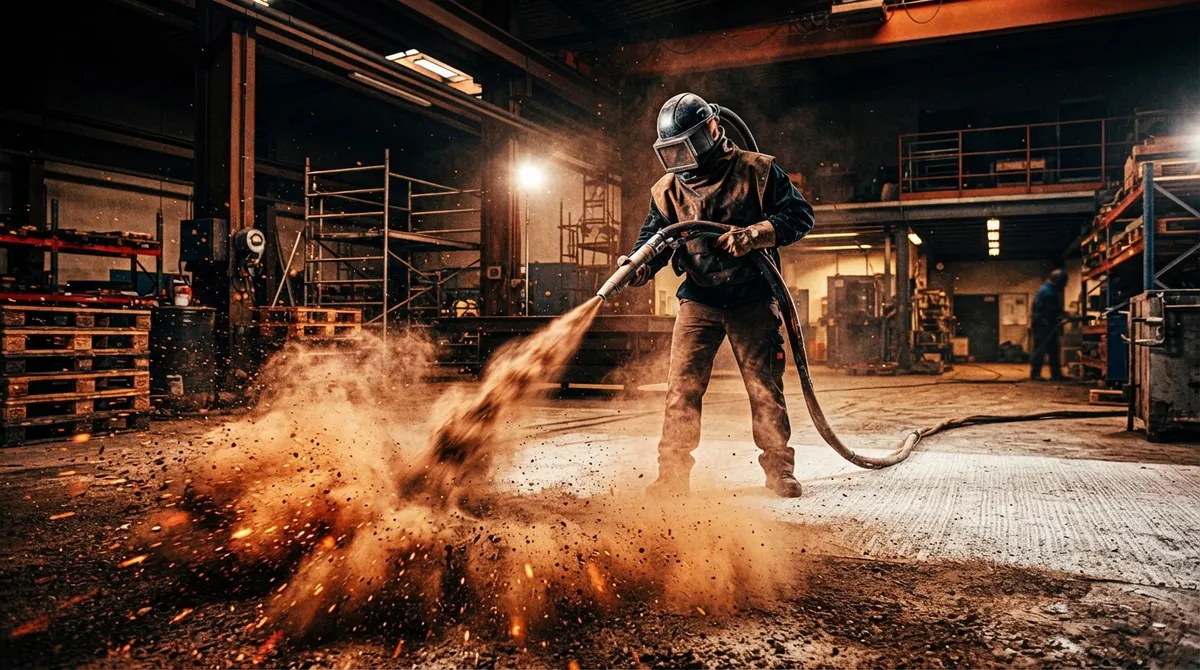
This is the big question, and it deserves a real answer. Blasting can be done safely, but only with a plan. The work creates dust, noise, and rebounding media. It can also release hazards from the material being removed, like old lead-based coatings.
OSHA is clear about the risks. Respirable crystalline silica is a serious exposure hazard. OSHA’s silica standards set an action level of 25 micrograms per cubic meter and a permissible exposure limit of 50 micrograms per cubic meter. Both are measured as an 8-hour time-weighted average, where the standard applies.
That is one big reason the word “sandblasting” gets used loosely. Traditional silica sand is a hazardous choice. Safer substitute abrasives, containment, ventilation, and proper respiratory protection are the smart path. Our post on media blasting vs. sandblasting explains the difference.
Dustless Blasting for Active Spaces
If your warehouse stays open, dustless blasting is often the better fit. It uses water to cut down airborne dust, so it works well indoors and near other equipment. It is also a smart choice around inventory. Learn more in what makes dustless blasting so effective.
If you are wondering about indoor work in general, check out 9 facts on whether you can sandblast indoors.
How Do We Protect People, Inventory, and Equipment?
A good blasting job is as much about protection as it is about power. We contain the mess and protect the surrounding area. Every warehouse is different, so the plan changes from job to job.
Here is how a smart plan usually comes together:
- Assess the site. We look at the surface, the coating, access points, and what is nearby.
- Identify hazards. We check for old coatings that may contain lead or other toxic metals.
- Pick the media. We choose an abrasive that fits the surface and limits dust.
- Set up containment. Barriers and controlled airflow keep dust where it belongs.
- Schedule smart. Many jobs work best during shutdowns, nights, or weekends.
- Clean up properly. Spent media gets collected, not spread around.
OSHA’s abrasive blasting rules also address enclosures. Blast-cleaning enclosures must keep continuous inward airflow at openings during blasting. The dust-laden air must be cleared before the enclosure is opened. These are the kinds of details a pro should be able to explain.
For a closer look at the process, read about the safe blasting procedures every mobile crew follows and how pros handle dust control.
What Happens to the Dust and Spent Media?
Cleanup is part of the job, not an afterthought. Spent abrasive and removed coating have to be collected. Dust should never be sent into occupied areas.
OSHA’s silica rules limit dry sweeping and dry brushing where they could raise exposure, if safer methods are available. Wet cleaning and HEPA-filtered vacuuming are the better choices. Compressed air should not be used to blow silica-containing dust around, except under specific conditions.
Disposal can also vary. Spent media and coating debris may need testing and proper handling under federal, state, and local rules. This matters most when the removed coating may contain lead or other hazardous materials. A trustworthy contractor will explain containment, collection, and waste responsibilities before work begins.
Which Blasting Media Is Best for a Warehouse?
There is no single best answer. The right media for the job depends on the surface, the coating, and the finish you want. Here is a simple guide.
| Method | Best For | Good to Know |
|---|---|---|
| Dry abrasive blasting | Heavy rust and thick coatings on steel | Needs strong containment and dust control |
| Dustless (wet) blasting | Indoor work and active job sites | Cuts airborne dust significantly |
| Soda blasting | Grease, grime, and delicate surfaces | Gentle, good near machinery |
Want to compare them in more detail? Our articles on wet vs. dry sandblasting and soda blasting vs. sandblasting break it down.
What About Warehouse Concrete Floors?
Floors take a beating from forklifts, spills, and years of traffic. Blasting can remove old coatings, stains, and residue, and it can open up the surface so new coatings bond well. Dust control matters here too, especially in a working building.
One common worry is damage. Done right, blasting does not wreck concrete. The key is matching the media and pressure to the slab. Check out 11 facts on whether sandblasting damages concrete and our guide to concrete sandblasting prep.
How Much Does Warehouse Blasting Cost?
Every job is different, so we do not quote by guesswork. Price depends on the size of the area, the surface, the coating, the media, access, and any containment needs. A walkthrough gives us what we need to put a real number on it.
Our process is simple:
- Walkthrough. Send photos or we come look, and we pick the right media.
- Free estimate. You get a clear, written estimate the same day. The price we give is the price you pay.
- Blast and strip. We protect the surrounding area, then blast the surface clean at your location.
- Ready to finish. The surface comes out clean and ready for the next step.
For more on pricing, read how much sandblasting estimates really cost. Want to stay organized? Our 14 surface prep steps before commercial coating is a handy checklist.
One note on coatings. Our commercial work is removal and prep. Recoating is usually handled by your general contractor or coating crew. On industrial jobs, protective coating may be available when needed.
What Should You Ask Before Hiring a Blaster?
Not all blasting companies work the same way. A little homework now saves headaches later. Before you book, ask these questions:
- Are you fully insured?
- What media do you recommend for my surface, and why?
- How will you control dust and protect my inventory?
- Will any old coatings need testing for lead or other hazards?
- How will spent media be collected and disposed of?
- Can you work after hours to limit downtime?
- Do I get a written estimate?
You should also be able to talk to the people actually doing the work. That is how we do it at Blastworx. We are an owner-operated crew, so you get straight answers from the start. For more help, see what you should know before hiring sandblasting services.
Why Mobile Blasting Beats Hauling Things Away
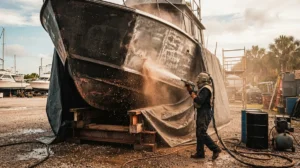
Warehouse steel and fixed equipment cannot be loaded on a truck. That is where mobile work shines. We come to you, and our fully mobile, self-contained rig works right where the job is. No borrowing power. No hauling. Less disruption.
It also keeps things simpler for your team. You skip transport, scheduling at a drop-off shop, and long waits. If you are weighing the options, see mobile vs. shop sandblasting and factory sandblasting that saves downtime.
Where We Work
We are based in Tampa and serve Tampa Bay and the central Florida corridor. That includes Clearwater, Sarasota, Ocala, Orlando, and Fort Myers, plus towns like Brandon, Riverview, Plant City, Lutz, and St. Pete. For the right job, we will travel anywhere in the state. Check our service areas to see if we cover you, and browse our gallery for real project photos. You can also Visit us on Google — see what our customers are saying about us.
Final Thoughts: Is Blasting Right for Your Warehouse?
Sandblasting warehouse cleaning is not for every mess. It is the right tool when rust, failing coatings, or stubborn buildup are beyond what a broom or pressure washer can handle. With the right media, solid containment, and careful cleanup, it can bring tired surfaces back to clean, sound material and set up a coating that lasts.
The best next step is simple. Get a pro to look at your surfaces, talk through the safest method, and give you a clear price. If you are ready, get a free estimate from our team, or give us a call at 813-380-8092. You can text too. We would love to help you get your warehouse back to clean and ready for the next step.
FAQs
Q: What does mobile sandblasting warehouse cleaning include?
A: It covers on-site abrasive blasting to remove rust, old paint, coatings, and heavy buildup from selected surfaces like steel beams, equipment, dock rails, and concrete floors. It is surface prep, not routine housekeeping. We bring a fully mobile, self-contained rig, so we come to you.
Q: Is sandblasting safe to do inside an operating warehouse?
A: It can be, with the right plan. That means safer media, dust control or dustless methods, containment, protection for inventory and equipment, and proper cleanup. Many jobs are also scheduled around shutdowns or after hours to keep your team safe.
Q: How is spent abrasive and removed coating waste handled?
A: Spent media and coating debris get collected, not spread around, and dry sweeping or compressed air is avoided where it could kick up dust. Disposal rules vary, especially if old coatings contain lead or other hazards. A good contractor explains the plan before work starts.
Q: What should I ask a mobile blasting contractor before scheduling?
A: Ask if they are fully insured, which media they recommend, how they control dust, and how they handle waste. Also ask whether you get a written estimate and if you will speak with the people doing the work. Clear answers are a good sign.