
Key Takeaways
-
On-site mobile sandblasting eliminates transport costs and extended downtime by bringing blasting rigs directly to your facility, allowing other plant operations to continue running while work is performed.
-
Proper surface prep is critical in Florida’s humid, salty environment—blasting removes rust and old coatings completely, ensuring new coatings bond properly and resist failure caused by hidden corrosion in seams and corners.
-
Mobile crews select abrasive media matched to your specific surface type (sand, soda, aluminum oxide, dustless), preventing damage to delicate equipment while ensuring rust and buildup are effectively removed.
-
Dustless and wet blasting options allow work near sensitive electronics, food production areas, and active operations without full shutdowns, reducing airborne particles and cleanup time afterward.
-
Get a written estimate before work begins to lock in pricing with no surprise charges; costs vary based on square footage, media type, rust thickness, accessibility, and whether dustless blasting is needed.
-
Mobile sandblasting market is growing at 5.8% annually (projected to reach USD 0.95 billion by 2033), reflecting that on-site service is often cheaper and faster than traditional shop blasting for large or fixed equipment.
If you run a factory in Tampa or anywhere in central Florida, you already know how much a shutdown costs. Every hour your equipment sits idle is money out the door. That’s exactly why more plant managers are turning to factory sandblasting done on-site, instead of shipping heavy equipment across town to a blasting shop. It’s simpler, faster, and honestly, it just makes more sense.
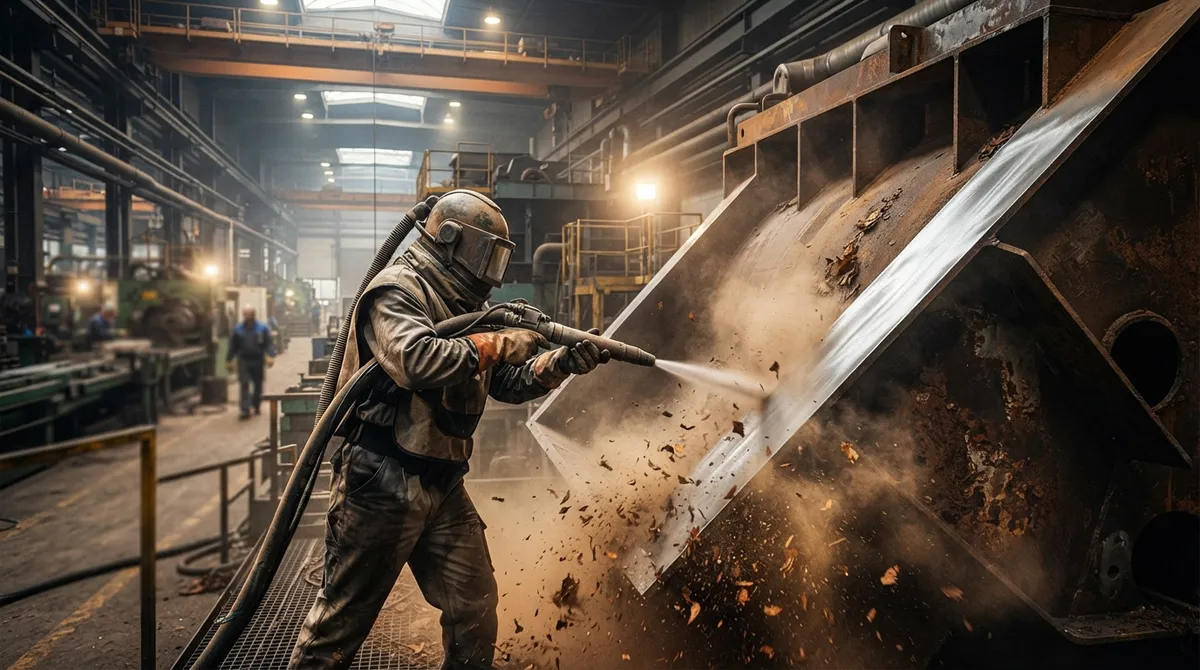
Factory sandblasting means bringing the blasting rig to your facility instead of moving your tanks, steel, or machinery somewhere else. A mobile crew shows up with a self-contained setup, blasts the surface clean right where it sits, and packs up when the job is done. No cranes. No trucking fees. No weeks of waiting for your equipment to come back.
In this article, we’ll walk through how factory sandblasting works, what surfaces it’s used on, how it compares to traditional shop blasting, and what it usually costs. We’ll also answer the questions we hear most often from Florida business owners considering this service.
What Is Factory Sandblasting, Exactly
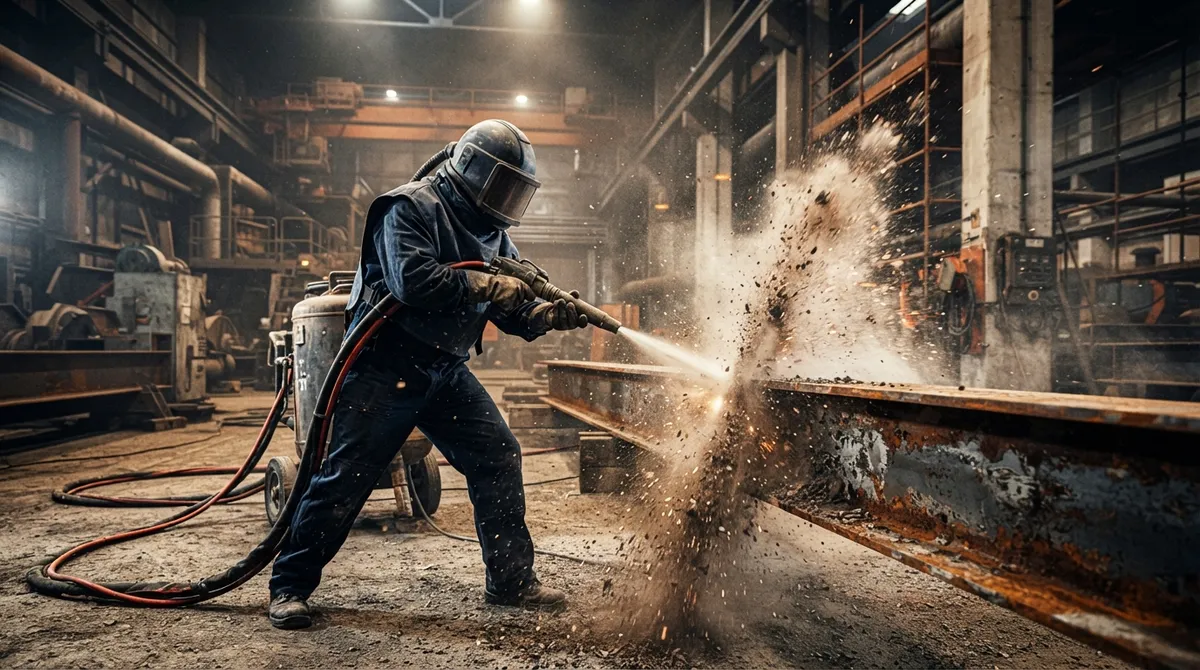
Factory sandblasting is abrasive blasting performed directly inside or around a manufacturing facility. Instead of disassembling equipment and hauling it to a blast shop, a mobile crew brings trailer-mounted or self-contained rigs straight to the plant floor.
The goal is simple: strip away rust, old paint, grime, or coatings so the surface is ready for the next step, whether that’s a new coating, a weld repair, or a safety inspection. This is what people mean by what is sandblasting in an industrial setting: using pressurized air and abrasive media to clean a surface fast and thoroughly.
Here’s why this matters so much for factories specifically:
- Large equipment like tanks and structural beams can’t easily be moved
- Downtime during a shutdown directly cuts into production and profit
- Onsite work lets other parts of the facility keep running
- Mobile crews bring their own power and water, so you don’t lose utilities
- Cleanup and containment are handled by the crew, not your maintenance team
How Mobile Sandblasting Works Inside a Factory
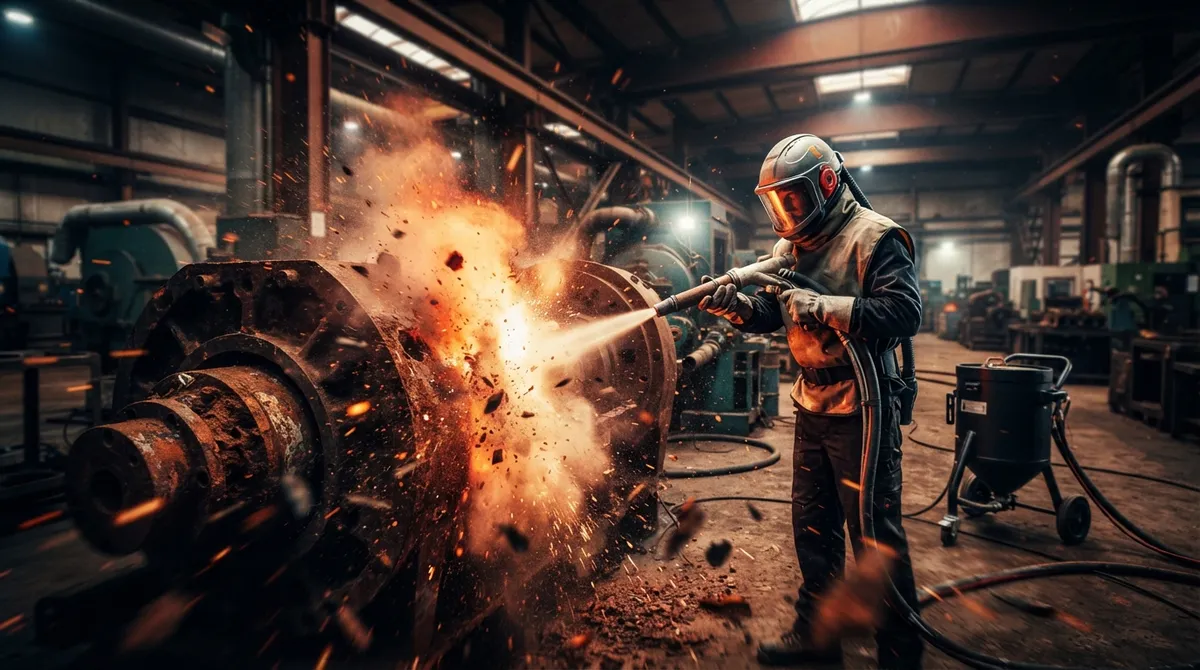
Every job starts the same way: with a walkthrough. A good crew looks at the surface, figures out what’s built up on it, and matches the blast media to the job. This step matters more than people realize. We match the blast to your surface, not the other way around, because the wrong media can damage delicate metal or waste time on something too soft for heavy rust.
Here’s a general step-by-step of what happens on a typical factory job:
- The crew walks the site and identifies surfaces needing prep, whether it’s steel beams, tanks, or floors
- They choose the right abrasive, options include sand, soda, or dustless blasting media
- Containment barriers go up to protect nearby equipment and workers
- Blasting begins, removing rust, coatings, or buildup down to bare metal or sound material
- Debris and used media are collected and hauled away
- The surface is inspected and left ready to coat, weld, or paint
Because the equipment is self-contained, crews can often work in one section of a plant while other areas keep running. That’s a big deal if you can’t afford a full shutdown.
Common Surfaces Factories Sandblast On-Site
Factory sandblasting covers a wide range of surfaces. Some are structural, some are equipment, and some are just part of daily plant upkeep.
| Surface Type | Common Reason for Blasting | Typical Media Used |
|---|---|---|
| Structural steel beams and columns | Rust removal before repainting or inspection | Sand or aluminum oxide |
| Storage tanks and vessels | Coating removal, corrosion control | Sand, dustless blasting |
| Production machinery | Grime buildup, paint stripping | Soda or walnut shell for delicate parts |
| Concrete floors | Coating removal, resurfacing prep | Sand blasting |
| Interior walls | Cleanup, mildew or paint removal | Dustless blasting |
| Loading dock areas | Rust and grease removal | Sand blasting |
Our industrial blasting services cover most of these use cases across Tampa Bay, Orlando, and the surrounding corridor. We bring our own power and water, so we don’t tap into your facility’s systems while we work.
Factory Sandblasting vs. Shop Sandblasting
A lot of business owners assume shop blasting is the only option. It’s not, and for factory settings, mobile blasting usually wins on convenience alone. Here’s how the two stack up.
| Factor | Mobile Factory Sandblasting | Traditional Shop Sandblasting |
|---|---|---|
| Location | Done on-site at your facility | Equipment must be transported to a shop |
| Downtime | Minimal, work happens in place | Extended, due to transport and scheduling |
| Cost of moving equipment | None | Can be significant for oversized items |
| Scheduling flexibility | High, crews travel to you | Limited by shop capacity and location |
| Containment control | Custom to your site | Standardized shop setup |
| Best for | Large, fixed, or oversized equipment | Small parts that are easy to transport |
Mobile blasting has grown for a reason. The global mobile sandblaster market was valued at roughly USD 0.6 billion in 2024, and it’s projected to reach close to USD 0.95 billion by 2033, growing at a rate of about 5.8% each year. Businesses are catching on that outsourcing to a shop isn’t always the cheapest or fastest route.
Why Surface Prep Matters So Much
A coating is only as good as the surface underneath it. This is true whether you’re painting structural steel or coating a storage tank. Hand-sanding misses rust hiding in seams and corners. Blasting takes the whole surface back to clean, sound material at once, so whatever goes on next actually bonds and holds up.
In Florida’s heat, humidity, and salt air, this matters even more. Coatings applied over rust or old paint tend to fail fast here. That’s why proper prep before painting or recoating is so critical for factories near the coast or anywhere in the central corridor. If you want a deeper look at what good prep involves, check out our guide on surface prep steps before commercial coating.
Dustless and Wet Blasting for Sensitive Environments
Not every factory can handle a cloud of dust. If you’ve got sensitive electronics nearby, food production areas, or workers in adjacent zones, dustless or wet blasting is often the better call.
Here’s what makes dustless blasting useful in these settings:
- It suppresses dust using water mixed into the blast stream
- It reduces airborne particles that could affect nearby equipment
- It’s gentler on some coatings while still removing rust and buildup
- It allows work closer to active operations without full shutdowns
- It cuts down on cleanup time afterward
We talk more about this approach in our article on what makes dustless blasting so effective, if you want to dig into the details.
What Factory Sandblasting Typically Costs
Pricing depends on a few things: the size of the area, the type of media used, how much rust or coating needs removal, and how accessible the surface is. Factories with tight spaces or overhead equipment sometimes take longer to prep and contain, which can affect the final number.
Here’s what generally drives the price up or down:
- Square footage or surface area being blasted
- Type of media required (soda tends to cost more than sand)
- Thickness of rust, coating, or buildup
- Whether dustless blasting is needed for dust control
- Accessibility of the equipment or structure
- Travel distance if the site is outside the immediate service area
We always recommend getting a written estimate before work begins. At Blastworx, the price we give is the price you pay, no surprise charges after the job starts. If you want specifics for your facility, it helps to get a free estimate so you know exactly what to expect.
Why Tampa Bay Factories Choose Mobile Blasting
Factories across Tampa, Orlando, Ocala, and Fort Myers deal with the same issues: humidity, salt exposure, and equipment that’s too large or too important to shut down for days. Mobile blasting solves a lot of that by bringing the work to the plant floor instead of the other way around.
We’re fully mobile and self-contained, which means we don’t need your power or water to get the job done. We also protect the surrounding area and contain the mess, so your team can keep working nearby without breathing in dust or debris. And because you talk to the people doing the work, there’s no middleman slowing down communication.
If you’re curious what this looks like in practice, our page on why Tampa businesses choose mobile sandblasting covers real examples from local companies. You can also browse our gallery to see before-and-after results from past jobs.
Getting Ready for a Factory Sandblasting Job
A little prep on your end goes a long way toward keeping the job smooth and fast. Here’s what we usually ask factory managers to think through before we arrive:
- Identify which equipment or areas need to stay operational during the job
- Clear a safe path for the mobile rig to access the blasting site
- Flag any sensitive machinery nearby that needs extra containment
- Confirm whether the surface will be coated or painted afterward
- Decide if work needs to happen after hours or on weekends
Our team walks through all of this with you during the initial site visit, so nothing gets missed once blasting starts. We also cover more prep tips in our guide on steps to prepare for sandblasting the right way.
Where We Work Across Florida
Blastworx is based in Tampa, but we travel throughout the central Florida corridor for the right job. That includes Clearwater, Sarasota, Ocala, Orlando, and Fort Myers, along with smaller communities like Brandon, Riverview, Plant City, Lutz, and St. Pete. Check our service areas page for the full list of places we cover.
We’ve handled everything from marine hardware to structural steel to commercial concrete prep, and factory work fits right into that mix. Whether you need one tank cleaned or an entire production line stripped and prepped, we bring the same process every time: a walkthrough, a clear estimate, careful blasting, and a surface that’s ready for the next step.
Don’t just take our word for it, either. You can visit us on Google — see what our customers are saying about us to hear directly from businesses we’ve worked with across the Tampa Bay area.
Ready to Get Your Factory Surfaces Prepped Right
Factory sandblasting doesn’t have to mean shutting down your operation or shipping heavy equipment across town. With the right mobile crew, you get clean, prepped surfaces without the downtime, the hauling costs, or the headaches. We match the blast to your surface, protect what’s around it, and leave things ready to coat, weld, or inspect.
If you’ve got rust, old paint, or buildup slowing down your next project, let’s talk about it. Get a free estimate today, or if you’d rather talk it through first, give us a call and we’ll walk you through exactly what your job needs.
FAQs
Q: What is factory sandblasting in mobile blasting?
A: Factory sandblasting means bringing a blasting crew directly to your facility instead of moving equipment to a shop. It’s used to strip rust, old paint, and buildup off tanks, steel, and machinery right where they sit, so you avoid downtime and transport costs.
Q: How does mobile sandblasting work in a factory?
A: A mobile crew shows up with a self-contained rig, does a quick walkthrough to pick the right media, sets up containment to protect nearby areas, then blasts the surface clean on-site. Everything from setup to cleanup happens at your location, so your plant keeps running around the work.
Q: What surfaces in factories can be sandblasted on-site?
A: Pretty much anything that’s part of daily plant operations: structural steel, storage tanks, production machinery, concrete floors, and interior walls all qualify. We match the media and pressure to whatever surface we’re working with, so delicate equipment stays safe.
Q: Is mobile sandblasting safe to use in active manufacturing facilities?
A: Yes, when it’s done right. Crews set up containment barriers to control dust and debris, and dustless or wet blasting options exist for facilities that need extra care around sensitive equipment or active work zones nearby.
Q: How much does factory sandblasting cost?
A: Cost depends on the surface area, media type, how much rust or coating needs removing, and site accessibility. We always recommend getting a written estimate first, so you know the exact price before any work begins, no surprises later.





