
Key Takeaways
-
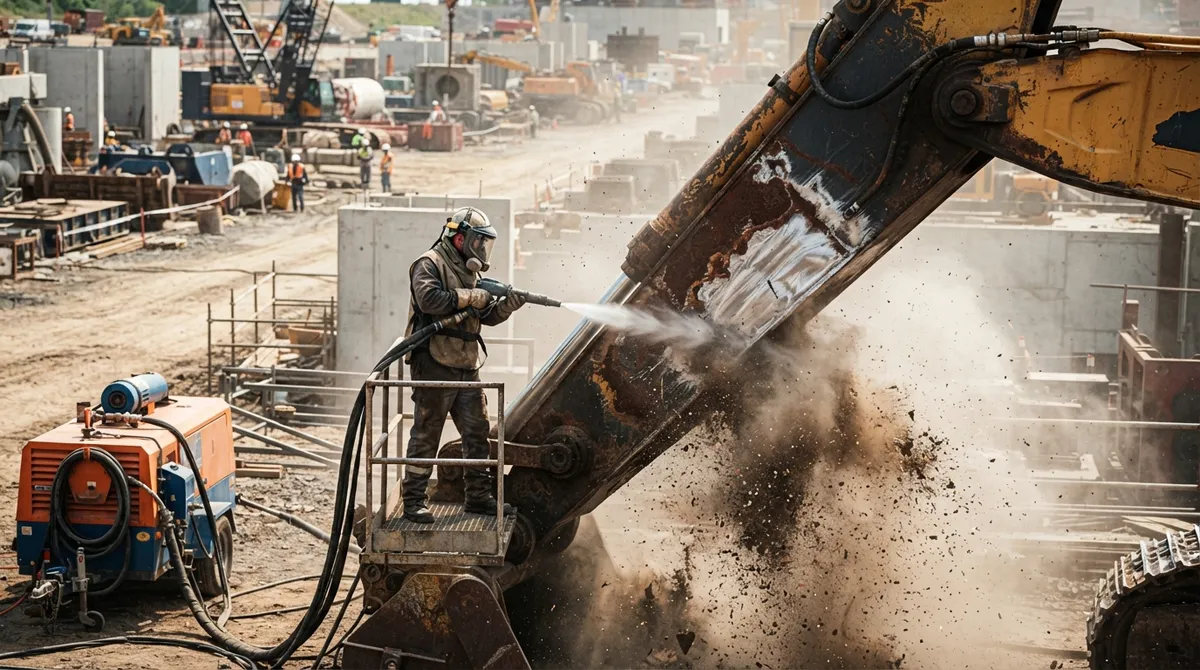
Equipment blasting eliminates transport costs and multi-week downtime by bringing the blasting rig directly to your location, allowing machinery to stay in service while being stripped to bare metal on-site.
-
Mobile blasting rigs are fully self-contained with diesel compressors, blast pots, and containment systems, requiring no power or water hookups and handling equipment too large or fixed to transport.
-
Dustless blasting costs 20-30% more than dry blasting but reduces dust and adds rust inhibitors to protect bare metal immediately after preparation, making it ideal for active job sites.
-
Pricing ranges from $1.50-$7.00 per square foot or $75-$150 per hour for a two-person crew, with final costs depending on equipment size, coating thickness, and containment requirements.
Got a piece of heavy equipment that’s too big, too heavy, or just too much of a headache to haul to a shop? You’re not alone. Equipment blasting solves this problem by bringing the whole setup straight to your location. No flatbed rentals. No downtime waiting on a shop slot. Just clean, bare metal ready for the next step, done right where the equipment already sits.
Whether you’re running a fleet of trailers, restoring a piece of vintage machinery, or trying to get rust off a tank before a coating job, equipment blasting is one of the most practical services in the mobile blasting world. In this guide, we’ll walk through what equipment blasting actually involves, what gear it takes, how pricing works, and why more contractors and property owners are choosing it over traditional shop-based prep. We’ll also answer the questions we hear most often from folks in Tampa, Ocala, Orlando, and everywhere in between.
What Is Equipment Blasting, Exactly?
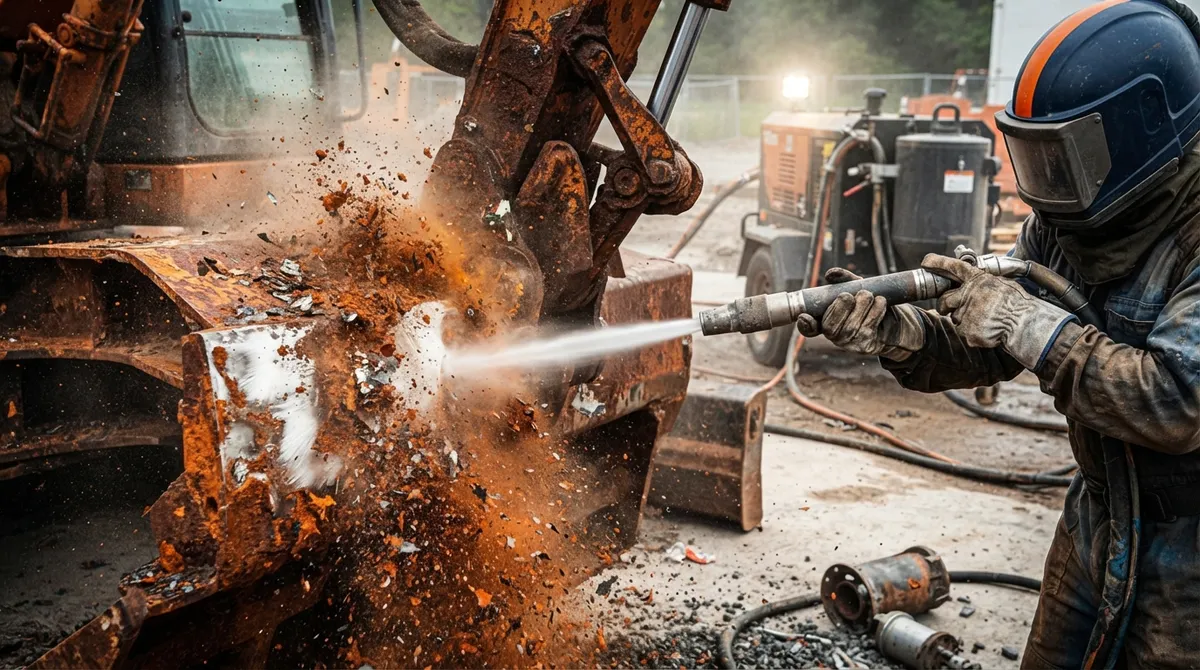
Equipment blasting is abrasive surface preparation performed directly on machinery, vehicles, and industrial assets at the customer’s location. Instead of loading up a piece of equipment and driving it to a blast booth, the blasting rig comes to you. This is the heart of mobile blasting, and it’s a big reason businesses across central Florida call us instead of scheduling a shop visit weeks out.
The process itself relies on what is sandblasting at its core: propelling abrasive media at high pressure to strip away rust, old paint, coatings, and grime. But mobile equipment blasting adds a layer of logistics on top of that. We bring containment materials, protect the surrounding area, and match the blast media to whatever surface we’re working with.
Why On-Site Beats Shop Drop-Off for Big Equipment
Think about the last time you tried to schedule a tow for something huge. It’s expensive, it’s a hassle, and it takes equipment out of service for days. Mobile equipment blasting flips that around.
- No transport costs or liability risk from hauling heavy machinery
- Less downtime since equipment stays on-site and ready to use again fast
- Flexible scheduling around your job site or shop hours
- Ability to blast equipment that’s literally too large or fixed in place to move
- One crew handles the whole job, from setup to cleanup
What’s Inside a Mobile Equipment Blasting Rig
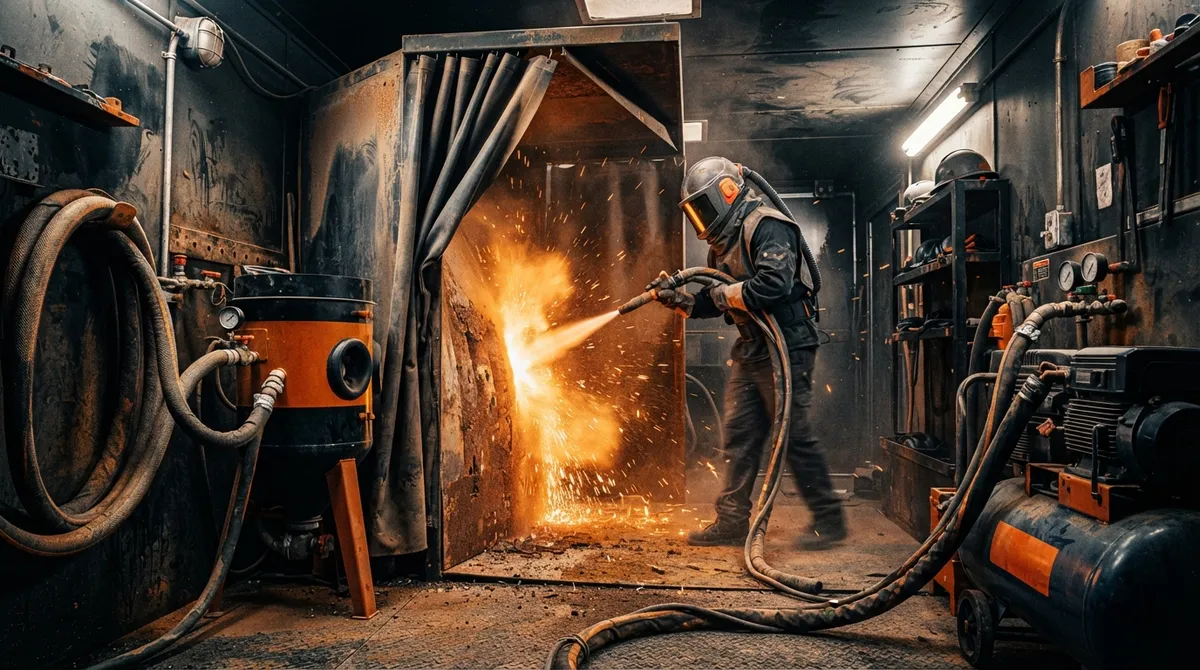
A lot of people picture a guy with a hose and a bag of sand. The reality is a bit more involved. A proper mobile blasting setup is a small, self-contained operation on wheels.
| Component | Purpose | Typical Range |
|---|---|---|
| Tow-behind diesel compressor | Powers the blast pot and hose | 185–1600 CFM |
| ASME blast pot | Holds and pressurizes abrasive media | 3.5–20 cu ft |
| Moisture separator | Keeps water out of the air line | Standard on most rigs |
| Blast hose and nozzle | Delivers media to the surface | Varies by job size |
| Containment materials | Protects surrounding area from overspray | Tarps, curtains, vacuum recovery |
| PPE | Protects the operator | Blast hood, suit, respirator |
Because we’re fully mobile and self-contained, we don’t need your power or water hookup. That matters a lot for job sites, marinas, and shops where hookups aren’t convenient or available at all.
Dry Blasting vs Dustless Blasting for Equipment
Not every job calls for the same setup. Dry abrasive blasting uses media alone, propelled by compressed air. It’s fast and effective, but it kicks up more dust, which matters if you’re working near other equipment or indoors.
Dustless blasting mixes water, air, and abrasive together. This knocks dust down significantly and adds a rust inhibitor to the mix, which helps protect bare metal right after blasting. It’s a popular choice for equipment jobs on active job sites or near sensitive machinery. You can read more about what makes dustless blasting in Tampa so effective if you want the deeper dive.
What Kinds of Equipment Get Blasted On-Site
Equipment blasting covers a wide range of assets across several industries. Here’s a rundown of what we see most often.
- Heavy construction equipment, including excavators, loaders, and attachments
- Structural steel and fabrication components before recoating
- Storage tanks and industrial vessels
- Fleet vehicles and trailers with rust or worn paint
- Marine hardware like davits, cleats, rails, and trailers
- Automotive frames, undercarriages, and suspension parts
- Agricultural machinery and implements
- Weld prep surfaces before fabrication
For marine-specific equipment, we typically switch to gentler media to protect fiberglass and gelcoat, while metal hardware and trailers can handle a stronger abrasive. Check out our Marine services page for more on how that works. If your equipment falls more into the industrial category, our Industrial page covers tanks, vessels, and structural steel prep in detail.
How Equipment Blasting Pricing Works
Pricing for equipment blasting depends on a handful of factors: size, coating thickness, media type, and how much containment the job needs. That said, there are some general benchmarks worth knowing.
| Pricing Factor | Typical Range |
|---|---|
| Per square foot | $1.50–$7.00 |
| Hourly, two-person crew | $75–$150 per hour |
| Dustless blasting premium | 20%–30% higher than dry blasting |
| Mobilization fee | Added on top of labor and media costs |
Dustless blasting costs more because of the water and rust inhibitor mixed into the process, but a lot of customers find the reduced cleanup and cleaner result worth the extra cost. If you want a clearer sense of what drives these numbers, our post on how much sandblasting estimates really cost breaks it down further.
Getting an Accurate Estimate
Every job is different, so cookie-cutter pricing rarely works. Here’s how we typically approach an estimate for equipment blasting.
- Send us photos, or we come take a look at the equipment in person
- We figure out the right media for the surface and coating
- You get a clear, written estimate the same day
- The price we give is the price you pay, no surprises later
If you’re ready to get moving on a project, you can always get a free estimate and we’ll walk you through the details before we ever show up.
Is Equipment Blasting Safe for Heavy Machinery?
This is one of the top questions we get, and it’s a fair one. Blasting heavy equipment involves stripping away rust and coatings without damaging the metal underneath. The key is matching the media and pressure to the surface, not just blasting everything the same way.
- Thicker steel and cast components can handle stronger abrasives at higher pressure
- Thin sheet metal or delicate components need lower pressure and softer media
- Sensitive areas like seals, bearings, and electronics get masked off before blasting starts
- Experienced operators adjust technique in real time based on how the surface responds
We match the blast to your surface, not the other way around. That’s the difference between a job that leaves clean, sound material ready to prime and coat, and one that causes warping or pitting.
Who Uses Mobile Equipment Blasting Most
Equipment blasting shows up across a surprising number of industries. Here’s where we see the most demand.
- Construction companies prepping equipment before repainting or resale
- Marine businesses maintaining boats, trailers, and dock hardware
- Industrial facilities doing tank and vessel maintenance
- Automotive shops handling frame-off restorations
- Fleet managers keeping trailers and work trucks looking sharp
- Agricultural operations maintaining tractors and implements
Contractors especially like being able to offer blasting as part of a larger job instead of outsourcing it to a separate shop. It keeps projects moving and keeps more of the work under one roof. If your business could use blasting as an add-on service, our Commercial page covers how that typically works for fleets, storefronts, and equipment enclosures.
Mobile Rig vs Drop-Off Shop: A Quick Comparison
| Factor | Mobile Equipment Blasting | Drop-Off Shop |
|---|---|---|
| Transport needed | None, we come to you | Yes, hauling required |
| Downtime | Minimal, stays on-site | Days or weeks, depending on backlog |
| Scheduling flexibility | Works around your site | Fixed shop hours and queue |
| Large or fixed equipment | No problem | Often can’t be transported |
For a deeper look at this comparison, check out Mobile Rig vs. Drop-Off Shop: Which Blaster Wins? It covers scenarios where one option makes more sense than the other.
Why Central Florida Businesses Choose Mobile Equipment Blasting
Florida’s heat, humidity, and salt air are tough on metal. Rust forms fast, and coatings break down quicker than in drier climates. That’s why so many businesses across Tampa, Clearwater, Sarasota, Ocala, Orlando, and Fort Myers lean on mobile equipment blasting to stay ahead of corrosion.
We’re an owner-operated crew, which means when you call, you talk to the people doing the work. No call centers, no runaround. We’re fully insured and small enough to give every job our full attention, but well equipped enough to handle tough industrial and equipment blasting projects across the central Florida corridor. You can browse examples of past work in our Gallery, or see where we operate on our Service Areas page.
Don’t just take our word for it, either. You can visit us on Google — see what our customers are saying about us before booking a job.
Ready to Get Your Equipment Back to Bare Metal?
Equipment blasting is one of the most efficient ways to prep machinery, tanks, trailers, and heavy equipment without the cost and hassle of transporting it to a shop. Whether you’re dealing with rust, old paint, or years of buildup, on-site blasting gets the job done fast and leaves the surface ready for the next step.
If you’ve got equipment that needs stripping down to clean, sound material, reach out today. You can get a free estimate or give us a call to talk through your project. We serve Tampa Bay and the central Florida corridor, and for the right job, we’ll travel anywhere in the state.
FAQs
Q: What is equipment blasting in the mobile blasting industry?
A: It’s abrasive blasting done right at your location instead of hauling equipment to a shop. We bring the compressor, blast pot, and containment gear to you, so heavy machinery, tanks, and trailers get cleaned up without ever leaving the site.
Q: What kind of equipment is needed for mobile blasting?
A: A typical rig includes a diesel compressor, blast pot, moisture separator, hoses, PPE, and containment materials like tarps or vacuum recovery systems. We’re fully mobile and self-contained, so we don’t need your power or water hookup to get started.
Q: How does dustless blasting differ from dry abrasive blasting?
A: Dustless blasting mixes water and a rust inhibitor with the abrasive media, which cuts down on dust and helps protect bare metal right after blasting. Dry blasting is faster and a bit cheaper, but kicks up more dust, so it depends on your job site and budget.
Q: How much does a mobile blasting rig cost?
A: A used turnkey rig usually runs about $30,000 to $60,000, while a new dustless setup can run $85,000 to $130,000. That said, as the customer, you don’t need to worry about that side of things, we handle the equipment so you just get a clean result.
Q: Is mobile blasting safe for heavy equipment and industrial machinery?
A: Yes, as long as the media and pressure are matched to the surface. We match the blast to your surface, not the other way around, which means thick steel gets a stronger approach while delicate components get a gentler touch.





