
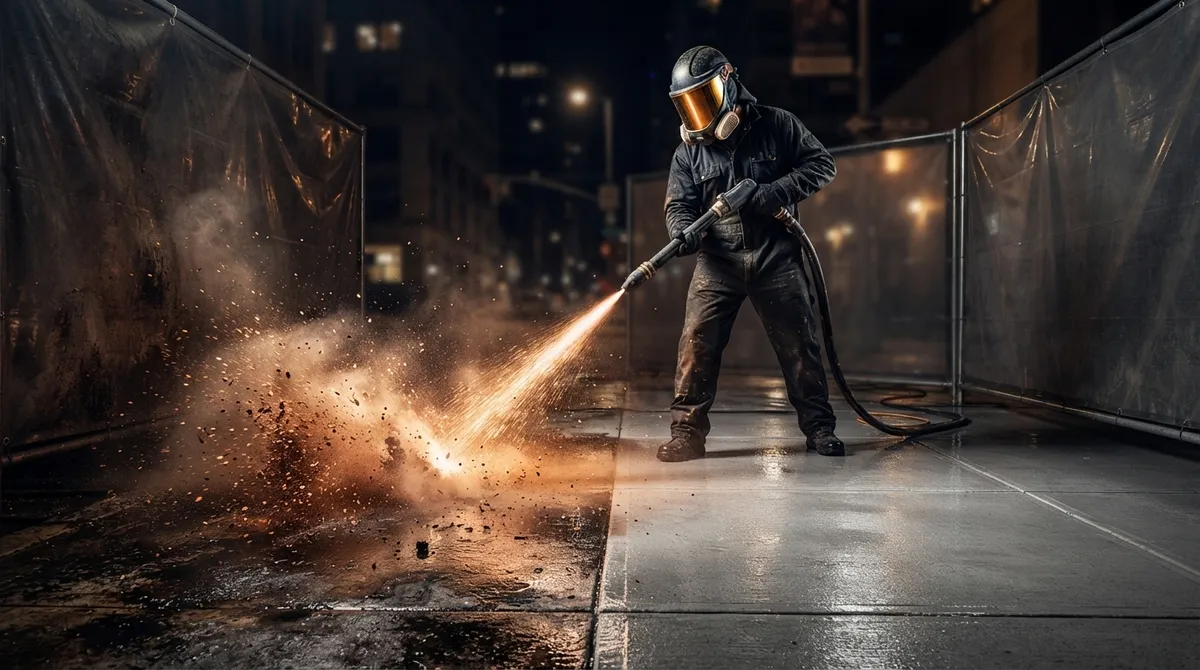
Key Takeaways
-
Mobile blasting is faster and more effective than pressure washing for removing deep stains like oil, paint, and efflorescence because it physically abrades the surface instead of just rinsing, and leaves concrete dry and ready for immediate repainting or sealing.
-
Concrete is porous, so dirt and stains soak deep into the surface rather than sitting on top, making standard pressure washing ineffective for set-in oil, paint, salt deposits, and other tough stains that require abrasive removal.
-
Professional crews match the abrasive media type to your specific surface condition—sand for heavy paint removal, soda for light stains, crushed glass for general cleaning, and steel grit for aggressive stripping—to avoid damaging the concrete.
-
Mobile blasting is a dry process with no chemical runoff or water pollution concerns, unlike pressure washing which creates storm drain runoff and requires several hours of drying before applying paint or sealer.
-
Professional blasting operators use proper safety equipment including silica dust respirators, safety goggles, coveralls, and hearing protection, plus dust containment barriers to protect the crew, property, and nearby bystanders from harmful crystalline silica exposure.
-
Most commercial parking lots should be cleaned every 1-2 years for routine maintenance, but when paint spills or deep oil stains occur, professional blasting provides a complete reset that standard washing cannot achieve.
Got a concrete parking lot covered in old paint, oil stains, or that stubborn white salty film called efflorescence? You’re not alone. Every property owner in Tampa Bay deals with concrete that just won’t come clean, no matter how much you scrub or how many chemicals you pour on it. The good news is there’s a method that actually works, and it doesn’t involve gallons of water or harsh chemicals running into storm drains.
Mobile blasting has become the go-to solution for cleaning tough concrete surfaces. It’s faster than pressure washing, it doesn’t rely on chemicals, and it leaves your parking lot or sidewalk looking like new. In this guide, we’ll walk through exactly how it works, why it beats other cleaning methods, and what to expect when you bring in a professional crew. By the end, you’ll know exactly how to clean a concrete parking lot or sidewalk the right way.
Why Concrete Parking Lots Get So Dirty
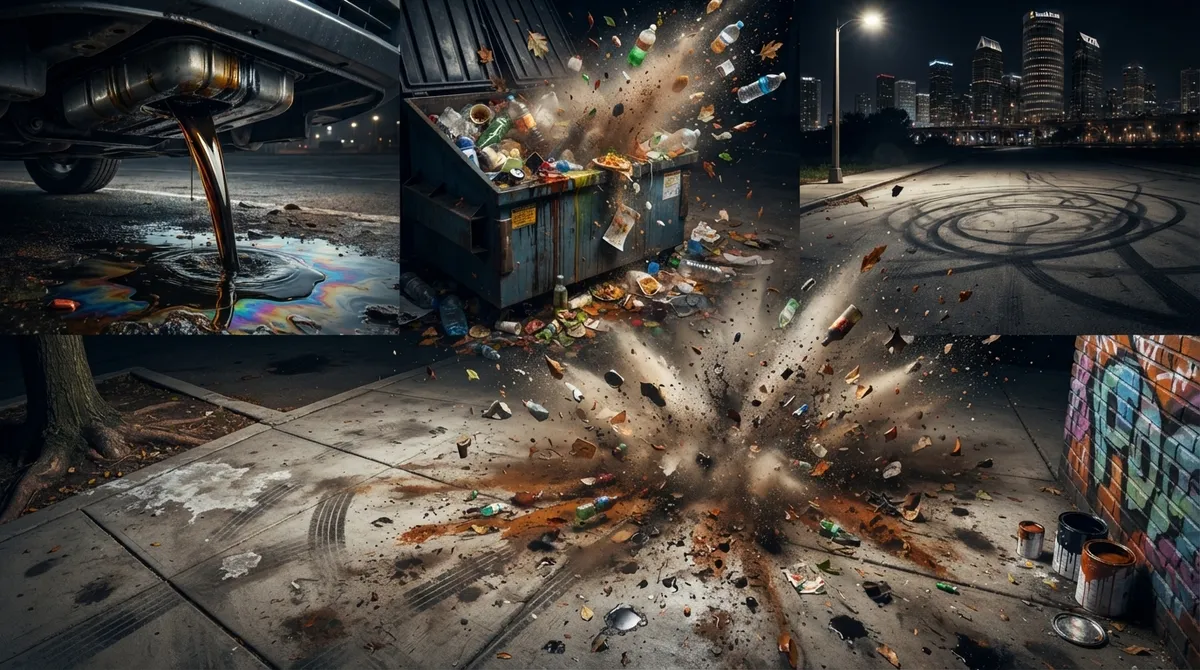
Concrete is porous. That means dirt, oil, and grime soak in deep instead of just sitting on top. Over time, this creates stains that regular cleaning just can’t touch.
Here are the most common culprits behind dirty concrete surfaces:
- Oil and grease drips from parked cars and delivery trucks
- Old paint spills from maintenance work or accidents
- Efflorescence, the chalky white residue that forms when moisture pulls salts to the surface
- Algae and mildew growth in shaded or damp areas
- Tire marks and rubber buildup near entrances and turns
- Faded or peeling traffic paint that needs to come off before repainting
Standard pressure washing can help with surface dirt, but it often struggles with deep stains. That’s where blasting steps in.
What Is Mobile Blasting and How Does It Work
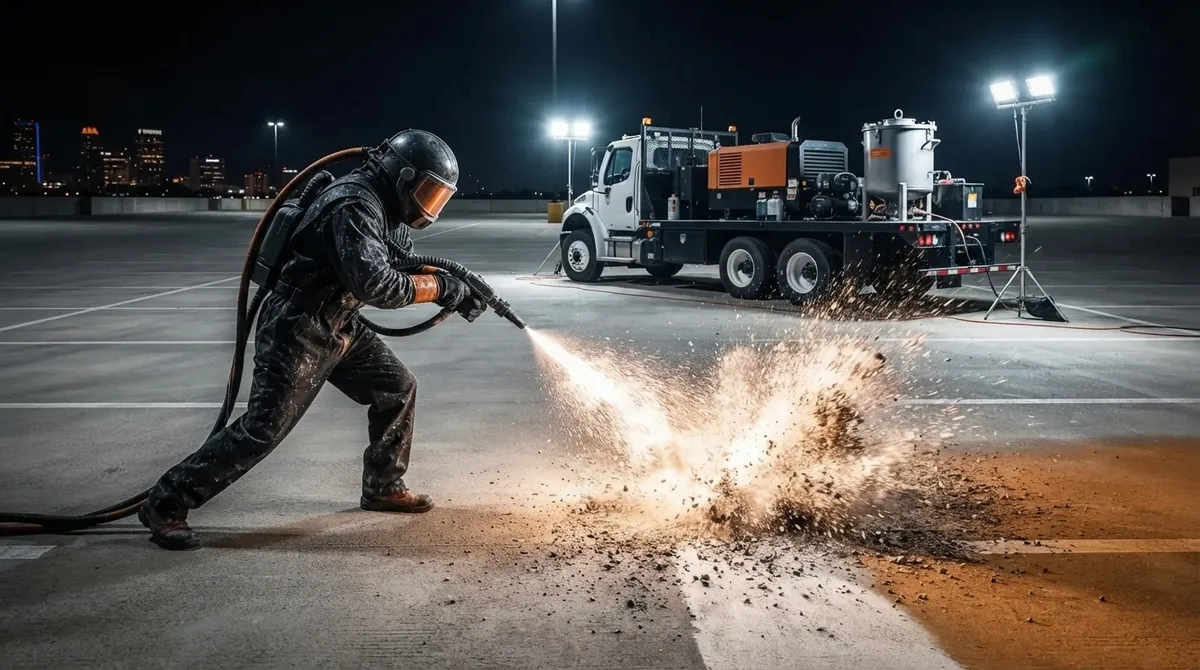
Mobile blasting uses abrasive media, like sand or soda, blown at high speed to strip away grime, paint, and stains. Unlike pressure washing, it doesn’t rely on water pressure alone. It physically removes the top layer of buildup without soaking the concrete.
This process is a type of what is sandblasting adapted specifically for concrete surfaces. The media is matched to the job, so a parking lot with heavy oil stains might need a more aggressive abrasive, while a sidewalk with light dirt might only need a gentler touch.
Why Blasting Beats Pressure Washing for Tough Stains
Pressure washing uses water to push dirt off the surface. That works fine for light dust or mud, but it often fails on set-in oil, paint, and salt deposits. Blasting mechanically abrades the surface, which means it actually removes the stain instead of just rinsing it around.
There’s also the water issue. Pressure washing creates runoff that has to go somewhere, and that somewhere is often a storm drain. Blasting is a dry process, so there’s no chemical-laden water to worry about. If you want a deeper look at how these two methods stack up, check out our full breakdown on sandblasting vs. pressure washing for concrete.
Step-by-Step: How Mobile Blasting Cleans a Parking Lot
Here’s what a typical mobile blasting job looks like from start to finish:
- Site walkthrough. We look at the surface, check the type of stains, and figure out the right media for the job.
- Test patch. A small, hidden area gets blasted first to confirm the right pressure and abrasive settings.
- Containment setup. We protect nearby landscaping, vehicles, and structures before starting the full job.
- Blasting the surface. The operator moves the nozzle at a steady distance, usually 8 to 16 inches from the concrete, using short bursts in corners for even coverage.
- Dust control. Dustless blasting options keep the mess down, especially important for busy commercial lots.
- Final inspection. The surface is checked for uniform cleaning and readiness for the next step, whether that’s sealing or repainting lines.
This process works well for both large parking lots and smaller sidewalks, though the equipment and media may vary depending on the size of the job.
Comparing Cleaning Methods for Concrete Surfaces
Not sure which method fits your situation? Here’s a quick side-by-side look.
| Method | Best For | Water Use | Removes Deep Stains | Dry Time Needed |
|---|---|---|---|---|
| Pressure Washing | Light dirt, dust, mild grime | High | Limited | Yes, several hours |
| Chemical Cleaning | Mild stains, mold, mildew | Moderate | Limited | Yes |
| Mobile Blasting | Paint, oil, efflorescence, heavy grime | None to minimal | Yes | No, ready right away |
As you can see, blasting wins when the job calls for serious stain removal or surface prep before repainting or sealing.
Types of Abrasive Media Used on Concrete
Choosing the right media matters. Too aggressive, and you risk damaging the surface. Too gentle, and the stain won’t budge. Here’s a look at common options.
| Media Type | Best Use | Surface Impact |
|---|---|---|
| Sand | Heavy paint and rust removal | Moderate to aggressive |
| Soda | Light stains, delicate surfaces | Gentle |
| Crushed Glass | General surface cleaning | Moderate |
| Steel Grit | Industrial-grade stripping | Aggressive |
We match the blast to your surface, not the other way around. That’s true whether we’re working on a shopping center parking lot or a residential driveway.
What Gets Removed During Concrete Blasting
People often ask what blasting can actually take care of. Here’s a rundown of the most common issues we tackle:
- Old traffic paint lines that need to be stripped before repainting
- Grease and oil stains from vehicles and equipment
- Efflorescence buildup on concrete surfaces exposed to moisture
- Tough algae and mildew stains that chemical cleaners miss
- Graffiti on sidewalks, curbs, and concrete walls
- Rubber tire marks near loading docks and driveways
If your property has graffiti issues along with dirty concrete, it’s worth reading our article on graffiti removal facts every Tampa property owner should know.
Getting Concrete Ready for Repainting or Sealing
One of the biggest advantages of blasting is what happens after the cleaning. Pressure washing leaves concrete wet, and you have to wait for it to dry before applying paint or sealer. Blasting is a dry process, so the surface is ready to go right away.
This matters a lot for businesses that need traffic lines repainted quickly, or property managers who want to apply a sealer before the next rain. According to the Environmental Protection Agency’s guidance on stormwater management, reducing runoff from cleaning activities also helps protect nearby waterways, which is another reason dry blasting methods are gaining popularity.
How Often Should You Clean a Parking Lot
Routine maintenance matters. Most experts recommend washing parking lots and garages every one to two years for general upkeep. But when paint spills happen, or oil stains set in deep, standard washing often isn’t enough. That’s when blasting becomes the better choice for a full reset.
Safety Matters During Concrete Blasting
Blasting concrete kicks up a lot of dust, and that dust can contain crystalline silica, which is harmful to breathe in over time. Professional crews take safety seriously. Here’s what proper protection looks like:
- Respirators rated for silica dust protection
- Safety goggles to shield eyes from flying debris
- Coveralls to protect skin and clothing
- Hearing protection, since blasting equipment is loud
- Dust containment barriers to protect bystanders and nearby property
This isn’t just about following rules. It’s about doing the job right and protecting everyone involved, including the crew and anyone nearby. The Occupational Safety and Health Administration’s silica exposure standards outline the specific protections required for this kind of work.
Why Choose a Mobile Blasting Company Over DIY
Renting equipment and trying this yourself might sound like a money-saver, but it rarely works out that way. Here’s why hiring a professional crew makes more sense:
- Professionals know how to match media to your specific concrete condition
- Proper equipment handles large parking lots faster than rental gear
- Experienced crews avoid over-blasting, which can damage the concrete surface
- Dust containment keeps your property and neighbors safe
- You get a uniform, even finish across the entire lot or sidewalk
At Blastworx, we come to you. Our rig is fully mobile and self-contained, so we don’t need your power or water to get the job done. Whether you’re in Tampa, Clearwater, Orlando, or anywhere along the central Florida corridor, we bring everything needed to get your concrete back to clean, sound material.
We handle jobs of all sizes through our commercial blasting services, covering parking lots, sidewalks, storefronts, and more. For a closer look at how we approach concrete prep specifically, check out our guide on concrete sandblasting done right in Tampa.
What to Expect When You Book a Concrete Blasting Job
Here’s our simple four-step process, so you know exactly what happens when you call:
- Walkthrough. Send us photos, or we’ll come take a look. We figure out the right media for your surface.
- Free estimate. You get a clear, written price the same day. The price we give is the price you pay.
- Blast and strip. We protect the surrounding area, then get to work cleaning your concrete on-site.
- Ready to finish. Your parking lot or sidewalk comes out clean and ready for sealing, painting, or whatever comes next.
We’re fully insured, and when you call, you talk to the people actually doing the work. No middlemen, no confusion.
Concrete Cleaning FAQs Property Owners Ask
Before wrapping up, let’s touch on a few things people commonly wonder about when comparing blasting to other cleaning methods. If you want more detail on specific comparisons, our article on why Tampa businesses choose mobile sandblasting covers even more ground.
Don’t just take our word for it. You can visit us on Google — see what our customers are saying about us and hear directly from property owners across Tampa Bay who’ve used our services.
Ready to Get Your Concrete Looking New Again
Cleaning a concrete parking lot or sidewalk doesn’t have to mean hours of scrubbing or waiting for chemicals to work. Mobile blasting gets the job done faster, cleaner, and without the water runoff headaches that come with pressure washing. Whether you’re dealing with old paint lines, oil stains, or years of built-up grime, this method delivers results that actually last.
If you’re ready to see the difference for yourself, get a free estimate today, or give us a call to talk through your project. We serve Tampa, Clearwater, Sarasota, Ocala, Orlando, Fort Myers, and everywhere in between. Let’s get your concrete back to clean.
FAQs
Q: What is the difference between shot blasting and pressure washing for concrete parking lots?
A: Pressure washing uses water to rinse dirt off the surface, while shot blasting physically abrades and removes the top layer of concrete grime, paint, and stains. Blasting gets deeper results without the water runoff, which is why it’s often the better choice for tough industrial stains.
Q: How does mobile blasting remove oil stains from concrete sidewalks?
A: The abrasive media strips away the stained layer of concrete mechanically, pulling the oil out along with it instead of just pushing it around like water does. It’s a dry process, so there’s no need to wait for the surface to dry afterward.
Q: Is shot blasting better than chemical cleaning for removing paint from concrete?
A: In most cases, yes. Chemical cleaners can soften paint but often leave residue behind, while blasting removes the paint completely and leaves a clean, uniform surface ready for repainting.
Q: How long does it take to clean a standard parking lot with a mobile blasting unit?
A: It depends on the size of the lot and how heavy the stains are, but most standard-sized parking lots can be completed in a single day. We’ll give you a clear timeline during your free estimate, so there are no surprises.
Q: What safety equipment is required for mobile concrete blasting operations?
A: Operators need respirators rated for silica dust, safety goggles, coveralls, and hearing protection since the equipment is loud. We take these precautions seriously on every job to keep our crew and your property safe.





