Key Takeaways
-
Match the abrasive media and pressure to each surface, since steel grit, garnet, glass bead, and soda each suit different materials and aggressiveness levels.
-
Grit blasting leaves a surface profile that gives new paint or powder coat a texture to bond to, so coatings last longer and resist peeling.
-
Always test a small patch first on old, thin, or delicate surfaces to see how the material reacts before blasting the full area.
-
Specify the cleanliness standard you need, such as SSPC-SP 6 commercial or SSPC-SP 10 near-white, and confirm the profile with your coating manufacturer.
-
Silica sand is a serious health hazard, so check the media's safety data sheet and choose silica-free abrasives where possible.
-
Ask your contractor how spent media and removed coatings are collected and disposed of, since old paint may contain lead and requires proper handling.
Ever looked at a rusty trailer, a peeling gate, or a tired steel beam and wondered how anyone gets it truly clean? Grit blasting is often the answer. It’s one of the oldest and most trusted ways to take a surface back to sound material, and these days the whole process can come right to your driveway, dock, or job site.
Here’s the short version. Grit blasting shoots hard abrasive media at a surface to strip rust, paint, scale, and buildup. It also leaves a tiny texture that helps new coatings stick. The tricky part is that “grit” isn’t one single thing. The right media, pressure, and method change with every surface.
In this guide, we’ll walk through how grit blasting works, which media fit which jobs, what standards mean, how safety and cleanup are handled, and what to expect when a mobile crew shows up. We’ll keep it simple and friendly, so you can feel confident asking the right questions.
What Is Grit Blasting?
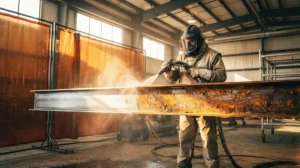
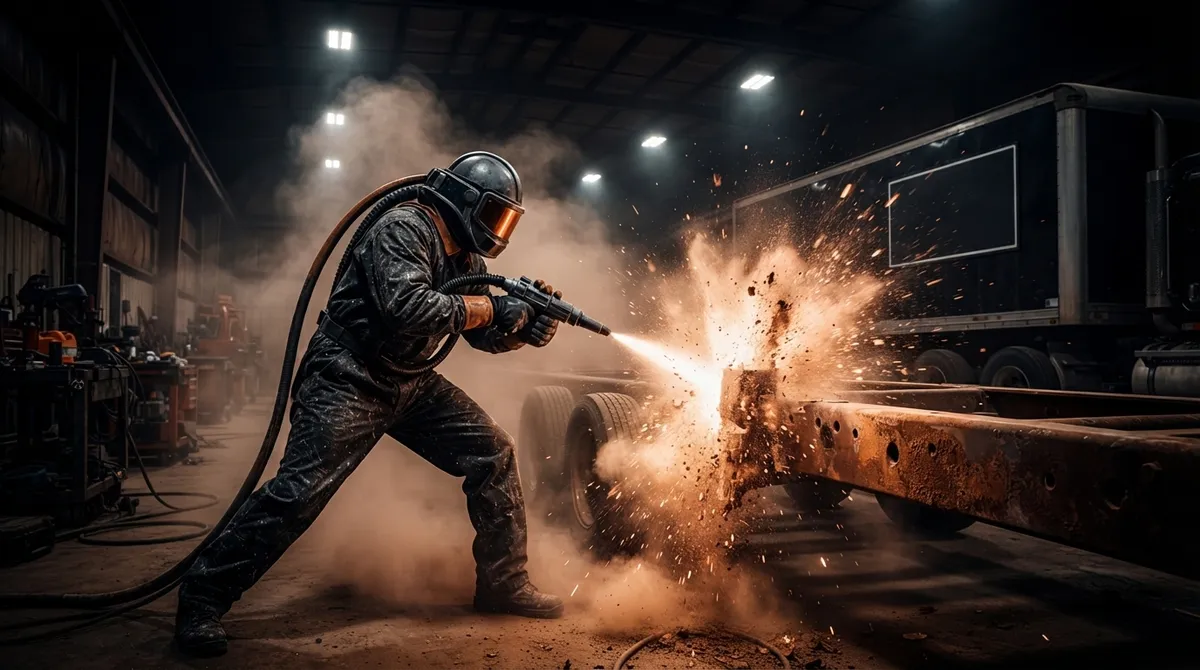
Grit blasting is a type of abrasive blasting. A stream of compressed air, water, or another force pushes abrasive media against a surface. The media knocks off rust, old paint, mill scale, and other contaminants. It also roughens the surface just enough for a new coating to grab onto.
That roughness has a name: surface profile. Think of it like the tiny teeth on sandpaper. Paint, powder coat, and primer bond better when they have a profile to hold onto. A smooth, shiny, or dirty surface lets coatings peel early.
If you want a quick background read, here’s a helpful overview of what is sandblasting and how the technique got started.
Grit Blasting vs. Sandblasting
People use these terms almost interchangeably. Sandblasting was the original name, back when sand was the go-to media. Today, many pros avoid silica sand because breathing its dust is a serious health risk. Instead, they use other abrasives, and the work is often called grit blasting or abrasive blasting.
So the real difference is the media. “Grit” covers many options, not just sand. If you’re curious about the older term, our guide on what sandblasting is in Florida breaks it down.
How Does Grit Blasting Work?
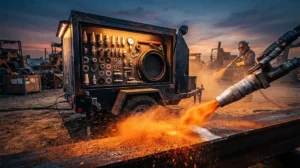
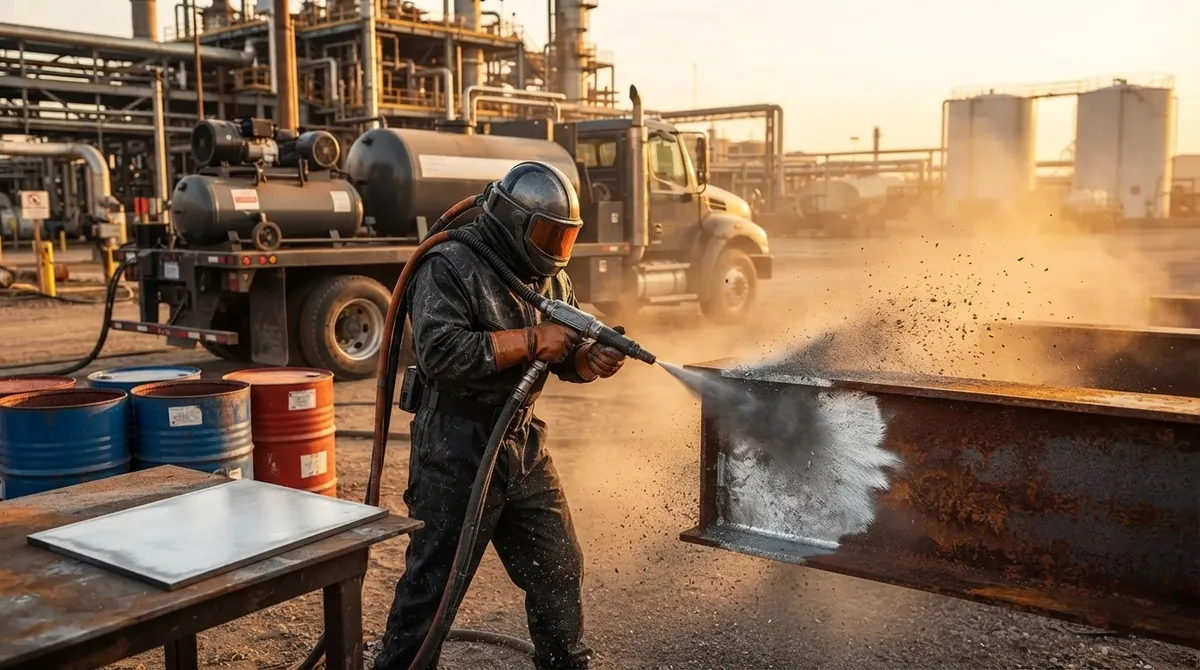
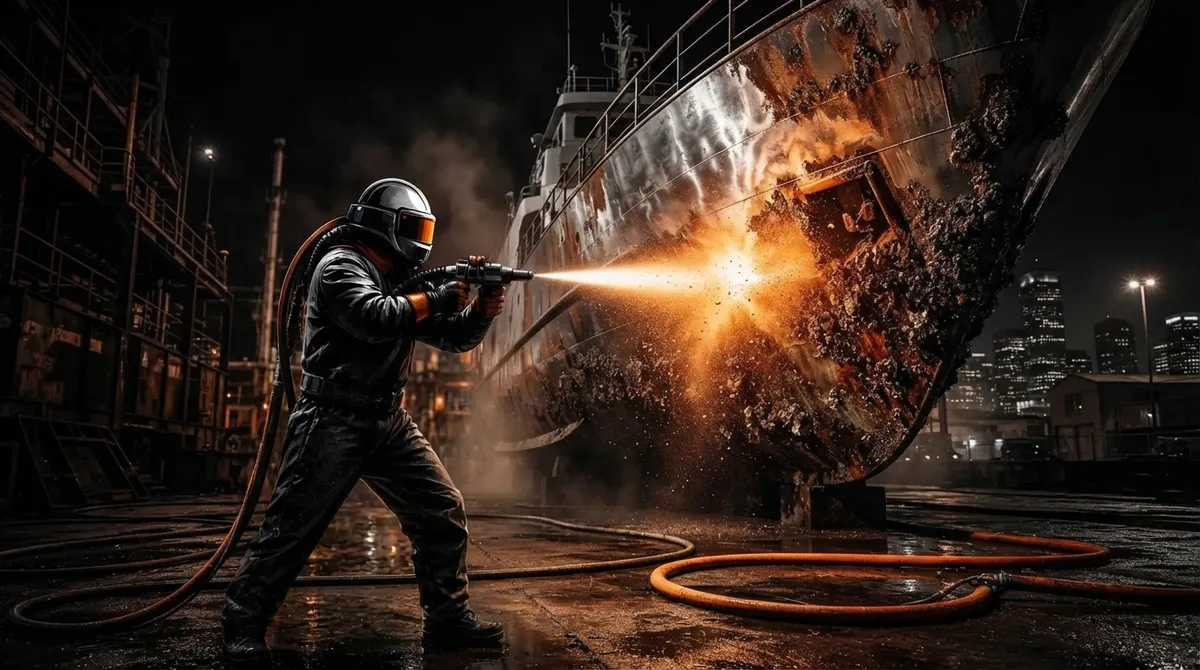
The basic setup is simple. A compressor makes high-pressure air. That air moves abrasive from a blast pot through a hose and out a nozzle. The media hits the surface, and the coating, rust, or buildup comes off.
What changes from job to job is how aggressive the blast needs to be. Three things matter most:
- The media: its hardness, shape, and size.
- The pressure: how hard the media hits.
- The angle and distance: how the operator holds the nozzle.
Small changes here make a big difference. Too aggressive, and you can pit steel, gouge wood, or warp thin panels. Too gentle, and rust stays in the seams. That’s why we say, “We match the blast to your surface, not the other way around.”
Which Abrasive Media Is Used in Grit Blasting?
Here’s where many people get surprised. There is no single “grit.” Common options include garnet, aluminum oxide, steel grit, glass bead, and softer media like soda or walnut shell. The best choice depends on the surface, what you’re removing, and what finish you need.
Harder, angular media cut fast and leave a defined profile. Softer media clean gently and protect delicate material. Here’s a simple comparison:
| Media Type | Aggressiveness | Best For | Notes |
|---|---|---|---|
| Steel grit | High | Heavy rust, mill scale, structural steel | Leaves a strong profile for coatings |
| Aluminum oxide | High | Tough coatings, hard metals | Cuts quickly, reusable in some setups |
| Garnet | Medium to high | General steel prep, equipment | Popular silica-free option |
| Glass bead | Medium | Cleaning, light finishing | Smoother, more polished look |
| Soda | Low | Fiberglass, gelcoat, delicate parts | Gentle, strips paint without heavy etching |
| Walnut shell | Low | Soft surfaces, wood, trim | Light cleaning with low risk of damage |
Want to go deeper on a few of these? We have helpful reads on aluminum oxide blasting vs. sand, glass bead blasting, and steel shot blasting.
Should You Test a Small Area First?
Yes, when you’re unsure. If the surface is old, thin, or delicate, a small test patch shows how it reacts. It’s a quick step that can save a lot of heartache. A good crew will do this without being asked.
Why Does Surface Profile Matter So Much?
A coating is only as good as the surface underneath it. Paint, powder coat, resurfacing, and marine coatings all need a clean, properly textured base. Hand-sanding often misses rust hiding in seams and corners. Blasting takes the whole surface back to clean, sound material at once.
Here’s what a good blast actually gives you:
- Bare, clean material with rust and old coating gone.
- A consistent profile so primer can bond.
- Fewer weak spots where peeling and bubbling start.
- A surface that holds up better in Florida’s heat, humidity, and salt air.
For a closer look at how this plays out on metal, see how metal surface preparation blasting really works.
What Do Blast Cleaning Standards Mean?
On bigger jobs, you may see terms like SSPC-SP 6 or SSPC-SP 10. These come from AMPP, a standards group for surface preparation and corrosion control. They describe how clean a steel surface must be before coating.
| Standard | Common Name | What It Means |
|---|---|---|
| SSPC-SP 6 / NACE No. 3 | Commercial blast cleaning | Most visible rust, paint, and scale removed, with some staining allowed |
| SSPC-SP 10 / NACE No. 2 | Near-white metal blast cleaning | Nearly all visible residue removed, with very light staining allowed |
Here’s an important detail. These standards describe cleanliness, not a set profile depth. The coating maker and the project specification usually tell you the profile needed. So instead of just asking for “grit blasting,” it’s smarter to say what cleanliness level and finish you need.
On concrete, AMPP also lists profile ranges, called CSP 3 to 7, for blasting methods. The right number depends on the coating or overlay going on next.
Cleaner Than It Looks
Visible rust isn’t the whole story. Oil, grease, dust, and soluble salts can hide on a surface and cause coating failure later. This matters a lot in coastal Florida, where salt is everywhere. Good prep checks for more than what the eye can see.
What Surfaces Can Mobile Grit Blasting Clean?
Quite a lot, as long as the media is matched to the material. In our work around Tampa Bay and central Florida, common jobs include:
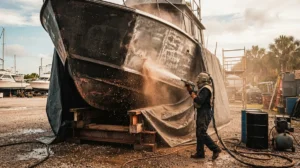
- Marine: boat hulls, trailers, props, rails, davits, and docks. See our marine blasting service.
- Automotive: frames, body panels, wheels, and suspension parts. See automotive blasting.
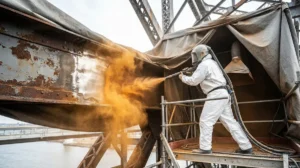
- Industrial: structural steel, tanks, and heavy equipment. See industrial blasting.
- Commercial: concrete, graffiti, storefronts, and fleet gear. See commercial blasting.
- Residential: fences, railings, pool decks, and pavers. See residential blasting.
A few materials need extra care. Vinyl is too delicate for blasting. Wood needs soft media and low pressure. If you’re wondering about specific materials, check whether sandblasting damages wood and whether it damages concrete.
Why Choose Mobile Grit Blasting?
Some things just can’t be moved. Think of a gate that’s bolted in place, a big steel frame, a tank, a dock, or a whole parking lot. Mobile blasting brings the compressor, blast pot, hoses, and nozzle to the work. We come to you.
Our rig is fully mobile and self-contained, so we don’t need your power or water. We can work dockside, in a driveway, at a shop, or on a job site. That saves hauling, scheduling headaches, and downtime.
Not sure how it compares to a drop-off shop? Read mobile rig vs. drop-off shop to see the tradeoffs.
Wet or Dry: Which Method Fits Your Project?
Both are forms of abrasive blasting, and each has strengths. Dry blasting is fast and common for steel and concrete. Wet and dustless methods add water to cut dust, which helps near people, pools, or other equipment.
- Dry blasting: quick removal, good for heavy rust and outdoor work.
- Wet or dustless blasting: far less dust, great for tight or active sites.
- Soda blasting: gentle cleaning for delicate or finished surfaces.
For help picking, see wet sandblasting vs. dry and what makes dustless blasting so effective.
How Do You Keep Grit Blasting Safe?
Safety is a big deal, and it should be. Blasting can create hazardous dust from both the media and the material being removed. Silica-containing abrasive is especially dangerous to breathe, so always check the media’s safety data sheet.
OSHA guidance points to a clear order of protection. Use safer media first, then isolate and contain the work, then add ventilation. Proper respiratory protection comes into play where needed.
Here’s what a careful crew does on every job:
- Checks the media and the coating being removed for hazards.
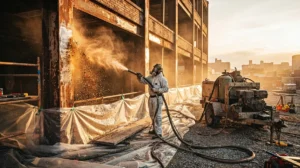
- Sets up containment to protect people, plants, pools, and windows.
- Watches wind, weather, and access before starting.
- Uses proper protective gear for the operator.
- Cleans up thoroughly and handles waste the right way.
You can read more in how pros handle sandblasting dust control and 5 safe blasting procedures every mobile crew follows. We contain the mess and protect the surrounding area on every job.
What Happens to the Spent Abrasive?
Good question, and one people forget to ask. Spent media mixed with old paint, rust, or other residue can’t just be assumed harmless. Older coatings may contain lead or other materials, so waste has to be characterized and handled under the rules that apply.
A responsible crew plans for cleanup before the first pass. That includes collecting used media, protecting drains and soil, and disposing of waste properly. Don’t be shy about asking your contractor how they handle it.
What Does a Mobile Blasting Job Look Like?
Here’s the simple flow we follow. It keeps things clear and stress-free:
- Walkthrough. Send photos or we come look, and we choose the right media for the surface.
- Free estimate. You get a clear, written estimate the same day. The price we give is the price you pay.
- Blast and strip. We protect the surrounding area, then blast the surface clean at your location.
- Ready to finish. The surface comes out clean and ready for the next step.
One note on scope. We strip and prep, then hand off to your painter or coating crew in most cases. Before you hire anyone, it’s smart to review 5 questions to ask before you sandblast. And to know what to expect on cost, check how much sandblasting estimates really cost.
Common Grit Blasting Mistakes to Avoid
Even simple jobs can go sideways. Watch out for these:
- Using the wrong media: too harsh can damage the surface, too mild leaves rust behind.
- Skipping the test patch: especially on old or delicate material.
- Ignoring hidden contaminants: salt and grease can wreck a new coating.
- Waiting too long to coat: bare steel can flash rust fast in Florida humidity.
- Forgetting containment: dust and debris can travel farther than you’d think.
For more on this, our post on abrasive blasting method mistakes is worth a look.
Ready for a Cleaner Start?
Grit blasting is really about one thing: a better base for whatever comes next. When the media, method, and safety plan fit the surface, you get clean, sound material and coatings that last. When they don’t, you get peeling paint and repeat work.
We’re Blastworx, an owner-operated, fully insured mobile blasting company serving Tampa Bay and the central Florida corridor. You talk to the people doing the work, and we bring everything to you. Curious how others feel about us? Visit us on Google — see what our customers are saying about us. Have a project in mind? Get a free estimate today, or give us a call at 813-380-8092. You can text us too. We’d love to help.
FAQs
Q: What is the difference between grit blasting and sandblasting?
A: Sandblasting is the older name from when sand was the main media. Today, grit blasting is the broader term because crews use many safer abrasives like garnet, aluminum oxide, steel grit, and soda. The big difference is the media, and picking the right one is what matters most.
Q: Is grit blasting safe for delicate surfaces like wood or fiberglass?
A: It can be, as long as the media is matched to the material. Softer options like soda or walnut shell work well on fiberglass, gelcoat, and wood, paired with lower pressure. A small test patch first is always a smart move.
Q: How do I know which blast cleaning standard I need?
A: It depends on your project and the coating going on next. The coating maker’s instructions and your project specification usually name the cleanliness level, like commercial or near-white metal. If you’re unsure, tell us about your project and we’ll help point you in the right direction.
Q: Is wet or dry mobile blasting better?
A: Neither is better for every job. Dry blasting is fast for heavy rust and outdoor steel, while wet or dustless blasting cuts dust and fits tight or active sites. We’ll recommend the best fit once we see your surface and setting.
Q: What happens to the used abrasive and removed paint?
A: Spent media mixed with old coatings or rust must be handled under the waste rules that apply, since it can’t be assumed harmless. A responsible crew collects it, protects drains and soil, and disposes of it properly. Always feel free to ask your contractor how they handle it.