Key Takeaways
-
Nozzles, nozzle washers, blast hoses, and couplings wear out fastest because abrasive constantly eats at them; inspect these before every job to avoid mid-job failures.
-
Test the deadman control before every start-up; it should stop blasting immediately when released, and any sticking or lag means repair before work begins.
-
Moisture is a major enemy in humid climates: use air filters, moisture separators, and an aftercooler, and drain them on a regular schedule to prevent clogs and flash rust.
-
Never let a worn metering valve or oversized nozzle go unchecked, since uneven media flow causes streaky, inconsistent surface prep and wastes air.
-
Keep a spare parts kit on the truck with extra nozzles, washers, couplings, gaskets, a short hose length, and deadman fittings, especially for remote or long jobs.
-
Match replacement parts to the machine's make, model, part number, hose size, pressure rating, and media, and ask the manufacturer when unsure.
Ever wonder what is really going on inside a mobile blasting rig? From the outside, it looks like a big pot, a long hose, and a loud nozzle. But a lot more is happening in there. Each piece has a job, and when one part fails, the whole day can go sideways.
That is why understanding sandblasting machinery parts matters, even if you never plan to run a rig yourself. If you hire a mobile blaster, knowing the basics helps you spot a crew that takes care of its gear. And if you are curious about what is sandblasting from the equipment side, this list is a friendly place to start.
Below, we walk through 13 key parts of a portable blast system. We cover what each one does, what wears out, and what to watch for. Think of it as a tour of the rig, minus the noise and the dust.
What Counts as Sandblasting Machinery Parts?
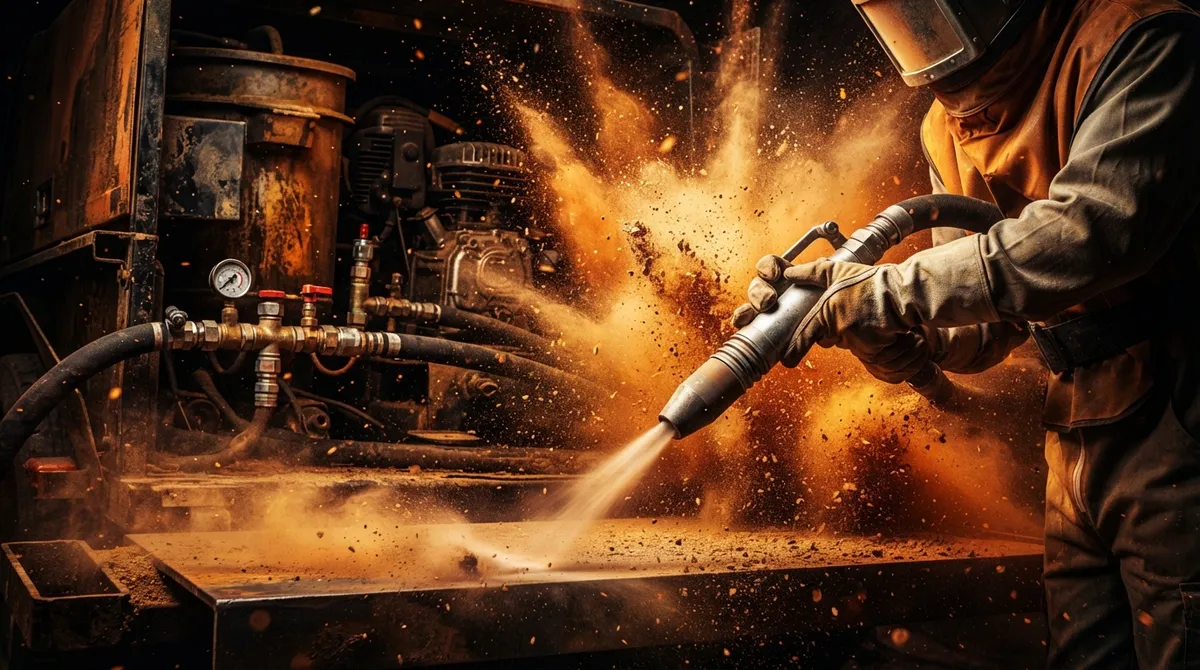
In mobile work, sandblasting machinery parts means the components that move, control, and protect the blast. That includes the pot, the valves, the hoses, the nozzle, the air-treatment gear, and the safety controls. It is more than just the machine itself.
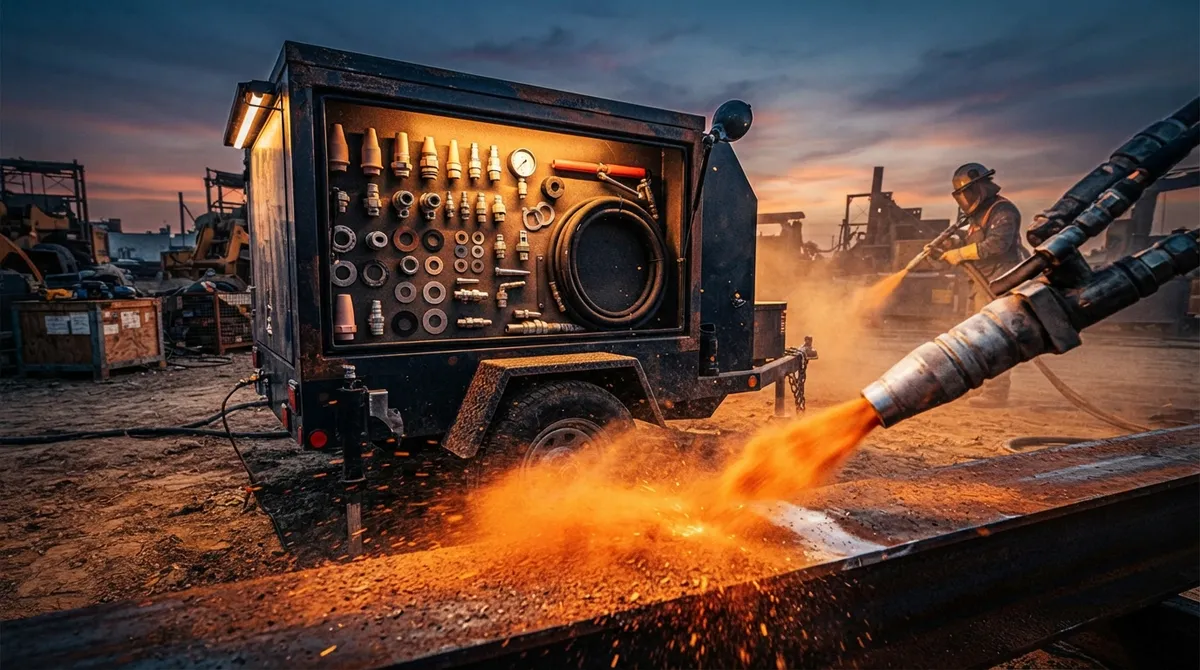
A typical portable setup includes an air compressor, a blast pot, an abrasive metering valve, a blast hose, a nozzle and holder, a remote deadman control, and air-prep equipment. Parts need to match the machine, the pressure, the hose size, and the media. Mixing mismatched parts is one of the fastest ways to lose performance.
Here is a quick snapshot of the main groups:
- Delivery parts: blast pot, metering valve, hose, couplings, nozzle
- Control parts: deadman system, pressure regulation, remote lines
- Air quality parts: filters, moisture separators, aftercoolers
- Protection parts: containment, dust control, respiratory gear
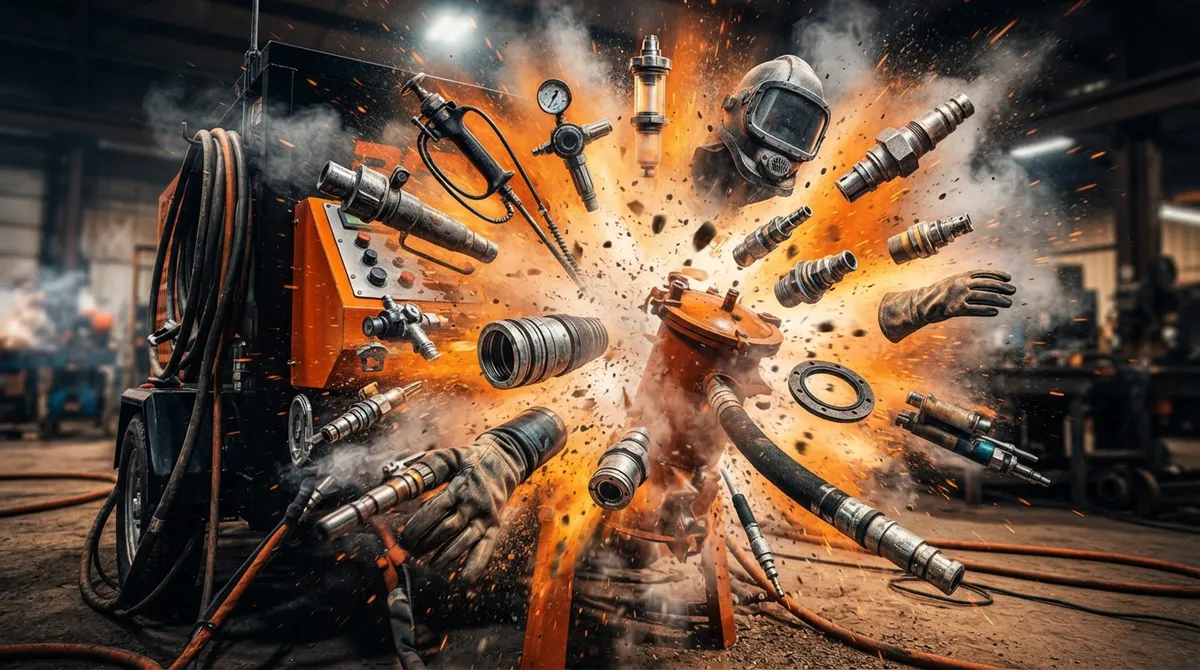
13 Parts That Keep a Mobile Blasting Rig Running
1. The Blast Pot
The blast pot is the heart of the machine. It holds the abrasive and feeds it into the compressed air stream. Think of it as the pantry and the kitchen in one pressurized tank.
Pots need clean seals, solid welds, and working pressure fittings. Before each job, a good crew checks for cracks, leaks, and worn gaskets. A tired pot can leak air, waste media, and slow the whole job down.
2. The Metering Valve
The metering valve controls how much abrasive mixes with the air. Too much media and the nozzle can clog. Too little and the surface cleans slowly.
Worn valves can cause uneven flow, which shows up as streaky, inconsistent results. This is a wear part, so it helps to keep spare components on hand. We match the blast to your surface, not the other way around, and a healthy metering valve is a big part of that.
3. The Blast Hose
The blast hose carries abrasive and air from the pot to the nozzle. It takes a beating from dragging, bending, and constant media rubbing the inside.
OSHA shipyard rules call for static-resistant hose, since moving abrasive can build static electricity. Look for hose rated for the working pressure and the media in use. Inspect it for soft spots, bulges, and worn outer layers before every job.
4. Hose Couplings and Gaskets
Couplings join hose lengths and connect to the pot and nozzle holder. They look small, but a failed coupling can whip a hose around fast.
OSHA shipyard guidance calls for metal couplings that are secured externally. Gaskets inside couplings wear down and leak air, so swap them early. Quick, cheap replacements beat a surprise failure mid-job.
5. The Nozzle
The nozzle shapes the blast stream and sets how fast the media leaves the hose. It is one of the highest-wear parts on any rig. Abrasive literally eats the inside of the bore over time.
Bigger, worn-out nozzles drop pressure and waste air. Nozzle size and style should match the compressor, the media, and the surface. This is part of using the right media for the job, and the right nozzle goes with it.
6. Nozzle Holders and Washers
The nozzle holder threads onto the hose and keeps the nozzle seated. Nozzle washers sit at the connection and protect the threads from abrasive leakage.
OSHA shipyard guidance calls for nozzle attachments that prevent accidental disengagement. Worn holders or missing washers can let the nozzle loosen. A quick thread check at the start of each job saves headaches.
7. The Deadman Control
The deadman control is a safety lever at the nozzle end. If the operator lets go, blasting stops, or the pot tender is signaled to shut off flow. It is a small part with a big job.
OSHA shipyard guidance points to this control as a way to stop blasting if the operator loses control. Test it every time you start up. If it sticks, lags, or feels loose, it gets fixed before any blasting happens.
8. Remote Control Lines and Valves
Remote control components connect the deadman handle to the pot’s air and media valves. They can be pneumatic lines or electric systems, depending on the rig.
These lines can get pinched, cut, or clogged with dust. Walk the full length of the hose and control line before starting. Replacing a damaged control line is much easier than dealing with a runaway blast.
9. Air Filters
Compressed air can carry oil, dirt, and rust from the compressor and lines. Filters catch a lot of that before it reaches the pot and the surface.
Dirty air can leave oil on a surface that needs to be perfectly clean. Filter elements need regular swaps based on the maker’s guidance. A clogged filter also drops air pressure, which hurts cleaning speed.
10. Moisture Separators
Florida humidity is tough on blast gear. Water in the air line makes abrasive clump up, clog the metering valve, and leave damp, flash-rusted metal.
A moisture separator pulls water out of the air stream. It needs regular draining, and many have automatic drains that still need a check. Dry air makes for smooth media flow and a cleaner finish.
11. Aftercoolers
Hot air holds more water. An aftercooler cools compressed air so moisture drops out before it hits the pot. Not every rig has one, but in humid climates, it is a real help.
Aftercoolers pair with the separator. Together they keep the media dry and flowing. Check the maker’s manual for cleaning and drain steps, because skipped maintenance can quietly undo the benefit.
12. Dust Control and Containment Parts
Containment is part of the machine setup, too. Think of curtains, tarps, vacuum or collection gear, and dustless blasting systems that bring water into the mix to cut airborne dust.
OSHA requires employers to keep hazardous dust and fume exposure under applicable limits. That is true outdoors and at changing job sites, too. We contain the mess and protect the surrounding area, and the right gear makes that possible. Curious how pros think about this? Read how pros handle sandblasting dust control safely.
13. Respiratory and Personal Protection
This is not a machine part in the strict sense, but it is part of the system. Blast hoods, supplied-air respirators, gloves, suits, and hearing protection all belong in the kit.
OSHA requires NIOSH-approved respirators when respiratory protection is needed, plus a respiratory-protection program where respirators are used. The right type depends on the hazard and the governing standard. A crew that treats safety gear as part of the rig is a crew worth trusting.
Quick Reference: Wear Parts and What to Watch
Some parts wear out faster than others. This table gives a simple view of what to inspect most often. Service life varies a lot based on the media, pressure, and hours of use, so treat it as a guide, not a schedule.
| Part | Wear Level | What to Watch For |
|---|---|---|
| Nozzle | High | Enlarged bore, uneven stream, pressure drop |
| Nozzle washers and holders | High | Damaged threads, loose fit |
| Blast hose | High | Soft spots, bulges, worn outer layer |
| Couplings and gaskets | Medium to high | Air leaks, loose or damaged fittings |
| Metering valve | Medium | Inconsistent media flow, clogging |
| Deadman and control lines | Medium | Sticking, lag, pinched or cut lines |
| Filters and separators | Medium | Clogs, water in the line, oil carryover |
| Blast pot | Low to medium | Cracks, leaking seals, weak gaskets |
How to Choose the Right Replacement Parts
Buying the wrong part wastes time and money. A few simple steps help you get it right the first time:
- Find the make and model. Look for the data plate on the pot or machine.
- Note the part number. Match it to the manufacturer’s parts list when possible.
- Check the size and connection type. Hose diameter, thread style, and coupling type all have to match.
- Match the pressure rating. The part must handle the rig’s working pressure.
- Confirm media compatibility. Soda, glass bead, and steel grit all wear parts differently.
- Verify control compatibility. New deadman parts must work with the existing remote system.
When in doubt, follow the maker’s guidance. A quick call to the manufacturer or a trusted parts supplier beats guessing. Contractors who want help sourcing tools and gear can also explore resources like 1 Contractor Solutions for business support.
A Smart Spare-Parts Kit for the Truck
Mobile crews work far from a parts counter. A flat tire is bad, but a broken coupling on a job site in Ocala or Fort Myers can stop everything. That is why a well-stocked kit matters.
Here is a practical starting list:
- Extra nozzles and nozzle washers
- Spare nozzle holder
- Hose couplings and gaskets
- A short length of spare blast hose
- Deadman components and control line fittings
- Metering valve wear parts
- Air-line filter elements and separator service items
- Seals and gaskets for the pot
The right inventory depends on how long the job is and how far you are from a supplier. Longer jobs, bigger rigs, and remote locations call for more spares. Following the manufacturer’s recommendations is always a safe bet.
Why Parts Matter to the Finished Surface
A coating is only as good as the surface underneath it. Paint, powder coat, resurfacing, and antifouling do not last when the prep is bad. And prep quality depends on a rig that runs clean and steady.
Worn nozzles, wet air, and leaky couplings all show up in the finish. You get uneven cleaning, missed rust, and a surface that is not ready for the next step. A crew that keeps its machinery in good shape delivers back to clean, sound material every time.
If you want more on how rigs come together, our guide on what a mobile blasting rig needs is a great companion read. You can also look at the 9 pieces of proper sandblasting equipment for mobile jobs.
Safety Habits That Protect the Whole Crew
Good parts are only half the story. Good habits make them work safely. Here are a few that every mobile crew should follow:
- Inspect before every job. Check hose, couplings, nozzle, and controls.
- Test the deadman. It should stop the blast right away.
- Never point the nozzle at anyone. OSHA guidance is clear on this.
- Drain moisture traps. Do it on a regular schedule.
- Use proper protection. That means a blast hood, gloves, and suitable respiratory gear.
- Contain the work area. Protect people, plants, pools, and nearby property.
For a deeper look at crew routines, check out 5 safe blasting procedures every mobile crew follows.
What This Means If You Are Hiring a Blaster
You do not need to know every valve and gasket. But a few questions can tell you a lot about a company. Ask how they inspect equipment, how they handle moisture, and how they protect the area around your property.
A crew that answers clearly and calmly is a good sign. At Blastworx, we are fully mobile and self-contained, so we come to you with our own power and water. You talk to the people doing the work, and you get a clear written estimate the same day. Want to see how our customers feel? Visit us on Google — see what our customers are saying about us.
We work across Tampa Bay and the central Florida corridor, from Tampa and Clearwater to Ocala, Orlando, and Fort Myers. You can see our full service areas or browse our project gallery for before-and-after work.
Ready to Put a Well-Kept Rig to Work?
The best sandblasting machinery parts are the ones you never think about, because they just do their job. A well-kept pot, a solid hose, a sharp nozzle, and dry air make for smooth, safe, and clean results.
Whether you are a curious homeowner, a property manager, or a fellow contractor, we hope this tour helped. If you have a project in mind, we are happy to talk it through. Get a free estimate today, or give us a call at 813-380-8092. You can text, too. We come to you, and we will match the blast to your surface.
FAQs
Q: What parts make up a mobile sandblasting machine?
A: A typical mobile setup includes an air compressor, blast pot, metering valve, blast hose, couplings, nozzle and holder, and a deadman control. Air filters and moisture separators round out the system. Each part has to match the others for the rig to run well.
Q: Which sandblasting machinery parts wear out most often?
A: Nozzles, nozzle washers, blast hose, and couplings wear out the fastest because abrasive rubs against them constantly. Metering valves and filters need regular attention, too. Wear rates depend on the media, pressure, and how many hours the rig runs.
Q: What does a deadman control do on a blast machine?
A: It is a safety lever at the nozzle. If the operator lets go, blasting stops, or the pot tender is signaled to shut off the flow. It is a small piece of gear that helps keep everyone safe.
Q: How can I keep moisture from disrupting abrasive blasting?
A: Use air filters, moisture separators, and an aftercooler if the rig has one. Drain them on a regular schedule and follow the manufacturer’s maintenance steps. Dry air keeps media flowing smoothly and helps avoid flash rust on bare metal.
Q: How do I find the right replacement parts for my blast pot?
A: Start with the make, model, and part number on the machine’s data plate. Then check sizes, connection types, pressure ratings, and compatibility with your control system. When you are unsure, ask the manufacturer before you buy.