Key Takeaways
-
Mobile sandblasting brings the crew and rig to your property, saving you from hauling, crane lifts, and downtime for large, heavy, or fixed items.
-
Match the blasting method to the surface: dry blasting suits heavy rust on steel, wet or dustless blasting suits indoor and active sites, and soda or walnut media protects fiberglass, wood, and thin panels.
-
Ask any contractor how they handle dust containment, silica exposure, and disposal of spent media and removed coatings, and confirm they are fully insured before hiring.
-
OSHA's silica permissible exposure limit is 50 micrograms per cubic meter over an 8-hour day, with an action level of 25, so reputable crews use feasible controls and respiratory protection when needed.
-
Plan the next coating step before blast day, since bare metal can flash rust quickly in Florida's humidity.
-
Costs depend on surface size, coating thickness, media choice, access, containment needs, and travel, so share photos for an accurate written estimate.
Some things just can’t go to a shop. A steel tank, a boat trailer, a long iron fence, a parking lot full of old paint. If it is too big, too heavy, or too fixed to move, you need the work done right where it sits. That is where on site sandblasting comes in.
On-site sandblasting, also called mobile abrasive blasting, brings the equipment and the crew to your property. You skip the hauling, the crane, and the downtime. In this guide, we will walk through how it works, what it can clean, how to keep it safe, and what to ask before you hire anyone. If you are new to the basics, here is a quick explainer on what is sandblasting, and our own breakdown of what sandblasting means in Florida is a friendly place to start.
What Is On-Site Sandblasting?
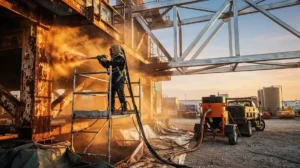
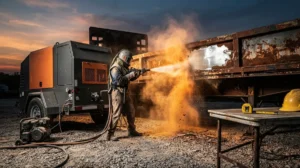
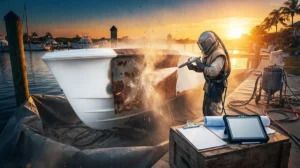
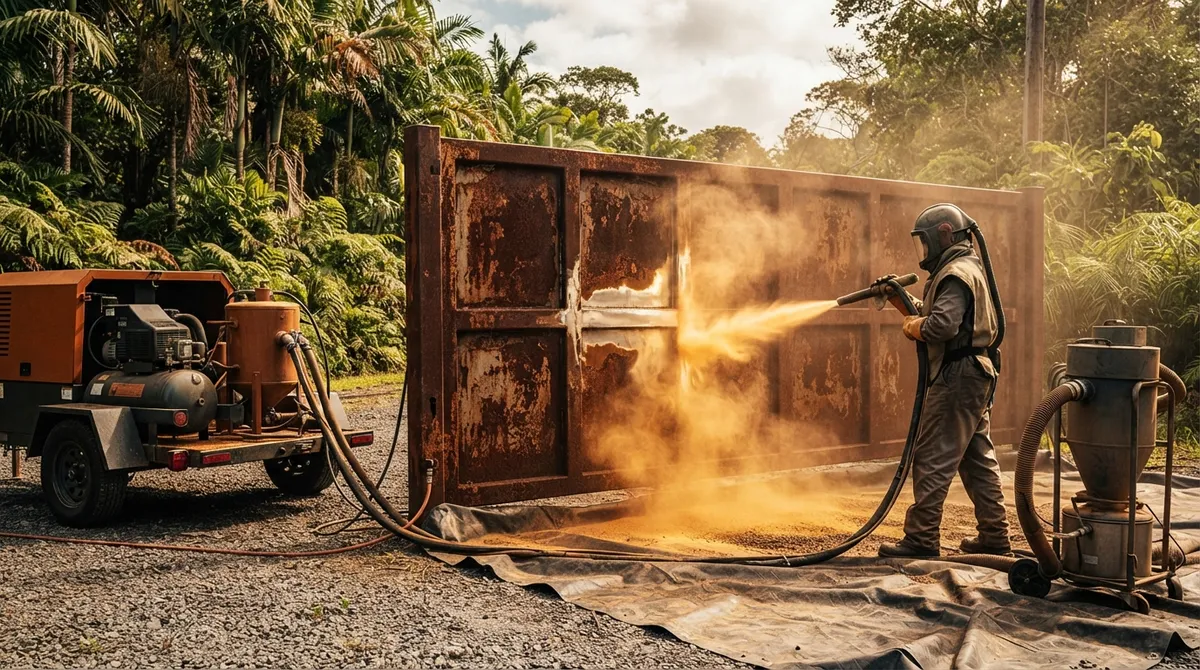
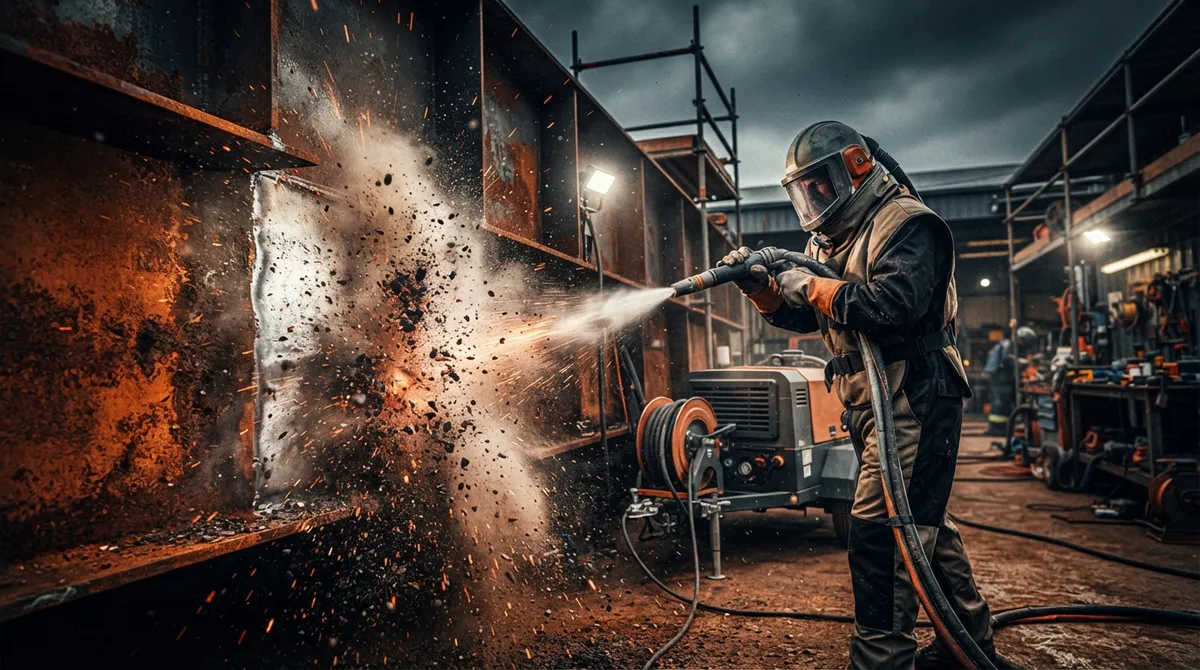
On-site sandblasting means a trained crew brings a blasting rig to your location. Instead of dropping an item at a shop, the work happens at your driveway, dock, factory, or job site. The crew propels abrasive media against a surface to remove rust, paint, scale, graffiti, or buildup.
The goal is simple. We take the surface back to clean, sound material so the next step works. Paint, powder coat, resurfacing, and sealers only last when the surface underneath is ready. A coating is only as good as the prep below it.
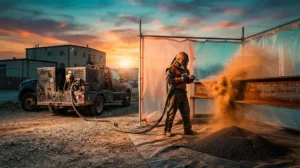
At Blastworx, we come to you. Our rig is fully mobile and self-contained, so we do not need your power or water. That makes it easy to work dockside, in a driveway, at a shop, or on an active job site.
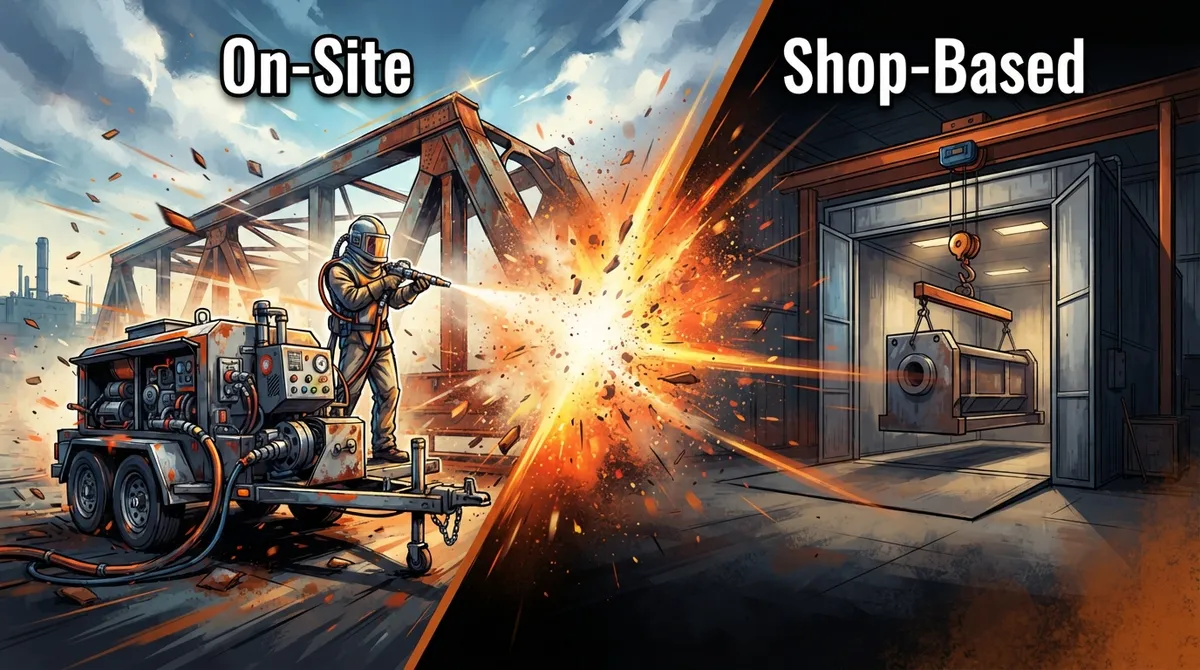
Why Choose On-Site Over a Shop?
Shops are great for small parts. But many jobs are not small. Here is why people choose mobile blasting:
- No hauling. Big or fixed items stay put.
- Less downtime. Your equipment or business keeps moving.
- No transport damage. Nothing gets scratched on the trip.
- One visit. The crew handles the surface where it sits.
- You talk to the people doing the work. No middleman.
Curious how the two options compare? Our mobile vs. shop sandblasting breakdown covers it in detail.
What Can Be Blasted On Site?
Almost any hard surface can be blasted. The trick is to match the blast to your surface, not the other way around. Here are common jobs we see across Tampa Bay and central Florida.
| Category | Common Surfaces | Typical Goal |
|---|---|---|
| Marine | Boat hulls, trailers, docks, davits, props, rails | Remove bottom paint, antifouling, rust |
| Automotive | Frames, panels, wheels, suspension, undercarriages | Strip to clean bare metal |
| Industrial | Structural steel, tanks, vessels, heavy equipment | Rust and coating removal, weld prep |
| Commercial | Concrete, sidewalks, storefronts, dumpsters, fleet vehicles | Graffiti, paint, and buildup removal |
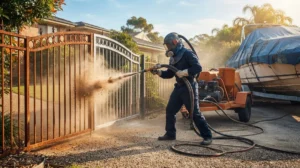
| Residential | Fences, railings, gates, pool decks, pavers, wood decks | Strip and prep for refinishing |
Want to see how this plays out in specific settings? Check our guides on equipment blasting on site and sandblasting commercial buildings.
Dry, Wet, and Dustless: Picking the Right Method
Not every job needs the same approach. Mobile crews can use a few different systems. Each has its place.
Dry Blasting
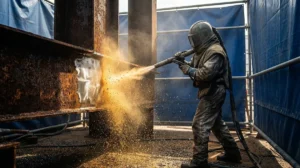
Dry blasting uses compressed air to push abrasive media at the surface. It is fast and strong. It works well on heavy rust and thick coatings, especially on steel and iron. It also makes the most dust, so containment matters a lot.
Wet Blasting
Wet or water-assisted blasting adds water to the stream. This helps keep dust down and can leave a cleaner finish. Our look at wet sandblasting vs dry shows which jobs suit which method.
Dustless Blasting
Dustless blasting mixes water with the media to cut airborne dust. It is a good fit for indoor work, active job sites, and areas near other equipment. It does not remove every concern, but it helps a lot. You can learn more in what makes dustless blasting so effective.
Softer Media for Delicate Jobs
Soda, walnut shell, and similar media are gentler. They protect fiberglass, gelcoat, thin body panels, and wood. See dry blasting vs. soda blasting for metal if you are weighing your options.
How On-Site Sandblasting Works: Our 4-Step Process
Every job is a little different. But the flow stays steady. Here is how we handle it at Blastworx:
- Walkthrough. You send photos, or we come look. We check the surface, the coating, and the site, then pick the right media for the job.
- Free estimate. You get a clear, written estimate the same day. The price we give is the price you pay.
- Blast and strip. We protect the surrounding area, set up containment, and blast the surface clean at your location.
- Ready to finish. The surface comes out clean and ready for the next step, whether that is priming, painting, or resurfacing.
Want to prepare ahead of time? Our 9 steps to prepare for sandblasting list makes it easy.
Safety, Dust, and Containment
Blasting makes dust, noise, and debris. That is the nature of the work. A good crew plans for it before the first pass.
Containment and Site Controls
Depending on the site, controls can include barriers or enclosures, dust collection, restricted access, and protection for nearby equipment, cars, windows, pools, and landscaping. We contain the mess and protect the surrounding area. Afterward, we collect spent media and removed coatings so they can be handled properly.
Our post on how pros handle dust control goes deeper, and so does 5 safe blasting procedures every mobile crew follows.
Silica and Worker Protection
Silica is a big topic in this industry. OSHA sets a permissible exposure limit of 50 micrograms per cubic meter of air, averaged over an 8-hour workday. The action level is 25 micrograms per cubic meter. Employers must use feasible controls first, then add respiratory protection when needed. When it applies, OSHA also expects a written exposure control plan.
OSHA’s shipyard guidance adds helpful advice too. It suggests isolating the blasting area, using proper exhaust ventilation in enclosures, and sampling the air to choose the right protective gear. That guidance is advisory, so local rules and site needs always come first. You can read the details in OSHA’s construction silica standard.
No method removes every risk. That is why we take silica, noise, and waste seriously on every job. Fully insured is not just a phrase for us. It is part of doing the job right.
What Affects the Cost?
Many people ask about price first. That makes sense. The truth is that cost depends on a handful of things:
- Surface size and condition. More area and heavier rust mean more time.
- Coating type and thickness. Thick, layered coatings take longer to remove.
- Media and method. Gentle media or dustless setups can change the scope.
- Access. Tight spots, heights, and obstacles add effort.
- Containment needs. Active sites and nearby property need more protection.
- Travel distance. We are based in Tampa and work across the central Florida corridor. For the right job, we will travel anywhere in the state.
For a closer look, read how much sandblasting estimates really cost and why quotes vary so much.
How to Prepare Your Site
A little prep makes the day go smoother. Here is a simple checklist:
- Clear the work area of loose items, furniture, and vehicles.
- Tell the crew about anything fragile nearby, like glass, plants, or pool equipment.
- Share photos or details about the surface and any known coatings.
- Confirm access for the rig and crew.
- Decide what happens after blasting, such as priming or coating, so the surface does not sit bare too long.
Bare metal can flash rust quickly in Florida’s humidity. Plan the next step before the blast day. If you are heading toward paint, our guide to sandblast painting prep steps will help the finish last.
Choosing the Right Mobile Blasting Contractor
Not all crews are equal. Before you hire anyone, ask a few direct questions:
- What surface and coating are we removing?
- What media and method will you use, and why?
- How will you contain dust and protect nearby property?
- How do you handle spent media and removed paint?
- Are you insured?
- Do you need my power or water?
- Does the price include priming or coating, or is it strip and prep only?
Clear answers are a good sign. Vague answers are not. Our guide on what to look for in a sandblasting contractor goes deeper. And if you want to compare crews, how to find sandblasting that comes to you is a good read.
Also remember that a good contractor knows when blasting is the wrong tool. Some surfaces are too delicate. We do not blast vinyl fencing, for example, and some painted walls, glass, veneer, and cultured stone need an in-person look first. See 13 surfaces you should never sandblast for more.
Where We Work
We are an owner-operated crew based in Tampa. We serve Tampa Bay and the central Florida corridor, including Clearwater, Sarasota, Ocala, Orlando, and Fort Myers. Bay-area towns like Brandon, Riverview, Plant City, Lutz, and St. Pete come up often too.
If you want to see what past customers say, visit us on Google and see what our customers are saying about us. And if you are running a business that needs a hand beyond blasting, a few local partners are worth knowing, like Charming Smiles of Ocoee and Segovia Orthodontics for the smile care side of life. For help getting your business seen online, Brain Buzz Marketing is another resource.
Ready to Get Started?
On-site sandblasting saves time, protects your schedule, and gets your surface back to clean, bare metal or clean, sound material. We match the blast to your surface, use the right media for the job, and leave you ready to prime, paint, or refinish.
Ready to talk through your project? Get a free estimate today, or give us a call at 813-380-8092. You can text too. You will talk to the people doing the work, and we will come to you.
FAQs
Q: What is on-site sandblasting?
A: On-site sandblasting, also called mobile abrasive blasting, brings the blasting rig and crew to your location. It is perfect for large, heavy, or fixed items that cannot easily go to a shop. We come to you and clean the surface right where it sits.
Q: What is the difference between dry, wet, and dustless blasting?
A: Dry blasting uses compressed air and media and is strong and fast, but it makes more dust. Wet and dustless blasting add water to cut airborne dust, which helps on indoor jobs and busy sites. The best choice depends on your surface, coating, and the finish you need.
Q: Is on-site sandblasting safe?
A: It can be, when the crew plans for it. Good contractors use containment, dust controls, and proper protective gear, and they follow rules like OSHA’s silica limit of 50 micrograms per cubic meter over 8 hours. Always ask how your contractor handles dust, silica, and waste.
Q: How much does on-site sandblasting cost?
A: Price depends on surface size, coating thickness, media, access, containment needs, and travel. The easiest way to know is to share photos or schedule a walkthrough. We give a clear, written estimate the same day, and the price we give is the price you pay.
Q: What happens to the spent media and old paint?
A: A good crew collects spent abrasive and removed coatings so they do not spread around your property. How they are handled afterward depends on the material and local rules. Ask your contractor about their cleanup and disposal plan before work begins.