Key Takeaways
-
Mobile blasting brings equipment and trained crews to your shop or job site, eliminating hauling heavy or oversized parts and waiting in line at outside facilities.
-
Confirm the coating spec's cleanliness level and target surface profile before blasting, and ask the coating supplier if unclear to avoid costly rework.
-
Match abrasive media to the base metal and coating: aggressive steel grit suits heavy rust and mill scale, while soda or softer media protects thin or delicate parts.
-
Schedule primer or coating to follow blasting quickly, since bare steel can flash rust fast in humid environments.
-
Silica exposure is limited by OSHA to 50 micrograms per cubic meter over 8 hours, so review silica standards (29 CFR 1910.1053 and 1926.1153) and dust controls before blasting starts.
-
Prepare the site by sharing photos and dimensions early, clearing the blast zone, masking machined surfaces and threads, and testing a sample piece on unfamiliar parts.
Running a fabrication shop means juggling deadlines, heavy steel, and a lot of moving parts. Then there is the blasting bottleneck. A huge weldment sits waiting for prep. A frame is too big to ship out. The coating crew is booked for Monday, and the surface is not ready.
That is where mobile blasting steps in. When it comes to sandblasting fabrication shops can lean on, bringing the equipment and the crew to your floor is often the simplest fix. No hauling. No waiting in line at someone else’s facility. No building a blast room you may only use a few times a year.
In this guide, we will walk through what mobile blasting does for a fabrication shop, when it makes sense, how to pick the right media, and what to sort out before the crew shows up. We will keep it simple and friendly. You will also get a clear look at the safety rules that matter, because good prep is only good if everyone goes home healthy.
What Mobile Blasting Means for a Fabrication Shop
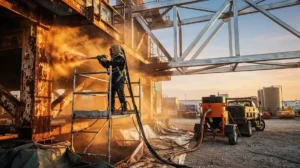
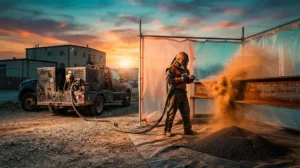
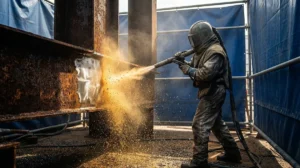
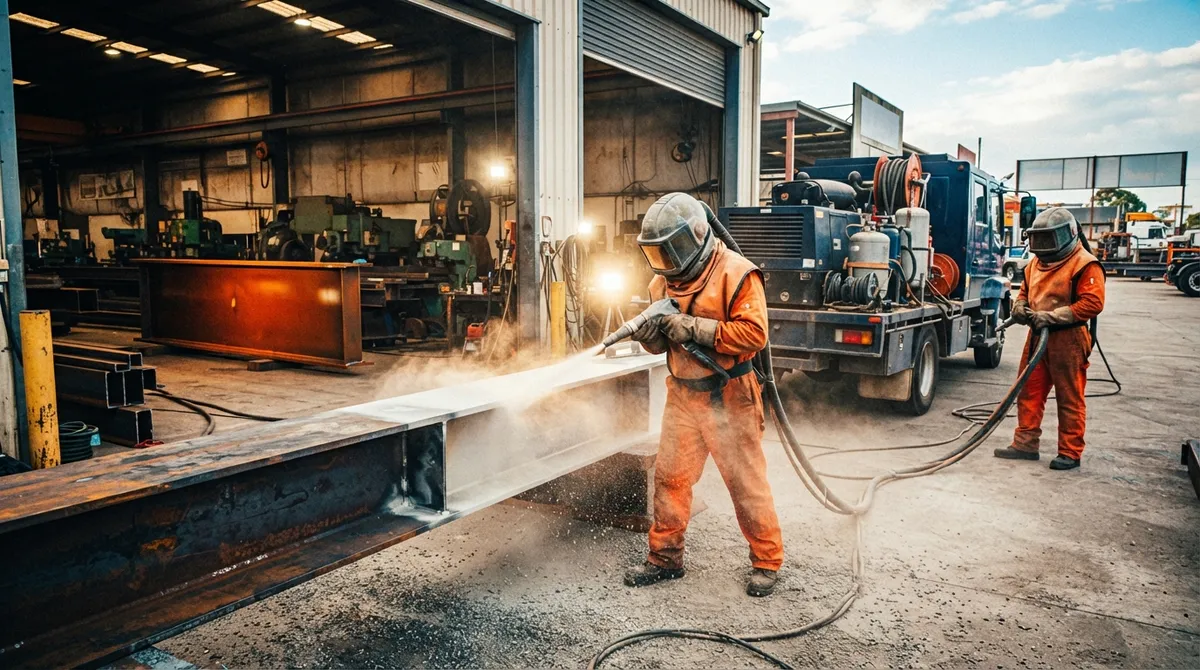
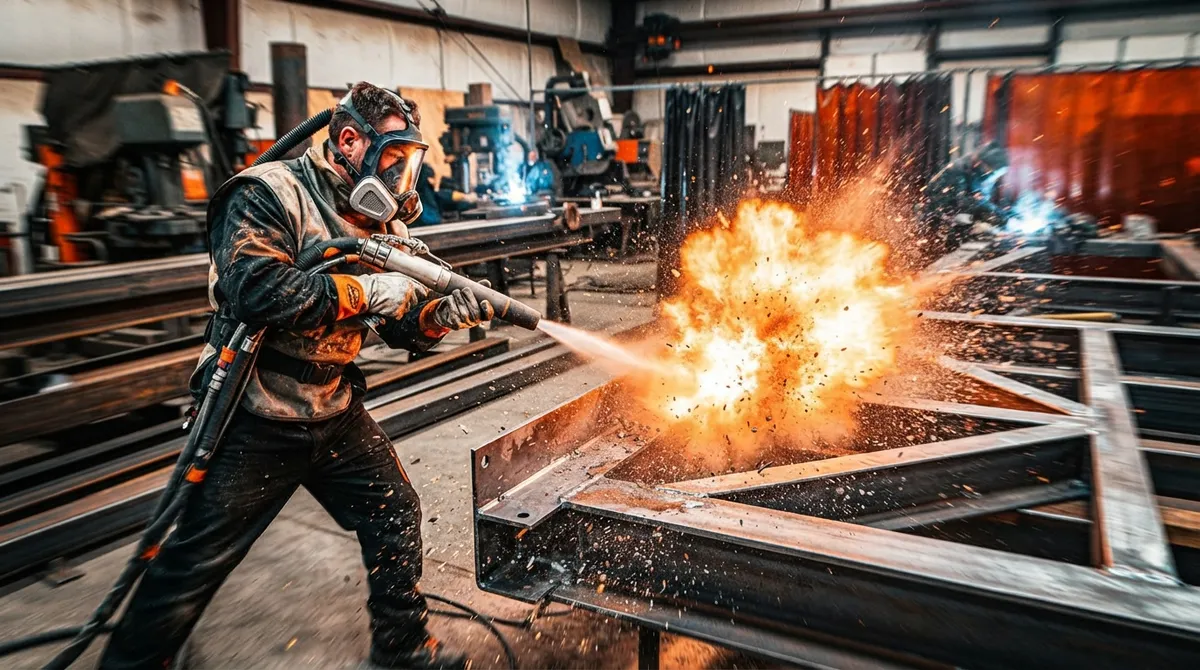
In this context, mobile blasting means we bring the abrasive-blasting equipment and trained operators to your shop or job site. Your parts stay where they are. We come to you.
If you want a quick refresher on the basics, here is a good overview of what is sandblasting. The short version is that abrasive media is propelled at a surface to clean it or give it a profile. For fabricators, that usually means getting steel back to clean, bare metal and ready to prime and coat.
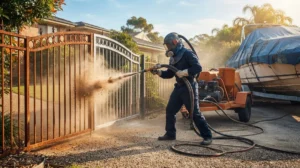
At Blastworx, our rig is fully mobile and self-contained. We work in driveways, at docks, on job sites, and inside shops without needing your power or water. We are based in Tampa and serve the central Florida corridor, including Ocala, Orlando, and Fort Myers. For the right job, we will travel anywhere in the state.
What Fabricators Use Blasting For
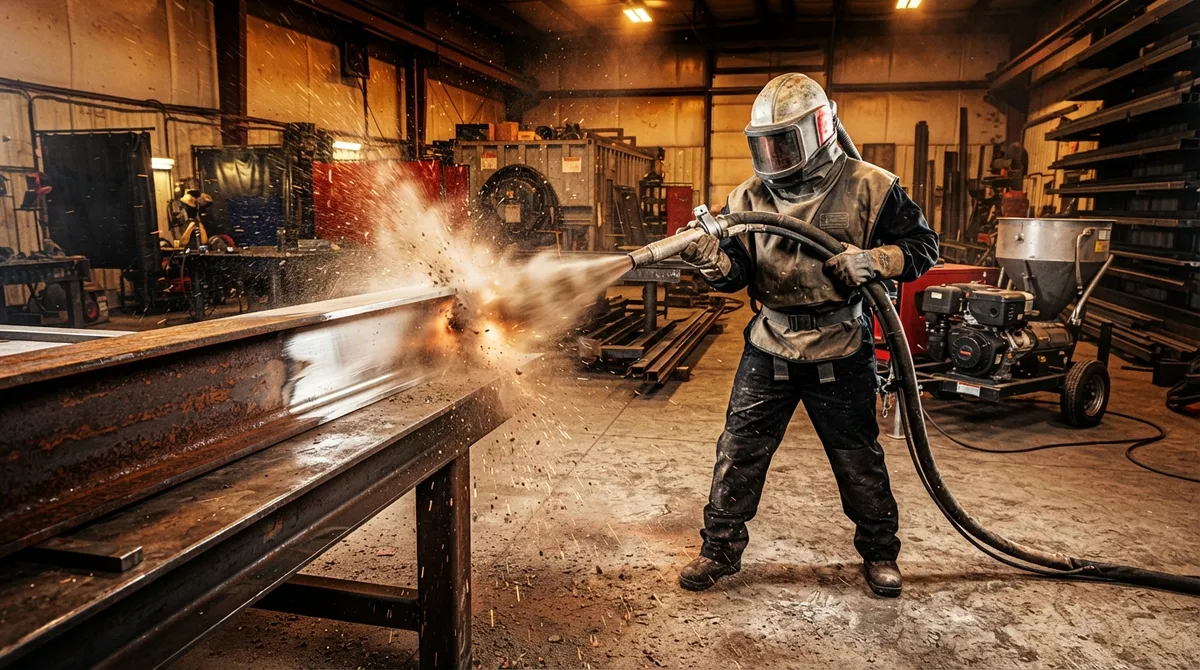
A coating is only as good as the surface underneath it. Paint, powder coat, and protective finishes do not last if the prep is bad. Hand-sanding and grinding miss rust in seams and corners. Blasting takes the whole surface back to clean, sound material at once.
Here are the most common jobs we see in a fabrication setting:
- Removing rust and mill scale from raw steel
- Stripping old paint and failed coatings
- Cleaning weldments and weld areas before coating
- Prepping frames, tanks, and structural components
- Cleaning machinery and equipment that needs refurbishing
- Removing surface contaminants before painting
The exact cleanliness level and surface profile should come from your coating system or project documents. We match the blast to your surface, not the other way around.
When Mobile Blasting Beats an In-House Blast Room
Many shops do not have a blast room. Others have one that is too small, too busy, or too costly to run. Mobile blasting can fill the gap. Here is a quick side-by-side to help you think it through.
| Situation | Mobile Blasting | Off-Site Blast Facility | In-House Blast Room |
|---|---|---|---|
| Oversized or heavy parts | Great fit, no transport | Hard to haul and handle | Limited by room size |
| Parts already installed or fixed in place | Works on site | Usually not possible | Not possible |
| Occasional blasting needs | Pay only when needed | Pay per job plus transport | High upfront cost |
| Tight schedules | Crew comes to you | Depends on their queue | Depends on your staff |
| Dust collection and media recovery | Brought by the contractor | Handled off site | You build and maintain it |
Actual savings depend on setup, access, and job size. We would rather give you a real number than a guess, so the best move is always a written estimate for your specific parts.
Picking the Right Media for the Job
Not every part needs the same blast. The right media for the job depends on the base metal, the finish you want, and what is going on top afterward. Pressure and media both change the surface profile. They can also affect tolerances and the risk of damaging thin or delicate pieces.
Common Options for Fabricated Parts
- Steel grit or shot: Aggressive, good for heavy rust, mill scale, and thick coatings on structural steel.
- Garnet and similar abrasives: A solid middle ground for many cleaning and prep jobs.
- Soda or softer media: Gentler, useful for thin or delicate parts and light coating removal.
- Dustless blasting: Helpful for indoor work, active shops, and areas near other equipment.
Not sure which way to go? Our posts on dry blasting vs. soda blasting for metal and shot blasting vs. air blasting break down the tradeoffs in plain English.
Surface Prep Standards and Profile
Before anyone fires up a blast pot, agree on what “done” looks like. Your coating manufacturer or project spec will usually call out a cleanliness level and a target profile. That profile is the tiny peak-and-valley pattern that helps coatings grip.
If the spec is unclear, ask the coating supplier. It is a quick call that can save a lot of rework. Our guide on how metal surface preparation blasting really works goes deeper on this, and our list of 14 surface prep steps before commercial coating is a handy checklist.
One more tip. Timing matters. Bare steel can flash rust fast in Florida’s humidity, so plan your primer or coating to follow the blast as soon as the spec allows.
Safety and OSHA: What Shops Should Know
Blasting makes dust, noise, spent abrasive, and debris. A good work plan covers protection for workers, nearby operations, equipment, and the environment. We contain the mess and protect the surrounding area, and we expect the shop to be part of that plan too.
Which OSHA rules apply depends on the work setting and the hazards. These are the main ones to know:
- 29 CFR 1910.94: General-industry ventilation and abrasive-blasting rules.
- 29 CFR 1926.57: Construction ventilation rules.
- 29 CFR 1910.1053 and 1926.1153: Respirable crystalline silica standards.
- 29 CFR 1910.134: Respiratory protection.
Silica deserves special attention. It can come from the blasting media or from the material being blasted. OSHA sets an 8-hour permissible exposure limit of 50 micrograms per cubic meter and an action level of 25 micrograms per cubic meter. Silica-free abrasives are commonly recommended where feasible. They do not remove every hazard, though. Old coatings can add their own risks.
Employers must assess exposures and use feasible engineering and work-practice controls. Respirators must be part of a compliant program. For a closer look at how crews work safely, see our post on 5 safe blasting procedures every mobile crew follows and our guide to how pros handle sandblasting dust control.
How to Get Your Shop Ready for a Mobile Crew
A little prep on your end makes the day go smoother. Think of it as setting the stage so the crew can focus on the blast.
- Share the scope early. Send photos, dimensions, and the coating spec. We can then pick the right media and plan the setup.
- Clear the work area. Move tools, materials, and unrelated parts out of the blast zone.
- Mark what stays untouched. Point out machined surfaces, threads, bearings, and anything that needs masking.
- Plan for access. Make sure the rig can reach the work area and that parts can be positioned or rotated.
- Agree on containment and cleanup. Decide where spent media goes and how the area will be left.
- Line up the coating crew. Set the timing so primer goes on while the surface is fresh.
For unfamiliar parts, a test area or sample piece is a smart move. It lets everyone confirm the finish before the whole job gets blasted. Our post on 9 steps to prepare for sandblasting the right way has more ideas.
Who Does What: Contractor vs. Shop
Clear roles prevent surprises. Here is a simple way to think about it.
| Item | Blasting Contractor | Fabrication Shop |
|---|---|---|
| Equipment, media, and operators | Provides | Gives access and space |
| Surface-prep standard and target profile | Confirms it can meet it | Supplies the spec |
| Containment and dust control | Sets up and runs it | Coordinates with nearby work |
| Masking and protection of sensitive areas | Helps plan and execute | Identifies what needs protecting |
| Inspection and acceptance | Supports | Defines acceptance criteria |
| Coating application | Strip and prep only for most jobs | Handles or schedules coating |
For most industrial work, we focus on removal and prep. In some cases, paint or protective coating may be available when needed, so just ask.
Mistakes That Cost Fabricators Time and Money
Most blasting headaches come from a few repeat problems. Watch for these:
- Skipping the spec and guessing at the profile
- Using media that is too aggressive on thin metal
- Waiting too long to prime after blasting
- Not protecting nearby equipment from dust and debris
- Hiring on price alone without checking insurance
We cover several of these in more detail in 13 abrasive blasting mistakes that cost you money in 2026 and 5 sandblasting large equipment mistakes that cost you. If you are still weighing options, our guide on how to choose an industrial sandblasting company is a good next read.
How Blastworx Works With Fabrication Shops
We are an owner-operated mobile blasting company. When you call, you talk to the people doing the work. We are fully insured and small enough to give your job our full attention.
Our process is simple:
- Walkthrough. Send photos or we come look, and we figure out the right media for the surface.
- Free estimate. A clear, written estimate the same day. The price we give is the price you pay.
- Blast and strip. We protect the surrounding area, then blast the surface clean at your location.
- Ready to finish. The surface comes out clean and ready for the next step.
Dustless blasting is available for indoor work and active shops where dust needs to stay down. You can learn more about our industrial blasting services, or read our take on factory sandblasting and on-site prep that saves downtime. Curious about the reviews? Visit us on Google and see what our customers are saying about us.
If you are searching for ways to get the word out about your own shop, a marketing partner like Brain Buzz Marketing can help you reach more customers while you focus on the work.
Ready to Skip the Bottleneck?
Mobile blasting gives fabrication shops a flexible way to get steel prepped without hauling parts or building a blast room. Agree on the spec up front, pick the right media, plan for containment, and keep safety at the center. Do that, and your coatings have a clean, sound surface to hold onto.
Have a weldment, frame, or tank waiting on prep? Get a free estimate and we will come to you, or give us a call at 813-380-8092. You can text, too.
FAQs
Q: What does a mobile sandblasting contractor do for a fabrication shop?
A: We bring the blasting equipment and trained operators right to your shop or job site. We strip rust, mill scale, and old coatings so your steel is clean and ready for the next step. No hauling heavy parts across town.
Q: When should a fabrication shop hire mobile blasting instead of using an in-house blast room?
A: Mobile blasting shines for oversized, heavy, or installed parts, tight schedules, and shops that only blast now and then. It lets you skip the cost of building and running a blast room. A written estimate will show you what makes sense for your parts.
Q: How do I choose blasting media for steel fabrication?
A: It depends on the metal, the finish you need, and the coating going on after. Heavy steel with thick rust usually calls for tougher media, while thin parts need something gentler. We match the blast to your surface, not the other way around.
Q: What OSHA requirements apply to abrasive blasting at a fabrication shop?
A: It depends on your work setting and hazards. Key standards include 29 CFR 1910.94 for general-industry blasting ventilation, 1926.57 for construction ventilation, the silica standards (1910.1053 and 1926.1153), and 1910.134 for respiratory protection. Silica exposure is limited to 50 micrograms per cubic meter over 8 hours.
Q: How should a shop prepare for a mobile blasting crew?
A: Share photos and your coating spec early, clear the work area, and mark any surfaces that need masking. Plan access for the rig and agree on containment and cleanup. A test piece on unfamiliar parts is a smart way to confirm the finish.