Key Takeaways
-
Mobile sandblasting brings the equipment to your home, shop, marina, or job site, so you avoid hauling heavy items and waiting for drop-off slots.
-
Match the blasting media to the surface: soda for fiberglass and delicate panels, dry abrasive for heavy steel rust, and dustless wet blasting for active or indoor sites.
-
Dustless blasting reduces dust but not all mess; ask contractors how they will contain spent media, paint chips, wastewater, and protect landscaping, pools, and storm drains.
-
Get a written, project-specific estimate covering surface area, media and method, containment and cleanup plan, access needs, and any follow-on coating requirements, since generic price averages are unreliable.
-
Confirm a contractor's insurance and experience with your specific surface, and avoid blasting fragile materials like vinyl fencing, which a good contractor will tell you to skip.
-
Blasting is only the prep step, so plan your painter or coating crew in advance to protect the fresh surface quickly in Tampa's humid climate.
If you’ve ever stared at a rusty gate, a peeling fence, or a tired old trailer and thought, “There has to be a better way,” you’re in good company. Here in Tampa Bay, the heat, humidity, and salt air are tough on metal, concrete, and paint. That’s why more folks are searching for sandblasting Tampa Florida, and why so many are surprised to learn the crew can come right to them.
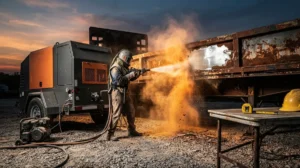
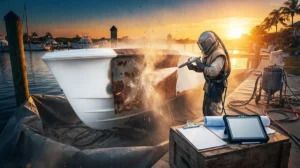
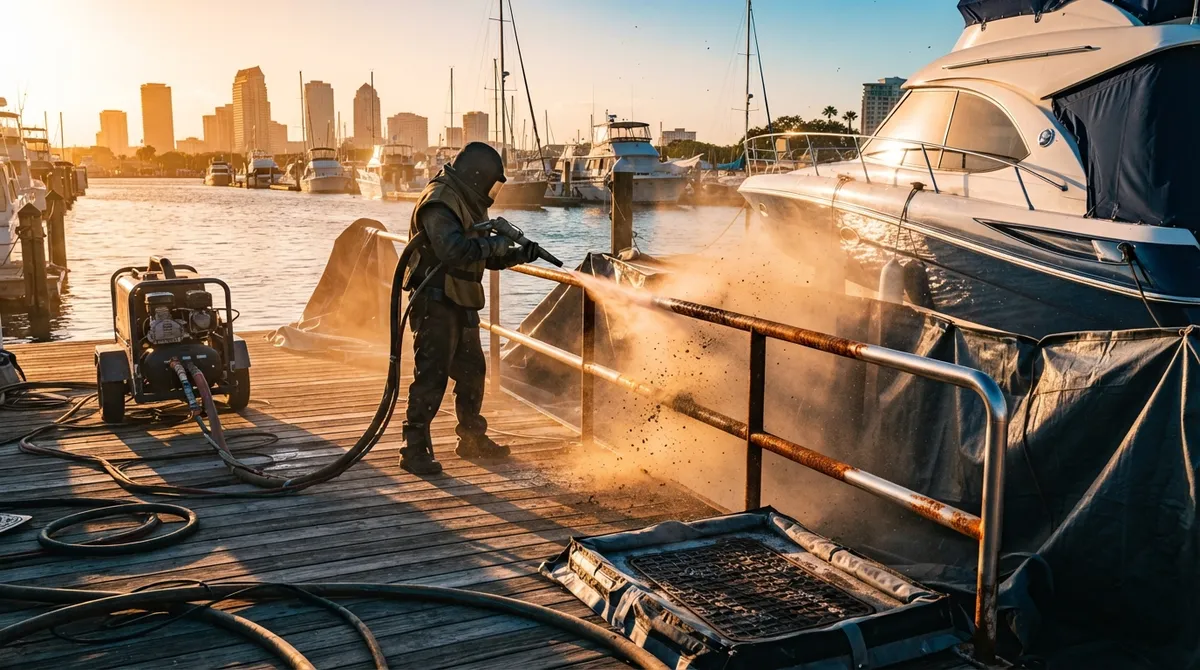
Mobile blasting means the equipment shows up at your home, shop, marina, or job site. No hauling heavy items across town. No waiting weeks for a drop-off slot. Just a clean, bare surface that’s ready for its next coat.
In this friendly guide, we’ll walk you through six things worth knowing before you hire anyone. We’ll cover what mobile blasting really is, which media fits which surface, how the mess gets handled, and how to compare estimates. Think of it as a chat with a neighbor who happens to know a lot about blasting. Let’s dig in!
1. What Sandblasting in Tampa Really Means Today
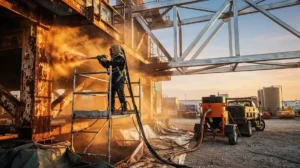
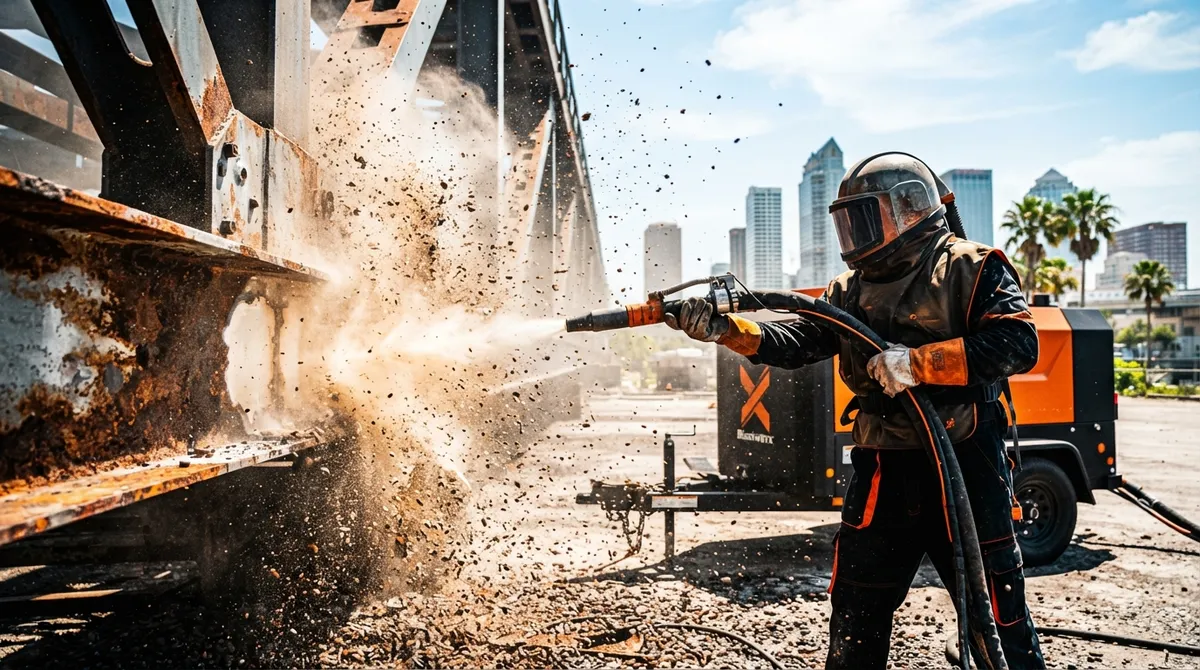
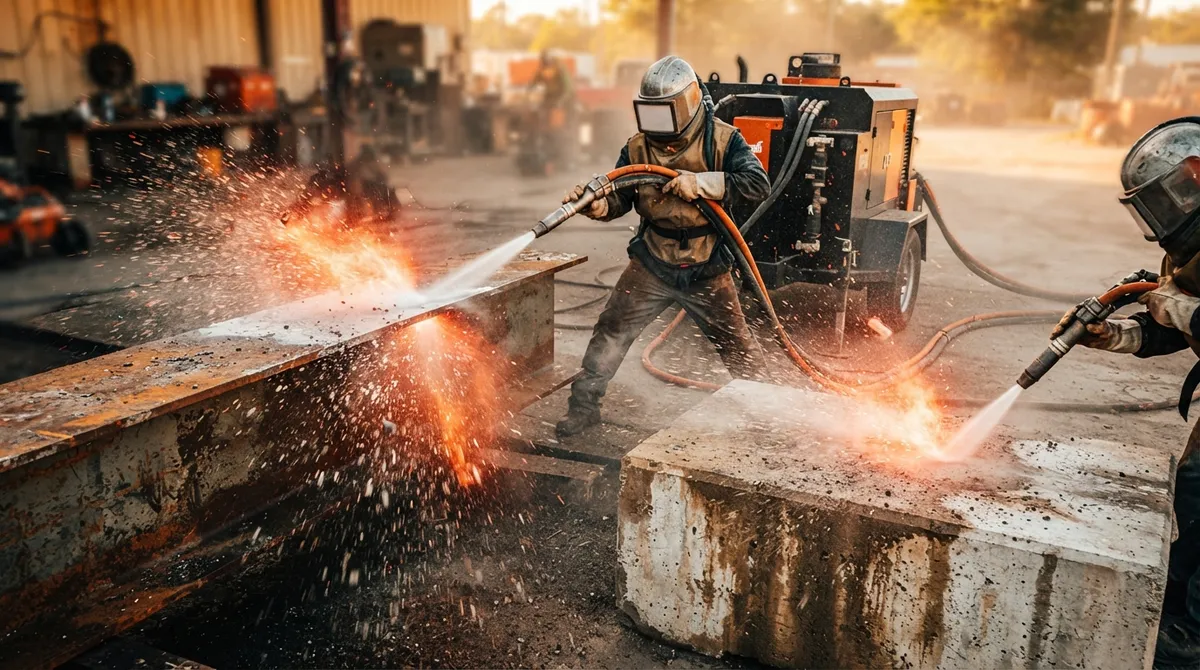
When most people say “sandblasting,” they mean what is sandblasting at its core: using pressurized air or water to push abrasive media against a surface. The goal is to strip away rust, old paint, coatings, graffiti, or buildup.
Here’s the fun part. Today’s sandblasting often doesn’t use sand at all. Pros pick from soda, glass, walnut shell, steel grit, and more. The right media depends on what you’re cleaning. If you’d like a deeper primer, our post on what sandblasting is in Florida covers the basics.
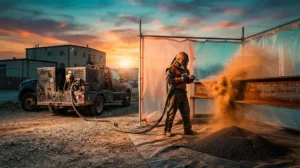
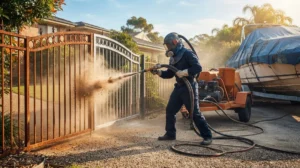
In Tampa, the “mobile” part matters most. A mobile rig is fully self-contained, so we come to you and work in your driveway, at a dock, or on a job site. You can read more about how that works in our guide to on-site sandblasting.
Why Prep Matters So Much
A coating is only as good as the surface underneath it. Paint, powder coat, and resurfacing products won’t last if the prep is poor. Hand-sanding often misses rust in seams and corners. Blasting takes the whole surface back to clean, sound material at once. That helps the next coat bond and hold up against Florida’s heat and humidity.
- Rust and old paint come off in one pass
- Hard-to-reach corners get cleaned evenly
- New coatings stick better and last longer
- You skip hours of tiring hand work
2. The Surfaces Mobile Blasting Can Handle
One reason mobile blasting is so popular around Tampa Bay is how many surfaces it can handle. Local providers advertise work on structural steel, heavy equipment, fences, gates, masonry, pool decks, vehicles, and boats. Not every contractor does every job, so always confirm.
At Blastworx, our work falls into five groups: marine, automotive, industrial, commercial, and residential. Here’s a quick look at what each one covers.
| Service Type | Common Surfaces | Typical Goal |
|---|---|---|
| Marine | Boat hulls, trailers, docks, davits, rails | Remove bottom paint, antifouling, rust |
| Automotive | Frames, body panels, wheels, undercarriages | Back to clean, bare metal |
| Industrial | Structural steel, tanks, heavy equipment | Rust and coating removal, weld prep |
| Commercial | Concrete, graffiti, storefronts, fleet vehicles | Remove paint and buildup |
| Residential | Fences, railings, pool decks, pavers, wood decks | Strip and prep for refinishing |
You can explore each area on our residential, commercial, industrial, marine, and automotive pages.
Surfaces That Need Extra Care
Some surfaces are too delicate for blasting, and a good contractor will tell you so. For example, we don’t blast vinyl fencing because it’s too fragile. Our post on surfaces you should never sandblast goes into more detail. And if you’re curious about wood, see whether you can sandblast a wood deck without damaging it.
3. Picking the Right Media for the Job
Here’s our golden rule: we match the blast to your surface, not the other way around. The right media for the job protects what’s underneath while removing what you don’t want.
The main options you’ll hear about are not interchangeable. Each one fits a different situation.
| Method | Best For | Good to Know |
|---|---|---|
| Dry abrasive blasting | Heavy rust on tough steel | More aggressive; needs good containment |
| Wet or dustless blasting | Active sites, indoor work, areas near equipment | Water helps suppress dust |
| Soda blasting | Fiberglass, gelcoat, thin panels, delicate surfaces | Gentler on the surface underneath |
| Glass or recycled glass media | Cleaning and light surface finishing | Leaves a smoother finish |
Want to compare options? Our guides on dry blasting vs. soda blasting for metal and wet sandblasting vs. dry break it down in plain English.
A Quick Example
Picture a classic car with a thin body panel and a heavy steel frame. The frame can handle a stronger abrasive. The panel needs lower pressure and cooler media so it doesn’t warp. One project, two different approaches. That’s what “matching the blast” looks like in real life.
4. How Dustless Blasting Keeps Things Cleaner
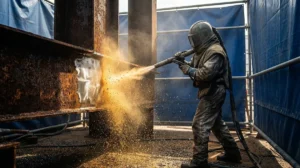
Let’s talk about dust, because it’s the number one question we hear. Wet or “dustless” blasting mixes water with media to help hold dust down. One local provider claims wet blasting can suppress airborne dust by up to 92% compared with traditional methods. That’s a company-reported number, so treat it as a rough guide, since results depend on equipment, media, and site conditions.
Here’s the honest truth: dustless doesn’t mean mess-free. Spent media, paint chips, and wastewater still need to be handled. A good contractor will explain exactly how they plan to do that. Our team says it simply: we contain the mess, and we protect the surrounding area.
If you want the full story, check out what makes dustless blasting in Tampa so effective and how pros handle sandblasting dust control safely.
Questions to Ask About Containment
- How will you protect landscaping, windows, and pools?
- What happens to spent media and paint chips?
- How do you keep debris out of storm drains?
- Will you clean up before you leave?
A confident answer to these four questions tells you a lot about a contractor’s habits.
5. How to Compare Quotes and Estimates
Let’s be real: price is on everyone’s mind. The research simply doesn’t give a reliable, independent “average” price for mobile blasting in Tampa. Jobs vary too much by surface size, coating type, access, and the media needed. So the smartest move is to get a project-specific written estimate.
If quotes you collect look wildly different, you’re not imagining it. Our post on why sandblasting service quotes vary so much explains the reasons, and 7 sandblasting cost facts adds more context.
What a Good Estimate Includes
- The exact surface and area being blasted
- The media and method planned
- A containment and cleanup plan
- Access needs and schedule
- Any follow-on coating requirements
At Blastworx, we keep it simple: you get a clear, written estimate the same day, and the price we give is the price you pay. We’re also fully insured, which is something you should ask every contractor about.
While you’re gathering info, it also helps to ask for relevant experience on your specific surface. Our checklist on what to look for in a sandblasting contractor is a handy companion.
6. How to Prepare Your Property and Hire With Confidence
Good news: getting ready for a mobile blasting job is easier than most people expect. Our rig is self-contained, so we don’t need your power or water. Still, a little prep makes the day go smoothly.
Here’s a simple way to get ready:
- Walkthrough. Send photos or have us stop by so we can pick the right media.
- Free estimate. Review the written estimate and ask questions.
- Clear the area. Move cars, patio furniture, and anything valuable out of the work zone.
- Blast and strip. We protect the surrounding area, then clean the surface at your location.
- Ready to finish. The surface comes out clean and ready for the next step.
Remember that blasting is the prep, not always the finish. Plan your painter or coating crew ahead of time so the fresh surface gets protected quickly in our humid climate. Our guide to 9 steps to prepare for sandblasting has even more tips, and 10 sandblast painting prep steps helps you plan the finish.
Choosing a Crew You Can Trust
Local search results show several Tampa Bay businesses advertising mobile or on-site blasting. Their service areas and offerings are company claims, so confirm current availability, insurance, and project-specific skills directly. It also helps to hear what real customers say. You can visit us on Google and see what our customers are saying about us.
Not sure whether a mobile rig or a shop is better for your project? Take a look at mobile vs. shop sandblasting. And if you’re just starting your search, how to find sandblasting near me that comes to you is a friendly place to begin.
One more tip from the community side of things: businesses across Tampa Bay lean on each other. For example, local wellness providers like Healthcare Solutions Team Brandon remind us that good neighbors and trusted local services make a real difference. The same goes for choosing a blasting crew. Pick folks who show up, communicate clearly, and stand behind their work.
Wrapping Up: Your Next Step Toward a Clean Surface
Sandblasting in Tampa, Florida doesn’t have to feel complicated. Know what mobile blasting is, match the media to your surface, ask smart questions about dust and cleanup, and get a written estimate. Do those things, and you’ll be in great shape.
We’re an owner-operated team serving Tampa Bay and the central Florida corridor, including Clearwater, Sarasota, Ocala, Orlando, and Fort Myers. You talk to the people doing the work, and we come to you. Have a gate, a boat, a frame, or a patio that needs help? Get a free estimate today, or give us a call at 813-380-8092. You can even text. We’d love to help you get back to clean, sound material, ready for the next step.
Need help spreading the word about your own local business? Our friends at Brain Buzz Marketing can help local companies get found online.
FAQs
Q: What does mobile sandblasting in Tampa, Florida include?
A: It means the crew brings the blasting equipment right to your home, business, marina, or job site to remove rust, paint, coatings, and buildup. Depending on the surface, that could be soda, dry, or dustless blasting. We come to you, so you don’t have to haul anything.
Q: Is dustless blasting really dust-free?
A: Not quite! Wet or dustless blasting uses water to help hold dust down, but it doesn’t eliminate every bit of mess. Spent media, paint chips, and wastewater still need to be contained and cleaned up, so ask any contractor how they handle that.
Q: How much does mobile sandblasting cost in Tampa?
A: It really depends on the surface, size, coating, and media needed, so there’s no one-size-fits-all price. The best move is to request a written, project-specific estimate. At Blastworx, the price we quote is the price you pay.
Q: Can mobile blasting remove paint and rust from boats, fences, and pool decks?
A: Yes, in many cases! We use softer media like soda for fiberglass hulls and delicate surfaces, and stronger abrasives for iron, brick, and concrete. We do strip and prep only, so a painter or coating crew handles the finish.
Q: How should I prepare my property for a mobile blasting job?
A: Start with a walkthrough or send photos so we can choose the right media. Then clear cars, furniture, and valuables from the work area. Our rig is self-contained, so you don’t need to provide power or water.