Key Takeaways
-
Match the blasting media to your surface: heavy rust on steel can take dry abrasive, while gelcoat, wood, or delicate materials need soda or walnut shell to avoid damage.
-
Silica dust is a serious hazard: OSHA's permissible exposure limit is 50 micrograms per cubic meter over an 8-hour day, with an action level of 25, so ask how the contractor controls exposure.
-
Ask for proof of insurance, a written estimate after a walkthrough or photos, and a clear plan for containing dust and handling waste, especially if old paint may contain lead.
-
Vague phone quotes are a red flag because cost depends on surface area, coating type and thickness, access, media, and containment needs.
-
Choose a mobile contractor for large or fixed items like buildings, tanks, and fences; use a drop-off shop for small, portable parts that are easy to transport.
-
Prep determines how long a new coating lasts, so confirm whether the contractor handles only removal or also the coating, and know where the handoff happens.
Hiring a sandblasting contractor sounds simple. You have rust, old paint, or buildup. Someone blasts it off. Done. But anyone who has been through it knows the details matter a lot. The wrong method can pit steel, chew up wood, or leave a mess across the neighbor’s yard.
Here’s the good news. Once you know what a good contractor does, picking one gets much easier. In this guide, we’ll walk through what a mobile sandblasting contractor does, how to match the method to your surface, what safety rules apply, and what to ask before you sign anything.
We’re Blastworx, an owner-operated mobile blasting company serving Tampa Bay and central Florida. We’ve seen what great prep looks like, and what bad prep costs. Let’s get into it so you can hire with confidence in 2026.
What Does a Mobile Sandblasting Contractor Actually Do?
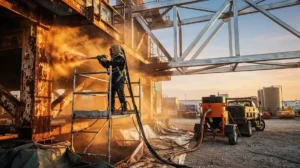
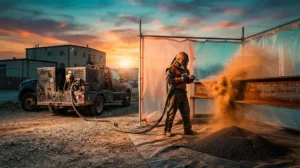
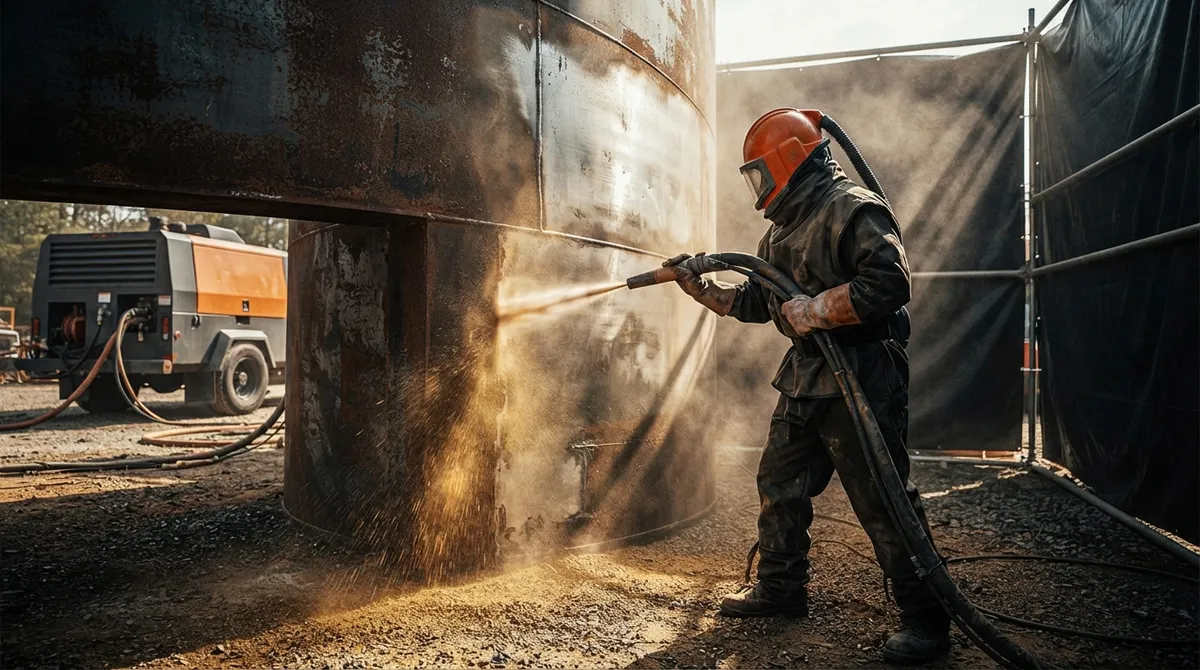
A mobile sandblasting contractor brings the blasting equipment and trained operators to your location. You don’t have to haul the item to a shop. That matters when the “item” is a building, a tank, a boat trailer, or a long iron fence.
Typical work includes:
- Removing paint, rust, scale, and old coatings
- Cleaning concrete, brick, and structural steel
- Erasing graffiti from walls and storefronts
- Prepping metal or concrete for new paint or protective coatings
The goal is a clean, sound surface that’s ready for the next step. A coating is only as good as the surface underneath it. Paint, powder coat, and resurfacing products all fail early when the prep is bad. If you want the full background, here’s a quick primer on what is sandblasting and how the process developed.
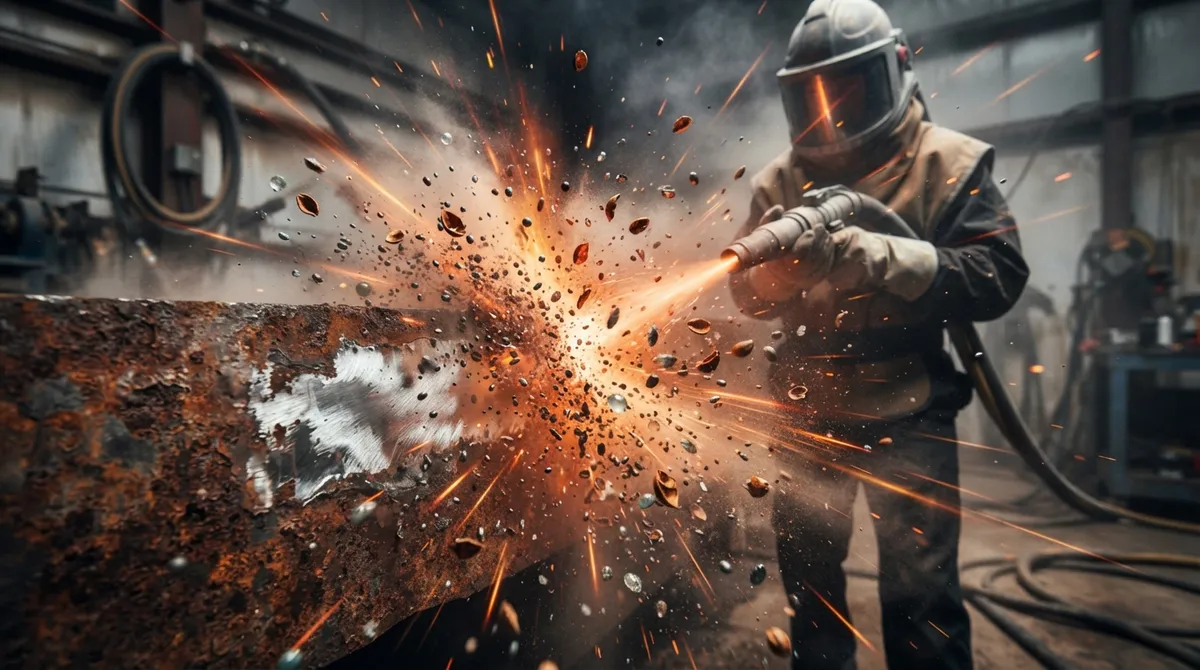
Is “Sandblasting” Really Just Sand?
Not anymore. People still say “sandblasting” as a catch-all, but a good contractor uses many types of media. The best ones match the blast to your surface, not the other way around.
Common options include:
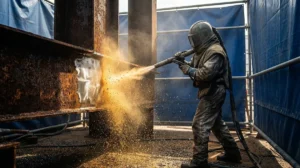
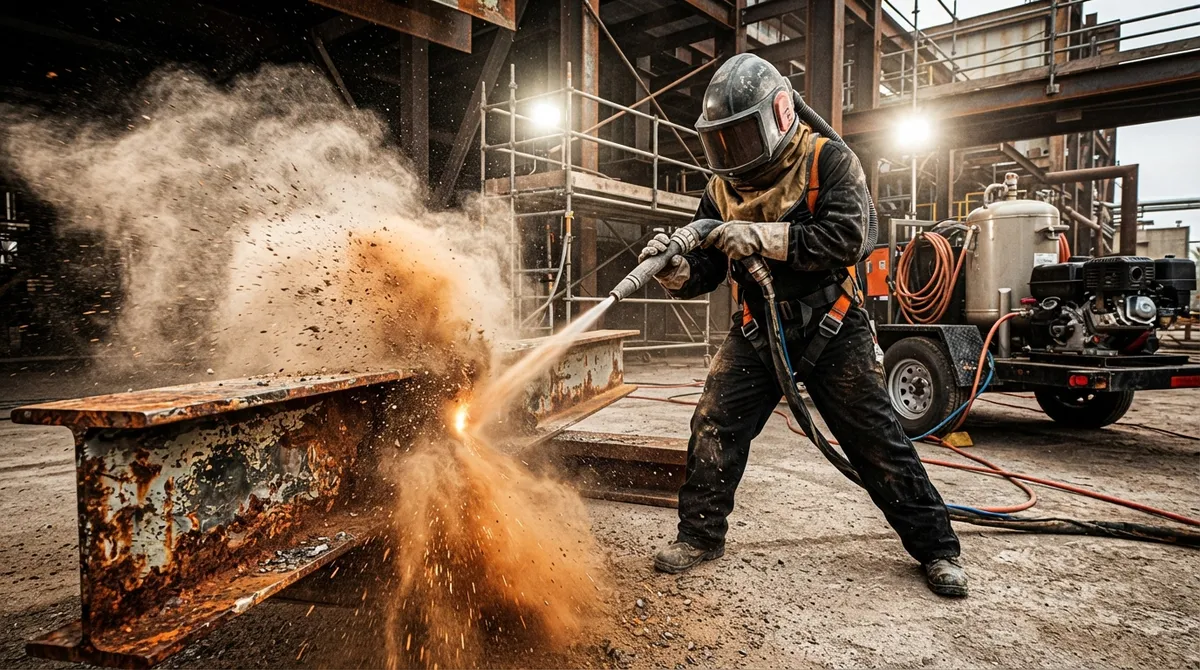
- Dry abrasive blasting: Strong and fast. Great for heavy rust and thick coatings on steel.
- Wet or dustless blasting: Water mixed in to cut dust. Handy near homes, businesses, and active job sites.
- Soda blasting: Gentle media that cleans without harming softer surfaces.
- Walnut shell or similar soft media: Useful for delicate materials like gelcoat or wood.
Want to see how these compare? Our guide on 6 types of sandblasting every Florida owner should know breaks them down in plain language. And if you’re torn between two methods, dry blasting vs. soda blasting for metal can help you decide.
Which Surfaces and Jobs Suit a Mobile Contractor?
Mobile service shines for assets that are large, fixed, or tough to move. Whether your job is a good fit depends on site access, weather, containment needs, and what’s nearby.
| Job Type | Common Surfaces | Typical Goal |
|---|---|---|
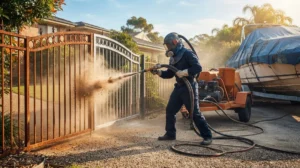
| Residential | Fences, railings, gates, pool decks, pavers | Strip rust or paint, restore the look |
| Commercial | Concrete, storefronts, graffiti, dumpster enclosures | Remove buildup without damaging the surface |
| Industrial | Structural steel, tanks, heavy equipment | Weld prep, coating removal, rust removal |
| Marine | Boat hulls, trailers, docks, davits | Remove bottom paint and corrosion |
| Automotive | Frames, wheels, panels, undercarriages | Back to clean, bare metal |
Some things should not be blasted, or need an in-person look first. Vinyl fencing is too delicate. Glass, veneer, and cultured stone need evaluation. Our post on 13 surfaces you should never sandblast covers the big ones.
What Safety Rules Should a Good Contractor Follow?
This is where a pro really separates from a hobbyist. Abrasive blasting can create hazardous dust. That can include respirable crystalline silica, plus harmful materials from old coatings, such as lead.
OSHA sets clear limits here. The permissible exposure limit for respirable crystalline silica is 50 micrograms per cubic meter of air, averaged over an 8-hour workday. The action level is 25 micrograms per cubic meter. Employers must use feasible engineering and work-practice controls to stay under those limits. Respirators come in where those controls aren’t enough.
A responsible contractor should also:
- Keep a written exposure control plan
- Train workers on silica and blasting hazards
- Restrict access to high-exposure areas
- Follow housekeeping and recordkeeping rules
- Use proper respiratory protection and PPE
OSHA guidance also calls for NIOSH-certified Type CE blasting respirators in certain cases. Those include enclosed or confined spaces, or abrasive that contains more than 1% crystalline silica. Rules differ by project, so a good contractor will explain which ones apply to yours. For a closer look at day-to-day habits, see 5 safe blasting procedures every mobile crew follows.
How Do Pros Handle Dust, Debris, and Waste?
Blasting makes a mess unless someone plans for it. Containment and cleanup are central to responsible mobile work. That’s especially true near homes, shops, pools, or landscaping.
For old paint, extra care is a must. Lead paint rules focus on keeping dust and debris out of the air, soil, water, and neighboring properties. Waste has to be collected and handled correctly. Wet methods cut airborne dust, but they create liquid waste that also needs to be contained.
A good contractor protects the surrounding area, contains the mess, and cleans up when the job is done. We cover the details in how pros handle sandblasting dust control safely. If your job is near customers or staff, you may also like can you sandblast a storefront while it’s open?
How Much Does a Sandblasting Contractor Cost?
Here’s the honest answer. It depends. There’s no reliable, industry-wide average price for mobile sandblasting, because every project is different. Quotes vary with:
- Total surface area
- Type and thickness of the coating
- Surface material and condition
- Site access and setup
- Media choice
- Containment and waste needs
That’s why a vague phone price should make you cautious. A written estimate after a walkthrough, or after you send photos, is much more reliable. Not sure why two quotes look so different? Read why sandblasting service quotes vary so much, and our 7 sandblasting cost facts for a deeper look at what drives price.
What Questions Should You Ask Before You Hire?
A few smart questions will tell you almost everything. Ask them before you agree to anything.
- What media will you use, and why? The answer should tie directly to your surface.
- Are you insured? Ask for proof. Fully insured is the baseline.
- Do you need my power or water? A self-contained rig makes setup easier.
- How will you contain the mess? You want a clear plan, not a shrug.
- How do you handle waste? Especially if old paint may contain lead.
- Is the estimate written, and is the price final? No surprises later.
- Who will be doing the work? You should be able to talk to the crew.
- Do you handle the coating, or just the prep? Know where the handoff happens.
Licensing and insurance rules vary by location and project, so ask what applies where you live. For more on vetting a company, check out how to choose an industrial sandblasting company and 7 local sandblasting contractor traits that matter.
Mobile Contractor or Drop-Off Shop: Which Is Better?
It depends on what you’re blasting. A shop works well for small parts you can carry in. A mobile contractor wins when the work can’t move, or when hauling would cost you time and money.
| Factor | Mobile Contractor | Drop-Off Shop |
|---|---|---|
| Large or fixed items | Works on-site | Needs transport |
| Downtime | Often less | Item is away for days |
| Site access needed | Yes | No |
| Small loose parts | Possible | Often a good fit |
If you want the full breakdown, see mobile vs. shop sandblasting: which one wins?
How Should You Prepare Your Site?
A little prep makes the day go smoother. Here’s a simple checklist most jobs need:
- Clear the area of cars, furniture, plants, and loose items
- Make sure the crew has access for the rig
- Point out delicate spots, like windows, pools, or landscaping
- Share any known history, like old lead paint
- Let neighbors or tenants know about the work window
For a fuller walkthrough, our guide on 9 steps to prepare for sandblasting the right way has you covered. And if you’re hiring for a Florida job, this homeowner guide to mobile sandblasting is a handy next read.
How Does Blastworx Work?
We keep it simple. Here’s our four-step process:
- Walkthrough. Send photos or we come look, and we pick the right media for your surface.
- Free estimate. You get a clear, written estimate the same day. The price we give is the price you pay.
- Blast and strip. We protect the surrounding area, then blast the surface clean at your location.
- Ready to finish. The surface comes out clean and ready for the next step.
We come to you. Our rig is fully mobile and self-contained, so we work in a driveway, at a shop, dockside, or on a job site without needing your power or water. We’re fully insured, and you talk to the people doing the work. Curious how others feel? Take a look and see what our customers are saying about us on Google.
One note on scope. We handle removal and prep, which is the part that decides whether a coating lasts. Refinishing is usually handled by you, your painter, or your coating crew. If you need a trusted partner on the business side of things, our friends at Brain Buzz Marketing help local companies get found online, and Healthcare Solutions Team Brandon is another local business worth knowing.
Ready to Hire a Sandblasting Contractor You Can Trust?
The right sandblasting contractor does more than blast. They match the media to your surface, follow safety rules, contain the mess, and give you a clear price. Ask good questions, expect straight answers, and don’t settle for less.
If you’re in Tampa Bay or the central Florida corridor, we’d love to hear about your project. Get a free estimate today, or give us a call at 813-380-8092. You can text, too. We come to you, and we’ll get your surface back to clean, sound material, ready for what’s next.
FAQs
Q: What does a mobile sandblasting contractor do?
A: A mobile sandblasting contractor brings blasting equipment and trained operators right to your location. They remove paint, rust, graffiti, and old coatings, then leave the surface clean and ready for the next step. It’s perfect for things that are too big or too fixed to haul to a shop.
Q: How much does mobile sandblasting cost?
A: There’s no single set price, because every job is different. Cost depends on surface area, coating type, access, media, and containment needs. The best move is to get a written estimate after a walkthrough or photos, so you know the price up front.
Q: Is mobile sandblasting safe around homes and neighbors?
A: It can be, when the contractor plans for it. A good crew contains the work area, protects nearby property, uses lower-dust methods where needed, and follows safety rules for dust and waste. Always ask how they’ll handle containment before the job starts.
Q: What’s the difference between sandblasting, abrasive blasting, and media blasting?
A: They’re closely related terms. “Sandblasting” is the everyday name, while abrasive or media blasting is the broader category. Many pros use media other than sand, like soda or walnut shell, to match the surface.
Q: How do I choose a qualified sandblasting contractor?
A: Look for proof of insurance, clear answers about media choice, a written estimate, and a plan for containment and waste. Ask who will actually do the work, and what rules apply in your area. A friendly, straight-talking contractor is usually a great sign.