
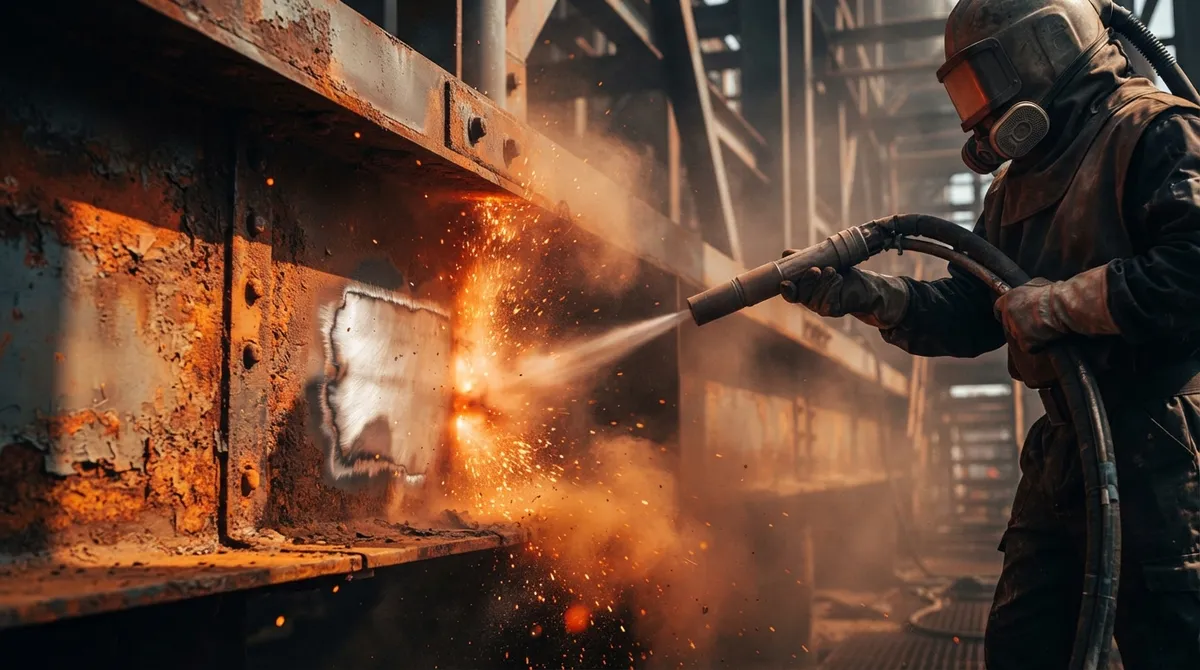
Key Takeaways
-
Proper surface preparation is critical—coatings only bond well if rust, debris, and old coatings are completely removed from seams, corners, and welds; rushed prep leads to early peeling or bubbling, especially in humid climates like Florida.
-
Match the blasting method to your specific coating, substrate, and site conditions—dry abrasive blasting suits heavy corrosion on structural steel, while wet, soda, or sponge blasting better control dust in active facilities or near sensitive equipment.
-
Test for lead and hazardous materials before blasting begins and use proper containment, respiratory protection, and dead-man nozzle controls; OSHA flags abrasive blasting as a high-risk process that exposes workers to toxic dust and metals if safety practices are skipped.
-
Recoat or protect freshly blasted surfaces quickly to prevent flash rust in high-humidity areas; delayed recoating recontaminates the clean surface and undermines the prep work.
-
Verify your contractor addresses surface profile requirements and cleanliness standards mandated by your coating manufacturer—visibly clean surfaces can still fail inspection if the profile is wrong for adhesion.
-
Ask contractors upfront about lead testing, media selection, dust containment methods, insurance, written estimates, and scheduling flexibility; a confident, clear answer to these questions indicates a trustworthy partner.
If you have ever looked at a rusty tank, a corroded steel beam, or a piece of equipment covered in decades-old paint, you know the job ahead is not small. Industrial coating removal is the process of stripping away old paint, epoxy, rust, and other coatings so a surface can be inspected, repaired, or recoated. It sounds simple, but doing it right takes the correct method, the correct media, and a contractor who knows how to protect your site, your crew, and your equipment along the way.
At Blastworx, we handle this kind of work every week across Tampa Bay and the central Florida corridor. We come to you, whether that means a job site in Orlando, a facility near Ocala, or a shop right here in Tampa. This guide walks you through how industrial coating removal actually works, what methods make sense for different jobs, and what questions to ask before you hire anyone to blast your equipment or structures.
What Industrial Coating Removal Really Means
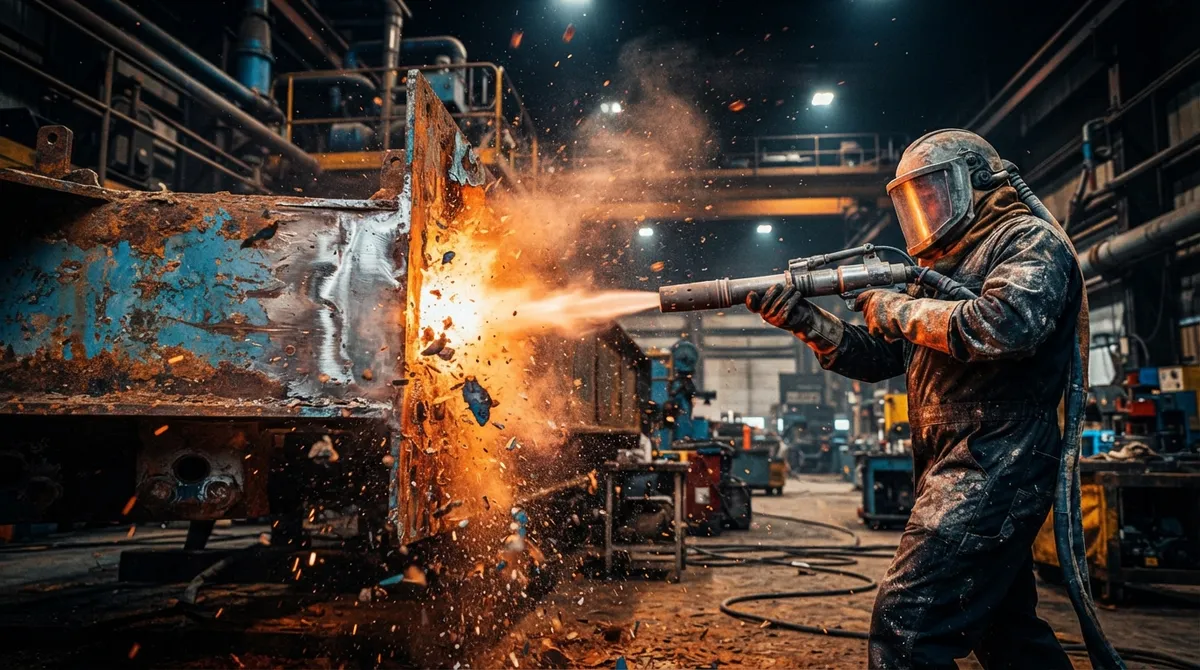
Industrial coating removal covers a wide range of jobs. It usually means stripping paint, epoxy, polyurethane, powder coating, rubberized coatings, or corrosion buildup from steel, concrete, machinery, tanks, and other industrial assets. The goal is always the same: get back to a clean, sound surface so a new coating or repair can bond properly.
This work happens on structural steel, storage tanks, bridges, heavy equipment, weld-prep areas, and fabrication shops. It also happens on smaller industrial parts that need to be stripped before recoating. No matter the size, the surface has to be prepared correctly, or the new coating will fail early.
Why Proper Prep Matters So Much
A coating is only as good as the surface underneath it. Paint, powder coat, or protective coatings will not last if the prep work is weak. Hand-sanding often misses rust hiding in seams, corners, and welds. Blasting takes the whole surface back to clean, sound material at once, which means whatever goes on next actually sticks and holds up.
This matters even more here in Florida. Our heat, humidity, and salt air are tough on coatings. A rushed prep job might look fine for a few months, then start bubbling or peeling once the weather gets to it. Good industrial blasting prep gives new coatings a real shot at lasting.
Choosing the Right Method for Your Job
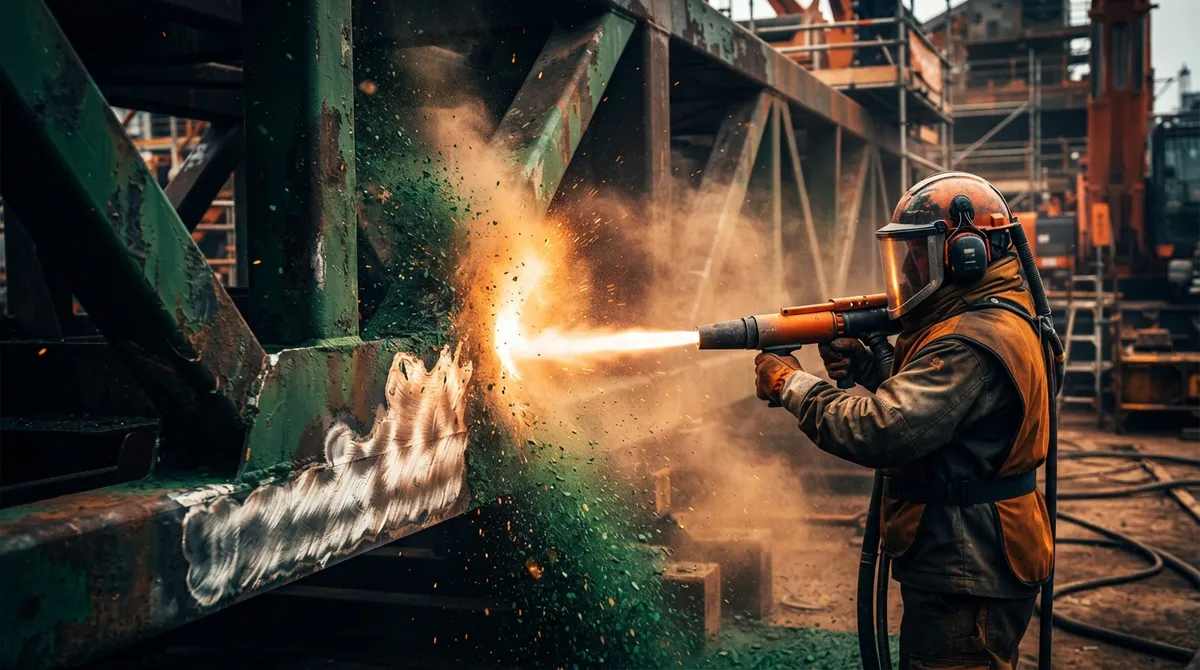
Not every job calls for the same approach. A mobile blasting contractor should match the process to your coating, your substrate, and your site conditions, not just show up with one tool and hope it works.
Common Methods Used in Industrial Coating Removal
- Dry abrasive blasting — Great for heavy coatings and corrosion, but it can create a lot of dust. Containment and ventilation matter here.
- Wet or slurry blasting — Uses liquid to knock down dust, which helps in dust-sensitive areas or near other equipment.
- Soda blasting — A gentler option that works well on delicate substrates without damaging the material underneath.
- Sponge or low-dust media — Good for jobs where dust control is a top priority, like active facilities.
- Hydroblasting — High-pressure water for certain coating and rust removal jobs.
- Dry ice or chemical stripping — Specialized alternatives for coatings that react poorly to abrasive methods.
The right choice depends on coating thickness, the surface profile needed, access to the site, and whether the area allows dust at all. This is exactly why we say we match the blast to your surface, not the other way around. Learn more about the differences in our breakdown of wet sandblasting vs. dry blasting.
Comparing Methods at a Glance
| Method | Best For | Dust Level | Typical Use |
|---|---|---|---|
| Dry Abrasive Blasting | Heavy coatings, rust, thick corrosion | High | Structural steel, tanks, heavy equipment |
| Wet/Slurry Blasting | Dust-sensitive job sites | Low | Facilities near occupied areas |
| Soda Blasting | Delicate substrates | Low to moderate | Fiberglass, thin metal, sensitive materials |
| Sponge Media | Indoor or restricted areas | Very low | Active job sites, occupied buildings |
| Hydroblasting | Rust and light coating removal | Minimal dust, water runoff | Tanks, pipelines, marine hardware |
Safety Comes First, Every Time
Blasting is not just about power. It is about control. The Occupational Safety and Health Administration has flagged abrasive blasting as a process that can expose workers to hazardous dust and toxic metals, including lead and silica, depending on the coating and media used.
Key Safety Practices for Coating Removal
- Testing older coatings for lead or hazardous materials before blasting begins
- Using synthetic abrasives with less than 1% free silica when appropriate
- Setting up barriers, containment, and restricted work zones
- Supplying proper respiratory, eye, and hearing protection for the crew
- Inspecting hoses, couplings, and nozzles regularly for wear
- Using a dead-man control on the nozzle so the system shuts down if the operator loses grip
These practices are not optional extras. They are part of doing the job responsibly. OSHA’s guidance under 29 CFR 1915.34 outlines equipment standards that many contractors, including us, treat as a baseline for safe operation, even outside shipyard settings.
Environmental and Waste Considerations
Spent abrasive and coating debris have to go somewhere, and that “somewhere” is regulated. The EPA has guidance around dry abrasive blasting, hydroblasting, and wet blasting that addresses emission control, filtration, and how contaminated abrasive should be handled. Depending on your location and the coating involved, permits or specific disposal rules may apply. A contractor who understands these rules protects you from headaches down the road.
Our Process for Industrial Coating Removal
We keep things simple and transparent, because surprises are the last thing you need on a job like this.
- Walkthrough. Send us photos, or we come take a look. We figure out the right media for your surface and coating.
- Free estimate. You get a clear, written estimate the same day. The price we give is the price you pay.
- Blast and strip. We protect the surrounding area, then blast the surface clean right at your location.
- Ready to finish. The surface comes out clean and ready for the next step, whether that is priming, coating, or repair work.
We bring our own power and water, so we can work at your facility or job site without disrupting your operations. Dustless blasting is available for indoor work, active sites, or areas near other equipment, which keeps the mess contained and your team safer.
What Surfaces and Assets We Work On
Industrial coating removal covers more ground than people expect. Here are some of the common jobs we see:
- Structural steel beams and columns
- Storage tanks and vessels
- Heavy equipment and machinery
- Weld-prep and fabrication surfaces
- Pipelines and industrial piping
- Bridges and infrastructure components
If you are curious how this applies to steel specifically, check out our guide on structural steel blasting facts or our piece comparing blasting versus hand tools for steel prep.
Common Mistakes That Cost Time and Money
Skipping the Pre-Job Coating Check
Older painted steel and industrial equipment sometimes contain lead or other hazardous materials. Skipping testing can lead to safety violations and costly cleanup later. Always ask your contractor if they assess coatings before blasting.
Using the Wrong Media
Using an abrasive that is too aggressive can damage thinner substrates or create a surface profile that is wrong for the new coating. Using one that is too soft might leave old coating behind. This is why we always say: the right media for the job matters more than brute force.
Ignoring Surface Profile Requirements
Removing the visible coating is not the finish line. Many coating systems require a specific surface profile and cleanliness level before they will bond correctly. A rushed job might look clean but fail inspection.
Waiting Too Long to Recoat
Freshly blasted steel is vulnerable to flash rust, especially in Florida’s humidity. Surfaces should be protected or coated soon after blasting to avoid recontamination.
Cost Factors to Expect
Every job is different, but a few factors tend to drive the price of industrial coating removal:
- Size of the surface area being stripped
- Thickness and type of coating being removed
- Media type required for the substrate
- Dust control or containment needs
- Site access and mobility requirements
- Waste disposal and environmental compliance
For a deeper look at pricing factors across different blasting jobs, our article on mobile blasting rates breaks it down further. If you want an exact number for your project, it is always faster to get a free estimate based on your specific site and coating.
Why Mobile Blasting Works So Well for Industrial Jobs
Not every piece of industrial equipment can be trucked to a shop. Tanks, structural steel, and heavy machinery often need to stay put. That is where mobile blasting earns its keep. A fully mobile, self-contained rig means the work comes to your facility instead of the other way around.
We serve Tampa, Clearwater, Sarasota, Ocala, Orlando, Fort Myers, and the surrounding areas, including Brandon, Riverview, Plant City, Lutz, and St. Pete. For the right job, we will travel anywhere in the state. You can see the areas we regularly cover on our service areas page.
If you want to see examples of past coating removal and surface prep work, our gallery shows real before-and-after results from jobs across the region. And if you are curious what other business owners in the area have said about working with us, you can visit us on Google and see what our customers are saying about us.
Questions to Ask Before You Hire a Blasting Contractor
- Do you test coatings for lead or hazardous materials before starting?
- What media will you use for my specific substrate?
- How do you contain dust and debris on-site?
- Do you carry insurance for industrial job sites?
- Will I get a written estimate before work begins?
- Can you work around my facility’s operating hours?
A contractor who answers these clearly and confidently is one worth trusting with your equipment. For general background on the blasting process itself, the what is sandblasting overview offers a helpful primer on how abrasive blasting developed as an industrial technique.
Ready to Get Your Surface Back to Bare Metal
Industrial coating removal is not a job for guesswork. It takes the right method, the right safety practices, and a crew that treats your site with respect. Whether you are dealing with a corroded tank, a structural steel project, or equipment that needs a fresh start, getting the prep right sets up everything that follows.
We are fully insured, fully mobile, and small enough to give your job our full attention. When you call, you talk to the people actually doing the work. If you have a coating removal project anywhere in Tampa Bay or the central Florida corridor, reach out and get a free estimate today, or give us a call to talk through your project. We are ready to help you get back to clean, sound material and ready for the next step.
FAQs
Q: What is the best blasting method for removing industrial coatings?
A: It really depends on your coating and substrate, and that’s the fun part of our job figuring it out with you. Dry abrasive blasting works great for heavy rust and thick coatings, while wet or sponge blasting is better when dust control matters. We always match the blast to your surface, not the other way around.
Q: Can mobile blasting remove lead paint safely?
A: Yes, but it takes proper testing and safety steps first. We check older coatings before we blast, and we use the right respiratory protection, containment, and disposal practices to keep everyone safe. Safety is never something we skip, no matter how tight the timeline is.
Q: How much does industrial coating removal cost?
A: Costs vary based on surface size, coating thickness, media type, and site access, so there is no one-size-fits-all number. The good news is we give same-day written estimates, and the price we quote is the price you pay. Reach out and we will walk your project with you.
Q: Will abrasive blasting damage steel, concrete, or other substrates?
A: Not when it is done right. We choose media and pressure based on your specific substrate, using gentler options for delicate surfaces and stronger abrasives for tough steel or concrete. That careful matching is exactly why prep work should never be a one-size-fits-all job.
Q: What surface preparation standard is required before applying a new industrial coating?
A: Most coating systems require a specific cleanliness level and surface profile, not just a visibly clean surface. We make sure the substrate is back to clean, sound material and ready for the next step before we call the job done. If you are unsure what your coating manufacturer requires, we are happy to talk it through with you.





