
Key Takeaways
-
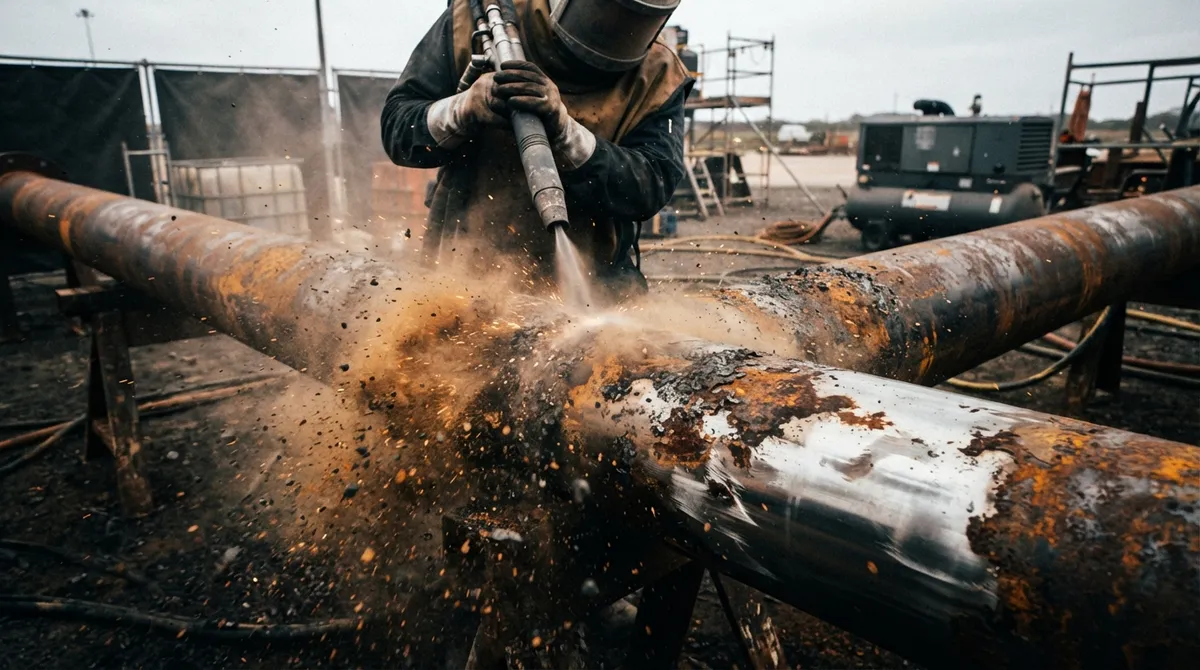
Pipeline sandblasting removes rust, mill scale, and old coatings to bare metal before recoating, ensuring new coatings bond properly and last longer in Florida’s corrosive environment.
-
Mobile blasting equipment eliminates the need to move pipelines off-site, saving time and transport costs while working directly at pump stations, valve sites, and remote pipeline segments.
-
Cleanliness standards (SP-10 near-white or SP-6 commercial blast cleaning) must come from your coating manufacturer’s data sheet and project spec, not general assumptions, to ensure coating success.
-
Pre-blast solvent cleaning and post-blast inspection for flash rust, salt contamination, and surface profile are critical steps; skipping them is a primary cause of early coating failure.
-
Dust control through containment systems, wet blasting, or vacuum blasting is essential near occupied buildings and active equipment, with complete documentation required for inspection sign-off.
-
Supplied-air respirators and engineering controls must address OSHA’s 50 microgram per cubic meter silica exposure limit, plus hazards like high noise, compressed-air injection risks, and heat stress in Florida’s climate.
If you manage pipeline assets in Florida, you already know rust and old coatings don’t wait around. Pipeline sandblasting is the process that gets steel back to bare metal so new coatings actually stick and last. It sounds simple, but there’s a lot going on behind the scenes, from picking the right abrasive to controlling dust on-site. Let’s walk through it together, in plain language, so you know exactly what to expect and ask for.
At Blastworx, we bring mobile blasting equipment straight to pump stations, valve sites, and pipeline rights-of-way across Tampa Bay and the central Florida corridor. We come to you, fully mobile and self-contained, so your crew doesn’t have to move the pipeline to us. Whether you’re near Ocala, Orlando, Fort Myers, or right here in Tampa, we match the blast to your surface, not the other way around. This guide covers the standards, safety rules, and practical steps that make pipeline sandblasting work correctly the first time.
What Is Pipeline Sandblasting and Why Does It Matter
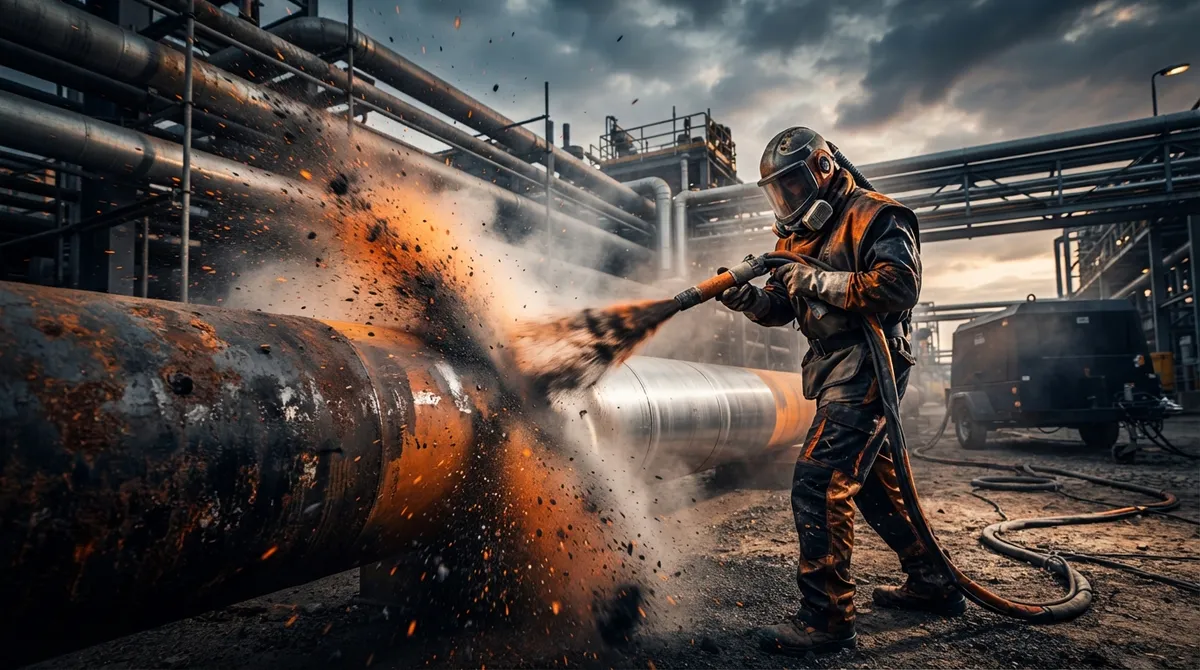
Pipeline sandblasting is a surface prep method that uses abrasive media to strip rust, mill scale, old coatings, and grime off exposed pipeline steel. This happens before recoating, lining, inspection, or repair work begins. It’s the same core idea behind what is sandblasting in general, just scaled and adapted for long runs of pipe in the field.
Here’s why it matters so much: a coating is only as good as the surface underneath it. If rust or old paint stays behind, the new coating fails early, sometimes within months. Blasting takes the whole surface back to clean, sound metal at once, so whatever goes on next actually bonds and holds up against Florida’s heat, humidity, and salt air.
Common places where this work happens include:
- Pipeline rights-of-way running through rural or industrial areas
- Pump stations and compressor sites
- Terminal facilities and tank farms
- Valve sites along active lines
- Fabrication yards prepping new pipe sections
Why Mobile Blasting Fits Pipeline Work So Well
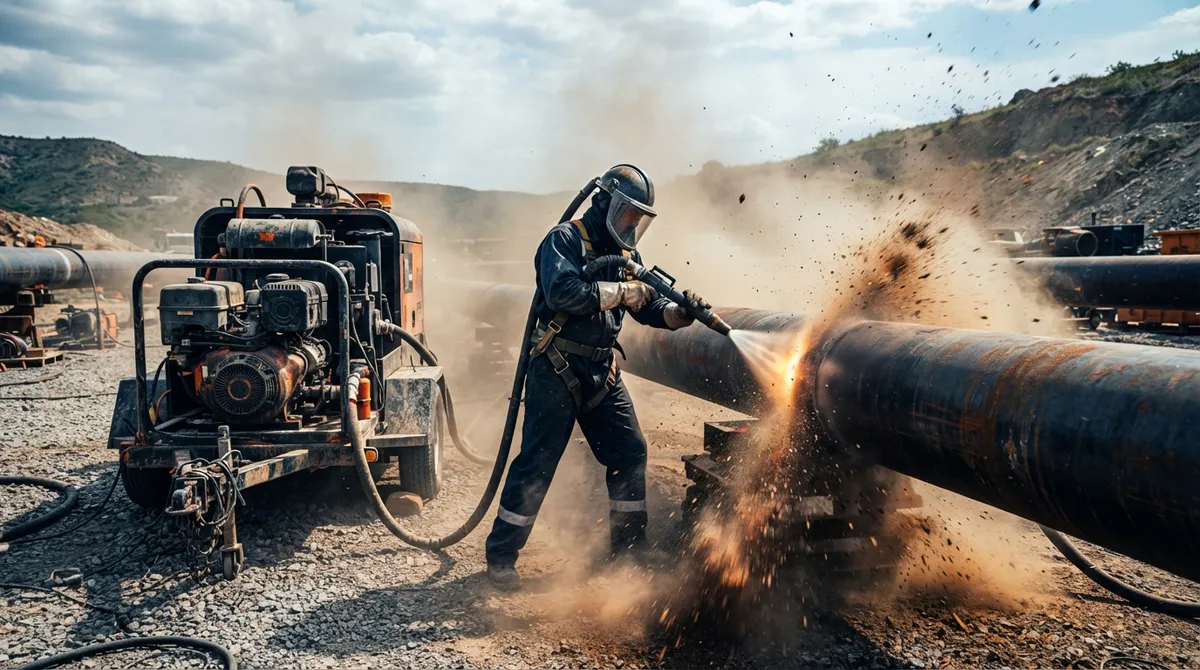
Pipelines don’t move, but blasting equipment can. A mobile setup brings the blast pot, compressor, abrasive recovery gear, containment, and dust collection directly to the pipeline location. That’s a big deal when the asset is miles from the nearest shop or sits in a spot with limited access.
We’ve seen this firsthand across our service areas in central Florida. Instead of cutting pipe sections and hauling them off-site, a mobile crew sets up right at the field location and gets to work. This saves time, reduces handling risk, and keeps the project moving without extra transport costs.
Mobile blasting also works well for:
- Remote or hard-to-reach pipeline segments
- Tight maintenance windows where downtime costs money
- Sites without on-site power or water hookups
- Projects needing dustless blasting near occupied buildings or active equipment
Understanding AMPP, SSPC, and NACE Cleanliness Standards
Before any blasting starts, the project needs a clear cleanliness standard. These come from AMPP (the Association for Materials Protection and Performance, which absorbed NACE and SSPC). The standard tells the crew exactly how clean the steel needs to be.
| Standard | Common Name | What It Means |
|---|---|---|
| SP-5 / NACE No. 1 | White-metal blast cleaning | Removes all visible rust, scale, and coating; strictest level |
| SP-10 / NACE No. 2 | Near-white-metal blast cleaning | Allows very light staining; common for demanding coatings |
| SP-6 / NACE No. 3 | Commercial blast cleaning | Removes most rust and scale, some staining allowed |
| SP-14 / NACE No. 8 | Industrial blast cleaning | Removes loose material; more staining allowed than SP-6 |
| SP-7 / NACE No. 4 | Brush-off blast cleaning | Lightest cleaning level; removes loose debris only |
Near-white and white-metal levels get picked most often for pipeline coatings because they remove contamination while leaving a good anchor profile for adhesion. That said, the exact standard, profile depth, and acceptable staining always come from the coating manufacturer’s data sheet and the project spec, not a general rule of thumb.
Choosing the Right Abrasive Media
The abrasive you pick affects everything: how fast the job goes, how much waste you generate, and how safe the work is for the crew. There’s no single “best” media for every pipeline job.
- Steel grit or shot works well for tough mill scale and can often be recycled, cutting down on waste.
- Garnet is a mineral abrasive that produces a clean profile with lower dust output than some alternatives.
- Crushed glass offers a lower-cost option with decent cutting power for many coating removal jobs.
- Coal or copper slag has been used for decades on structural steel, though some specs restrict it due to trace metal content.
- Other mineral abrasives get chosen based on hardness, moisture content, and compatibility with the coating system going on afterward.
Specifications often set hard limits on abrasive properties. For example, one commonly cited coating spec calls for abrasive hardness of at least 6 on the Mohs scale and maximum moisture of 0.5% by weight. Another requires abrasive conductivity no greater than 1,000 microsiemens under ASTM D4940 testing. These numbers are project-specific examples, not universal rules, so always check your spec sheet first.
Containment and Dust Control on Active Pipeline Sites
Blasting outdoors near active pipelines means dust, debris, and old coating material need to stay put. We protect the surrounding area on every job, and pipeline work is no exception. Depending on the site, containment might include:
- Full or partial enclosures around the work zone
- Negative-pressure systems that pull dust inward instead of letting it spread
- Ground covers and tarps to catch spent media and debris
- Vacuum blasting for tight or sensitive areas
- Wet abrasive blasting to knock dust down at the source
- Dust collectors and spent-abrasive recovery systems
Dustless blasting has become a favorite option for sites near occupied buildings, roads, or other equipment. It keeps airborne particles low while still delivering solid surface prep. If you’re curious how this approach performs in real conditions, our article on what makes dustless blasting in Tampa so effective breaks it down further.
Pre-Cleaning and Post-Blast Inspection Steps
Good pipeline sandblasting doesn’t start with the blast pot. It starts with checking the surface first. Here’s a practical sequence that keeps quality high:
- Inspect the pipe for oil, grease, or soluble contaminants before touching it with abrasive.
- Solvent clean or pressure wash if contamination is present, since blasting alone can spread oil into the surface instead of removing it.
- Blast to the specified cleanliness level using the approved abrasive and pressure settings.
- Check the surface profile with a profile gauge or replica tape to confirm it matches spec.
- Test for soluble salts, since leftover salts under a coating can cause early failure.
- Watch for flash rust, especially in Florida’s humidity, and recoat quickly if flash rust starts forming.
- Record environmental readings like steel temperature, air temperature, and dew point before coating begins.
Skipping any of these steps is one of the most common ways coating jobs fail early. It’s the same principle we cover in 14 surface prep steps before commercial coating, just applied to pipeline steel instead of a building exterior.
Silica Exposure and Worker Safety
Abrasive blasting can kick up crystalline silica, and that’s a serious health hazard if it’s not controlled. OSHA’s respirable crystalline silica permissible exposure limit sits at 50 micrograms per cubic meter of air as an 8-hour time-weighted average, with an action level of 25 micrograms per cubic meter. Employers need engineering controls, exposure monitoring, and respiratory protection to stay compliant, according to OSHA’s guidance on abrasive blasting media.
Beyond silica, pipeline blasting crews deal with a long list of other hazards on any given day:
- High noise levels from compressors and blast nozzles
- Compressed-air injection risks from equipment
- Flying abrasive and debris
- Heat stress, which is a real concern during Florida summers
- Confined or restricted work areas along pipeline corridors
- Traffic and heavy-equipment hazards near active rights-of-way
- Toxic metals that may be present in old coatings
Standard controls include supplied-air respirators, hearing protection, protective clothing, grounding equipment, deadman controls, and site-specific job hazard analyses. This is why choosing a crew that’s fully insured and safety-focused matters as much as picking the right abrasive.
Environmental Conditions That Affect Coating Success
Even a perfect blast job can fail if coating happens under the wrong conditions. Contractors typically monitor several readings before applying any coating:
| Condition | Why It Matters |
|---|---|
| Steel temperature | Must stay above dew point to avoid condensation on the surface |
| Air temperature | Affects coating cure time and application quality |
| Relative humidity | High humidity increases flash rust and moisture risk |
| Dew point | Steel temp should stay comfortably above this number |
Florida’s humidity makes this step extra important. The coating manufacturer’s data sheet always governs the actual acceptable ranges, so these numbers get checked and logged before work proceeds.
Documentation: What a Good Contractor Tracks
Quality pipeline work leaves a paper trail. A competent mobile blasting provider documents:
- Abrasive type and batch used
- Preparation standard achieved (SP-10, SP-6, etc.)
- Surface profile readings
- Cleanliness inspection results
- Dust and waste control methods used
- Environmental readings at time of blast and coating
- Coating hold points and sign-offs
- Waste disposal or recycling records
This documentation protects everyone involved and gives inspectors what they need to verify the work meets spec. If you want to see how we handle projects like this, take a look at our gallery or see what our customers are saying about us on Google.
Wet Blasting vs. Dry Blasting for Pipeline Work
Both methods show up on pipeline jobs, and the right pick depends on site conditions:
- Dry blasting is often faster and works well when dust control equipment is already in place.
- Wet abrasive blasting knocks dust down at the source, which helps near sensitive areas or occupied facilities.
- Vacuum blasting contains everything within the tool itself, useful for tight spaces or strict environmental rules.
We cover this comparison in more depth in wet sandblasting vs dry: which one fits your job, which applies just as well to pipeline sites as it does to other industrial surfaces.
Getting Started with a Pipeline Blasting Project
If you’re planning pipeline maintenance, coating renewal, or inspection prep, here’s the simplest path forward:
- Confirm the cleanliness standard required by your coating manufacturer and project spec.
- Send photos or request a site walkthrough so the right media gets matched to your pipe surface.
- Get a clear, written estimate before work begins.
- Confirm dust control and containment plans fit your site’s environmental requirements.
- Review documentation requirements so inspection sign-off goes smoothly.
Our team handles this exact process for industrial blasting projects across Tampa Bay and the central Florida corridor. We bring our own power and water, work at your facility or job site, and match media and pressure to the surface and coating needed. Dustless blasting is available for indoor work or sites near other equipment.
Ready to talk through your pipeline project? You can get a free estimate today, or if you’d rather talk it through first, give us a call and you’ll speak directly with the people doing the work.
Bringing It All Together
Pipeline sandblasting isn’t just about blasting metal until it looks shiny. It’s a careful process built around the right standard, the right abrasive, solid containment, and careful documentation. Get those pieces right, and your coating system has a real shot at lasting for years in Florida’s tough climate.
We’ve built our whole business around showing up, doing the work right, and standing behind it. Whether your pipeline site sits near Tampa, Ocala, Orlando, or Fort Myers, we come to you, fully mobile and self-contained, ready to get your steel back to clean, sound metal and ready for the next step.
FAQs
Q: What is pipeline sandblasting and why is it needed before coating?
A: Pipeline sandblasting removes rust, old coatings, and mill scale from pipeline steel so new coatings can bond properly. Without it, coatings often fail early because contamination stays trapped underneath. Think of it as giving the surface a clean slate before anything new goes on.
Q: How much does mobile pipeline sandblasting cost?
A: Cost depends on pipe length, access, cleanliness standard required, and abrasive type used. We always provide a clear, written estimate before work starts, so you know the price upfront with no surprises. Reach out and we’ll walk the site or review your photos to get you an accurate number.
Q: What AMPP, SSPC, or NACE blast-cleaning standard is required for my pipeline?
A: The required standard comes from your coating manufacturer and project specification, not a general rule. Common choices include SP-10 near-white metal or SP-6 commercial blast cleaning, depending on the coating system. We’ll confirm the exact spec with you before we ever fire up the blast pot.
Q: How do mobile blasting companies control dust and spent abrasive at a pipeline site?
A: We use containment methods like ground covers, negative-pressure systems, and vacuum or wet blasting depending on the site conditions. Dustless blasting is also available when the location needs extra dust control, like near occupied buildings or active equipment. We always protect the surrounding area, so cleanup stays manageable.
Q: How is silica exposure controlled during pipeline abrasive blasting?
A: Silica exposure gets controlled through engineering controls, supplied-air respirators, and monitoring against OSHA’s permissible exposure limit of 50 micrograms per cubic meter. Our crews follow safety protocols on every job, because protecting the people doing the work matters just as much as protecting your pipeline.





