
Key Takeaways
-
Modern residential sandblasting uses different media types (soda, walnut shell, garnet, etc.) matched to specific surfaces rather than harsh sand, with contractors selecting the right abrasive to avoid damage while following OSHA recommendations against silica-containing materials.
-
Dust control and lead paint safety are critical: professional crews use wet blasting, vacuum systems, and containment tools, and EPA regulations require special lead-safe practices for pre-1978 homes when disturbing painted surfaces over 6-20 square feet.
-
Typical residential sandblasting costs range from $8-$15 per linear foot for metal railings to $1-$5 per square foot for pool decks and brick walls, with final pricing depending on prep work, lead testing, and contractor travel distance.
-
Preparation involves moving vehicles and furniture, covering plants, closing windows, and selecting an insured contractor who tests for lead paint, controls dust properly, and understands local Florida conditions like coastal rust and humidity-related mold buildup.
If your patio looks stained, your railings are rusty, or your pool deck has seen better days, you’ve probably wondered if sandblasting could help. Good news: it usually can. Residential sandblasting brings professional-grade cleaning power straight to your home, no shop visit required. But before you book anyone, it helps to know what this service actually involves, what it costs, and how to keep your property safe during the process.
We’re going to walk you through six things every Florida homeowner should understand about residential sandblasting. Whether you live in Tampa, Clearwater, Sarasota, or a smaller town like Brandon or Plant City, this guide will help you make a smart, informed choice. Let’s dig in together, friend.
1. What Residential Sandblasting Actually Means Today
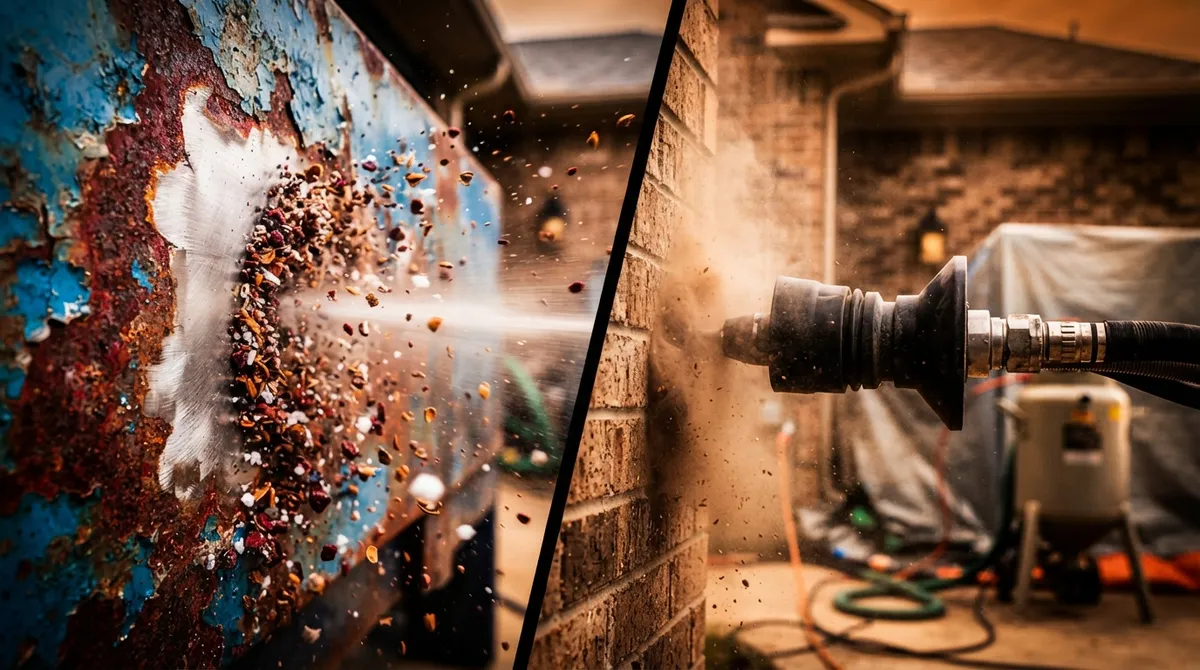
Residential sandblasting is a mobile service where a contractor brings all the equipment to your home. That includes blasting machines, media, hoses, containment tools, and cleanup gear. You don’t haul anything anywhere. The crew sets up right in your driveway, backyard, or wherever the work needs to happen.
The term “sandblasting” is a bit old-fashioned these days. Most professionals now use a mix of media types depending on the surface. This is often called what is sandblasting in broader industry terms, but the modern version is much more refined than old-school sand-only methods.
Here’s what falls under residential blasting work:
- Removing old paint from wood, brick, or metal
- Stripping rust off railings, gates, and fences
- Cleaning graffiti or stains off walls and pavers
- Prepping pool decks and patios for resurfacing
- Restoring wood decks and outdoor furniture
- Cleaning screen enclosures and lanai frames
At Blastworx, we handle all of this and more across the Tampa Bay area. We match the blast to your surface, not the other way around, which means your railings and your pool deck don’t get treated the same way.

2. Not All Blasting Media Are Created Equal
This might be the most important thing to understand. The old idea of “sandblasting” using pure sand is mostly gone. Sand is harsh, dusty, and can damage delicate surfaces fast. Today’s contractors pick from several types of media based on what needs cleaning.
OSHA actually recommends against using traditional sand when possible. They suggest non-silica-containing abrasives like steel or iron grit instead. This protects both the workers doing the blasting and reduces long-term health risks tied to silica dust.
A good contractor picks the right media for the job every single time. We’ve written more about this topic in our piece on how to choose between soda blasting vs sandblasting, which breaks down the differences even further.
3. Common Surfaces You Can Safely Blast at Home
People are often surprised by how many parts of their property can be treated. Here’s a quick rundown of what’s typically fair game for residential blasting.
- Metal railings and gates – Rust removal is one of the most popular requests we get.
- Pool decks and patios – Great prep step before resurfacing or resealing.
- Brick and concrete – Removes old paint, stains, and buildup without damaging the material.
- Wood decks – Gentle media strips old finish without gouging the wood.
- Fences (excluding vinyl) – Wood and metal fences respond well to blasting.
- Pavers and walkways – Cleans years of grime, moss, and old sealant.
One quick note: we don’t recommend blasting vinyl fencing. It’s simply too delicate and can warp or crack under pressure. Everything else on this list, though, is usually a great candidate. If you’re curious about specific surfaces, check out our guide on whether you can sandblast a wood deck without damaging it.
4. Dust Control and Safety Matter More Than You Think
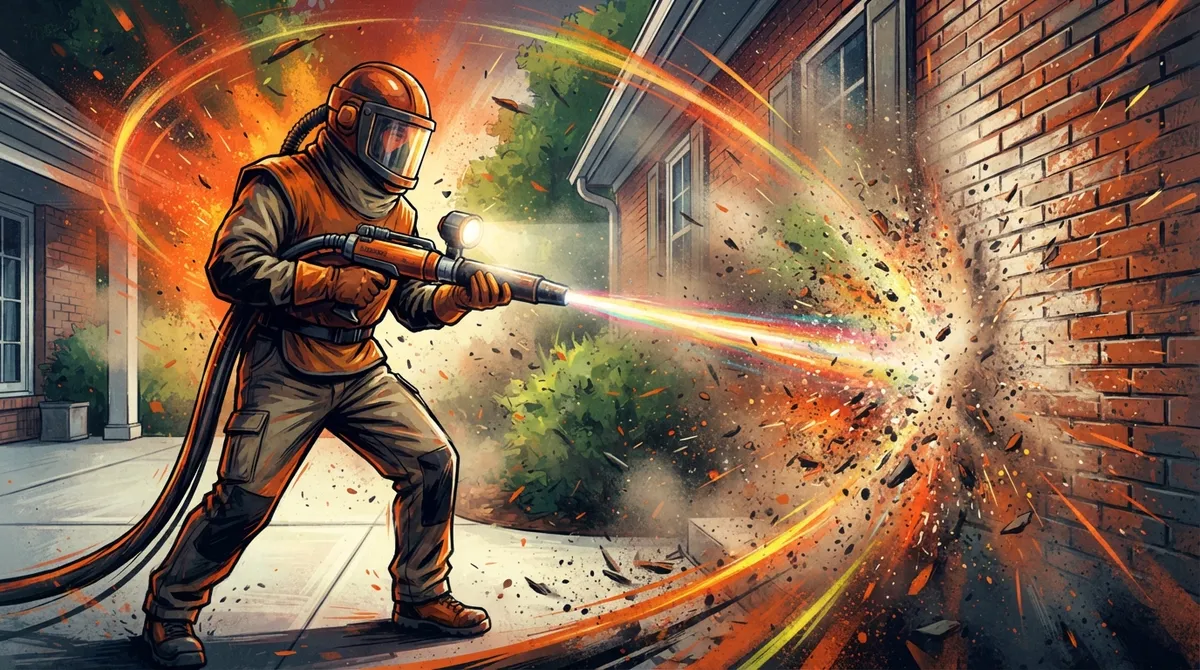
Nobody wants a cloud of dust drifting into their neighbor’s yard or settling on their car. That’s why dust control is such a big deal in residential work. Professional crews use a few different tricks to keep things clean and contained.
Methods We Use to Control Dust
- Wet blasting, which mixes water into the process to trap dust
- Vacuum-assisted systems that suck up debris as we work
- Shrouds and containment tools around the blast nozzle
- Ground coverings to protect landscaping and pool water
- HEPA filtration for indoor or enclosed spaces
If your home was built before 1978, there’s another layer to think about: lead paint. The EPA’s Renovation, Repair, and Painting rule requires special handling any time more than 6 square feet of interior or 20 square feet of exterior painted surface gets disturbed. This isn’t something to skip. Lead dust is dangerous, and EPA guidance actually prohibits blasting lead-painted surfaces unless the equipment has proper shrouding and HEPA vacuum attachments.
OSHA also sets strict limits on airborne lead exposure, capping it at 50 micrograms per cubic meter over an 8-hour period. A trustworthy contractor will always test older coatings first and follow lead-safe practices. This protects your family, your pets, and the crew doing the work.
5. What Residential Sandblasting Typically Costs
Pricing varies quite a bit depending on the surface, size of the area, and type of media needed. Here’s a general breakdown to help you budget.
| Media Type | Best For | Surface Sensitivity |
|---|---|---|
| Soda | Wood, fiberglass, gentle stripping | Very gentle |
| Walnut Shell | Soft woods, delicate trim | Gentle |
| Glass Bead | Metal, light rust removal | Moderate |
| Garnet | Concrete, brick, heavy coatings | Moderate to aggressive |
| Crushed Glass | Masonry, general paint removal | Moderate |
| Aluminum Oxide | Metal railings, heavy rust | Aggressive |
These numbers shift based on how much prep work is involved, whether lead paint testing is needed, and how far the crew has to travel. If you’re in Tampa, Ocala, Orlando, or Fort Myers, we’re happy to come take a look and put together a clear written estimate. For a deeper dive into pricing, check out our article on how much sandblasting estimates really cost.
6. How to Prepare Your Property and Choose the Right Contractor
A little prep work on your end goes a long way toward a smooth blasting day. Here’s a simple checklist to run through before your appointment.
- Move vehicles, furniture, and grills away from the work area
- Cover or relocate delicate plants and landscaping
- Close windows and vent openings near the blast zone
- Ask your contractor about pet safety during the job
- Confirm whether water or electricity access is needed
- Clear a path for equipment to reach the work site
When picking a contractor, a few questions can save you a lot of headache later. Ask if they carry insurance, whether they test for lead paint on older homes, and how they handle dust and debris cleanup. A trustworthy company will answer these questions without hesitation.
We’re proud to be a mobile, self-contained operation. Our rig doesn’t need your power or your water to get the job done. We’re fully insured, and when you call, you talk to the people actually doing the work, not a call center. If you’d like to see how we’ve helped other homeowners around Tampa Bay, feel free to visit us on Google and see what our customers are saying about us.
Our Simple Four-Step Process
- Walkthrough: We look at photos or visit in person to plan the right media
- Free estimate: Same-day written quote, no surprises later
- Blast and strip: We protect your property, then clean the surface on-site
- Ready to finish: Your surface comes out clean and ready for paint, sealant, or coating
Why Local Experience Matters in Florida
Florida’s heat, humidity, and salt air create unique challenges for outdoor surfaces. Rust forms faster near the coast. Mold and mildew build up quicker in humid inland areas too. A contractor who understands these local conditions can pick better media and techniques for lasting results.
We work throughout the central Florida corridor, including Tampa, Clearwater, Sarasota, Ocala, Orlando, and Fort Myers. We also handle plenty of jobs in Brandon, Riverview, Plant City, Lutz, and St. Pete. If your project falls outside these areas, we’ll still travel for the right job. Check out our service areas page to see if we cover your location.
Want to see real examples of our work? Our gallery shows before-and-after photos from residential projects across the region. It’s a great way to picture what’s possible for your own property.
Ready to Get Started?
Residential sandblasting doesn’t have to feel complicated or intimidating. With the right contractor, it’s a straightforward process that brings real results, whether you’re refreshing a pool deck, restoring old railings, or prepping a patio for resealing. The key is picking a team that matches the media to your surface, controls dust properly, and communicates clearly from start to finish.
If you’re ready to see what residential blasting can do for your home, we’d love to help. Get a free estimate today, or give us a call to talk through your project. We’re here, we’re local, and we come to you.
FAQs
Q: What is residential sandblasting?
A: Residential sandblasting is a mobile surface-cleaning service where a contractor brings all the equipment right to your home. It’s used to strip paint, rust, and buildup off things like railings, decks, and patios, all without you having to move anything anywhere.
Q: Will sandblasting damage my brick, wood, or concrete?
A: Not if it’s done right! A skilled contractor picks the right media and pressure for each surface, so soft wood gets gentle treatment while tough concrete can handle stronger abrasives. That’s exactly why matching the blast to the surface matters so much.
Q: Is sandblasting safe for older homes with lead paint?
A: Yes, but it requires extra care and proper certification. The EPA has specific rules for homes built before 1978, and a good contractor will always test old paint first and use containment tools like HEPA vacuums to keep everyone safe.
Q: How much does residential sandblasting typically cost?
A: Costs vary based on the surface and size of the project, but small jobs like railings might run $150 to $500, while larger areas like pool decks or brick walls cost more. We always provide a clear, written estimate before starting any work, so there are no surprises.
Q: Do I need a permit for residential abrasive blasting?
A: It depends on your local city or county rules, since requirements can vary quite a bit across Florida. A trustworthy contractor will know the local regulations and handle any necessary permits or paperwork on your behalf.
| Project Type | Typical Price Range | Time Estimate |
|---|---|---|
| Metal railings (per linear foot) | $8 – $15 | 1 – 3 hours |
| Pool deck (per sq ft) | $1 – $3 | 2 – 5 hours |
| Wood deck (per sq ft) | $1.50 – $4 | 3 – 6 hours |
| Brick wall (per sq ft) | $2 – $5 | Half day – full day |
| Small fence section | $150 – $500 | 2 – 4 hours |





