
Key Takeaways
-
Bare steel must be coated the same day after blasting to prevent surface rust formation within hours in Florida’s humid climate, making timing coordination between blasting and painting crews critical.
-
Abrasive blasting removes mill scale (a hard flaky manufacturing layer), rust, paint, and corrosion in one process, creating a rough surface profile that helps new coatings adhere 5+ years instead of peeling in months.
-
Mobile blasting eliminates costly transportation of heavy structural steel, tanks, and equipment by bringing fully self-contained equipment on-site, reducing project downtime and operational disruptions.
-
Lead-based paint on older steel structures requires certified containment and hazardous waste disposal procedures; contractors must identify risks and communicate added costs before starting work.
-
Abrasive media selection depends on steel thickness—thick structural steel handles aggressive media, while thin sheet metal needs gentle media to prevent warping and damage.
-
Dustless (wet) blasting significantly reduces dust plumes compared to dry blasting, making it essential for indoor facilities, active work sites, and areas near sensitive equipment or neighbors.
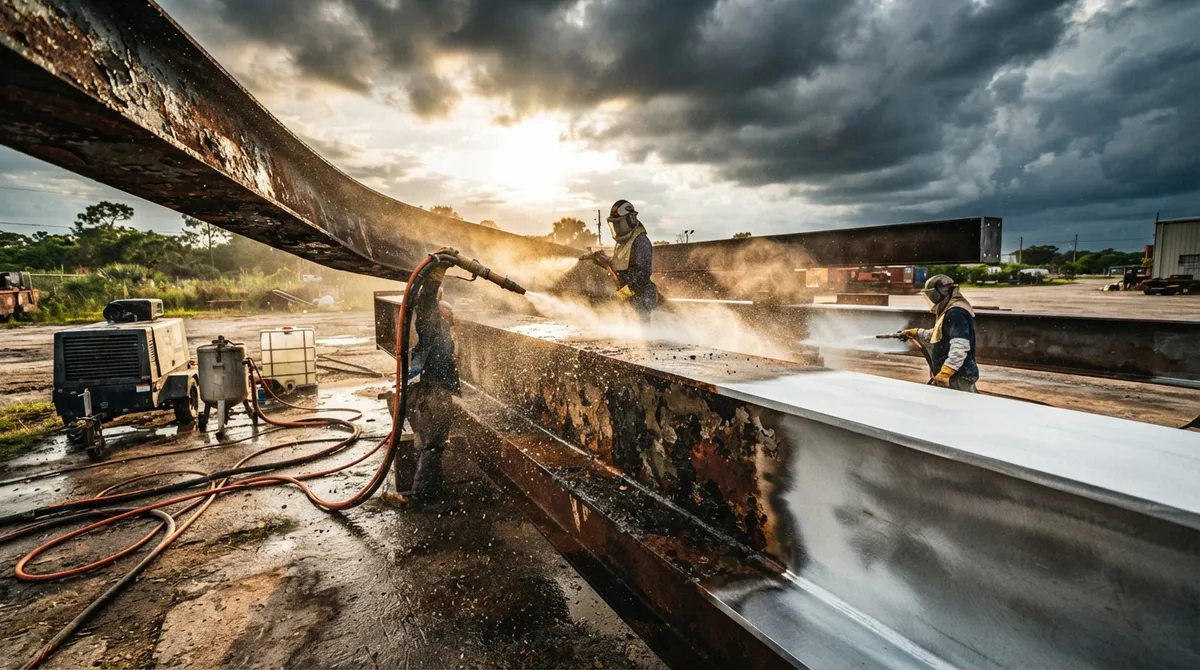
Got a rusty tank, an old trailer, or a steel beam that looks like it survived a shipwreck? You are not alone. Steel takes a beating in Florida’s heat, humidity, and salt air, and old paint or rust does not just look bad. It can weaken the metal underneath and ruin any new coating you put on top. Steel coating removal is the fix, and mobile blasting makes it easier than ever because the equipment comes straight to your site.
At Blastworx, we handle this kind of work across Tampa Bay and the central Florida corridor every week. Whether it is a bridge beam in Ocala or a fabrication shop in Orlando, we come to you with a fully mobile and self-contained rig. No dragging heavy steel to a shop. No waiting weeks for an opening. Just clean, bare metal, ready for the next step.
Below are 10 facts every steel owner in Florida should know before hiring a coating removal crew. We will cover what gets removed, how the process works, and what makes mobile blasting the smart choice for steel prep.
1. Steel Coating Removal Strips More Than Just Paint
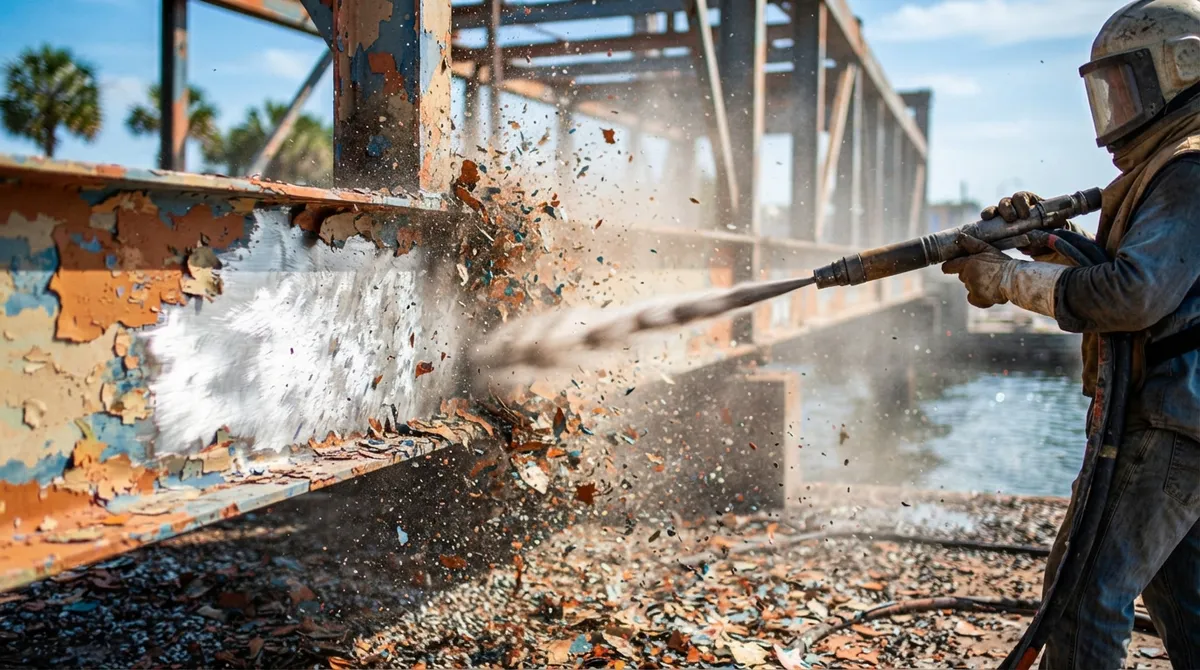
Most people think of steel coating removal as “paint stripping,” but it goes further than that. A proper blasting job removes paint, rust, corrosion, mill scale, and any surface grime that built up over the years. This matters because leftover residue under a new coat is a recipe for early failure.
Mill scale is a big one people forget about. It is a hard, flaky layer that forms on steel during manufacturing, and it hides underneath paint for years without anyone noticing. Abrasive blasting knocks it loose along with everything else, leaving clean, sound material behind.
2. Mobile Blasting Comes to the Steel, Not the Other Way Around
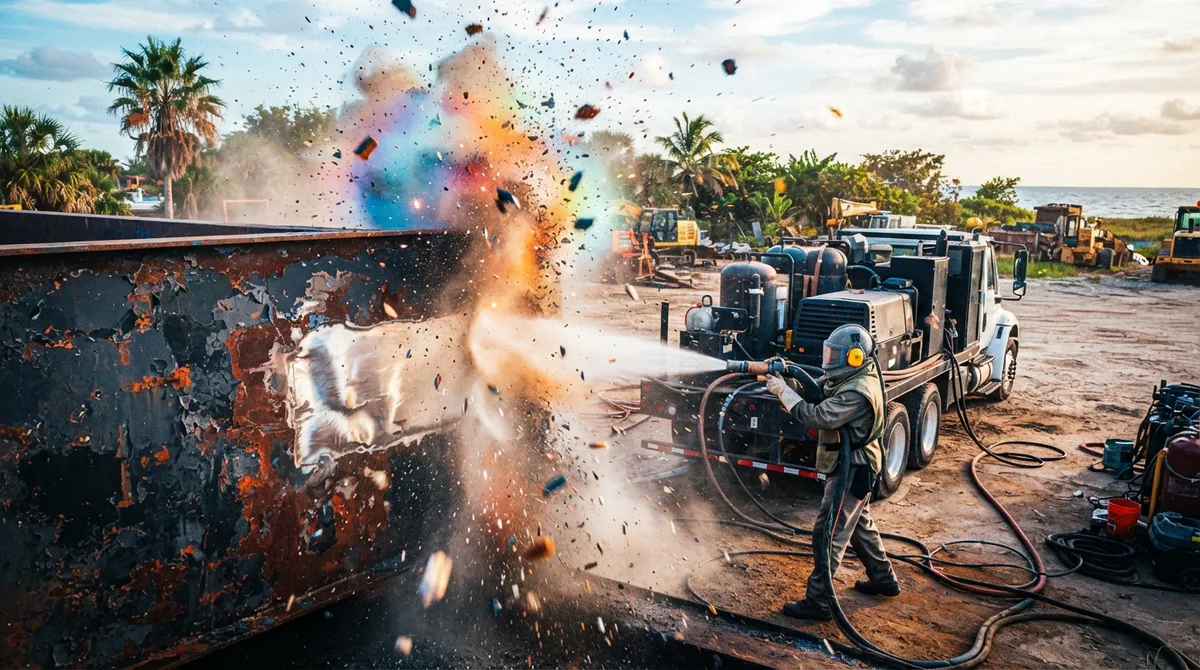
Here is the biggest advantage of mobile blasting: you do not have to move the steel. Structural beams, storage tanks, and heavy machinery are expensive and difficult to transport. A mobile crew sets up right at your job site and gets to work.
This is a game changer for:
- Bridges and structural steel that cannot be relocated
- Large storage tanks and pressure vessels
- Heavy equipment and fabrication shop projects
- Trailers and machinery that would cost a fortune to haul off-site
- Facilities that need work done without shutting down operations
If you want to see how this plays out on a real job, our post on structural steel blasting facts breaks down what owners can expect.
3. Common Steel Targets for Coating Removal
Not all steel projects look the same. Mobile blasting crews regularly work on a wide range of steel assets. Here are the most common ones we see across central Florida:
- Structural steel beams and I-beams
- Trusses and framing on commercial buildings
- Storage tanks and pressure vessels
- Trailers and hauling equipment
- Industrial machinery and fabrication parts
- Bridges and infrastructure components
- Agricultural equipment and steel fencing
Each of these has its own quirks. Tanks often have curved surfaces and tight seams. Trailers might have layers of old paint stacked on rust. We match the blast to your surface, not the other way around, so the approach changes depending on what we are working with.
4. Why Abrasive Blasting Beats Hand Tools
You could scrape, grind, or wire-brush old coatings off steel by hand. But it is slow, exhausting, and it almost always misses spots. Rust loves to hide in seams, corners, and pitted areas that hand tools cannot reach.
Abrasive blasting is widely considered the most effective method for cleaning steel before coating. It removes mill scale, heavy rust, and old paint from large areas fast, and it creates a rough surface profile that helps new coatings grip better. That profile is the difference between a coating that lasts five years and one that peels off in five months.
Want a deeper comparison? Check out our breakdown of blasting versus hand tools for steel prep.
5. Dry Blasting vs Dustless Blasting for Steel
One question we hear all the time: should you go with dry blasting or dustless blasting? Both remove coatings effectively, but they work differently and fit different situations.
| Method | Best For | Dust Level | Cleanup Time |
|---|---|---|---|
| Dry Abrasive Blasting | Heavy rust, thick coatings, outdoor open areas | Higher | Moderate |
| Dustless (Wet) Blasting | Indoor jobs, active sites, sensitive areas nearby | Much lower | Faster |
Dustless blasting mixes water with the abrasive media, which knocks the dust plume way down. This is huge if you are working near other equipment, employees, or neighbors. If you want the full picture, our article on what makes dustless blasting so effective covers it well.
6. The Right Media Matters for Steel Thickness
Not every piece of steel needs the same abrasive. Thick structural beams can handle aggressive media at high pressure. Thin sheet metal or delicate fabrication parts need a gentler touch to avoid warping.
Here is how we typically think about media selection:
- Heavy structural steel: coarse abrasive, higher pressure
- Tanks and vessels: medium abrasive with attention to seams
- Thin panels or light-gauge steel: softer media, lower pressure
- Detailed hardware and fittings: fine abrasive for precision
Choosing the wrong media can gouge soft metal or fail to touch stubborn rust on thick steel. This is why an experienced crew evaluates the job first instead of using one setting for everything.
7. Same-Day Coating Is Often the Best Practice
Here is a fact that surprises a lot of people: blast-cleaned steel should often be coated the same day it is blasted. Bare steel is vulnerable. Florida humidity can start new surface rust within hours if the metal sits exposed too long.
This means timing your steel coating removal project matters just as much as the blasting itself. A good mobile blasting crew will coordinate with your painting or coating team so there is no gap between prep and application. If you are planning a larger project, our guide on surface prep steps before commercial coating walks through the full timeline.
8. Environmental and Safety Rules Can Apply
Older steel structures sometimes have lead-based paint layered underneath newer coatings. This is common on bridges, older commercial buildings, and industrial equipment built decades ago. When lead paint is involved, special containment and cleanup procedures are required.
A reputable mobile blasting company will:
- Identify potential lead paint risks before starting work
- Use proper containment to protect the surrounding area
- Follow disposal guidelines for hazardous blast media
- Communicate clearly about any added steps or costs
These rules exist to protect workers, nearby residents, and the environment. According to the U.S. Environmental Protection Agency, lead paint disturbance requires certified handling in many older structures. Always ask your contractor how they handle this before signing a contract.
9. Mobile Blasting Saves Time and Downtime
Every hour your steel sits unused is money lost, especially in industrial and commercial settings. Mobile blasting cuts downtime by working around your schedule instead of the other way around.
Here is a quick step-by-step of how the process usually flows:
- You send photos or we visit the site to check the steel and surroundings
- We provide a free estimate with a clear price the same day
- We protect nearby areas and set up containment
- We blast the steel back to clean, bare metal
- The surface is left ready to prime and coat
This four-step approach means less waiting and fewer surprises. If your facility cannot afford a shutdown, our piece on factory sandblasting that saves downtime is worth a read.
10. Choosing the Right Crew Makes All the Difference
Not every blasting company handles steel the same way. Some rush the job. Some use the wrong media and damage the metal. Some skip containment and leave a mess behind. Here is what separates a solid steel coating removal job from a shaky one:
| What to Look For | Why It Matters |
|---|---|
| Fully insured crew | Protects you if something goes wrong on-site |
| On-site walkthrough before pricing | Ensures accurate estimate and right media choice |
| Containment and dust control | Protects surrounding equipment, people, and property |
| Direct communication with the crew | You talk to the people doing the work, not a call center |
| Clear same-day estimate | No surprise pricing after the job starts |
We are fully insured, and when you call us, you talk to the people doing the work. That is not a marketing line, it is just how we operate. We also serve a wide area, so whether you are near Tampa, Ocala, Orlando, or Fort Myers, check our service areas page to see if we cover your location.
Why Steel Owners Across Florida Choose Mobile Blasting
Steel does not forgive neglect. Rust spreads fast in Florida’s climate, and old coatings trap moisture against the metal, making things worse over time. Removing that layer properly is the only way to give a new coating a real chance to last.
Abrasive blasting remains one of the most trusted methods used across construction, marine, and industrial industries because of how thoroughly it cleans large steel surfaces. Learn more about the process itself through this overview of what is sandblasting and how it has been used for decades in metal restoration.
If your project involves industrial equipment, structural steel, or fabrication parts, our industrial blasting services are built exactly for that. We bring our own power and water, so there is no disruption to your existing setup.
A Quick Look at What Gets Removed
To wrap up the technical side, here is a simple breakdown of what steel coating removal actually clears away:
- Old paint and failed coatings
- Surface rust and deep corrosion
- Mill scale from manufacturing
- Grease, grime, and industrial residue
- Loose or flaking material that weakens adhesion
Once that is gone, the steel is back to clean, bare metal and ready to prime and coat. That is the whole point of the process, and it is why skipping steps or rushing the job almost always leads to coating failure down the road.
Wrapping Up Your Steel Coating Removal Project
Steel coating removal is not just about making old metal look better. It is about protecting your investment for years to come. Whether you are dealing with a rusty tank, an aging bridge component, or a fleet of trailers, proper prep makes every coating that follows perform better and last longer.
We have worked on all kinds of steel across Tampa Bay and the central Florida corridor, and we would love to help with yours. Feel free to get a free estimate for your project, or give us a call to talk through the details. You can also visit us on Google to see what our customers are saying about us before you decide. We contain the mess, protect the surrounding area, and get your steel ready for the next step.
FAQs
Q: What is steel coating removal in mobile blasting?
A: It is the process of using abrasive blasting on-site to strip old paint, rust, corrosion, and mill scale off steel. The goal is to leave clean, bare metal that is ready for a fresh coating. Mobile crews bring the equipment right to your steel, so there is no need to move heavy structures anywhere.
Q: What coatings can mobile sandblasting remove from steel?
A: Mobile sandblasting can strip paint, primer, rust, mill scale, and general grime buildup from steel surfaces. It works well on structural beams, tanks, trailers, and heavy equipment alike. The media and pressure just get adjusted depending on how thick or stubborn the coating is.
Q: Is abrasive blasting the best method for removing paint from steel?
A: Yes, abrasive blasting is widely considered the most effective way to clean steel before coating. It removes rust and old paint fast while also creating a rough surface profile that helps new coatings stick better. Hand tools simply cannot match that speed or thoroughness, especially in tight seams and corners.
Q: How soon should steel be recoated after blasting?
A: Ideally, the same day. Bare steel is vulnerable to new surface rust, especially in Florida’s humid climate. That is why we like to coordinate timing with your painting or coating crew so there is no gap between blasting and the next step.
Q: What safety or environmental rules apply to coating removal on old steel?
A: Older steel structures sometimes have lead-based paint hiding under newer coatings, which requires special containment and disposal procedures. A good mobile blasting crew will check for this risk before starting and follow proper safety steps throughout. It is always smart to ask your contractor how they handle this ahead of time.





