Key Takeaways
-
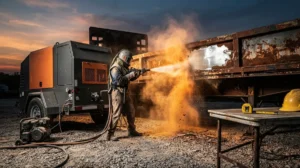
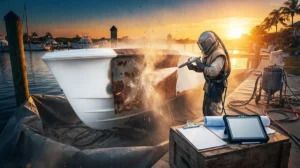
Match the blasting method to your surface: aggressive abrasive for heavy rust on steel, soda or walnut shell for fiberglass, wood, and delicate finishes, and dustless methods for indoor or tight areas.
-
Ask for a written estimate that details the work area, surface prep standard, media and method, containment and cleanup plan, schedule, and whether coating is included.
-
Confirm the contractor is fully insured, plans for hazard assessment and dust control, and uses respiratory protection, since blasting can release crystalline silica dust.
-
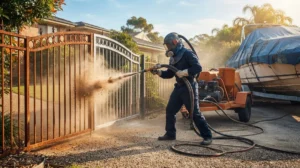
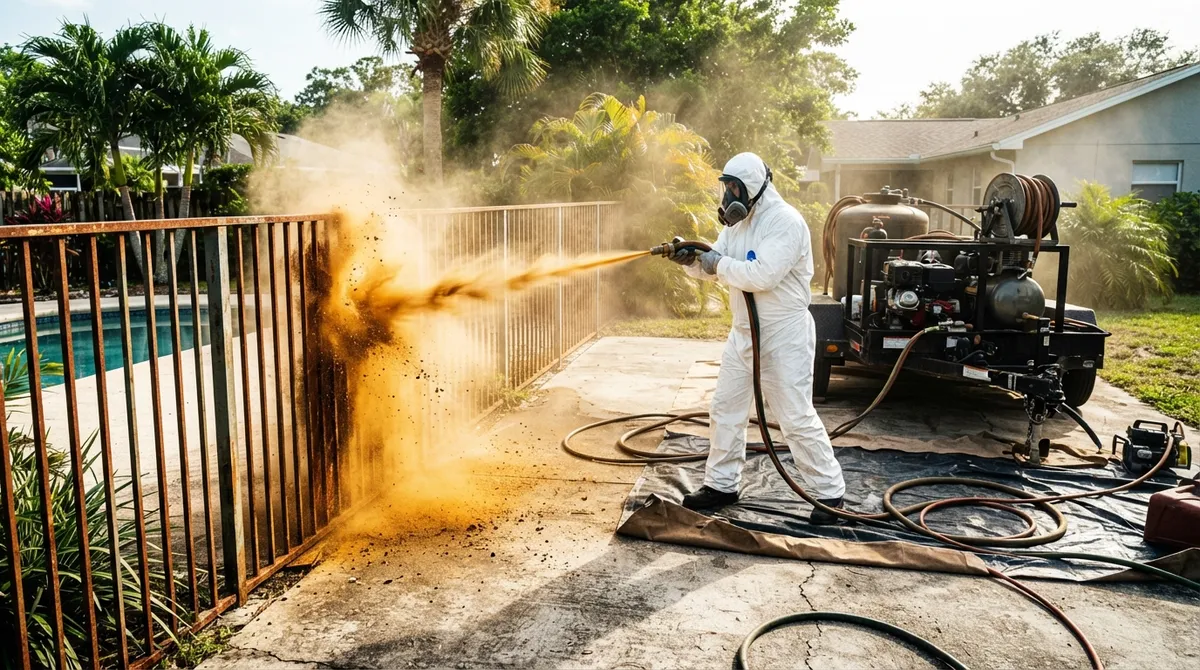
A fully self-contained mobile rig can blast pool decks, fences, and steel frames on-site without you supplying power or water, saving the hassle of hauling large items to a shop.
-
Talk directly with the crew doing the work to make sure details aren't lost, and ask about experience with your exact surface type and references or photos of similar jobs.
-
Blasting gets the whole surface back to clean, sound material so new coatings bond properly, which matters especially in Florida's heat, humidity, and salt air.
Finding a local sandblasting contractor sounds simple until you start making calls. One company quotes a flat price. Another says it depends. A third talks about media types you have never heard of. Meanwhile, you just want the rust, old paint, or graffiti gone so your project can move forward.
Good news: you do not need to be an expert to hire the right crew. You just need to know what a mobile blasting contractor actually does, what questions to ask, and what a solid estimate looks like. In this guide, we walk you through all of it in plain language, with Florida’s heat, humidity, and salt air in mind.
Whether you have a rusty fence, a boat trailer, a pool deck, or a steel frame at a job site, this article will help you hire with confidence. Let’s dig in.
What Does a Local Sandblasting Contractor Actually Do?
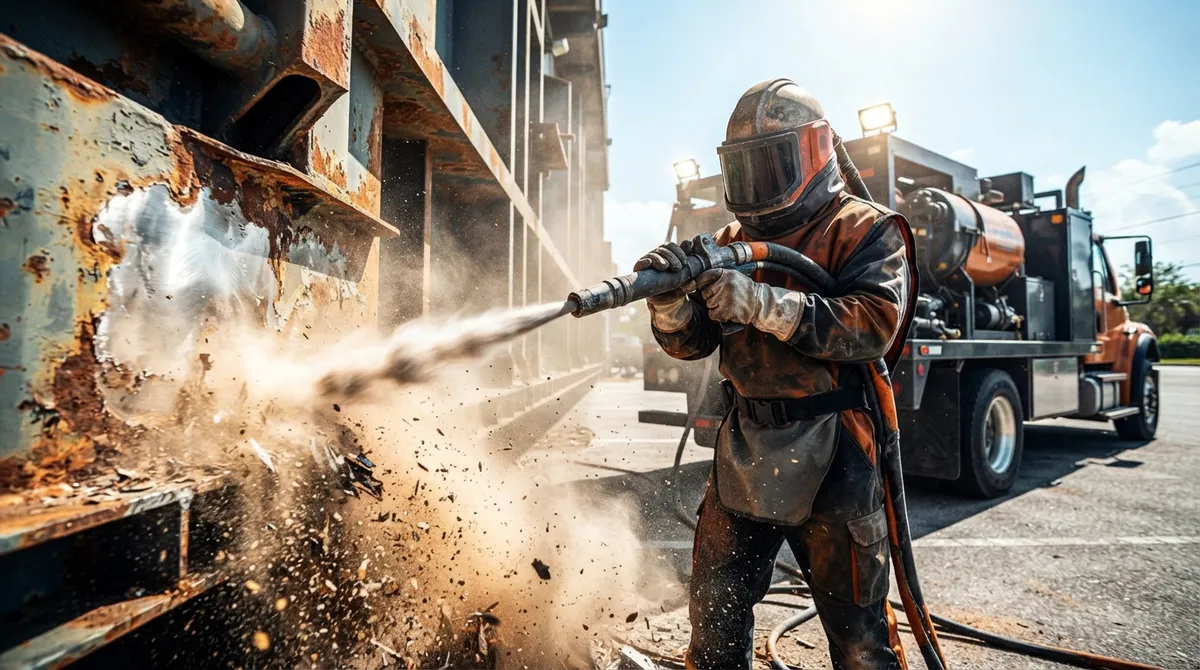
A local sandblasting contractor shoots abrasive media at a surface to strip rust, paint, scale, graffiti, or buildup. The goal is a clean, sound surface that is ready for the next step, like priming, coating, sealing, or refinishing.
In the mobile blasting world, the crew brings the equipment to you. That means no hauling a gate, trailer, or tank to a shop. If you want the basics on the process itself, here is a helpful overview of what is sandblasting. For a Florida-specific look, our post 8 Facts: What Is Sandblasting in Florida? goes deeper.
Common jobs include:
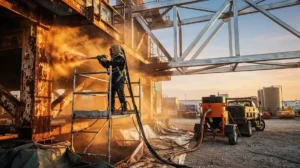
- Rust removal from fences, railings, gates, and steel frames
- Paint and coating removal from metal, concrete, brick, and wood
- Graffiti removal from walls, storefronts, and enclosures
- Boat hull, trailer, and marine hardware prep
- Weld and fabrication prep for industrial parts
- Concrete and paver cleaning
A coating is only as good as the surface underneath it. Paint, powder coat, and resurfacing will not last if the prep is bad. That is why blasting matters so much.
Why Go Mobile Instead of Hauling It to a Shop?
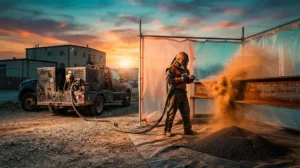
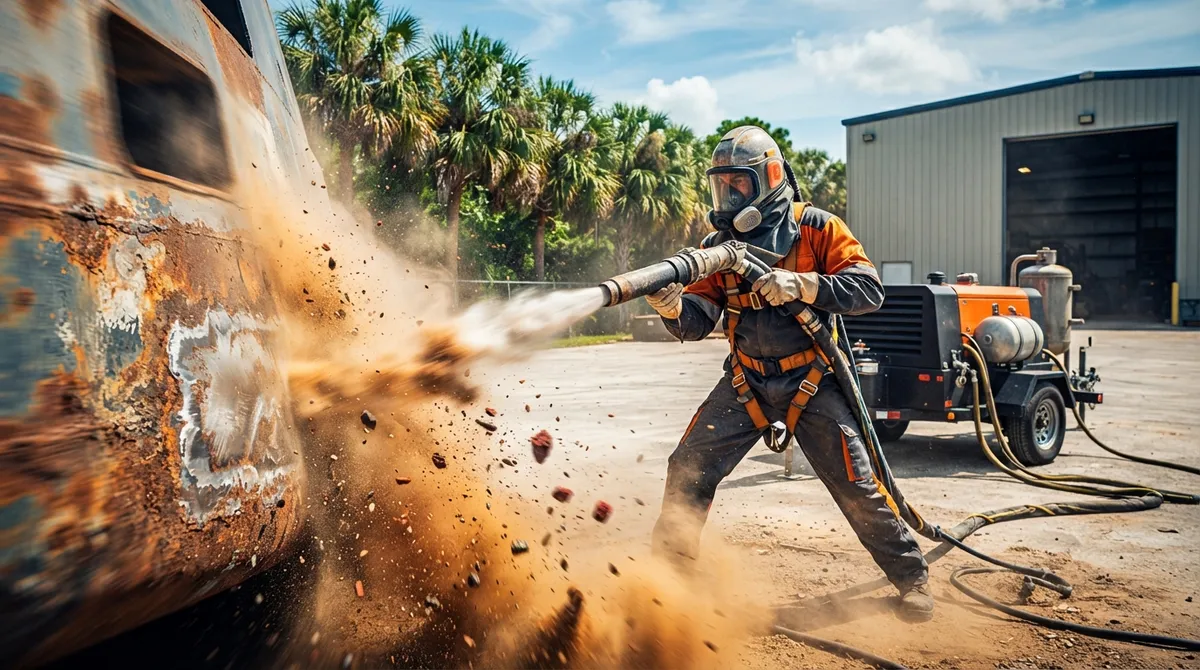
Mobile blasting means the rig comes to your driveway, dock, job site, or facility. A good mobile setup is fully self-contained, so you do not need to supply power or water.
This is a big deal for items that are large, heavy, or fixed in place. Think pool decks, building exteriors, bridges, tanks, or a long run of iron fence. You cannot put those on a truck. If you are weighing both options, read Mobile vs. Shop Sandblasting: Which One Wins? to see how the two compare.
Mobile work also saves time. Your equipment stays in place, there is no loading and unloading, and the surface is ready to finish right where it sits. For businesses, that can mean far less downtime.
Not All Blasting Is the Same: Match the Blast to the Surface
Here is the thing many people miss. There is no single “best” blasting method. The right choice depends on what you are blasting, what is on it, and what finish you need afterward. A good contractor matches the blast to your surface, not the other way around.
| Blasting Type | Best For | Notes |
|---|---|---|
| Sandblasting / abrasive blasting | Heavy rust, thick coatings, structural steel, frames | Aggressive; creates a profile for coatings to grip |
| Soda blasting | Fiberglass, gelcoat, thin panels, delicate surfaces | Gentle; helps prevent warping and surface damage |
| Walnut shell | Boat hulls, soft finishes, wood | Soft media; good for surfaces that scratch easily |
| Dustless (wet) blasting | Indoor work, active job sites, tight areas | Cuts dust and helps keep the work area cleaner |
Want to compare options? Our guides on dry blasting vs. soda blasting for metal and wet sandblasting vs. dry break it down in simple terms.
Safety and Dust Control: What a Pro Should Plan For
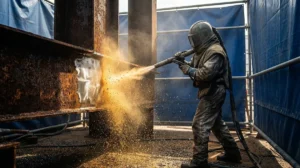
Blasting can create dust and noise. It can also create hazardous waste, depending on the surface. Old paint may contain toxic substances, and some abrasives or surfaces can release crystalline silica dust.
OSHA sets a permissible exposure limit for respirable crystalline silica of 50 micrograms per cubic meter, averaged over an 8-hour shift (29 CFR 1926.1153). The same rule calls for exposure controls and respiratory protection where needed. You do not need to memorize the numbers. You just need a contractor who takes them seriously.
A responsible crew will plan for:
- Hazard assessment before the job starts, including a look at what coatings are on the surface
- Containment to protect the surrounding area, landscaping, pools, and windows
- Ventilation and dust control, including dustless methods when they fit the job
- Proper respiratory protection for operators
- Cleanup and waste handling when the job wraps up
Curious how pros handle this day to day? Check out How Do Pros Handle Sandblasting Dust Control Safely? and 5 Safe Blasting Procedures Every Mobile Crew Follows.
What Surfaces Can a Mobile Blaster Handle?
Quite a lot. A skilled crew can work on metal, concrete, brick, wood, and more, as long as the media and pressure fit the material. Some surfaces should never be blasted, and a good contractor will tell you so up front.
Residential Projects
Homeowners often call about fences, railings, gates, pool decks, patios, pavers, wood decks, lanai frames, and outdoor furniture. Soft media and low pressure protect delicate surfaces like wood and trim. Stronger media tackles iron, brick, and concrete. One important note: vinyl fencing is too delicate to blast. Read more in 7 Facts on Sandblasting a Vinyl Fence in 2026.
Commercial and Industrial Projects
Businesses call for graffiti removal, concrete and parking area cleaning, storefronts, fleet vehicles, trailers, tanks, structural steel, and weld prep. For a deeper look, see Commercial Sandblasting Services: A Tampa Bay Business Guide.
Marine and Automotive Projects
Boat owners and car restorers need gentler control. Fiberglass and gelcoat call for soft media. Thin body panels need lower pressure and cooler media to help prevent warping. Frames and heavy rust can take a stronger abrasive. Learn more in Is Sandblasting a Boat Hull Right for Your Boat?.
What Should a Good Written Estimate Include?
A vague quote is a red flag. Ask for a written estimate that spells out the details. Here is what to look for:
- The exact work area and what will be blasted
- The surface prep standard you can expect when the job is done
- The abrasive or media and the blasting method
- A containment and cleanup plan
- The schedule and any access needs
- Price assumptions, plus what is and is not included
- Whether any coating work is part of the job
Pricing varies by job size, surface, access, and media, so there is no single number that fits everyone. The best move is to get an estimate from a local pro who sees your actual project. To understand why quotes differ, read Why Do Sandblasting Service Quotes Nearby Vary So Much? and 7 Sandblasting Cost Facts Florida Owners Need.
Questions to Ask Before You Hire
A few smart questions can save you money and stress. Use this checklist when you call:
- Are you fully insured?
- What media will you use on my surface, and why?
- How will you protect the surrounding area?
- What happens to the dust and debris?
- Do you bring your own power and water?
- Is coating included, or is this strip and prep only?
- Can you share photos of similar jobs or references?
- Will I speak with the people doing the work?
That last one matters more than you might think. When you talk directly to the crew, the details do not get lost. For a longer list of what to look for, see What Should You Look for in a Sandblasting Contractor? and 7 Local Sandblasting Contractors Traits That Matter.
Do You Need to Prep the Site?
Usually, just a little. Clear the work area so the crew has room to move. Move cars, furniture, planters, and anything fragile. Let the contractor know about pets, pools, nearby windows, or neighbors who might be sensitive to noise.
Your contractor should handle the rest, including protecting the surrounding area. We walk through the full list in 9 Steps to Prepare for Sandblasting the Right Way.
Why the Prep Work Pays Off in Florida
Florida is tough on coatings. Heat, humidity, and salt air attack paint and metal all year long. Hand-sanding often misses rust in seams and corners. Blasting takes the whole surface back to clean, sound material at once, so the next coat bonds properly and holds up longer.
If paint is your next step, our post 7 Reasons Sandblasting Before Painting Pays Off explains why the prep makes all the difference. You can also see how blasting stacks up in Sandblasting vs. Hand Prep: When Does Blasting Win?.
How a Mobile Blasting Job Typically Works
Here is how a smooth job looks from start to finish. At Blastworx, we keep it simple:
- Walkthrough. You send photos or we come look, and we choose the right media for your surface.
- Free estimate. You get a clear, written estimate the same day. The price we give is the price you pay.
- Blast and strip. We protect the surrounding area, then blast the surface clean at your location.
- Ready to finish. The surface comes out clean and ready for the next step.
We are an owner-operated, fully insured mobile blasting company based in Tampa. We cover Tampa Bay and the central Florida corridor, including Clearwater, Sarasota, Ocala, Orlando, and Fort Myers. Our rig is fully mobile and self-contained, so we can work in a driveway, at a dock, or on a job site. When you call, you talk to the people doing the work. Want to see how we are doing? Visit us on Google — see what our customers are saying about us.
Extra Tips for Comparing Local Contractors
Once you have a few estimates in hand, line them up side by side. Look past the bottom-line price. A cheaper quote that skips containment or leaves out cleanup may cost you more in the long run.
- Compare the media and method each contractor plans to use
- Check whether coatings are included or handled by someone else
- Confirm insurance and ask about experience with your exact surface
- Look at reviews and project photos for similar work
- Trust your gut on communication. A quick, clear reply is a good sign
If you want help sorting through your options, How to Choose Sandblasting Companies in Tampa Bay and How to Find Sandblasting Near Me That Comes to You are good next reads. And if you are still getting your name out as a contractor yourself, the folks at Brain Buzz Marketing help local trades grow online.
Ready to Hire a Local Sandblasting Contractor?
Hiring a local sandblasting contractor does not have to feel like a gamble. Look for a crew that matches the blast to your surface, plans for dust and safety, gives you a clear written estimate, and talks to you like a neighbor. Do that, and you will end up with a surface that is back to clean, sound material and ready for whatever comes next.
Have a project in mind? Send us a few photos and get a free estimate, or give us a call at 813-380-8092. You can text, too. We come to you.
FAQs
Q: What does a mobile sandblasting contractor do?
A: A mobile sandblasting contractor brings blasting equipment to your location and strips rust, paint, graffiti, and buildup from surfaces. The result is a clean surface that is ready for priming, coating, or refinishing. It saves you from hauling large or fixed items to a shop.
Q: How much does it cost to hire a local sandblasting contractor?
A: Price depends on the size of the job, the surface, the media used, and how easy the site is to access. Because every project is different, the best way to get a real number is a written estimate from a local pro who has seen your project. At Blastworx, the price we quote is the price you pay.
Q: Can a mobile contractor sandblast at my home or business?
A: Yes. A fully mobile, self-contained rig can work in a driveway, at a dock, at a shop, or on a job site without needing your power or water. The crew will contain the work area and protect nearby landscaping, pools, and windows.
Q: How do I choose the right blasting method for my project?
A: The right method depends on your surface, the coating on it, and the finish you need. Soft media like soda or walnut shell suits delicate surfaces such as fiberglass and wood, while stronger abrasives work for heavy rust on steel and iron. A good contractor will explain the choice and match the blast to your surface.
Q: Do I need to prepare the site before the crew arrives?
A: A little prep goes a long way. Clear the work area and move cars, furniture, and anything fragile, and let the contractor know about pools, pets, or nearby windows. The crew handles containment and the rest.