Key Takeaways
-
Mobile sandblasting brings a self-contained rig to your property, so heavy or fixed items like fences, pool decks, and steel never need to be moved to a shop.
-
Match the method to the surface: dry blasting suits heavy rust on steel, while soda or softer media protect fiberglass, wood, and thin panels.
-
Wet or dustless blasting helps reduce airborne dust near pools, landscaping, and occupied buildings, but it still requires containment and proper waste handling.
-
A good estimate is site-specific and written, and should cover the method and media, containment, cleanup and waste handling, scope, and access and timing.
-
Permit requirements vary by site, waste handling, and project scope, so confirm what applies with local and state authorities before work begins.
-
Before booking, ask if the contractor is fully insured, how they control dust, what happens to spent media, and whether the job is prep only or includes coating.
Rust on a gate. Old paint on a trailer. Graffiti on a back wall. If you live or work in Hillsborough County, you have probably looked at a surface like that and wondered how to get it clean without hauling it somewhere. Good news: you do not have to. Mobile sandblasting in Hillsborough County brings the equipment to your property, so the work happens right where the problem is.
In this guide, we will walk through what mobile blasting actually means, which surfaces it works on, and how to pick the right method. We will also cover what to ask before you book, what a fair estimate should include, and how to think about permits and cleanup. We are not going to throw around made-up prices. Every job is different, and the honest answer is a site-specific quote.
Think of this as a friendly walkthrough from folks who do this work every day. By the end, you should feel ready to have a smart conversation with any blasting contractor.
What Is Mobile Sandblasting in Hillsborough County?
“Sandblasting” is a common name for abrasive blasting. It means shooting a media at a surface under pressure to remove rust, paint, coatings, graffiti, and buildup. You can read the basic definition of sandblasting if you want the technical background.
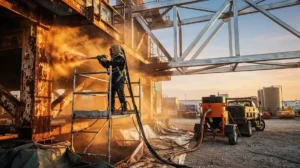
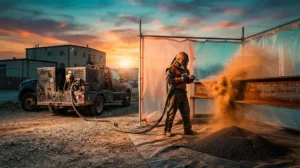
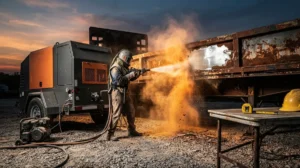
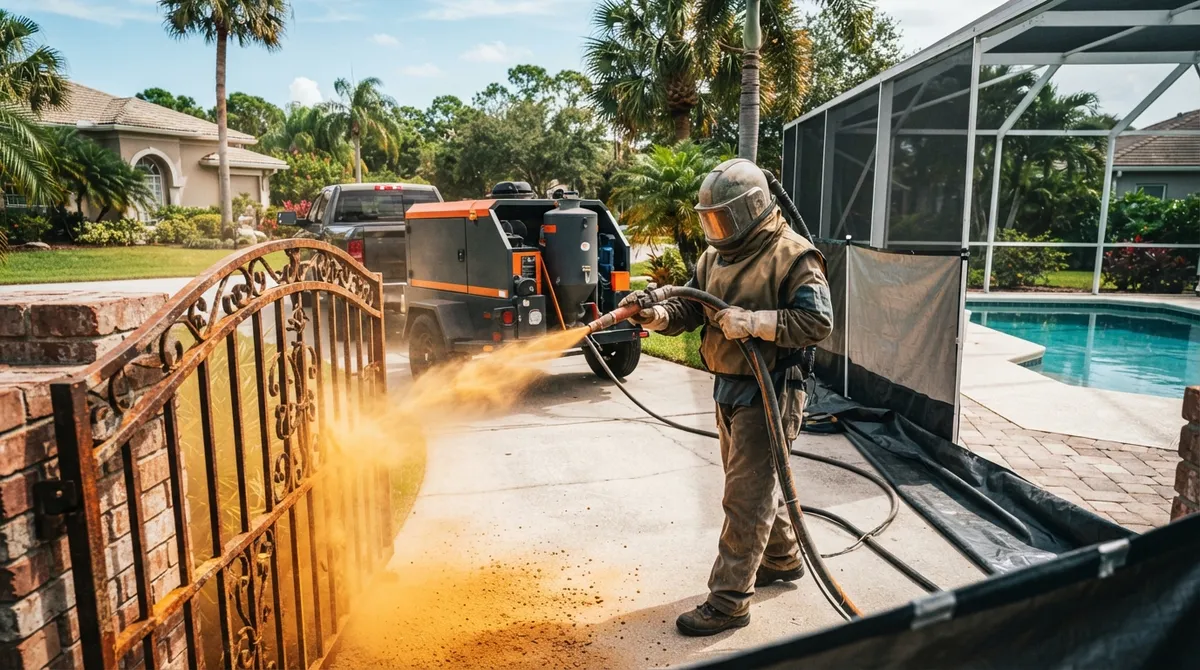
The “mobile” part is what matters most here. A mobile contractor brings a self-contained rig to your driveway, dock, shop, or job site. You skip the cost and hassle of moving large or fixed items. A fence, a pool deck, or a piece of structural steel cannot easily go to a shop anyway.
Here at Blastworx, we say it simply: we come to you. Our rig is fully mobile and self-contained, so we do not need your power or water. If you want more detail on how this works, our post on on-site sandblasting and how mobile blasting works breaks it down step by step.
Why Hillsborough County Surfaces Need Blasting
Our climate is tough on surfaces. Heat, humidity, summer storms, and salt air all work against paint and metal. Rust forms fast. Coatings peel. Mildew and buildup show up on concrete and pavers.
A coating is only as good as the surface underneath it. If the prep is poor, the new paint will fail early. Blasting takes the whole surface back to clean, sound material at once, so the next coat can bond properly.
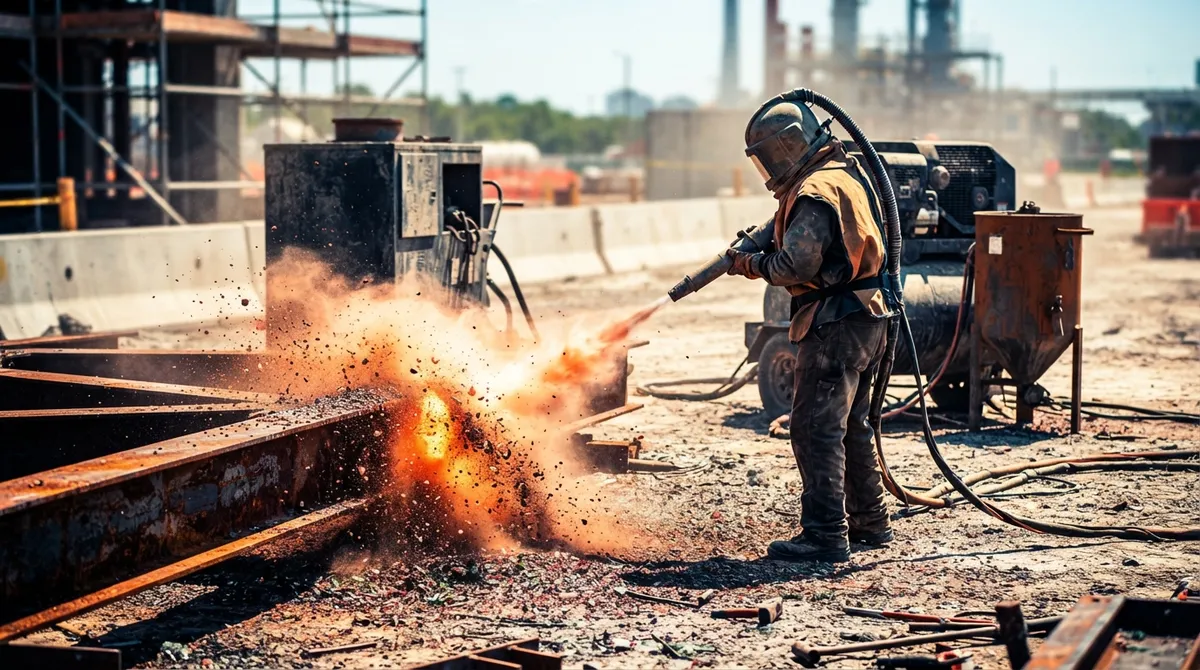
Surfaces and Jobs Mobile Blasting Can Handle
Mobile blasting covers a wide range of work. The right method depends on the surface, the coating, and how much access you have. Here are the main categories we see across the county.
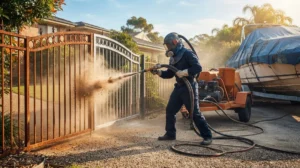
- Residential: fences, railings, gates, pool decks, patios, pavers, concrete, wood decks, and outdoor furniture.
- Commercial: sidewalks, parking areas, graffiti removal, storefronts, dumpster enclosures, fleet vehicles, and building exteriors.
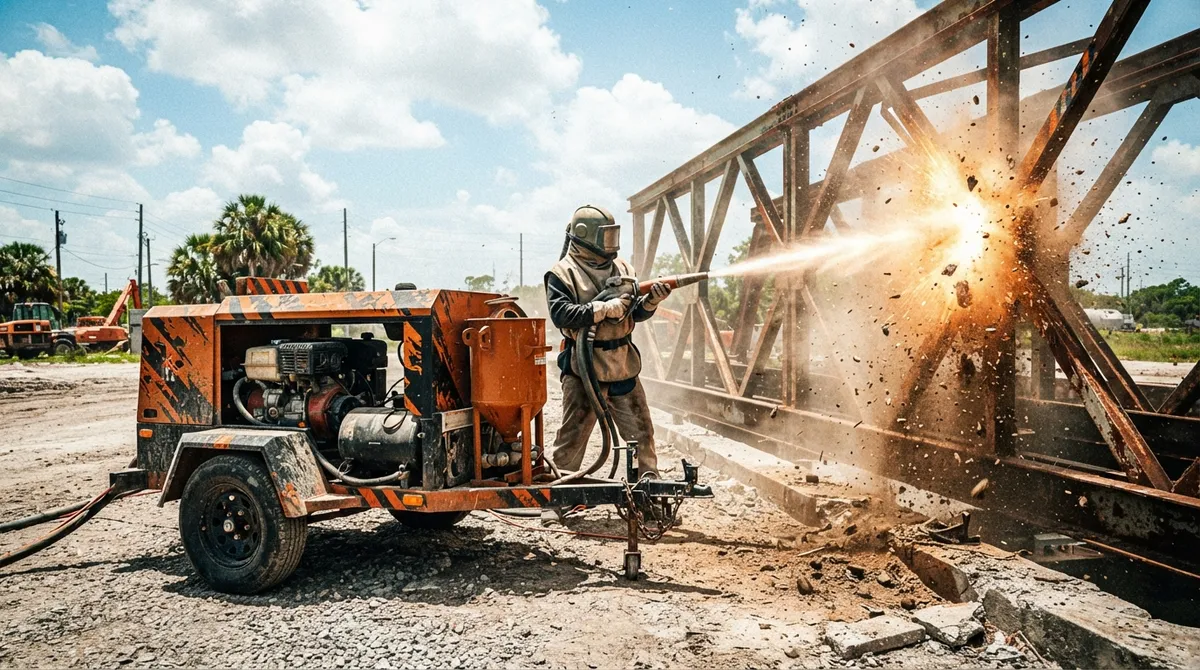
- Industrial: structural steel, tanks, heavy equipment, weld prep, and coating removal.
- Automotive: frames, wheels, body panels, and full restoration projects.
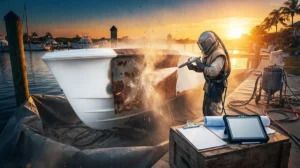
- Marine: boat hulls, trailers, docks, davits, and marine hardware.
You can see our work by category on our residential, commercial, and industrial pages.
Surfaces to Be Careful With
Not every surface should be blasted. Vinyl fencing, for example, is too delicate. Painted walls, glass, veneer, and cultured stone need to be looked at in person first. Our guide on surfaces you should never sandblast is worth a read before you plan a project.
The golden rule we follow: we match the blast to your surface, not the other way around. That means choosing the right media for the job.
Choosing the Right Method: Sand, Soda, or Dustless
Many people hear “sandblasting” and picture one single method. In reality, there are several. Contractors may also use alternatives to silica sand, so it is smart to ask what abrasive is being proposed and how dust is controlled.
| Method | Best For | Things to Know |
|---|---|---|
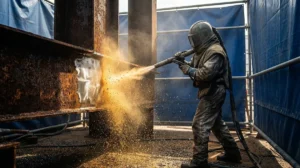
| Dry abrasive blasting | Heavy rust, thick coatings, steel, and concrete | Strong and fast, but it needs solid containment and dust control |
| Wet or dustless blasting | Active job sites, indoor work, and areas near other equipment | Helps suppress airborne dust, but still needs cleanup and proper waste handling |
| Soda blasting | Fiberglass, gelcoat, thin panels, and delicate surfaces | Gentle on the surface and good for removing paint and grime without heavy abrasion |
| Softer media (walnut shell and similar) | Wood, trim, and finishes that scratch easily | Lower aggression, so it can take more passes on stubborn coatings |
Wet blasting can reduce airborne dust compared with conventional dry blasting. Some companies report big dust reductions, but those numbers depend on the test conditions. It is smart not to treat any single figure as a promise. Wet blasting also does not remove the need for containment, worker protection, and proper handling of spent media and removed coatings.
Wet vs. Dry: How to Decide
If you are near a pool, landscaping, other equipment, or an occupied building, dustless methods often make sense. If you are stripping thick rust off heavy steel in an open area, dry blasting may be the better tool. Our comparison of wet sandblasting vs. dry can help you decide, and our look at dry blasting vs. soda blasting for metal covers the metal side.
What Should a Good Estimate Include?
A solid estimate is not just a number. It tells you how the job will be done. Before you book anyone, ask for a site-specific quote that spells out the details. A good estimate should cover the following.
- The surface and coating: what is being blasted and what is being removed.
- The method and media: dry, wet, soda, or another approach, and why it fits.
- Containment and protection: how nearby property, landscaping, pools, and windows will be protected.
- Cleanup and waste handling: what happens to spent abrasive and removed paint.
- Scope: whether the job is prep only, or also includes coating.
- Access and timing: how the crew will reach the surface and how long the work should take.
We keep our process simple. First we do a walkthrough, either by photos or in person. Then you get a clear, written estimate the same day. The price we give is the price you pay. After that, we protect the surrounding area, blast the surface clean at your location, and leave it ready for the next step.
Curious why quotes can look so different from one company to the next? We cover that in why sandblasting service quotes vary so much. And if you want a sense of what drives the price, see our post on sandblasting cost facts for Florida owners.
Permits, Containment, and Cleanup
Here is where we want to be careful and honest. Permit rules for blasting are not the same for every job. Requirements can depend on the site, how waste or runoff is handled, the project scope, and whether the work touches a regulated structure or facility. We cannot give you a blanket answer that fits every property in the county.
The best move is to confirm what applies to your specific project with the right local and state authorities before work begins. A professional contractor should be willing to talk through this with you and tell you what they plan to do about containment and waste.
Good Habits to Look For
- Clear plans to contain the work area and protect landscaping, pools, and windows.
- A plan for collecting and handling spent media and removed coatings.
- Proper protective gear for the crew.
- Proof that the contractor is fully insured.
Safety is not a bonus feature. It is part of the job. Our post on safe blasting procedures every mobile crew follows shows what careful crews do on every site.
How to Choose a Blasting Contractor in Hillsborough County
Plenty of companies say they offer mobile blasting. A few simple questions can help you tell who really knows the work. Here is a quick checklist to use on your next call.
- Are you fully insured?
- What media do you recommend for my surface, and why?
- How will you control dust and contain the mess?
- What happens to the spent abrasive and removed coating?
- Is the estimate written, and does it include everything?
- Will I talk to the people doing the work?
Pay attention to whether the contractor asks you questions too. A good one will want photos, details about the surface, and an idea of what you plan to do next. If you want a deeper checklist, read what to look for in a sandblasting contractor.
It also helps to know the difference between mobile and shop-based work. Our comparison of a mobile rig vs. a local shop shows when each one makes sense.
Prep Only or Prep and Coat?
This is a big one, and it trips people up. Some contractors only strip and prep the surface. Others may also apply coatings. At Blastworx, our residential, commercial, and marine work is strip and prep only, with refinishing handled by you or your painter. Automotive work is mostly strip and prep, and industrial jobs may include paint or protective coating when needed. Always ask up front so there are no surprises.
If painting is your next step, our guide on sandblast painting prep steps that make paint last shows how to line things up.
Serving Communities Across the County
Hillsborough County is big. It stretches from downtown Tampa out to Brandon, Riverview, Plant City, and Lutz. We are based in Tampa and work across Tampa Bay and the central Florida corridor, so we are used to covering a lot of ground.
Local homeowners often ask us about their own towns. If you are in one of these areas, you may enjoy our posts on mobile sandblasting for Plant City homes and residential sandblasting in Brandon. Business owners may prefer why Tampa businesses choose mobile sandblasting.
You can also check our full list on the service areas page, or visit us on Google and see what our customers are saying about us. Honest reviews are one of the best ways to size up any local contractor.
Ready to Get Your Surface Back to Clean?
Mobile sandblasting in Hillsborough County is about saving you time, hassle, and guesswork. The right method, the right media, and a careful crew can take a rusty, tired surface back to clean, sound material, ready for the next step. Just remember the basics: match the method to the surface, ask about containment and cleanup, confirm any permit questions for your site, and get a clear written estimate.
We would love to help. Whether it is a fence, a trailer, a pool deck, or a piece of steel, you will talk to the people doing the work. Ready to move forward? Get a free estimate today, or give us a call at 813-380-8092. You can text us too. Send a few photos and we will tell you what we recommend.
FAQs
Q: What does mobile sandblasting cost in Hillsborough County?
A: Cost depends on the surface, the coating being removed, the method, and how easy the site is to reach. Because every job is different, the best way to get an accurate number is a written, site-specific estimate. Send us photos and we will get you a clear price.
Q: Does mobile sandblasting require a permit in Hillsborough County?
A: It depends on the site, how waste is handled, the project scope, and whether the work affects a regulated structure. There is no one-size-fits-all answer, so confirm what applies to your project with the relevant local and state authorities before work begins. A good contractor will happily talk through it with you.
Q: Is dustless or wet blasting available for residential projects?
A: Yes, dustless and wet methods are a popular fit for homes, especially near pools, landscaping, and windows. They help cut down airborne dust, though you still need containment and proper cleanup. We match the method to your surface so you get a clean result without the mess.
Q: What should I ask a mobile sandblasting contractor before booking?
A: Ask if they are fully insured, which media they recommend for your surface, how they control dust, and what happens to spent abrasive and removed paint. Also confirm whether the estimate is written and whether the job is prep only or includes coating. Clear answers are a great sign you are in good hands.
Q: Which surfaces can mobile blasting safely clean?
A: Mobile blasting works on metal, concrete, pavers, brick, wood, boat hulls, trailers, fences, and more when the right media and pressure are chosen. Some surfaces, like vinyl fencing, are too delicate to blast. Others, like glass or painted walls, should be evaluated in person first.