Key Takeaways
-
Match the blasting method and media to your surface: dry abrasive blasting suits heavy rust on steel, while soda or softer media protects fiberglass, gelcoat, and thin panels.
-
Ask each company how they will contain dust, runoff, and debris, and how they will protect pools, landscaping, windows, and nearby property; "dustless" alone doesn't mean hazard-free.
-
Confirm the company is fully insured, ask whether they've worked on your exact surface type, and find out who will actually perform the work.
-
Request a written, site-specific estimate after a walkthrough or photo review, and check whether it includes cleanup, travel, and surface protection to avoid unexpectedly low quotes.
-
Ask for a small test patch before the full job so you can see the result on your surface before committing.
-
Confirm whether the surface will be ready for priming or coating after blasting, since poor prep causes new coatings to fail early in Florida's heat and salt air.
Searching for sandblasting companies in Tampa Bay can feel a little overwhelming. You type it in, and suddenly you see a dozen options. Some say “dustless.” Some say “soda.” Some say they do everything. So how do you pick the right one for your boat, your gate, your pool deck, or your project vehicle?
Good news: you don’t need to be an expert. You just need to know what to ask. In Tampa Bay, most of the folks you’ll find are mobile blasters. That means they bring the equipment to you instead of making you haul a big item to a shop. That’s handy, but it also means the details matter. The right crew, the right media, and a smart cleanup plan make all the difference.
This guide walks you through the whole process in plain English. We’ll cover what these companies do, the different blasting methods, safety basics, what to ask before you hire, and how to compare estimates. Let’s get you ready to make a confident choice.
What Sandblasting Companies in Tampa Bay Actually Do
When people search for sandblasting companies in Tampa Bay, they usually want one thing: a clean surface that’s ready for the next step. That might mean bare metal for paint. It might mean a boat hull that’s ready for new bottom coating. It might just mean old graffiti gone.
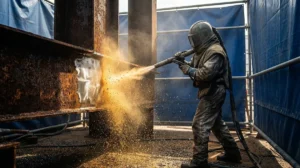
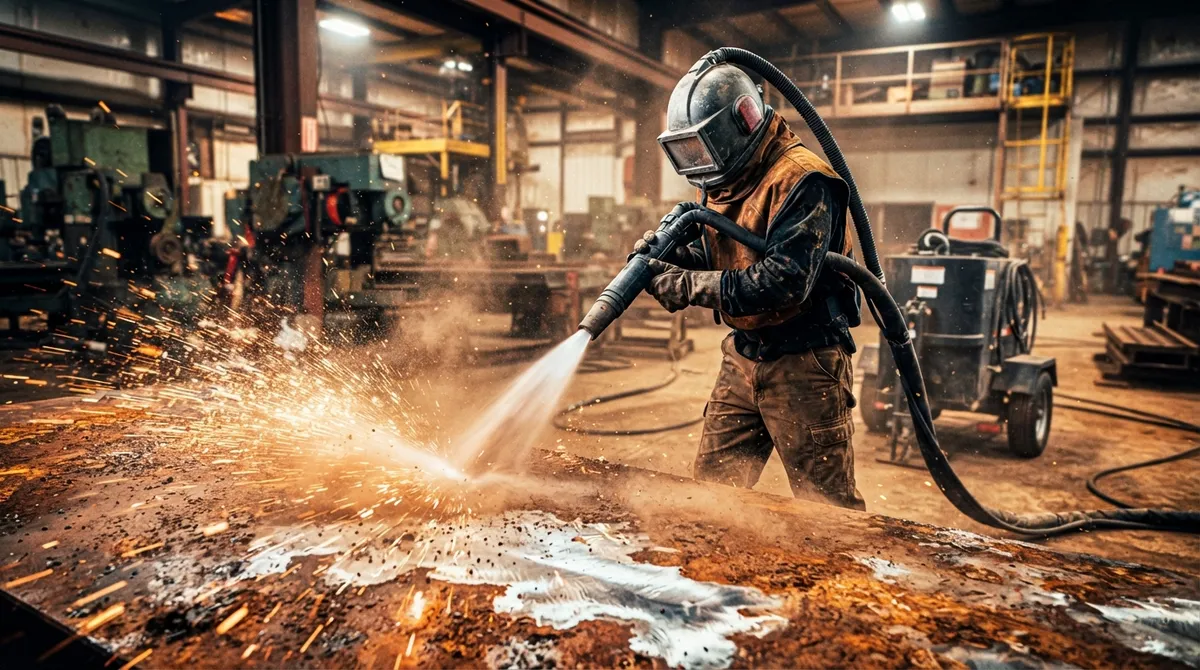
If you want a quick refresher on the basics, here’s a simple explainer on what is sandblasting. In short, a blaster propels media at a surface to strip rust, paint, coatings, and buildup.
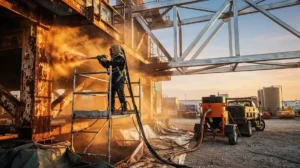
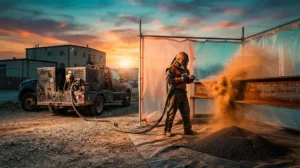
Most mobile blasting companies in our area work on a wide mix of surfaces:
- Boats, boat trailers, docks, davits, and marine hardware
- Vehicle frames, body panels, wheels, and suspension parts
- Structural steel, tanks, and heavy equipment
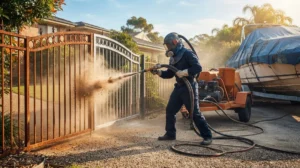
- Fences, railings, gates, and outdoor furniture
- Concrete, pavers, pool decks, and patios
- Brick, masonry, and graffiti-covered walls
Keep in mind that coverage varies. Not every company does every job, so always confirm directly before you book.
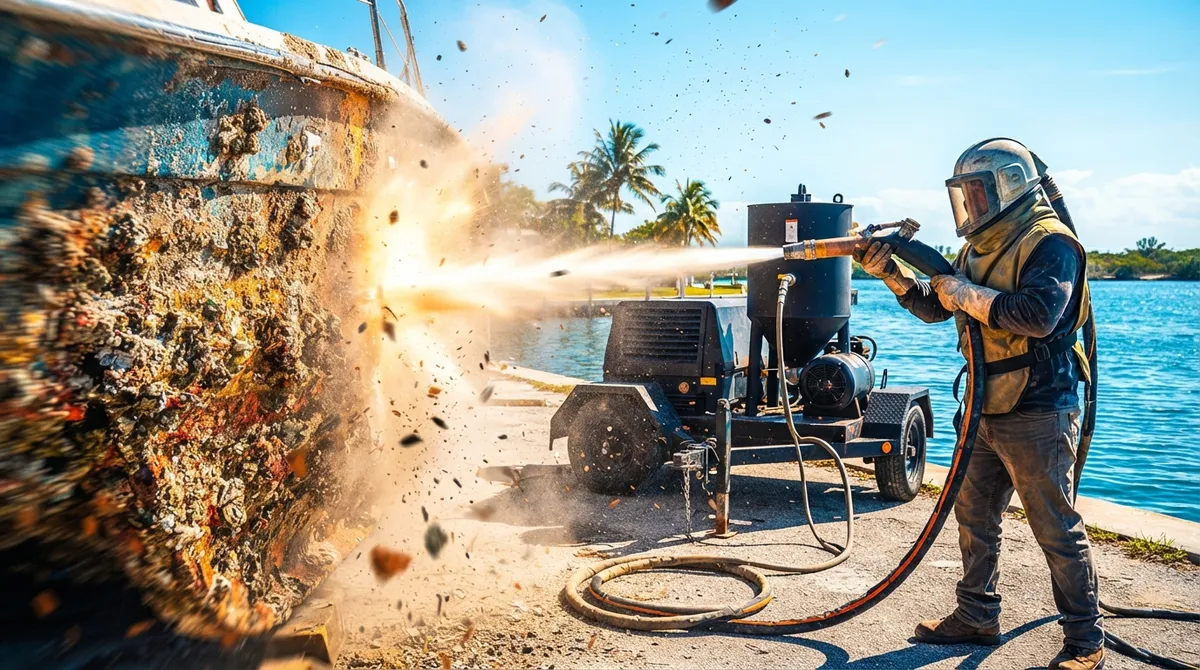
Why Mobile Blasting Makes Sense in Florida
Florida is tough on surfaces. Heat, humidity, and salt air eat through coatings and feed rust fast. That’s why so many Tampa Bay owners need blasting in the first place.
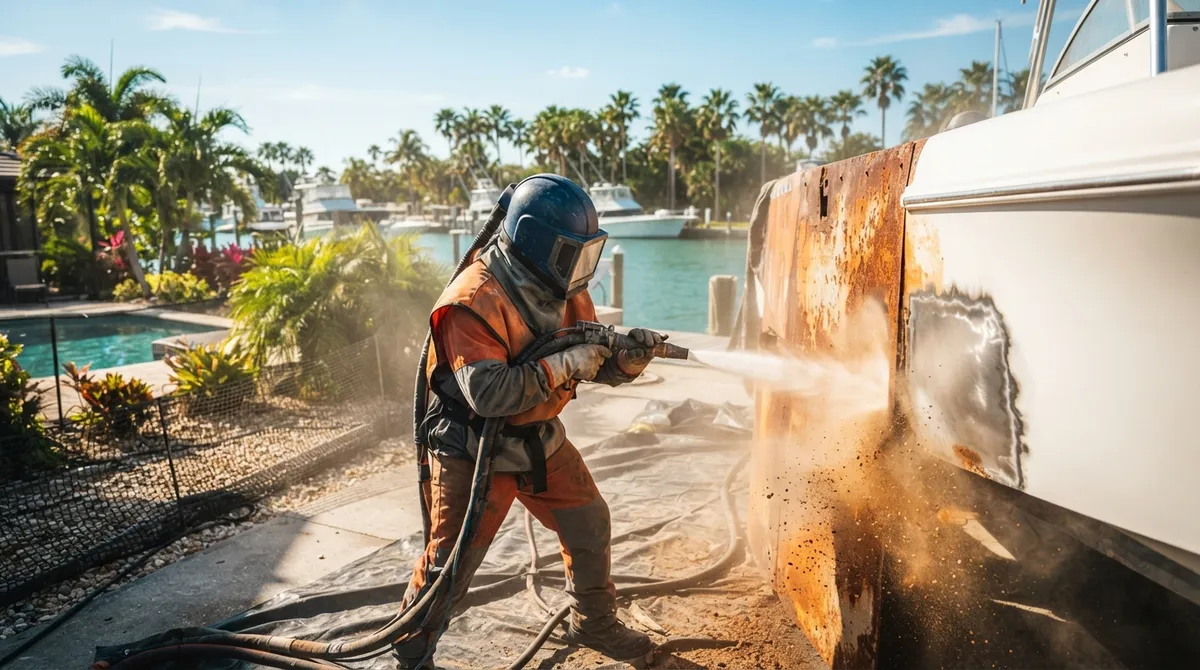
A mobile rig solves a big headache: you don’t have to move the item. We come to you. A fully mobile, self-contained setup can work dockside, in a driveway, at a shop, or on a job site. If you’re curious how that stacks up against a fixed location, take a look at this breakdown of mobile vs. shop sandblasting.
Here’s why mobile is popular around the bay:
- No hauling. Boats, trailers, and big steel are hard to move.
- Less downtime. The work happens at your site, on your schedule.
- Less guesswork. The crew sees the real conditions, like landscaping, pools, and neighbors.
Know the Three Main Blasting Methods
Here’s where many people get tripped up. “Sandblasting” is often used as a catch-all term. In reality, there are a few different methods, and they are not interchangeable. The right one depends on the surface, the coating, and the finish you want.
| Method | Best For | Things to Know |
|---|---|---|
| Dry abrasive blasting | Heavy rust, thick coatings, steel, frames, trailers | Most aggressive. Needs strong dust control. |
| Soda blasting | Fiberglass, gelcoat, thin panels, delicate parts | Gentler media. Great where heat or damage is a concern. |
| Dustless (water-assisted) blasting | Indoor work, active sites, areas near equipment or homes | Cuts visible dust. Runoff still needs a plan. |
Want to dig deeper into one comparison? This guide on dry blasting vs. soda blasting for metal is a helpful read. And for a bigger picture, check out these 6 types of sandblasting every Florida owner should know.
Here’s our simple rule: we match the blast to your surface, not the other way around. A good company will say the same.
Match the Media to Your Surface
Media is the stuff that does the work. Pick the wrong one, and you can damage what you’re trying to save. That’s why media choice is one of the most important things to talk about before any job starts.
A few easy examples:
- Fiberglass and gelcoat: Softer media like soda or walnut shell protects the hull.
- Metal trailers and hardware: Stronger abrasives can take rust back to clean, bare metal.
- Thin body panels: Lower pressure and cooler media help prevent warping.
- Wood and trim: Soft media and low pressure keep the grain from getting chewed up.
- Brick, iron, and concrete: These can handle stronger media.
Some surfaces should not be blasted at all. For example, vinyl fencing is too delicate. If you want to know what to skip, this list of surfaces you should never sandblast is worth a look.
A smart contractor will also offer a small test area first. That lets you see the result before the whole job gets done.
Safety Matters: What to Ask About Dust and Cleanup
Let’s talk about the not-so-fun but very important part. Blasting can create airborne dust from the media, the old coating, or the surface itself. According to OSHA guidance, crystalline silica from blasting media or from materials like concrete and masonry can cause serious lung disease, including silicosis and lung cancer. OSHA’s respirable crystalline silica standards set a permissible exposure limit of 50 micrograms per cubic meter of air as an 8-hour average, with an action level of 25 micrograms.
Old paint can add another layer of risk, especially if it contains metals like lead. That’s why a responsible crew thinks about exposure controls, isolation, ventilation, and the right respiratory protection.
Now, a quick word about “dustless.” Water-assisted blasting can cut down on visible dust, which is great. But the label alone doesn’t mean a job is dust-free or hazard-free. Ask how the crew will handle:
- Runoff and wastewater
- Spent media and coating debris
- Protection for people, pools, landscaping, and windows
- Waste cleanup and disposal
For a closer look at how pros think about this, read about sandblasting dust control and the safe blasting procedures every mobile crew follows. We contain the mess, and we protect the surrounding area. Any good company should be able to explain exactly how they do the same.
How to Compare Sandblasting Companies in Tampa Bay: Step by Step
Ready to start comparing? Here’s a simple process you can follow.
- List your project. Write down what you’re blasting, how big it is, and what’s on it (paint, rust, bottom paint, graffiti, and so on).
- Take clear photos. Snap wide shots and close-ups. Good photos help a contractor give a smarter estimate.
- Contact two or three companies. Ask about their experience with your exact type of surface.
- Ask about the plan. Which method? Which media? Why? How will they protect the area?
- Request a written, site-specific estimate. A walkthrough or photo review beats a guess over the phone.
- Confirm insurance. Ask for proof that they’re fully insured.
- Ask about the finish. Will the surface be ready to prime and coat? Is a coating included, or is it strip and prep only?
You can also use this checklist of what to look for in a sandblasting contractor as a handy companion.
Questions to Ask Before You Hire
Keep this list on your phone when you call around. These questions help you spot a pro fast.
- Have you worked on this exact surface before?
- What media will you use, and why?
- Can you do a small test patch first?
- How will you contain dust, runoff, and debris?
- How do you protect landscaping, pools, windows, and nearby property?
- Are you fully insured?
- Do you travel to my area, and is there a travel fee?
- Will the surface be ready for paint or coating when you finish?
- Who will actually be doing the work?
That last one matters. It’s nice when you talk to the people doing the work, not a call center. If you want more ideas, this guide on what to know before hiring sandblasting services goes even further.
Why Prep Matters More Than You Think
Here’s something folks often learn the hard way: a coating is only as good as the surface underneath it. Paint, powder coat, resurfacing, and antifouling all fail early when the prep is poor.
Hand-sanding tends to miss rust hiding in seams and corners. Blasting takes the whole surface back to clean, sound material at once. That helps new coatings bond properly and hold up in Florida’s heat, humidity, and salt air. If you’re weighing options, this comparison of sandblasting vs. hand prep shows when blasting wins.
Painters and coating crews love a well-prepped surface. It saves them time and helps your finish last. For more on that, see these sandblast painting prep steps that make paint last.
What Does It Cost? Understanding Estimates
Everyone wants a number, and that’s fair. The honest answer is that price depends on the size of the job, the surface, the coating, the media, and how hard the site is to work on. Different companies also quote differently.
Be careful about quotes that seem too good to be true. A low price can leave out cleanup, travel, or surface protection. A clear, written estimate that explains the scope is a good sign. If you want to understand why numbers vary, read why sandblasting quotes vary so much and the sandblasting cost facts Florida owners need.
The best approach is simple: ask for a site-specific estimate. It should be clear, in writing, and honest about what’s included.
Match the Service to Your Project
Different projects call for different approaches. Here’s a quick snapshot of common jobs around Tampa Bay and what to think about.
| Project | What You Want | Key Question to Ask |
|---|---|---|
| Boat or jet ski | Old bottom paint and buildup removed without hull damage | What soft media will you use on fiberglass? |
| Classic car or frame | Rust and paint stripped to bare metal | How do you prevent panel warping? |
| Fence, gate, or railing | Rust and peeling paint removed | Can you prep it so it’s ready to prime? |
| Pool deck or patio | Stains and old coatings removed | How will you protect the pool and plants? |
| Commercial site or graffiti | Fast cleanup with minimal disruption | Can you work after hours? |
For specific projects, these reads can help: pool deck blasting, sandblasting a boat hull, and restoring wrought iron railings.
Check Service Area and Availability
Tampa Bay is a big area. Some companies stick close to home, while others cover a wider region. Ask where they work and whether travel affects the price.
At Blastworx, we’re based in Tampa and work throughout the central Florida corridor, including Ocala, Orlando, and Fort Myers. For the right job, we’ll travel anywhere in the state. You can visit us on Google and see what our customers are saying about us. Reviews are a great way to get a feel for how a company treats people.
Also look at photos of past work. A strong gallery tells you a lot about experience and quality.
Red Flags to Watch For
Most contractors are honest and hardworking. Still, a few warning signs are worth knowing:
- They can’t explain which media they’ll use or why
- They promise “zero dust” or “zero mess” with no plan
- They won’t confirm insurance
- They refuse to look at photos or the site before quoting
- They offer to blast surfaces that should not be blasted
- They’re vague about cleanup and waste disposal
If you spot two or more of these, keep looking. Common errors can get expensive fast, so it helps to know the abrasive blasting mistakes that cost you money before you commit.
Our Simple Process at Blastworx
We like to keep things clear and easy. Here’s how we work:
- Walkthrough. Send photos or we come look, and we figure out the right media for the surface.
- Free estimate. You get a clear, written estimate the same day. The price we give is the price you pay.
- Blast and strip. We protect the surrounding area, then blast the surface clean at your location.
- Ready to finish. The surface comes out clean and ready for the next step.
We’re an owner-operated company, so you talk to the people doing the work. If you’d like to see how we think about local jobs, take a look at 6 things to know about sandblasting in Tampa, Florida. And if you’re still gathering information, this article on how to find sandblasting near me that comes to you is a good next step.
Final Thoughts
Choosing among sandblasting companies in Tampa Bay doesn’t have to be stressful. Know your surface, understand the basic methods, ask about dust and cleanup, and get a clear written estimate. Do those things, and you’ll be in great shape.
The goal is simple: a clean, sound surface that’s ready for its next coat and built to last through Florida’s heat, humidity, and salt air. A little homework up front saves you money and headaches later.
Ready to take the next step? We’d love to help. Get a free estimate for your project, or give us a call at 813-380-8092. You can text too. We come to you, and we’ll match the blast to your surface.
FAQs
Q: What is the difference between sandblasting, soda blasting, and dustless blasting?
A: Sandblasting (dry abrasive blasting) is the most aggressive and works great on heavy rust and steel. Soda blasting uses gentler media, so it’s a good fit for fiberglass and thin panels. Dustless blasting adds water to cut visible dust, which helps on indoor or active sites. The best choice depends on your surface, so we always match the blast to what you’ve got.
Q: How much does mobile sandblasting cost in Tampa Bay?
A: It really depends on the size of the job, the surface, the coating, and the media needed. That’s why a site-specific, written estimate is the way to go. Send photos or request a walkthrough, and a good contractor can give you a clear price.
Q: Can mobile blasting remove bottom paint from a boat without damaging the fiberglass?
A: Yes, when the right media is used. Softer options like soda or walnut shell are often chosen for fiberglass and gelcoat to protect the hull. Ask your contractor to explain their media choice and to try a small test area first.
Q: Is dustless blasting safe to use near a home, pool, or landscaping?
A: It can be a great choice, since it reduces visible dust. But “dustless” doesn’t mean hazard-free, so ask how the crew will contain runoff, collect debris, and protect nearby property. A careful crew will have a clear plan for all of it.
Q: What should I ask a Tampa Bay blasting contractor before hiring them?
A: Ask about their experience with your surface, the media they’ll use, and how they’ll handle dust, runoff, and cleanup. Confirm they’re fully insured, and ask if the surface will be ready to prime or coat. Getting a written, site-specific estimate is a smart final step.