
Key Takeaways
-
Always test a small patch on a hidden area first to fine-tune the blasting method and pressure before treating the main surface, preventing damage or mismatched finishes.
-
Different blasting methods suit different surfaces: abrasive for tough concrete/brick, soda for delicate masonry, dry ice for sensitive surfaces, and wet blasting for busy commercial sites with dust concerns.
-
Proper containment and cleanup are mandatory—collect spent media, paint chips, and manage wastewater to prevent environmental contamination and protect surrounding landscaping, windows, and drains.
-
Fresh graffiti is significantly easier to remove than paint baked in the sun for months, so prompt action saves time and reduces removal complexity.
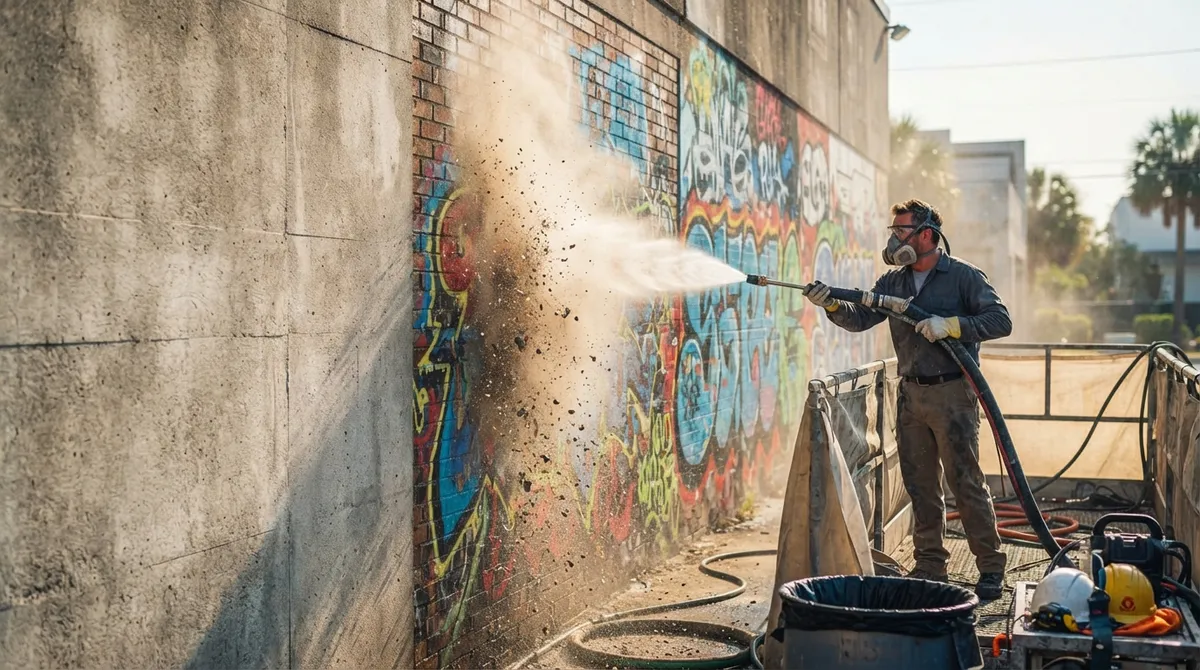
Nobody plans on waking up to spray paint on their wall. One morning it’s fine, and the next there’s a big tag across your brick, block, or storefront. It feels personal, even when it isn’t. The good news is that graffiti removal blasting can wipe it out fast, and a mobile crew can do it right at your property.
At Blastworx, we get calls about this all the time across Tampa Bay and central Florida. People want to know what works, what’s safe, and what it costs. So we put together 15 plain-English facts to help you make a smart choice in 2026. We keep it simple, we keep it honest, and we hope it helps you feel a little less stressed about that ugly mark on your wall.
The Basics: What Graffiti Removal Blasting Really Is
1. It’s a cleaning service that comes to you
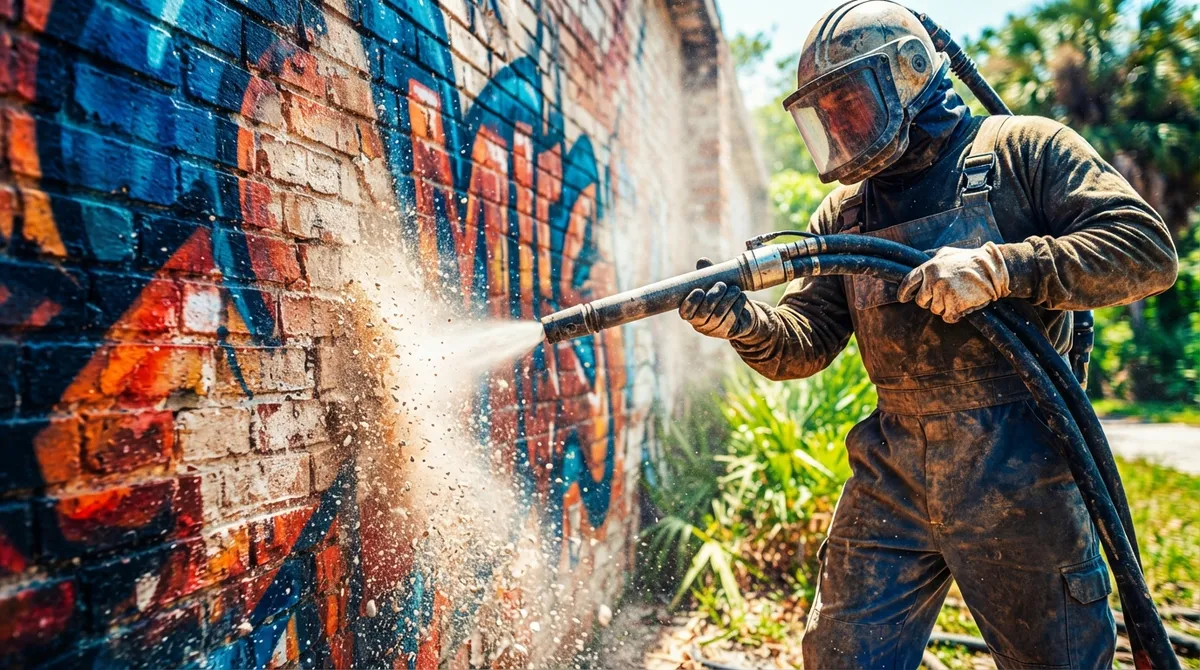
Graffiti removal blasting means a trained operator uses a blasting process to lift paint or markings off a surface. With mobile blasting, we come to you. Our rig is fully mobile and self-contained, so we don’t need your power or water. That matters when the graffiti is on a wall, a fence, or a building you can’t move.
2. The method depends on the surface
There is no one magic method. The right choice depends on the coating, the surface underneath, the access, and the site. We match the blast to your surface, not the other way around. If you want a bigger picture of how it all works, here’s a handy primer on what is sandblasting.
3. Different graffiti behaves differently
Spray paint, marker, paint pen, etching cream, and wheat paste all act differently on a surface. Some sit on top. Others soak into pores. A quick look at the tag tells us a lot about the best plan.
Choosing the Right Blasting Method
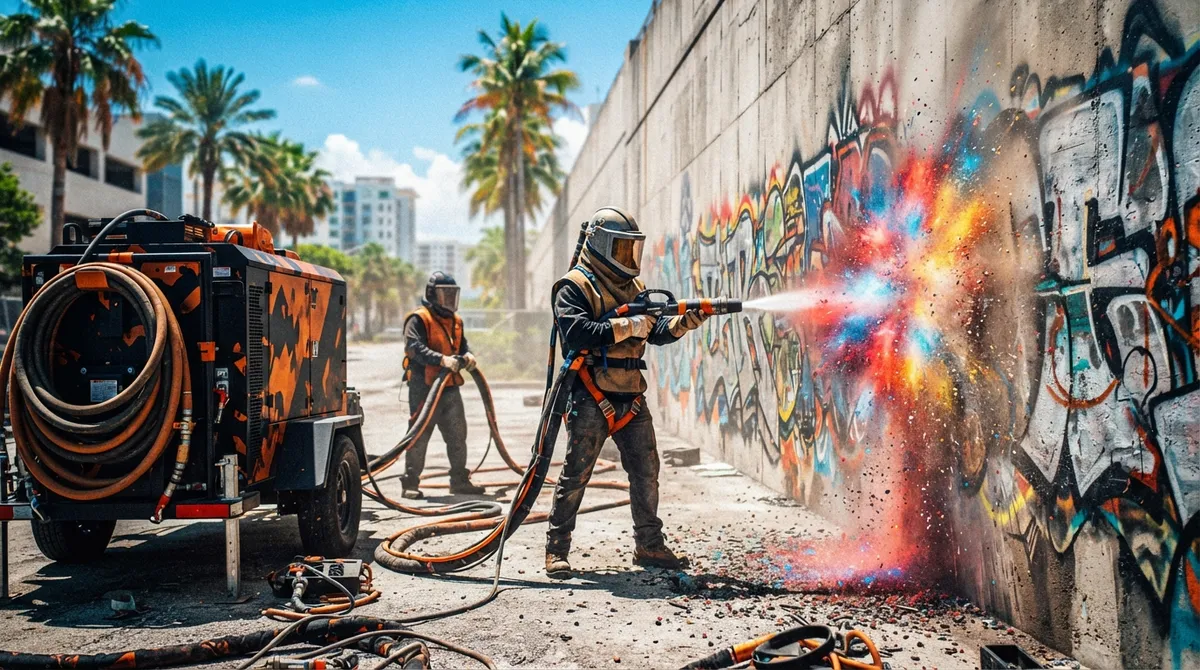
4. Abrasive blasting works on tough surfaces
Abrasive media blasting can remove graffiti from durable surfaces like concrete, brick, and stone. But it takes control. Pressure, nozzle distance, media type, and dwell time all matter. Go too hard, and you can wear down masonry, expose aggregate, or change the texture. For more on this, check out our guide on whether sandblasting damages concrete.
5. Soda blasting is a gentler option
Soda blasting uses sodium bicarbonate, a softer abrasive. It can suit some masonry and other surfaces where you want a lighter touch. It’s not magic, though. It still makes dust, and the spent media and removed paint still have to be collected. If you’re curious, see why soda blasting is Tampa’s gentlest cleaning fix.
6. Dry ice blasting is a special-case tool
Dry ice blasting uses carbon dioxide pellets that turn to gas on impact. That means no spent blasting media and no process wastewater. But the removed graffiti still has to be captured and disposed of properly. Dry ice isn’t an abrasive, so it won’t be the answer for every coating. Pellets also lose strength fast. One manufacturer says they can lose up to 20% of their efficacy after a single day.
7. Dustless blasting cuts down the cloud
Wet or mist-assisted blasting helps keep dust down and can be gentler on some surfaces. It’s a favorite for busy commercial sites. Just know that wet methods create slurry that must be contained. Learn more in what makes dustless blasting in Tampa so effective.
Quick Comparison of Common Methods
| Method | Best For | Watch Out For |
|---|---|---|
| Abrasive blasting | Concrete, brick, stone, steel | Surface wear if pressure is too high |
| Soda blasting | Softer masonry, delicate jobs | Dust and spent media cleanup |
| Dry ice blasting | Sensitive surfaces, no media residue | Not an abrasive; paint still needs capture |
| Wet or dustless blasting | Busy sites, dust control | Slurry must be contained |
Think of this table as a starting point. The real answer comes after we see your wall in person or review photos.
Surfaces and Smart Prep
8. Always test a small patch first
A test patch is one of the best habits in this trade. We pick a hidden spot, try the media and pressure, and check the result. It helps avoid a “clean patch” that looks worse than the graffiti. It also lets us fine-tune before touching the main area.
9. Brick, block, and concrete usually do well
These are common graffiti targets, and they usually handle controlled blasting well. Porous surfaces soak up paint, so the right media and a light hand are key. If you want to go deeper on brick, read our 15 brick sandblasting facts.
10. Painted walls, glass, and veneer need a closer look
Some surfaces must be checked in person before any blasting starts. That includes painted walls, glass, veneer, and cultured stone. Blasting can strip the wall paint along with the graffiti. We’d rather tell you that up front than surprise you later.
11. Historic or delicate masonry needs extra care
Old brick and soft stone can be damaged by aggressive blasting. For these, we use the lightest media and lowest pressure that does the job. Sometimes the best answer is a different method altogether.
- Identify the surface before choosing media.
- Start gentle and step up only if needed.
- Test first in a hidden area.
- Blend the finish so the cleaned area doesn’t stand out.
Safety, Containment, and Cleanup
12. Old paint can hide hazards like lead
Paint removal can send hazardous dust into the air, including lead from older coatings. EPA lead-safe guidance for covered renovation work says abrasive paint-removal machines need shrouds or containment and HEPA dust collection. Whether the rule applies depends on the building and the project. On older properties, we raise the question early.
13. Dry blasting makes the most dust
Illinois EPA guidance says dry abrasive blasting creates the most dust of the lead-paint removal methods it discusses, and it’s the hardest to contain. That’s why method choice and containment go hand in hand. We contain the mess and protect the surrounding area, including landscaping, windows, and storm drains.
14. Cleanup is part of the job, not an extra
Responsible blasting means collecting spent media, paint chips, dust, and slurry. Wastewater with paint solids needs to be managed so it doesn’t reach drains or waterways. Disposal rules vary by federal, state, and local requirements. Here’s a basic cleanup flow we follow:
- Walk the site and mark people, plants, and drains to protect.
- Set up barriers, covers, and drain protection.
- Blast with the method chosen from the test patch.
- Collect media, chips, and slurry as we go.
- Do a final sweep and wash-down plan so the site is left tidy.
15. Protect the wall after it’s clean
Once the graffiti is gone, the wall may be more open and porous than before. Many owners add an anti-graffiti coating so the next tag is easier to remove. We handle removal and prep only, so a painter or coating crew would apply the sealer. Our guide on chemical-free ways to erase graffiti covers more options.
What to Expect When You Hire a Mobile Crew
Here’s how it goes with us. It’s simple on purpose.
- Walkthrough. Send photos or we come look, and we choose the right media.
- Free estimate. You get a clear, written estimate the same day. The price we give is the price you pay.
- Blast and strip. We protect the area, then blast the surface clean at your location.
- Ready to finish. The surface is clean and ready for the next step.
Timing matters too. Fresh graffiti is usually easier to remove than paint that has baked in the Florida sun for months. If you manage a business, see our notes on commercial graffiti removal timelines, and learn what Tampa property owners need to know.
We serve Tampa, Clearwater, Sarasota, Ocala, Orlando, and Fort Myers, plus towns like Brandon, Riverview, Plant City, Lutz, and St. Pete. You can see our service areas and browse our commercial blasting and residential blasting pages. Want proof? Check our project gallery, or visit us on Google and see what our customers are saying about us.
Ready to Get Rid of That Graffiti?
Graffiti is annoying, but it doesn’t have to stick around. With the right method, a test patch, and good containment, your wall can go back to clean, sound material. At Blastworx, we’re fully insured, owner-operated, and you talk to the people doing the work.
Ready to get started? Get a free estimate today, or give us a call at 813-380-8092. You can text us too. We come to you.
FAQs
Q: What is graffiti removal blasting, and how does mobile blasting work?
A: Graffiti removal blasting uses a controlled process, like soda, abrasive, or dustless blasting, to lift paint off a surface. With mobile blasting, we bring a self-contained rig right to your property, so there’s nothing to haul away. We pick the right media for your surface and contain the mess as we go.
Q: Can blasting remove graffiti from brick, concrete, or stone without damaging it?
A: Usually, yes, when it’s done with care. The key is picking the right media and keeping pressure under control. We always run a small test patch first so we can adjust before touching the main wall.
Q: Does graffiti removal blasting create dust or waste?
A: Yes, every blasting method leaves something behind, like paint chips, spent media, dust, or slurry. That’s why containment and cleanup are part of every job. We protect the surrounding area and collect the debris so your site is left tidy.
Q: Should I seal the surface after graffiti is removed?
A: It’s a smart idea for walls that get hit often. An anti-graffiti coating can make the next cleanup much easier. We handle removal and prep only, so a painter or coating crew would apply the sealer afterward.





