
Key Takeaways
-
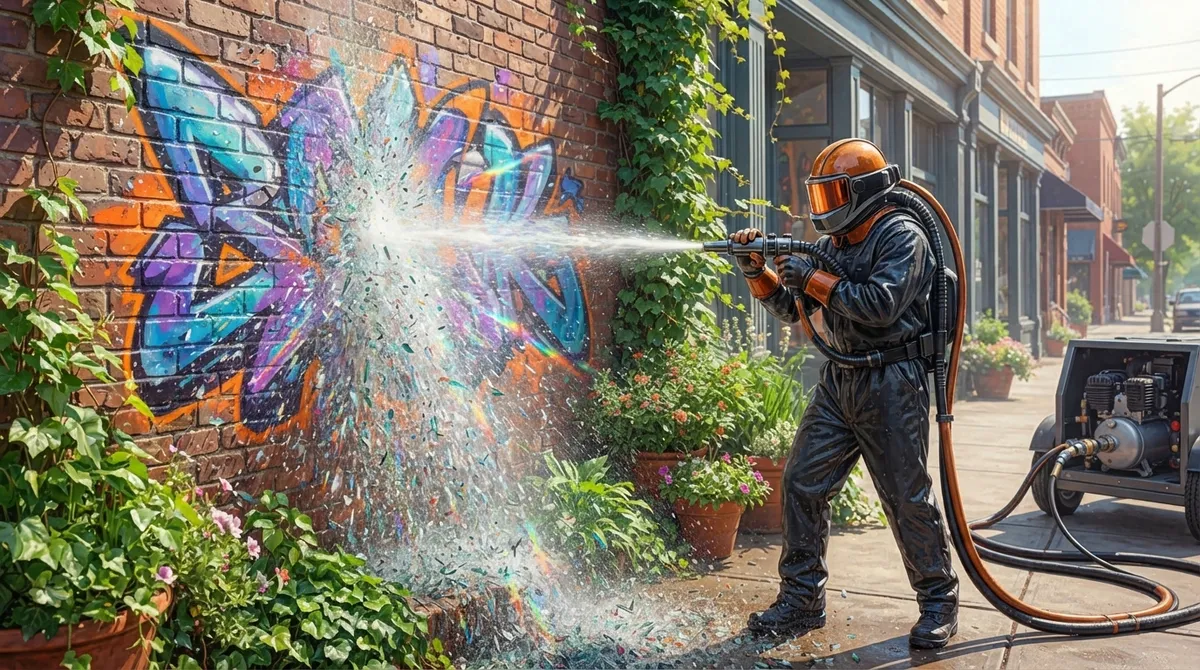
Wet abrasive blasting and dustless blasting remove graffiti mechanically using water and gentle abrasives like recycled glass or baking soda, eliminating toxic chemical runoff and fumes while protecting surrounding landscaping.
-
Multiple layers of spray paint strip away in a single pass with blasting, compared to chemical strippers requiring several applications, saving significant time and labor for commercial properties needing quick restoration.
-
Pressure and nozzle angle adjustments (500-2500+ PSI depending on surface type) are more critical than chemicals for effective removal without etching masonry, stone, or brick surfaces.
-
Recycled glass media is environmentally inert and safe for nearby plants, pets, and pedestrians, making dustless blasting ideal for busy sidewalks, storefronts, and areas with sensitive vegetation.
-
Mobile blasting units are self-contained with their own water and power, eliminating the need to transport damaged property and allowing work to happen on-site with minimal disruption to businesses.
-
Professional mobile blasting is recommended for tags larger than 50 square feet to ensure consistent pressure and media application, preventing patchy results and potential surface damage from DIY attempts.
Graffiti shows up overnight and ruins the look of a building in hours. Your first instinct might be to grab a bucket of chemical stripper and start scrubbing. But here’s the good news: you can remove graffiti without harsh chemicals, and honestly, it works better anyway. Mobile blasting uses water and gentle abrasives to lift spray paint off brick, concrete, metal, and more, without leaving behind toxic runoff or damaged surfaces.
We get calls all the time from property owners in Tampa, Clearwater, and across central Florida asking if there’s a safer way to deal with tags. There is. Wet abrasive blasting and dustless blasting strip paint mechanically, using pressure and media instead of solvents. No fumes, no dangerous chemicals soaking into your landscaping, and no guesswork about whether the surface underneath will survive the cleanup.
In this article, we’ll walk through 11 facts and methods that prove chemical-free graffiti removal is not just possible, it’s the smarter choice. Whether you manage a storefront, a warehouse, or your own backyard fence, this guide will help you understand your options.
1. Wet Abrasive Blasting Strips Paint Without Solvents
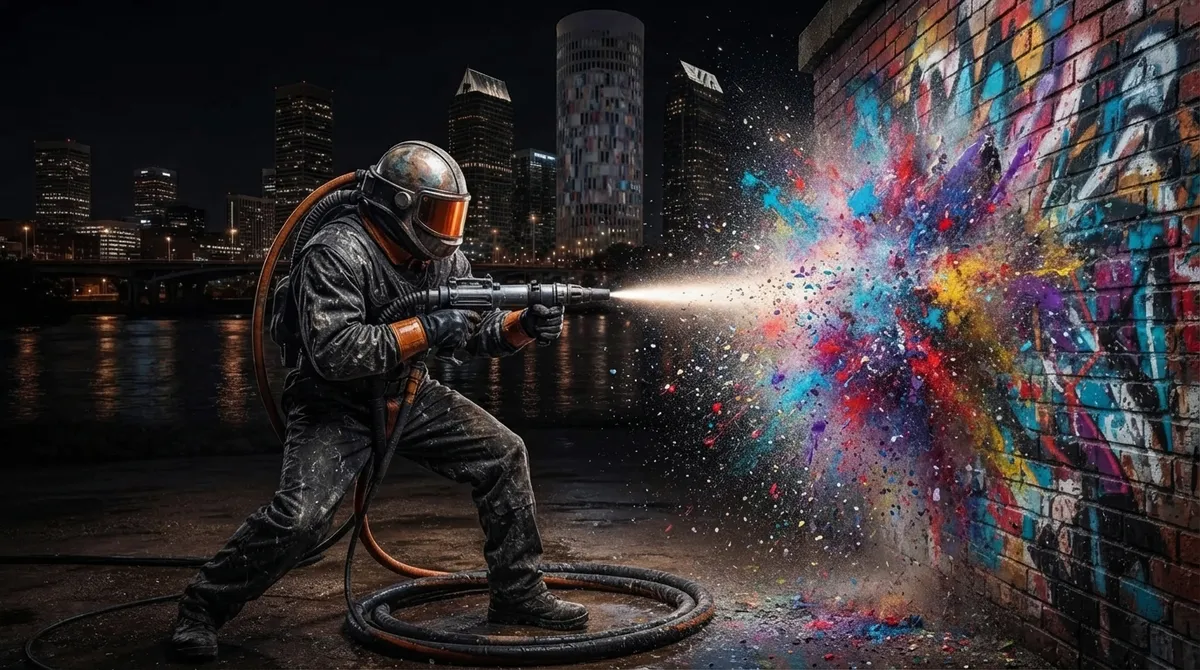
Wet abrasive blasting mixes water with a mild abrasive media, then sprays it at the surface under controlled pressure. The water suppresses dust and cools the surface, while the abrasive does the actual work of lifting paint away. There’s no chemical stripper involved at any point in the process.
This method relies purely on mechanical action, similar to what is sandblasting in its traditional form, but with water added for safety and control. The result is a clean surface with none of the toxic residue that chemical removers can leave behind.
2. Soda Blasting Handles Heavy Tags Gently
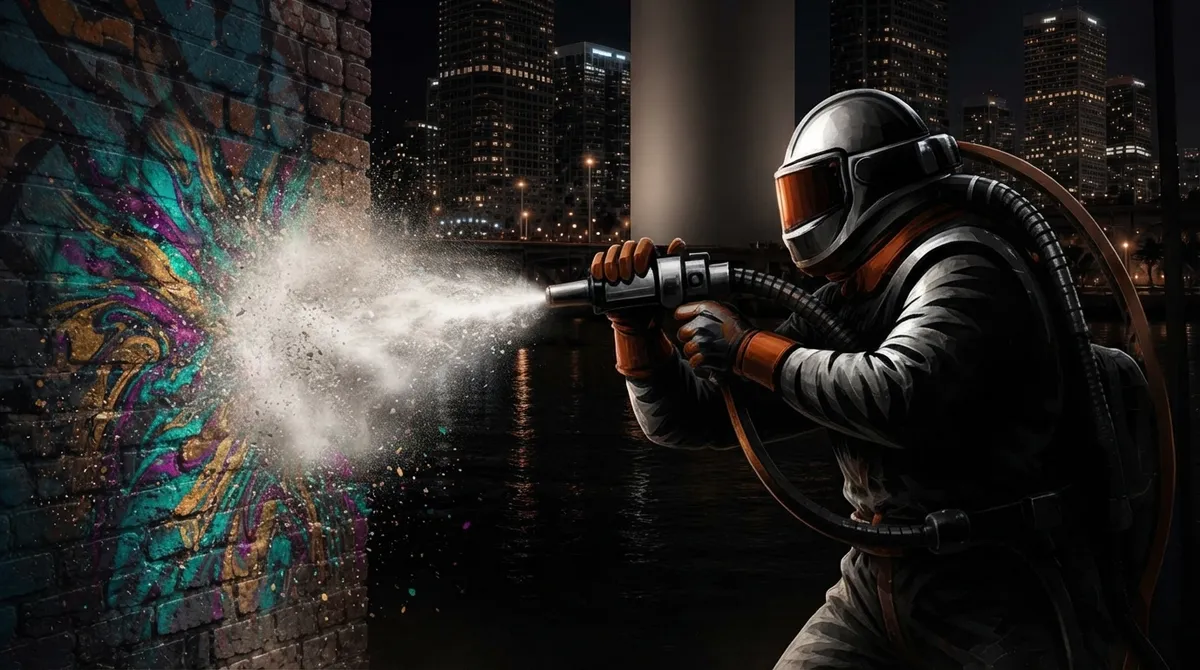
Soda blasting uses plain baking soda as the abrasive. It’s non-toxic, water-soluble, and gentle enough for surfaces that can’t handle aggressive sandblasting. Heavy graffiti with multiple paint layers is no match for it.
One thing to keep in mind: soda can be a little rough on nearby plants if it’s not managed carefully. That’s why we always protect the surrounding area before we start any job, keeping landscaping and hardscaping safe from overspray.
3. Recycled Glass Media Is Safe for Landscaping
Dustless blasting often uses recycled glass media, typically a 40/70 grit blend. This material is environmentally inert, meaning it won’t hurt plants, pets, or people nearby. It breaks down into harmless dust after use.
This makes it a favorite for jobs near flower beds, sidewalks with foot traffic, or storefronts where customers are walking by during the work. It’s one of the cleanest options available for graffiti removal in populated areas.
4. Multiple Layers Come Off in a Single Pass
Chemical strippers usually need several applications to break through thick or layered graffiti. Blasting doesn’t have that problem. A single pass with the right media and pressure can strip multiple coats of spray paint at once.
This saves time and labor, which matters a lot for commercial properties that need to look presentable again quickly. Nobody wants a half-stripped wall sitting there for a week while chemicals slowly do their job.
5. No Toxic Runoff Means Safer Job Sites
Chemical graffiti removers often need to be rinsed off, and that rinse water has to go somewhere. It can end up in storm drains, soil, or nearby water sources. Blasting avoids this entirely since there’s no chemical to begin with.
This is a big deal for properties near waterways, storm drains, or environmentally sensitive areas. It’s also just safer for the crew doing the work, since there are no fumes to breathe in during the job.
6. Pressure and Nozzle Angle Matter More Than Chemicals
Here’s a quick breakdown of pressure settings commonly used for different graffiti situations. Getting this right is what protects the surface while still removing the paint effectively.
| Graffiti Type | Recommended PSI | Nozzle Angle |
|---|---|---|
| Light spray paint on concrete | 500–1500 PSI | 15–45° |
| Heavy graffiti on brick | 2500+ PSI (or abrasive blasting) | Varies by media |
| Large tags over 50 sq ft | Professional blasting recommended | Adjusted per surface |
As you can see, pressure alone isn’t always the answer. That’s why we match the blast to your surface, not the other way around, adjusting media and technique based on what the wall or panel is made of.
7. Wet Blasting Won’t Etch Masonry or Stone
One common worry with power washing is that high pressure can etch or pit brick, stone, and concrete. Wet abrasive blasting is adjustable enough to avoid this. The water cushions the impact, so the abrasive removes paint without digging into the material underneath.
This is especially important for older buildings, historic storefronts, or decorative masonry where surface texture needs to stay intact. Learn more about how this compares in our guide on sandblasting vs. pressure washing for concrete.
8. Mobile Units Bring the Solution to You
You don’t need to move a damaged fence, wall, or vehicle to a shop. Mobile blasting rigs come fully equipped with their own water and power, so the work happens right where the graffiti is. This is huge for municipal properties, transit stops, and businesses that can’t afford downtime.
Our team at Blastworx works throughout Tampa Bay and the central Florida corridor, including Ocala, Orlando, and Fort Myers. We come to you, fully mobile and self-contained, so there’s no need to coordinate drop-off or pickup logistics.
9. Different Surfaces Need Different Approaches
Not every surface reacts to blasting the same way. Here’s a quick list of common surfaces and how we typically handle them:
- Brick and concrete: Moderate pressure with abrasive media works well without etching.
- Metal fences and gates: Stronger media can be used since metal tolerates more pressure.
- Wood surfaces: Lower pressure and softer media prevent gouging or splintering.
- Stucco and painted walls: These need a careful, in-person evaluation before blasting begins.
- Glass and cultured stone: Extra caution is required, often with softer techniques.
If you’re dealing with graffiti on a fence or gate, our post on how to strip paint from a metal fence or gate fast covers similar techniques in more detail.
10. Dustless Blasting Works Well in Tight or Public Spaces
Because water suppresses dust during the process, dustless blasting is a great fit for busy sidewalks, storefronts, and areas near parking lots. There’s minimal airborne debris, which means less disruption for foot traffic and neighboring businesses.
This method has become popular for commercial graffiti removal because it keeps things clean and controlled. Curious how it stacks up in real projects? Check out our article on what makes dustless blasting in Tampa so effective.
11. Professional Blasting Beats DIY for Larger Tags
If a tag covers more than 50 square feet, it’s usually time to call in a professional crew rather than attempt a DIY fix. Larger areas need consistent pressure and media application to avoid patchy results or surface damage.
Here’s a simple step-by-step of what working with a professional mobile blasting crew usually looks like:
- We take a look at photos or visit the site to assess the graffiti and surface type.
- You get a free, same-day estimate with a clear price, no surprises later.
- We protect the surrounding area, then blast the graffiti off using the right media for the job.
- The surface comes out clean and ready for the next step, whether that’s repainting or just staying as is.
This process keeps things simple and predictable, which matters when you’re trying to get a property looking good again fast.
Comparing Removal Methods at a Glance
Here’s a side-by-side look at common graffiti removal approaches, so you can see why blasting tends to win out over chemical strippers.
| Method | Chemical-Free? | Surface Risk | Speed |
|---|---|---|---|
| Chemical stripper | No | Can weaken paint bond, toxic runoff | Slow, multiple applications needed |
| High-pressure washing only | Yes | Risk of etching or surface loss | Moderate |
| Soda blasting | Yes | Low risk with proper containment | Fast, single pass |
| Dustless (glass media) blasting | Yes | Very low risk, safe for vegetation | Fast, single pass |
If you want to see the full range of ways graffiti removal can go wrong or right, our detailed post on 11 facts about graffiti removal Tampa property owners need is worth a read.
Why This Matters for Property Owners
Graffiti isn’t just an eyesore, it can lower property value and make customers feel unsafe. Handling it quickly and correctly protects your investment and keeps your building looking its best. Choosing a chemical-free method also means you’re not introducing new hazards while trying to fix the old ones.
Whether you’re managing a commercial storefront, an industrial facility, or your own home, mobile blasting gives you a faster, cleaner, and safer path forward. It’s the kind of solution that just makes sense once you see it in action.
A Few Things to Keep in Mind
- Always get a professional evaluation for painted walls, glass, or delicate stone before blasting.
- Ask about media type, since recycled glass is gentler on landscaping than soda in some cases.
- Request a written estimate upfront, so there are no surprises on job day.
- Confirm the crew protects nearby windows, plants, and vehicles before work starts.
- Check if the company is fully insured, since that protects you if anything unexpected happens.
We’re proud to say Blastworx checks every one of these boxes. We’re fully insured, and when you call, you talk to the people doing the work. No middlemen, no confusion, just straightforward mobile blasting done right.
Want to see what our neighbors in Tampa Bay have to say? Visit us on Google — see what our customers are saying about us and get a feel for how we handle jobs big and small.
Ready to Get That Graffiti Gone?
Graffiti doesn’t have to mean a battle with harsh chemicals or a damaged wall. Mobile blasting gets the job done fast, clean, and without the toxic mess. If you’re dealing with tags on a fence, storefront, or building exterior anywhere in Tampa Bay or the central Florida corridor, we’d love to help.
Reach out today to get a free estimate, or if you’d rather talk it through first, feel free to give us a call. We’re ready to match the right media to your surface and get things back to clean, sound material, ready for whatever comes next.
FAQs
Q: Can you remove graffiti without harsh chemicals?
A: Absolutely! Mobile blasting uses water and gentle abrasives like recycled glass or baking soda to strip paint mechanically, with zero harsh chemicals involved. It’s a cleaner, safer approach that gets your surface looking great again without any toxic runoff.
Q: What is the best mobile blasting method for removing graffiti from brick walls?
A: Wet abrasive blasting tends to be the sweet spot for brick, since it’s gentle enough to avoid etching but strong enough to lift stubborn paint. We always match the blast pressure and media to your specific wall to keep it looking its best.
Q: Does wet abrasive blasting damage the underlying surface when removing graffiti?
A: Not when it’s done right! The water cushions the abrasive impact, so surfaces like masonry, stone, and wood come out clean without pitting or scarring. That’s actually one of the biggest perks compared to high-pressure washing alone.
Q: Is soda blasting better than dustless blasting for eco-friendly graffiti removal?
A: Both are great non-toxic options, but recycled glass media used in dustless blasting is a bit more environmentally neutral around plants and landscaping. Soda blasting works wonderfully too, we just take extra care to protect nearby greenery.
Q: How does mobile blasting compare to chemical graffiti removers in terms of speed?
A: Mobile blasting is usually much faster since it can strip multiple layers of graffiti in a single pass. Chemical removers often need repeated applications, so blasting saves you time and gets your property back to normal sooner.





