Key Takeaways
-
Always start with a walkthrough to assess base metal, coating type and thickness, rust depth, and access before choosing media, since skipping this often leads to wrong media or mid-job surprises.
-
Match the abrasive and method to the surface: use strong media for heavy steel frames, but gentler options like soda blasting for thin sheet metal, aluminum, and delicate parts to avoid warping.
-
Define the cleanliness standard (e.g., SP 5, SP 10, SP 6, SP 14) with your coating maker before blasting begins, and verify the result before coating to protect your warranty.
-
Mask bearings, seals, hydraulic lines, gauges, and electrical boxes, plug ports, and set up containment so grit doesn't cause expensive damage or affect nearby machines and people.
-
Hire insured crews that use proper respiratory protection and dust controls, since silica dust has an OSHA limit of 50 micrograms per cubic meter and old coatings may contain lead or other toxic metals.
Large equipment is a big investment. A rusty loader, an old trailer, or a tank that has seen better days can stop work cold. So when it is time to strip it and start fresh, you want the job done right the first time. Here is the good news: sandblasting large equipment on-site is easier than most people think. Here is the not-so-good news: a few common mistakes can turn a smart plan into a pricey headache.
At Blastworx, we have seen it all. We come to you with a fully mobile and self-contained rig, so we know what works and what wastes money. In this guide, we walk through five mistakes owners make when sandblasting large equipment, and how to dodge each one. Whether you run a farm, a fleet, a plant, or a job site, these tips will help you get back to clean, bare metal without the stress.
Why Mobile Blasting Makes Sense for Big Equipment
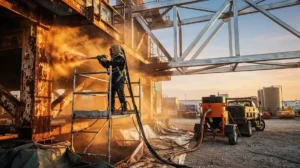
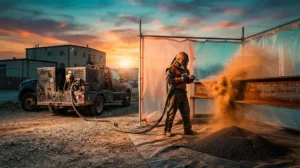
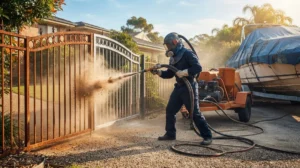
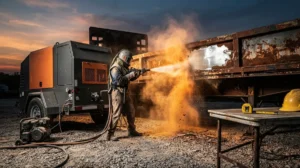
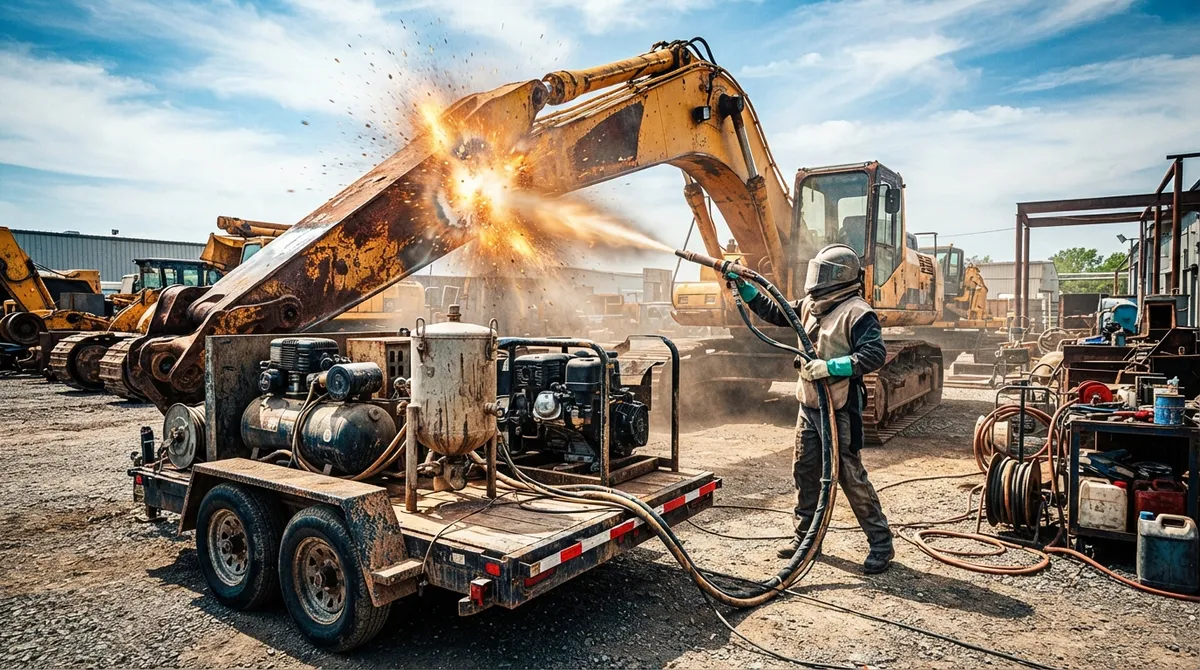
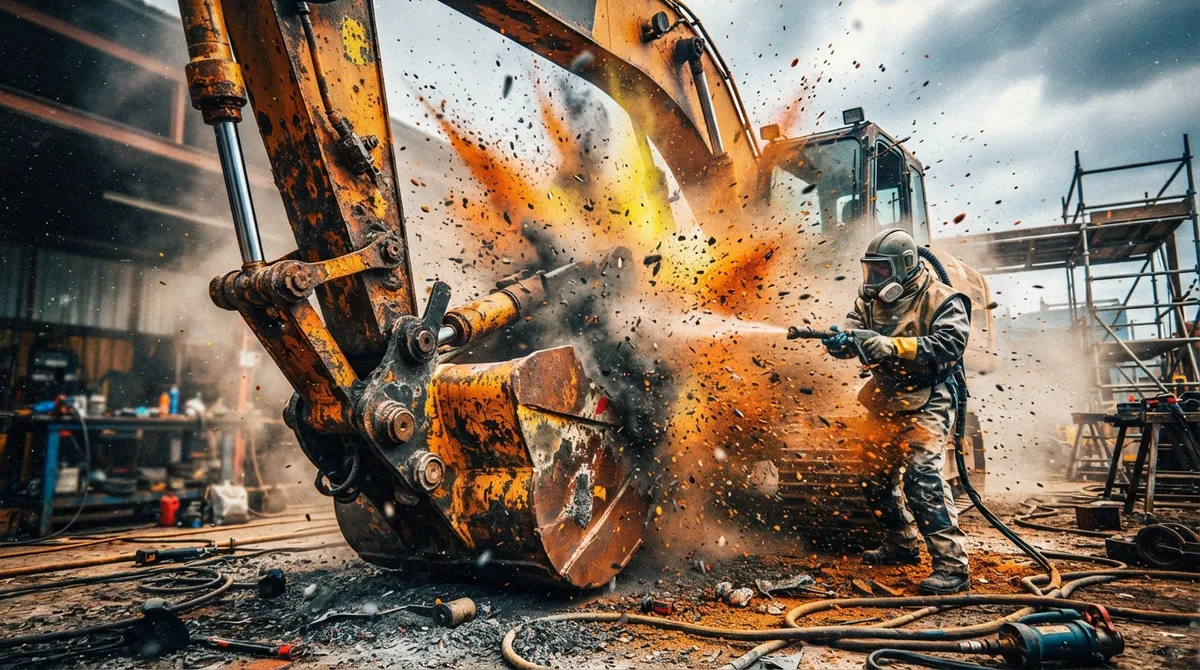
Some things are just too big to move. Hauling a crane boom, a storage tank, or a bulldozer to a shop costs time and money. Mobile abrasive blasting flips that problem around. The crew and the equipment come to the machine, so your asset stays put.
Mobile blasting works for many types of heavy gear:
- Heavy machinery like loaders, excavators, and dozers
- Trailers, truck frames, and fleet vehicles
- Tanks, vessels, and storage containers
- Structural steel, rails, and fabricated parts
A coating is only as good as the surface underneath it. Paint, powder coat, and protective layers will not last if the prep is bad. Blasting takes the whole surface back to clean, sound material at once, so what goes on next bonds properly. If you want a deeper look at how this works, check out equipment blasting for on-site rust and paint removal.
Mistake 1: Skipping the Walkthrough and Assessment
The biggest mistake is jumping in without a plan. Every job should start with a good look at the equipment. What is the base metal? How thick is the old coating? How bad is the rust? Where will the crew work, and what sits nearby?
These answers decide the abrasive, the method, and the setup. A job that skips this step often ends up with the wrong media or a surprise cost halfway through. That is why our first step is always a walkthrough. You send photos, or we come look, and we figure out the right media for the surface.
What a Good Assessment Covers
- The base material, such as steel, cast iron, or aluminum
- The type and age of the existing coating
- How deep the rust and pitting go
- Access, space, and nearby people or machines
- The coating system that goes on next
Older equipment may also have legacy coatings with hazardous substances, such as lead. Knowing this up front changes how the work is contained and how debris is handled. It is much better to find out on day one than on day three.
Mistake 2: Picking the Wrong Abrasive or Method
Not all blasting is the same. The media you choose affects how fast the old coating comes off, how rough the surface gets, how much dust you make, and whether the metal gets damaged. We match the blast to your surface, not the other way around.
Heavy steel frames can take a strong abrasive. Thin sheet metal, aluminum, and delicate parts need something gentler. Using one approach on everything is a quick way to warp a panel or leave the wrong finish. To learn more about the trade-offs, take a look at dry blasting vs. soda blasting for metal.
| Method | Best For | Things to Watch |
|---|---|---|
| Dry abrasive blasting | Heavy rust and thick coatings on steel | More airborne dust; needs good containment |
| Wet or dustless blasting | Active sites, indoor work, areas near other equipment | Creates water and debris that must be managed |
| Soda blasting | Softer surfaces and delicate parts | Gentler removal; not for every heavy coating |
One thing to keep in mind: wet or dustless blasting helps keep dust down, but it is not magic. It still creates debris, and it is not right for every surface. The dustless blasting guide explains where it shines.
Mistake 3: Ignoring the Surface Standard
Here is a mistake that costs real money: not knowing what “clean” means. If you tell a crew to “blast it clean,” two people may picture two different results. That is where surface standards come in.
For steel, the AMPP/SSPC standards give clear cleanliness targets. Here are the common ones:
- SP 5 (White Metal): the cleanest level, with all coatings and rust removed
- SP 10 (Near-White Metal): staining may remain on no more than 5% of each defined unit area
- SP 6 (Commercial): a step down, with a bit more allowed residue
- SP 14 (Industrial): tight rust or coating may remain in some spots
Which one you need depends on the coating system going on next. Your paint or coating maker usually spells out the surface profile and cleanliness it wants. Agree on the target before the blasting starts, and check the result before anything is coated. This one step protects your warranty and your wallet. You can read more about it in the surface prep steps before commercial coating.
Mistake 4: Forgetting to Protect Parts and Nearby Areas
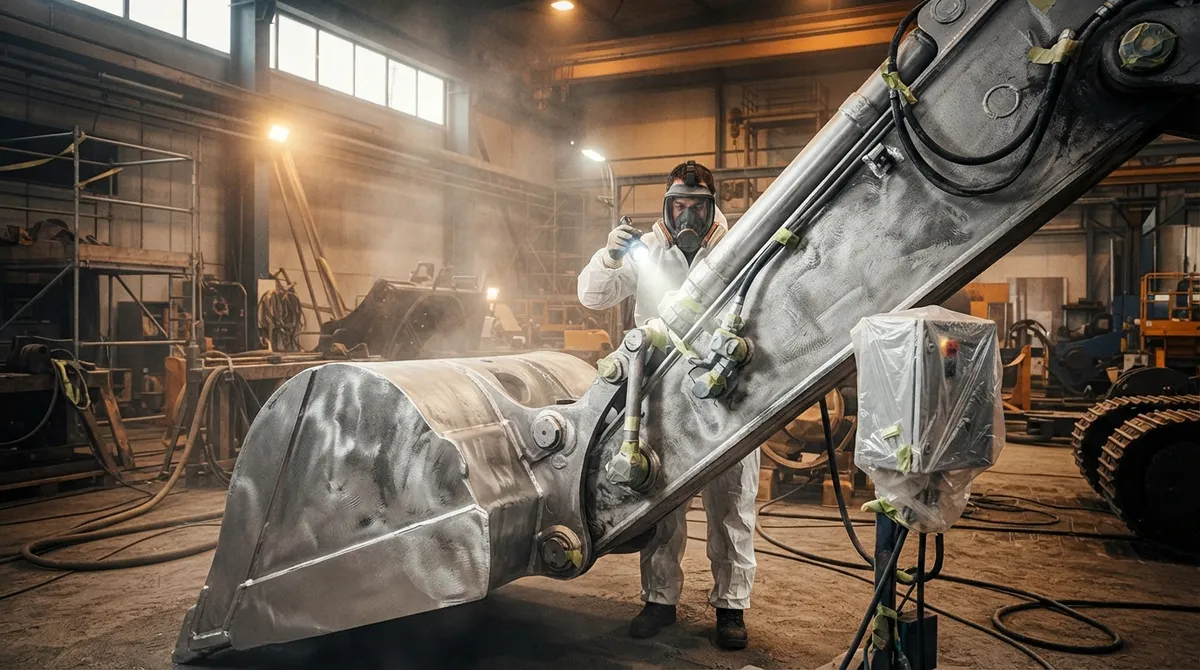
Big machines are full of parts that do not love abrasive. Bearings, seals, hydraulic lines, gauges, electrical boxes, and sensors can all be damaged by stray grit. And if the equipment sits inside an active yard or plant, nearby machines and people need protection too.
A good crew plans for this before the first blast. We contain the mess and protect the surrounding area. Common steps include:
- Masking or covering seals, bearings, and electrical parts
- Plugging openings and ports where grit could sneak in
- Setting up containment screens or barriers around the work zone
- Planning ventilation and debris recovery
- Cleaning up spent media and old coating when the job is done
Skipping this prep is a classic way to turn a rust fix into a repair bill. It also matters for neighbors. In a busy facility, you want the job to run without shutting everything else down. If you work around other crews, you might also like our post on on-site prep that saves downtime.
Mistake 5: Cutting Corners on Safety and Hiring
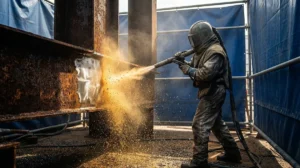
This last mistake is the most serious. Blasting is serious work, and the hazards are real. Dust can contain respirable crystalline silica, and OSHA sets a permissible exposure limit of 50 micrograms per cubic meter as an 8-hour time-weighted average. Employers must use feasible engineering and work-practice controls to keep exposure at or below that limit, with respiratory protection as backup. Old coatings may also hold toxic metals, and blasting can be very loud.
When you hire out the work, you want a crew that takes this seriously. Look for a company that:
- Is fully insured
- Uses proper respiratory protection, containment, and dust controls
- Can explain the media and method it plans to use
- Gives a clear, written estimate
- Lets you talk to the people doing the work
Low bids can look great until the extras pile on. Our price is a written estimate the same day, and the price we give is the price you pay. For help sizing up a crew, see what to look for in a sandblasting contractor and our guide to safe blasting procedures every mobile crew follows.
How Long Does It Take and What Does It Cost?
People always ask these two questions, and the honest answer is: it depends. Time and price swing based on the size of the equipment, how thick the coating is, how rusty the metal is, and the finish you need. A small trailer is a quick job. A large tank or a full fleet takes longer.
Here is what drives the numbers:
- Surface area and shape, since tight corners and seams take more time
- Type and thickness of the old coating
- Level of rust and pitting
- The cleanliness standard you need
- Access, containment needs, and debris cleanup
The easiest way to get a real number is a quick look at your equipment. If you want to understand what shapes a quote, read how much sandblasting estimates really cost. And if you want the basics on the process itself, here is a handy overview of what is sandblasting.
Our Simple Four-Step Process
We keep things simple so you always know what comes next:
- Walkthrough. Send photos or we come look, and we figure out the right media for the surface.
- Free estimate. A clear, written estimate the same day.
- Blast and strip. We protect the surrounding area, then blast the surface clean at your location.
- Ready to finish. The surface comes out clean and ready for the next step.
For industrial and heavy equipment work, we bring our own power and water, so you do not have to set up anything. Dustless blasting is available for indoor work, active job sites, and areas near other equipment. We handle strip and prep, and paint or protective coating may be available when needed for industrial jobs.
We serve Tampa Bay and the central Florida corridor, including Orlando, Ocala, Sarasota, and Fort Myers. Curious what other customers think? Visit us on Google — see what our customers are saying about us. For more on our heavy-duty work, see our industrial blasting services.
Wrapping It Up
Sandblasting large equipment does not have to be scary. Skip the walkthrough, pick the wrong media, ignore the surface standard, forget to protect parts, or hire the wrong crew, and costs add up fast. Avoid those five mistakes, and you get clean, sound metal that is ready for a coating that lasts in Florida’s heat, humidity, and salt air.
Ready to get started? Send us photos of your equipment and get a free estimate today, or give us a call at 813-380-8092. You can also text. We come to you, and you talk to the people doing the work. We would love to help your equipment look and perform like new.
FAQs
Q: What types of large equipment can be sandblasted on-site?
A: Lots of heavy gear can be blasted right where it sits. That includes loaders, excavators, trailers, truck frames, tanks, vessels, and structural steel. If it is too big or too fixed to move, we come to you.
Q: How do crews protect engines, hydraulics, and electrical parts during blasting?
A: We mask and cover sensitive parts like bearings, seals, hydraulic lines, and electrical boxes before any blasting starts. We also plug openings and set up containment around the work zone. That keeps grit where it belongs and keeps your equipment safe.
Q: Is wet or dustless blasting less dusty than dry blasting?
A: Yes, wet or dustless blasting helps keep airborne dust down, which is great for indoor work and active job sites. It still makes water and debris that need to be contained, and it is not right for every surface. We match the blast to your surface to pick the best fit.
Q: What surface standard should I choose before repainting steel equipment?
A: It depends on your coating system. Common AMPP/SSPC options include SP 5 (white metal), SP 10 (near-white metal), SP 6 (commercial), and SP 14 (industrial). Check your coating maker’s requirements and agree on the target before work begins.
Q: How much does mobile sandblasting for large equipment cost?
A: Price depends on size, coating thickness, rust level, and the finish you need. The easiest way to get a real number is to send us photos or let us take a look. You will get a clear written estimate the same day, and the price we give is the price you pay.