Key Takeaways
-
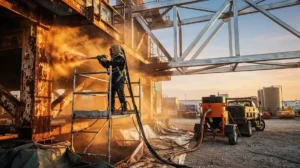
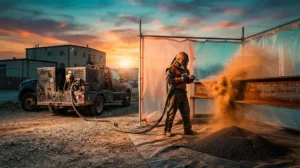
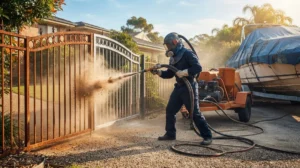
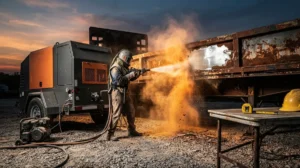
Mobile blasting brings the crew and rig to the plant, so fixed equipment like tanks, piping, and steel supports doesn't need to be moved to a shop.
-
Specify a named cleanliness standard (e.g., SSPC-SP 10 near-white or SP 6 commercial) based on your coating system, not just "blast it clean."
-
Avoid silica sand: NIOSH has recommended since 1974 that abrasives with more than 1% crystalline silica not be used for blasting.
-
Test unknown coatings before blasting, since older paint systems may contain lead, which changes safety, containment, and waste handling.
-
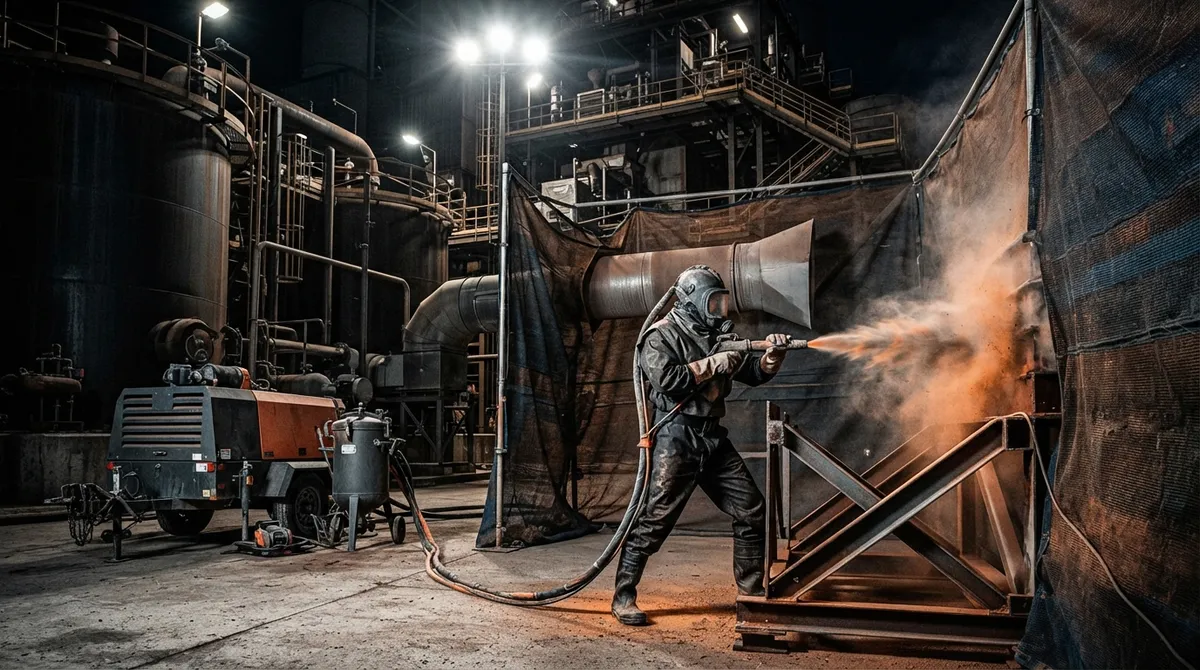
Control dust with temporary containment, exhaust ventilation, restricted zones, and air monitoring to protect running equipment and nearby workers.
-
Inspect the cleaned surface against the agreed standard and coat promptly, because humid conditions like Florida's can cause flash rust to return quickly.
Power plants run hard. Heat, moisture, steam, and salt air chew through coatings and steel year after year. When it is time for maintenance, the surface prep has to be right, or the new coating will fail early. That is where sandblasting for power plants comes in.
Here is the good news. You do not have to haul big equipment off site to get it done. Mobile blasting brings the crew and the rig to your plant. The work happens in place, in the right order, with the right controls. This guide walks you through how to plan it, step by step. We keep it simple and friendly, because a good plan should not feel like a puzzle.
We will cover what can be blasted, how to pick the right media, which cleanliness standard to ask for, how dust and safety are handled, and how to check the work before coating. Let’s get started.
What Sandblasting for Power Plants Really Means
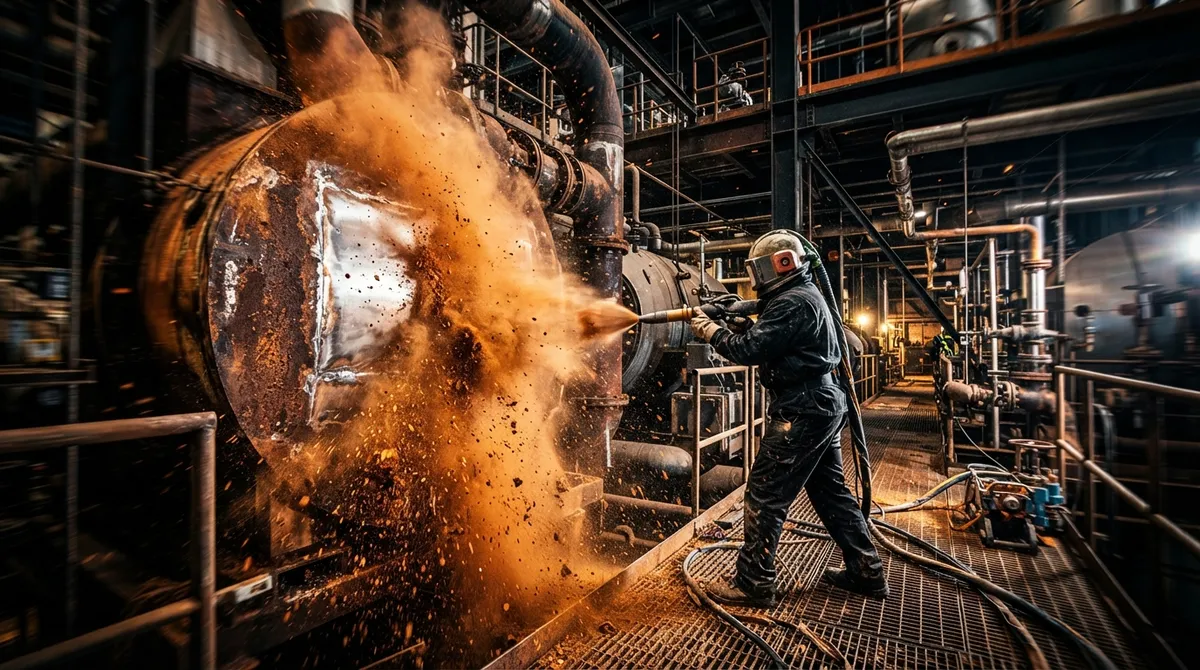
Most people say “sandblasting” for any kind of abrasive blasting. If you want a quick refresher, here is a plain explanation of what is sandblasting. In a power plant setting, the term usually means surface preparation. The goal is to remove rust, old coatings, scale, and buildup so a new protective coating can bond well.
It is not always done with sand. In fact, many crews avoid silica sand. We will talk about that below. The key idea is this: a coating is only as good as the surface underneath it. Paint, primer, and protective linings will not last if the prep is bad.
Mobile blasting is a good fit because power-plant equipment is big, fixed, and hard to move. You bring the service to the steel instead of moving the steel to a shop. If you want a deeper look at how this works in a related setting, see our guide on sandblasting for refineries.
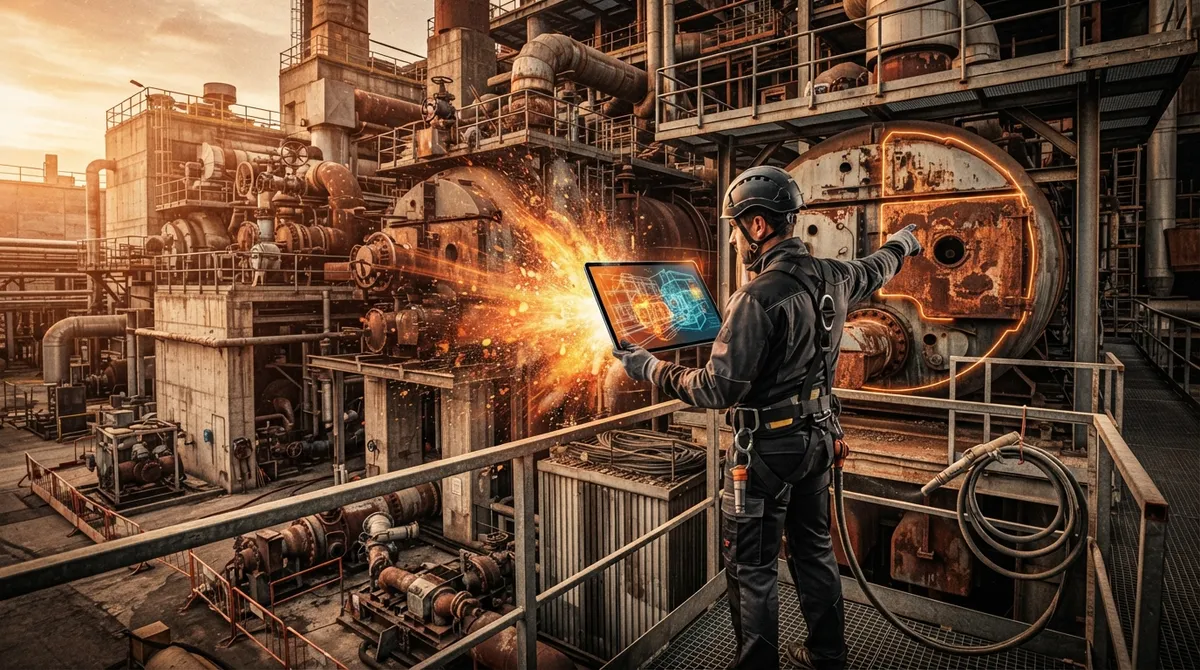
Step 1: List What Needs to Be Blasted
Start with a simple walk-through list. Think about what is rusty, peeling, or due for recoating. The plant owner sets the scope and access rules, so be clear about what is in and what is out.
Common work areas include:
- Structural steel, stairs, platforms, and supports
- Tanks and vessels
- Piping and pipe racks
- Boiler exteriors and related steel
- Concrete floors, pads, and walls
- Fixed equipment that is hard to move
Take photos as you go. Photos help a blasting crew understand the surface, the coating, and the access before anyone steps on site. If you want to see how crews think about big steel jobs, our post on sandblasting structural steel is a helpful read.
Step 2: Know What Is Under the Coating
Before any blasting starts, find out what you are removing. Old coatings can hide hazards. Some older paint systems contain lead or other metals. Blasting can also create dust from the steel or concrete itself.
This matters because it changes the safety plan, the containment, and how waste is handled. If a coating is unknown, it is smart to test it first. That one step can save time, money, and trouble later.
Also note the base material. Steel, aluminum, stainless, and concrete all react differently to blasting. We match the blast to your surface, not the other way around. For a closer look at one common challenge, read about industrial coating removal.
Step 3: Pick the Right Cleanliness Standard
This is where many projects go sideways. The phrase “blast it clean” means different things to different people. That is why industry standards exist. They give everyone the same target.
For steel, the common surface-preparation standards come from AMPP (formerly SSPC and NACE). The right one depends on your coating specification, not just on the fact that the site is a power plant.
| Standard | Common Name | What It Means in Plain Words |
|---|---|---|
| SSPC-SP 5 / NACE No. 1 | White metal | Cleanest finish. All visible rust, coating, and mill scale removed. |
| SSPC-SP 10 / NACE No. 2 | Near-white | Very clean. Only light shadows or staining allowed. |
| SSPC-SP 6 / NACE No. 3 | Commercial | Most rust and coating removed. Some staining allowed. |
| SSPC-SP 14 / NACE No. 8 | Industrial | Most coating and rust removed. Some tight residue may stay. |
| SSPC-SP 7 / NACE No. 4 | Brush-off | Light cleaning. Loose material removed only. |
Ask your coating maker or engineer which level the coating system needs. Then write that standard into the job scope. A clear target keeps everyone on the same page. It also helps you compare estimates fairly.
Step 4: Choose the Right Abrasive
Not all media is the same. The right media for the job depends on the surface, the coating you are removing, and the finish you need. Here are the main things to think about:
- Substrate: Hard steel can take stronger abrasives. Softer metals and delicate parts need gentler media.
- Profile needed: The coating spec often calls for a certain roughness so the new coat can grip.
- Dust level: Some media breaks down and makes more dust than others.
- Recyclability: Some abrasives can be reused. Others are one and done.
- Waste rules: What you blast off and what you blast with both end up as waste.
One important safety note. NIOSH has recommended since 1974 that silica sand, or any abrasive with more than 1% crystalline silica, not be used for blasting. OSHA also advises using less hazardous alternatives where possible. So when a power plant asks about “sandblasting,” a good crew often suggests a different media.
Want to see how the options compare? Our post on dry blasting vs. soda blasting for metal breaks it down, and aluminum oxide blasting vs. sand covers another popular choice.
Step 5: Plan for Dust, Safety, and Containment
This is the big one for an operating plant. Blasting makes dust and debris. You do not want that drifting onto running equipment or nearby workers. A good plan controls it from the start.
OSHA points to three main controls: substitution (use a less hazardous abrasive), isolation or containment, and ventilation. For fixed structures, OSHA guidance recommends enclosures where feasible, proper exhaust and dust collection, and air monitoring where needed. The ventilation standard for blasting equipment is 29 CFR 1910.94(a).
A solid safety plan usually includes:
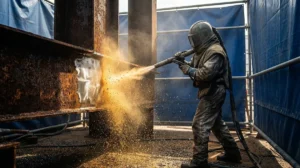
- Temporary containment around the work area
- Dust collection and exhaust ventilation
- Restricted work zones with clear signs
- Respiratory protection and training for the crew
- Air monitoring when exposures could reach nearby areas
- Planned cleanup and waste handling
We contain the mess and protect the surrounding area. If you want to know what good crews do on every job, read about safe blasting procedures and how pros handle sandblasting dust control.
Is Wet Blasting an Option?
Sometimes, yes. Wet abrasive blasting can cut down airborne dust. But it adds water to the job. That can mean extra rinsing, drying, corrosion control, and waste handling. AMPP also notes that wet-blasted steel should be checked against the right wet-blast cleanliness requirements and cleared of leftover abrasive. Our guide on wet sandblasting vs. dry can help you weigh it.
Step 6: Schedule Around Outages and Operations
Power plants cannot always stop on a dime. Maintenance shutdowns and outages are limited windows. Mobile blasting helps here because the rig is fully mobile and self-contained. We can work in the plant without needing your power or water.
To keep the schedule tight:
- Share the outage window and access rules up front
- Confirm which areas are cleared for work and when
- Plan blasting early so the coating crew is not waiting
- Agree on after-hours or weekend work if it helps
Good timing prevents downtime. For related thinking on keeping a site running, see our post on factory sandblasting that saves downtime.
Step 7: Inspect Before You Coat
Blasting is only half the job. The surface has to be checked before the coating goes on. This is the step that protects your investment.
Here is a simple way to think about it:
- Compare the cleaned steel to the agreed standard
- Check that the surface profile matches the coating spec
- Look for leftover dust, abrasive, oil, or moisture
- Make sure the surface is dry and free of fresh flash rust
- Coat promptly, before the steel can start to rust again
Florida’s heat and humidity can bring back flash rust fast, so timing matters. Our list of surface prep steps before commercial coating goes deeper on this, and the post on metal surface preparation blasting covers the basics.
Step 8: Choose a Crew You Can Trust
The best plan still depends on the people doing the work. Look for a crew that is fully insured, talks plainly, and puts the scope in writing. You should get a clear estimate, and the price you are given should be the price you pay.
Ask a few simple questions:
- What media will you use, and why?
- How will you contain dust and protect nearby equipment?
- Which cleanliness standard will you hit?
- How will waste be handled?
- Do you apply coatings, or is that handled by someone else?
At Blastworx, we do strip and prep, and recoating is handled by your coating crew. For tips on picking the right partner, read how to choose an industrial sandblasting company. Our industrial blasting services page shows what we do on large sites. You can also visit us on Google and see what our customers are saying about us.
Common Mistakes to Avoid
A little planning keeps you out of trouble. Watch for these slip-ups:
- Skipping the coating test and missing a lead hazard
- Writing “blast clean” without naming a standard
- Using silica sand when safer media is available
- Underplanning containment near running equipment
- Waiting too long to coat after blasting
Our list of abrasive blasting mistakes that cost you money goes through more of these.
Ready to Plan Your Power Plant Blasting Project?
Sandblasting for power plants works best when you plan the whole path: scope, standard, media, safety, schedule, and inspection. Get those right, and your coatings have a real shot at lasting. Skip them, and you pay twice.
We come to you. Our rig is fully mobile and self-contained, and you talk to the people doing the work. Whether you need a quick estimate or want to talk through an outage plan, get a free estimate today, or give us a call at 813-380-8092. We would love to help you get your steel back to clean, bare metal and ready for the next step.
FAQs
Q: What power plant equipment can be cleaned with mobile sandblasting?
A: Mobile blasting can handle fixed steel like structural supports, tanks, piping, boiler exteriors, and concrete surfaces. The plant owner’s scope and access rules decide what is cleared for work. We come to you, so nothing has to be moved to a shop.
Q: Which blast-cleaning standard should a power plant ask for on steel?
A: It depends on the coating system, not just the site. Common choices include SSPC-SP 5 (white metal), SP 10 (near-white), SP 6 (commercial), SP 14 (industrial), and SP 7 (brush-off). Check with your coating maker or engineer, then write that standard into the job scope.
Q: Should silica sand be avoided for power plant blasting?
A: In most cases, yes. NIOSH has recommended since 1974 that abrasives with more than 1% crystalline silica not be used, and OSHA advises choosing less hazardous options where possible. We match the media to your surface and your coating spec.
Q: How do crews control dust at an operating power plant?
A: Good crews use temporary containment, exhaust ventilation, and dust collection, plus restricted work zones and air monitoring when needed. Respiratory protection and training matter too. We contain the mess and protect the surrounding area.
Q: Is wet abrasive blasting a good fit for power plant equipment?
A: It can be, since it cuts airborne dust. But it adds water, so you may need extra rinsing, drying, corrosion control, and waste handling. The surface should also be checked against the right wet-blast cleanliness requirements before coating.