Key Takeaways
-
Refinery blasting is usually called abrasive blasting, and the media is chosen to fit the surface, coating spec, and site rules, not because it is sand.
-
The asset owner's coating specification sets the cleanliness grade and surface profile; the blaster's job is to meet that target and document it.
-
Safety comes first at refineries: hazard assessment, permits, gas testing, lockout/tagout, and a site-specific job safety analysis are often required before work starts.
-
Containment and waste planning must be agreed in advance, since old coatings may contain heavy metals like lead, which affects testing and disposal.
-
Blasted steel can flash-rust quickly in humid conditions, so coating timing should follow the manufacturer's requirements and be scheduled right after blasting.
-
Inspection hold points, including profile measurement, dust tests, and soluble salt testing where required, catch failures before coating and avoid costly rework.
If you’ve ever driven past a refinery, you’ve seen miles of steel. Tanks, pipes, vessels, and towers all stand outside in heat, humidity, and salty air. That steel takes a beating. Over time, coatings fail and rust moves in. That’s where sandblasting for refineries comes into the picture.
The good news? You don’t have to haul huge pieces of equipment away to fix them. Mobile blasting brings the crew and gear straight to the asset. In this guide, we’ll walk through what the work involves, which standards matter, how safety and containment fit in, and how to plan a smooth job. We’ll keep it simple and friendly, so you can feel confident asking the right questions.
One quick note up front: the word “sandblasting” is mostly a nickname. Today, the work is often called abrasive blasting, and the media is not always sand. You can read more about the basics in this overview of what is sandblasting, then come back here for the refinery details.
What Is Sandblasting for Refineries?
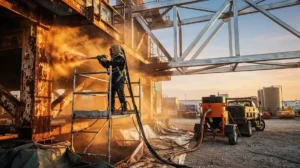
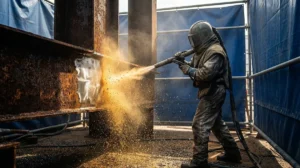
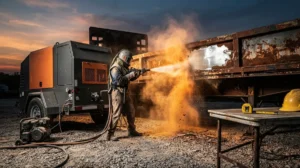
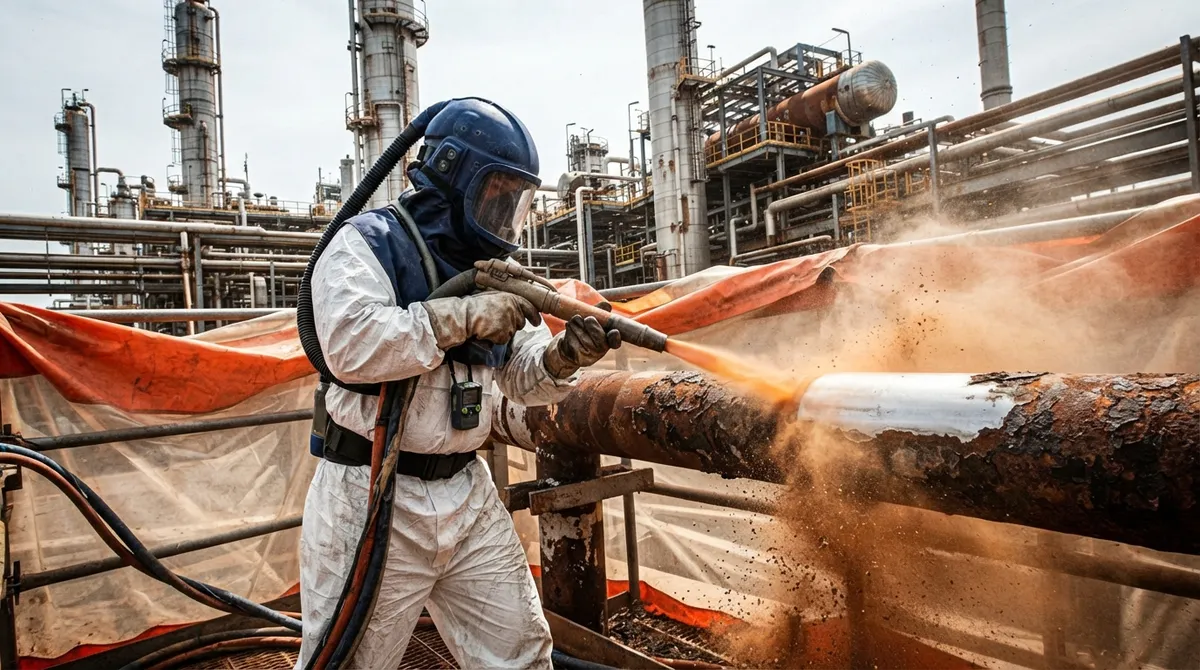
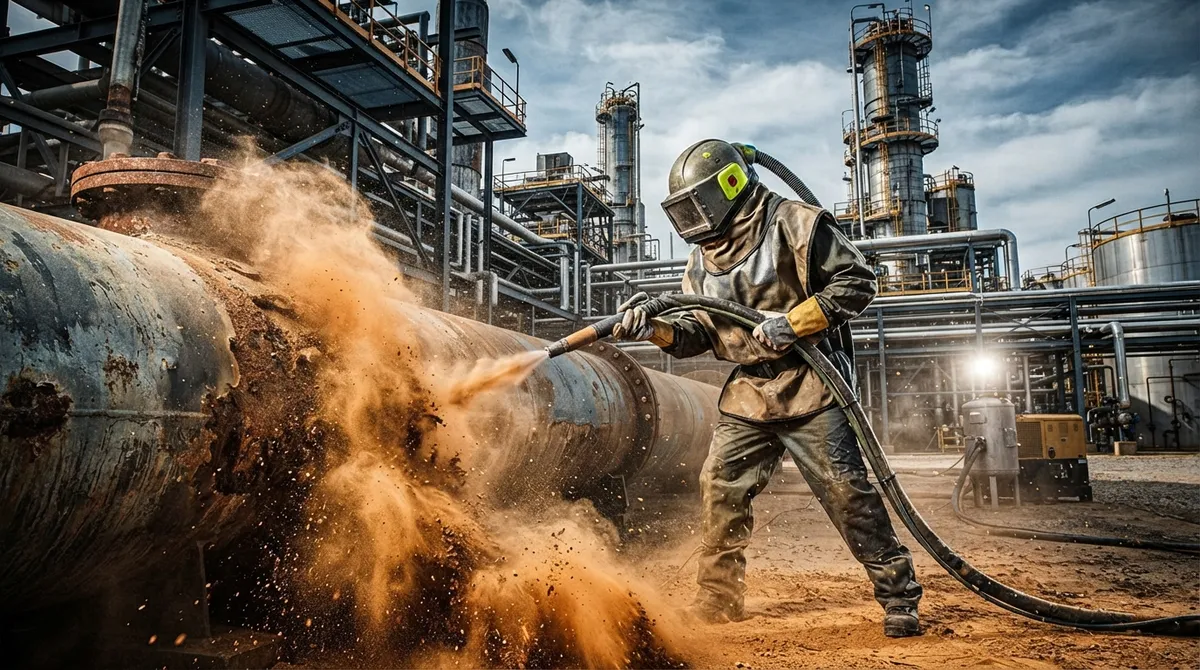
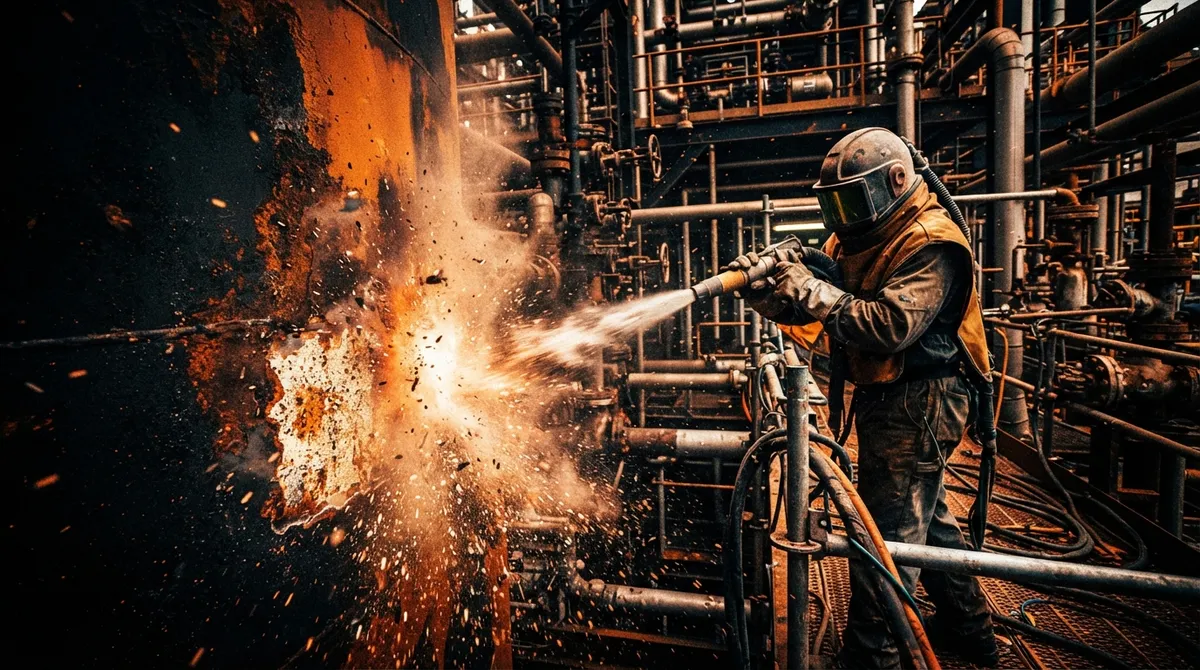
Sandblasting for refineries means using pressurized abrasive media to clean steel surfaces at a refinery site. The goal is to strip rust, mill scale, and failed coatings. Then the steel is ready for a fresh protective coating or lining.
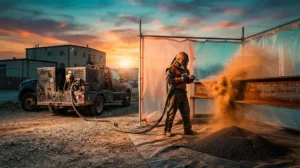
Mobile blasting means the equipment comes to you. Crews work on tanks, piping, structural steel, vessels, and process equipment right where they sit. No big teardown. No long haul to a shop. The exact scope depends on site access, whether a unit is running, containment needs, and the refinery’s permit rules.
Think of it like prepping a wall before painting. You wouldn’t paint over peeling flakes and expect it to last. Steel works the same way, only the stakes are much higher.
Why Does Surface Prep Matter So Much?
A coating is only as good as the surface underneath it. If rust, salts, or old paint are left behind, the new coating can lift and fail early. Hand tools tend to miss rust in seams, welds, and corners. Blasting takes the whole surface back to clean, sound material at once.
Quality prep is more than a visual check. A good plan often looks at:
- Cleanliness grade: how clean the steel must be before coating.
- Surface profile: the tiny peaks and valleys that help the coating grip.
- Dust and debris: leftover particles that can weaken adhesion.
- Soluble salts: invisible contaminants that can cause blistering later.
- Weather and humidity: conditions that affect flash rust and curing.
AMPP, the Association for Materials Protection and Performance, covers these topics in its surface preparation standards program. That includes profile, cleanliness, and testing for nonvisible contaminants like soluble salts.
Which Cleanliness Standard Should a Refinery Pick?
This one is not up to the blasting crew. The asset owner’s coating specification sets the target. The blaster’s job is to hit that target and document it. Here is a quick look at the common AMPP/SSPC grades:
| Standard | Common Name | What It Means in Plain Words |
|---|---|---|
| SSPC-SP 7 | Brush-Off | Loose rust, scale, and paint removed. Tight material may remain. |
| SSPC-SP 14 | Industrial | Most coatings and rust removed. Some tightly bonded residue allowed. |
| SSPC-SP 6 | Commercial | Most visible residue removed. Staining may remain in small amounts. |
| SSPC-SP 10 | Near-White | Nearly all visible residue removed. Very light staining allowed. |
| SSPC-SP 5 | White Metal | All visible residue removed. Cleanest grade of the group. |
No single grade fits every refinery job. A tank bottom in a harsh service may need a cleaner finish than a lightly exposed handrail. Always follow the written spec and the coating maker’s guidance.
What Refinery Assets Can Be Blasted On Site?
Mobile blasting works on many kinds of equipment. The right choice depends on the asset, the coating system, and the operating status of the area. Common targets include:
- Storage tanks, including shells, roofs, and floors
- Process piping and pipe racks
- Pressure vessels and heat exchangers
- Structural steel, platforms, and stairways
- Supports, saddles, and equipment skids
- Weld areas that need prep before repair or coating
If you want to see how this plays out on related work, our post on what pipeline sandblasting really involves is a helpful read. And for big steel frames, take a look at 12 things to know about sandblasting structural steel.
Is It Really Sand? Choosing the Right Media
Here is a fun surprise. “Sandblasting” rarely means plain silica sand these days. Many sites restrict it because of dust hazards. Crews pick the media based on the job, not the nickname.
We match the blast to your surface, not the other way around. Media choice depends on the base metal, the coating spec, the profile you need, contamination risks, waste handling, and site rules. Here is how common options compare:
| Media Type | Best For | Things to Keep in Mind |
|---|---|---|
| Aluminum oxide | Fast cutting, good profile on steel | Reusable in some setups, needs good dust control |
| Steel grit or shot | Heavy rust and mill scale, deep profile | Often used where recycling is possible |
| Glass bead | Light cleaning, smoother finish | Not for heavy rust or deep profile needs |
| Soda | Gentle stripping near delicate parts | Does not create a profile on steel |
| Garnet and slag-type media | General steel prep | Check site rules and waste requirements first |
Want a closer look at how the choices stack up? Our guide to dry blasting vs. soda blasting for metal breaks it down. You can also read about aluminum oxide blasting vs. sand.
How Do Crews Stay Safe at a Refinery?
Refineries are not ordinary job sites. The hazards are real, and good crews take them seriously. Every site has its own rules, so the plan must be site-specific. Here are the kinds of risks that can come up:
- Combustible or toxic atmospheres
- Ignition sources and static concerns
- Confined spaces
- Hazardous legacy coatings, such as old lead-based paint
- Dust and noise
- High-pressure equipment and hoses
- Other workers and equipment nearby
Depending on the task and site, the work may call for permits, isolation or lockout/tagout, gas testing, and a written job safety analysis. OSHA guidance for surface preparation work stresses hazard assessment, proper PPE and respiratory protection, ventilation or dust capture where needed, and regular checks of blasting hoses and connections.
Can blasting happen while a unit is running? Sometimes, but only if the refinery’s operations team approves it and the controls fit the hazards. That call belongs to the site, not the contractor. For a closer look at crew habits, see 5 safe blasting procedures every mobile crew follows.
How Are Dust and Spent Abrasive Controlled?
Containment matters most near operating units, drains, sensitive equipment, and neighboring crews. We contain the mess and protect the surrounding area. The plan should spell out how that happens before anyone mobilizes.
Common tools include:
- Barriers and enclosures to keep dust and media where they belong.
- Drain and equipment protection so debris does not travel.
- Dust capture or vacuum recovery where the job allows it.
- Wet or dustless methods when the spec and surface allow them.
- Proper waste handling for spent abrasive and removed coatings.
Waste rules depend on what was on the steel. Old coatings may contain heavy metals, so testing and the right disposal path matter. Dustless blasting can help in tight, busy areas. If you’re curious how it works, see what makes dustless blasting so effective and our tips on how pros handle dust control safely.
What Should You Agree On Before the Crew Shows Up?
A smooth job starts with a clear plan. Before mobilization, a good contractor and the refinery should agree on the details. Here is a simple checklist:
- Scope and work area: which assets, which sections, and how access works.
- Cleanliness standard: the grade and profile named in the coating spec.
- Media and equipment: what abrasive will be used and why.
- Containment plan: how dust, drains, and nearby equipment stay protected.
- Waste management: testing, storage, and disposal steps.
- Inspection hold points: when the owner’s inspector checks the work.
- Coating schedule: who coats, and how soon after blasting.
That last point is easy to miss. Blasted steel can flash-rust fast, especially in humid weather. It can also pick up fresh contamination if left exposed. Timing should follow the coating manufacturer’s requirements and the site conditions. Our post on 14 surface prep steps before commercial coating goes deeper on this.
How Do You Check the Work Before Coating?
Inspection is where good plans prove themselves. The refinery’s quality plan sets the checks, and they usually happen at set hold points. Typical checks include:
- Visual comparison against the cleanliness standard
- Surface profile measurement
- Dust tests on the blasted surface
- Soluble salt testing where required
- Checks of air and steel temperature, humidity, and dew point
If something fails, it gets fixed before coating starts. That small pause can save a lot of money and rework later. For common pitfalls, see 13 abrasive blasting mistakes that cost you money.
What About Cost and Timing?
There is no one-size price for refinery blasting. Cost and schedule depend on the surface area, rust level, coating type, access, containment, media, and waste handling. Work near operating units can also move more slowly because of permits and coordination.
Planning ahead helps. Refinery turnarounds, which are planned maintenance shutdowns, bring a lot of work into a tight window. One third-party report puts the global refinery turnaround services market at about $6.2 billion in 2025, with growth forecast through 2033. That figure covers turnaround services overall, not blasting alone, so treat it as a sense of scale. Our guide to sandblasting cost facts explains what drives pricing.
How Do You Pick the Right Contractor?
Look for a team that asks questions before it quotes. A good one wants to know your spec, your site rules, and your timeline. Here are a few signs of a strong fit:
- Clear, written estimates and scope
- Proof of insurance
- Comfort with your safety and permit process
- Honest talk about media, containment, and waste
- Willingness to document cleanliness and profile
- A real person you can reach on the phone
We cover this in more depth in how to choose an industrial sandblasting company in 2026. And if you want to understand the bigger picture of on-site prep, read factory sandblasting: on-site prep that saves downtime.
Where Blastworx Fits In
Blastworx is an owner-operated mobile blasting company based in Tampa. We serve Tampa Bay and the central Florida corridor, including Ocala, Orlando, and Fort Myers. For the right job, we will travel anywhere in the state. We’re fully mobile and self-contained, and fully insured. You talk to the people doing the work.
For industrial jobs, we strip rust, old coatings, and buildup from structural steel, tanks, vessels, and equipment, then leave the surface ready to prime and coat. Dustless blasting is available for indoor work and busy areas near other equipment. Because every refinery has its own safety, permit, and spec requirements, we start with a walkthrough and work inside your site’s rules. You can see what our customers are saying on Google: Visit us on Google — see what our customers are saying about us.
Curious how we handle the process from start to finish? Our four steps are simple: walkthrough, free estimate, blast and strip, then ready to finish. To learn more about our approach, check out surface preparation blasting: a mobile guide for 2026.
Key Takeaways
- Sandblasting for refineries is really abrasive blasting, and the media is chosen to fit the job.
- The coating spec sets the cleanliness grade and profile, not the contractor.
- Safety, permits, and containment come first at any refinery site.
- Inspection and coating timing protect your investment.
- A clear plan before mobilization prevents costly surprises.
Ready to Plan Your Refinery Blasting Project?
Good prep makes coatings last, and a clear plan makes the whole job easier. If you have steel that needs attention, we’d love to help you map it out. Get a free estimate and we’ll get you a clear, written price. Prefer to talk it through? Just give us a call. You can also text. We come to you.
FAQs
Q: What is sandblasting for refineries?
A: It’s the use of pressurized abrasive media to clean rust, mill scale, and old coatings off refinery steel before recoating. Mobile crews bring the gear to tanks, piping, vessels, and structural steel, so big pieces don’t have to leave the site.
Q: Does refinery sandblasting always use sand?
A: Not at all! “Sandblasting” is a nickname, and the media is picked to fit the surface, coating spec, and site rules. Options include aluminum oxide, steel grit, glass bead, and soda, depending on the job.
Q: Which cleanliness standard should a refinery choose?
A: That depends on the coating specification from the asset owner. Common choices are SSPC-SP 5, SP 6, SP 10, and SP 14, and one grade doesn’t fit every job, so always follow the written spec and the coating maker’s guidance.
Q: Can blasting happen while a refinery unit is operating?
A: Sometimes, but only when the refinery’s operations team approves it and the hazards are controlled. Permits, gas testing, isolation, and a job safety analysis may be required depending on the site and task.
Q: How is dust controlled during refinery blasting?
A: Crews use barriers, enclosures, drain protection, and dust capture or dustless methods where the spec allows. Spent abrasive and removed coatings are handled and disposed of based on testing and site waste rules.