Key Takeaways
-
Mobile blasting brings the crew and a self-contained rig to your plant, so equipment doesn't need rigging, trucking, or shop downtime.
-
Avoid crystalline silica sand: OSHA flags respirable silica as a serious hazard, so choose non-silica media like soda, aluminum oxide, or glass bead based on the surface and finish needed.
-
OSHA's silica standard sets a permissible exposure limit of 50 μg/m³ and an action level of 25 μg/m³ as 8-hour time-weighted averages; engineering controls should come before respirators.
-
Identify existing coatings early, since old paint may contain lead, which changes the safety, containment, and waste-handling plan.
-
Schedule after-hours or weekend work, isolate and lock out nearby equipment, and mark restricted zones to limit production disruption.
-
Coordinate the coating crew in advance, because blasted steel can flash rust quickly in humid conditions like Florida's, so timing matters.
Running a factory means one thing above all: keep the line moving. So when rusty steel, flaking paint, or old coatings need attention, the last thing you want is to haul heavy equipment off-site or shut everything down for weeks. That is where sandblasting for factories comes in, and where mobile blasting makes the whole job a lot easier.
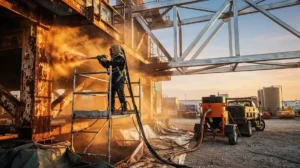
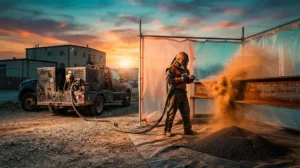
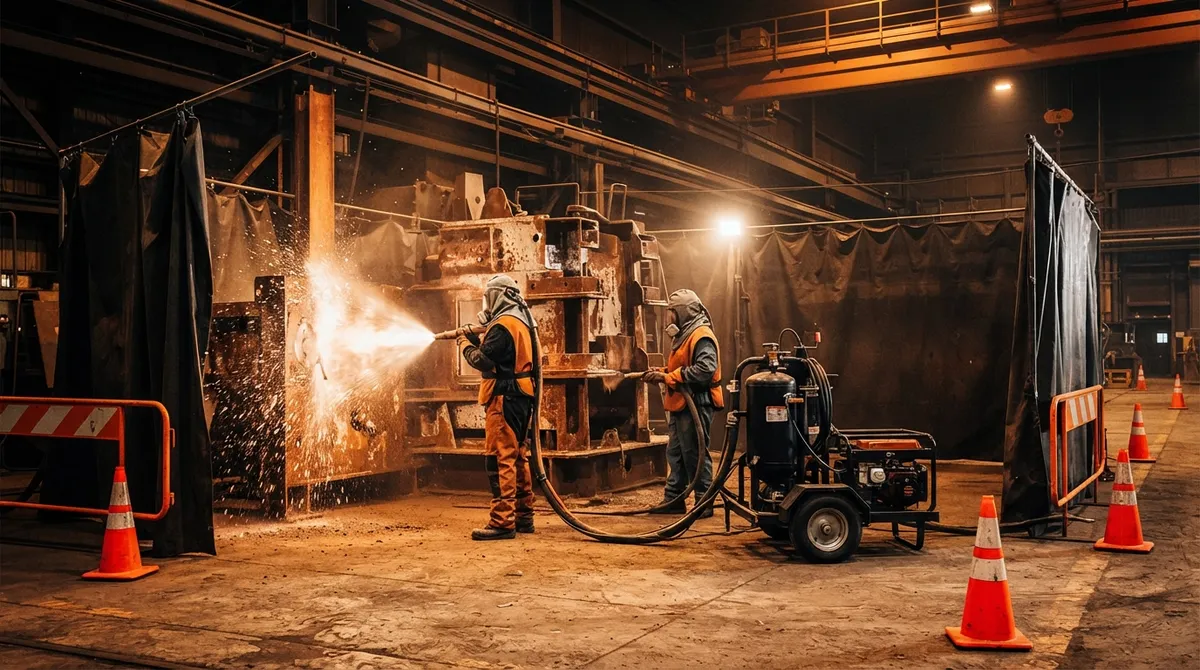
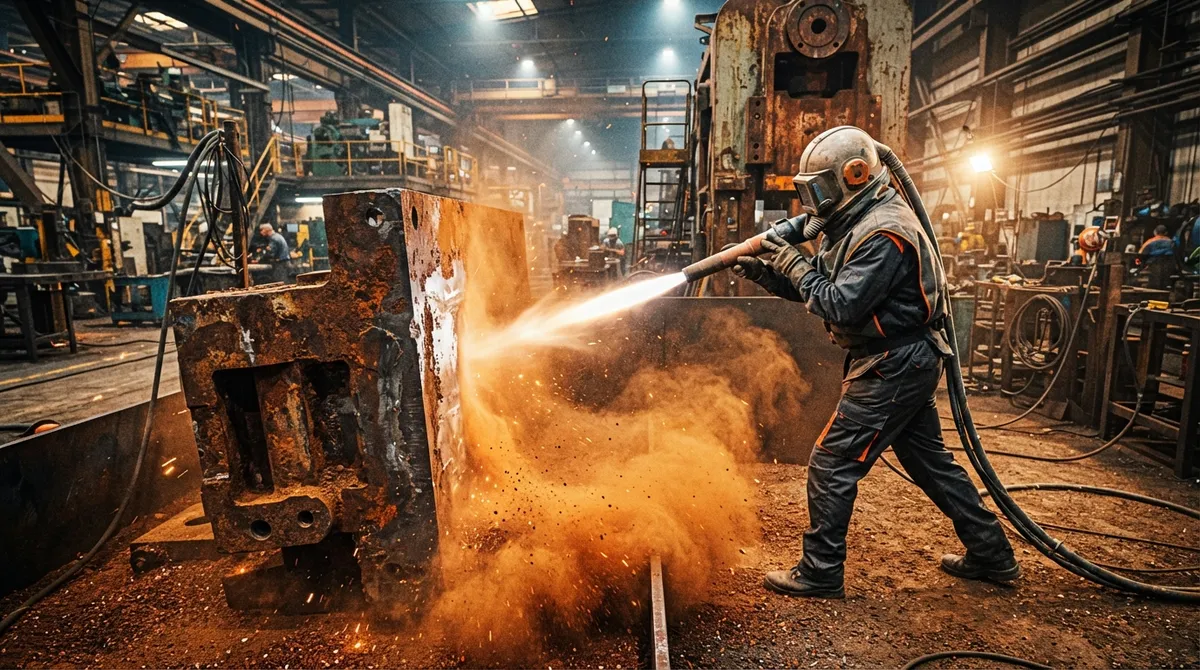
Mobile blasting means the crew and the rig come to your plant. We strip rust, old paint, and buildup right where the work sits, then leave the surface clean and ready for the next step. No crane. No flatbed. No weeks of waiting on a shop.
In this guide, we will walk through what factory blasting really covers, how to pick the right media, how dust and safety are handled, and how to get your site ready. We will keep it simple and friendly, because a good plan starts with clear answers. Let’s dig in.
What Is Sandblasting for Factories?
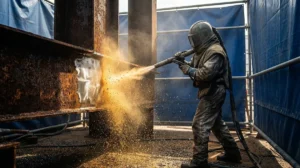
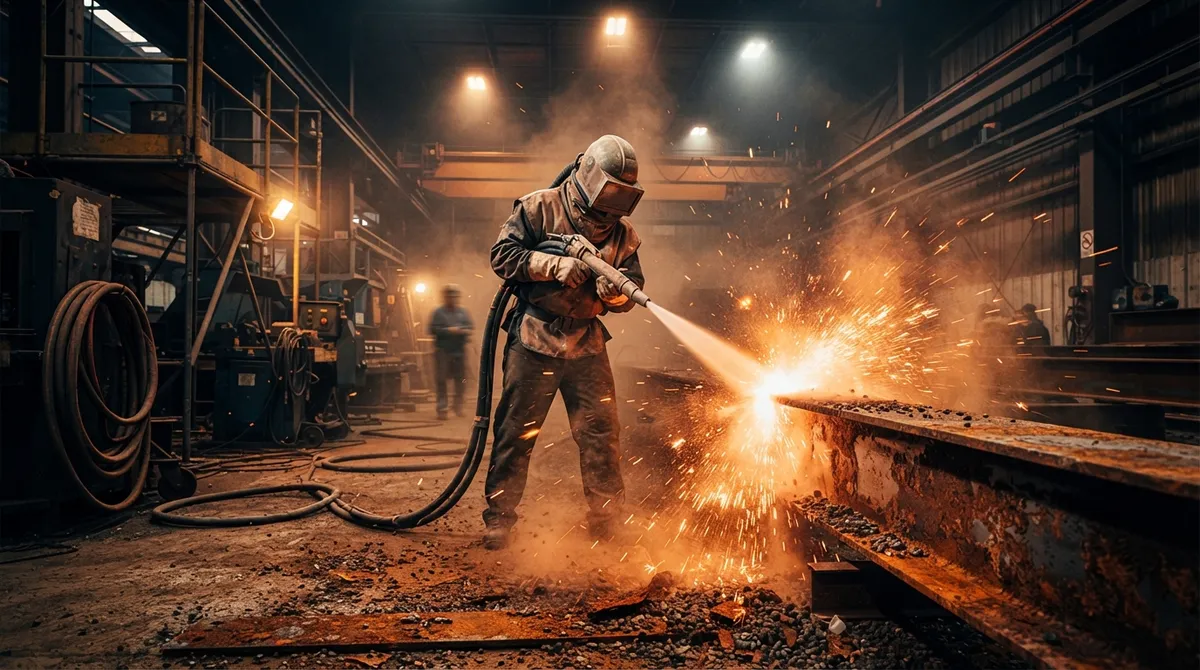
Sandblasting for factories is on-site surface preparation. A trained crew uses abrasive media and compressed air to remove rust, mill scale, old coatings, and contaminants from industrial surfaces. The goal is a clean, sound surface that a new coating can bond to.
The word “sandblasting” is used loosely. If you want the technical background, here is a quick look at what is sandblasting and how the process developed. Today, the job is more often done with safer, non-silica media, which we will cover below.
The mobile part matters most for factories. Many industrial assets are fixed in place or simply too big and costly to move. A mobile rig brings the work to the asset. If you want a deeper look at this approach, our post on factory sandblasting and on-site prep that saves downtime covers the basics.
What Can Be Blasted On Site in a Factory?
A lot more than most plant managers expect. Here are the common targets:
- Structural steel: beams, columns, platforms, catwalks, and supports
- Tanks and vessels: exterior surfaces, and interiors when the job is properly planned
- Machinery and equipment: frames, guards, housings, and heavy fixed equipment
- Concrete floors and pads: coating removal and surface prep
- Weld areas: prep before welding or after fabrication
- Pipes and racks: rust and coating removal in place
- Loading docks and exterior surfaces: graffiti, paint, and buildup
Not every surface is a good fit for blasting. Thin sheet metal, delicate components, and certain substrates need softer media or a different method. That is why a walkthrough comes first. We match the blast to your surface, not the other way around.
For a closer look at one common use, see how sandblasting structural steel works in practice.
Why Mobile Beats Moving Equipment to a Shop
Think about what it takes to move a large piece of equipment. You need rigging, trucking, downtime, and a place to store it. Then you need to bring it back and reinstall it. Every step adds cost and risk.
Mobile blasting skips all of that. Here is what changes when the rig comes to you:
- Less downtime. Equipment stays where it is, and the work happens around your schedule.
- Lower handling risk. Nothing gets dropped, bent, or damaged in transit.
- Flexible scheduling. After-hours and weekend work can help keep production running.
- Self-contained setup. Our rig is fully mobile and self-contained, so we do not rely on your power or water.
- One crew from start to finish. You talk to the people doing the work.
Want the full comparison? Our guide on mobile rig vs. local shop breaks it down.
Choosing the Right Blasting Media
Media choice is one of the biggest decisions in any factory project. The wrong media can leave the wrong finish, damage the substrate, or create extra dust and waste. The right media gives you a clean, even surface with the right profile for your coating.
A key point on safety: crystalline silica sand creates serious breathing hazards. OSHA identifies abrasive blasting with sand as a source of respirable silica. Because of that, many jobs use non-silica media that fit the surface and the finish needed.
| Media Type | Best For | Things to Keep in Mind |
|---|---|---|
| Soda | Gentle cleaning, delicate or heat-sensitive surfaces, light coating removal | Softer action; not the choice for heavy rust or mill scale |
| Walnut shell | Soft stripping on sensitive substrates | Milder cut; slower on thick coatings |
| Aluminum oxide | Heavy rust, scale, and tough coatings on steel | Aggressive; leaves a defined surface profile |
| Glass bead | Clean, smooth finishes and light cleaning | Does not remove heavy rust well |
| Dustless (wet) blasting | Indoor work, active sites, areas near other equipment | Water is part of the process, so plan for slurry cleanup |
Want help comparing options? Read dry blasting vs. soda blasting for metal and aluminum oxide blasting vs. sand. We use the right media for the job, every time.
Dust, Safety, and Protecting Your People
Blasting creates dust and noise. In a working factory, that is a real concern, and a good contractor plans for it before the first nozzle is opened.
Dust can come from the abrasive itself, from the old coating, and from the substrate underneath. Old paint may contain lead or other metals. That is why identifying existing coatings and reviewing safety data sheets is a smart early step.
What OSHA Says About Silica
OSHA’s general-industry standard for respirable crystalline silica (29 CFR 1910.1053) sets two key numbers:
- Permissible exposure limit: 50 μg/m³ as an 8-hour time-weighted average
- Action level: 25 μg/m³ as an 8-hour time-weighted average
Where the standard applies, employers must assess exposure, follow a written exposure control plan, and train workers. Abrasive-blasting ventilation rules and respiratory protection requirements may apply too. Exact obligations depend on the work, the materials, and the site, so always confirm with your safety team.
Engineering Controls Come First
OSHA’s preferred approach is to use feasible engineering and work-practice controls before relying on respirators. On a mobile job, that can include:
- Temporary enclosures and containment
- Ventilation and dust capture
- Dust suppression, including wet or dustless methods
- Barricades and restricted access zones
- Proper PPE and approved respiratory protection for the crew
We contain the mess and protect the surrounding area. For a deeper look, see how pros handle sandblasting dust control safely and the 5 safe blasting procedures every mobile crew follows. We are also fully insured, which gives you extra peace of mind.
How to Prepare Your Factory for On-Site Blasting
A little prep goes a long way. Use this simple checklist to get your site ready:
- Share the details. Send photos, sizes, and locations of the surfaces. Mention anything unusual, such as tight access or nearby sensitive equipment.
- Identify the coatings. If you know or suspect lead paint or other hazardous coatings, say so up front. It changes the plan.
- Plan around production. Pick low-activity windows where possible. After-hours or weekend work can reduce disruption.
- Isolate equipment. Lock out and tag out machinery as your safety rules require. Cover or move products and items that should not get dusty.
- Set up access and zones. Mark restricted areas, keep walkways clear, and let staff know when blasting starts.
- Check fire and ignition risks. Flag any flammable materials or hot-work areas nearby.
- Plan for the finish. Know who will coat the surface and how fast they need it. Blasted steel can flash rust quickly in Florida’s humidity, so timing matters.
For more on this, our list of 9 steps to prepare for sandblasting the right way is a handy companion.
Cleanup, Waste, and Final Inspection
The job is not done when the blasting stops. Spent media, removed coatings, and debris all need to be collected and handled properly. If old coatings contain hazardous materials, waste handling rules can be stricter, and the plan should cover that before work begins.
After cleanup, the surface should be inspected. Check that the cleanliness and finish match what your coating system requires. A good coating depends on good prep, and the right surface finish is a big part of that. The result: back to clean, bare metal, ready to prime and coat.
If you want to see how this ties into the next stage, read 14 surface prep steps before commercial coating.
How Our Process Works
At Blastworx, we keep it simple. Here is how a factory job usually goes:
- Walkthrough. Send photos or we come look, and we pick the right media for the surface.
- Free estimate. You get a clear, written estimate the same day. The price we give is the price you pay.
- Blast and strip. We protect the surrounding area, then blast the surface clean at your location.
- Ready to finish. The surface comes out clean and ready for the next step.
Our industrial blasting service covers structural steel, tanks, heavy equipment, weld prep, rust removal, and coating removal. Paint and protective coating may be available when needed. You can also learn more in our guide on how to choose an industrial sandblasting company.
Where We Work
We are based in Tampa and serve the Tampa Bay and central Florida corridor, including Orlando, Ocala, Sarasota, Clearwater, and Fort Myers. For the right job, we will travel anywhere in the state. Our service areas page has more detail. If you would like to see what others say about us, visit us on Google — see what our customers are saying about us.
Need help spreading the word about your own plant or business online? The team at Brain Buzz Marketing can help with that side of things.
Wrapping Up
Sandblasting for factories does not have to mean long shutdowns or complicated logistics. With a fully mobile, self-contained rig, the work comes to your equipment, and your production keeps rolling. The keys are simple: pick the right media, plan for dust and safety, coordinate with your schedule, and make sure the surface is ready for what comes next.
A coating is only as good as the surface underneath it. Good prep helps your next coat bond properly and hold up in Florida’s heat, humidity, and salt air.
Ready to talk through your project? Get a free estimate today, or give us a call at 813-380-8092. You will talk to the people doing the work.
FAQs
Q: What is mobile sandblasting for factories?
A: It is on-site surface prep where a crew and a self-contained rig come to your plant. We strip rust, old paint, and coatings from steel, tanks, equipment, and floors right where they sit. That way, nothing has to be moved or shipped to a shop.
Q: Is silica sand safe to use for industrial blasting?
A: Not really. Crystalline silica sand creates respirable dust that OSHA flags as a serious inhalation hazard. Many jobs use safer non-silica media like soda, aluminum oxide, or glass bead, chosen to fit the surface and the finish you need.
Q: How do you control dust and protect factory workers?
A: We start with engineering and work-practice controls like containment, barricades, ventilation, and dust suppression, including dustless blasting when it fits. Our crew also uses proper PPE and respiratory protection, and we protect the surrounding area so your team stays safe.
Q: Can my factory keep running during on-site blasting?
A: Often, yes, but it depends on the job. We can work after hours or on weekends, set up containment, and use dustless methods near active equipment. A quick walkthrough helps us plan around your production schedule.
Q: How should a factory prepare for blasting day?
A: Share photos and details of the surfaces, flag any suspected lead or hazardous coatings, and lock out nearby equipment per your safety rules. Clear access, mark restricted zones, and line up who will coat the surface so it gets finished before flash rust sets in.