Key Takeaways
-
Blasting suits solid decks with thick, peeling coatings, but soft, rotted, or loose boards need repair or replacement before any surface treatment.
-
Never accept silica sand for deck blasting; NIOSH has advised against it since 1974 due to silicosis risk, and safer media like soda or walnut shell are preferred.
-
Wood can erode faster than the coating if pressure is too high, media is too aggressive, or the nozzle stays in one spot, so a test patch on a hidden area is essential.
-
Soda blasting leaves an alkaline residue that must be rinsed or neutralized before refinishing, and the wood must be clean and sufficiently dry before stain goes on.
-
Containment matters: blasting creates substantial dust and waste, so protect plants, windows, and pools, and collect spent media and debris for proper disposal.
-
Ask any contractor about inspection for rot, media choice, test patching, dust containment, and insurance before hiring; avoid blasting composite or vinyl decking without a hands-on evaluation.
Your deck should be the spot where you sip coffee on a Saturday morning, not the thing you dread looking at. But years of Florida sun, storms, and humidity can leave it peeling, stained, and tired. If you have ever stared at flaking paint or gray, worn-out stain and wondered about sandblasting deck refinishing, you are in the right place.
Here is the honest answer: it can work well on some decks, and it is the wrong tool for others. Blasting can strip old coatings quickly. It can also fuzz the grain, round the edges, and dig into soft wood if it is done poorly. The trick is matching the method to your deck, not the other way around.
In this guide, we will walk through when blasting makes sense, which media is safe for wood, what the process looks like, and what to expect for cost and finishing. By the end, you will know exactly what to ask before anyone fires up a blast pot on your property.
What Does Sandblasting Deck Refinishing Actually Mean?
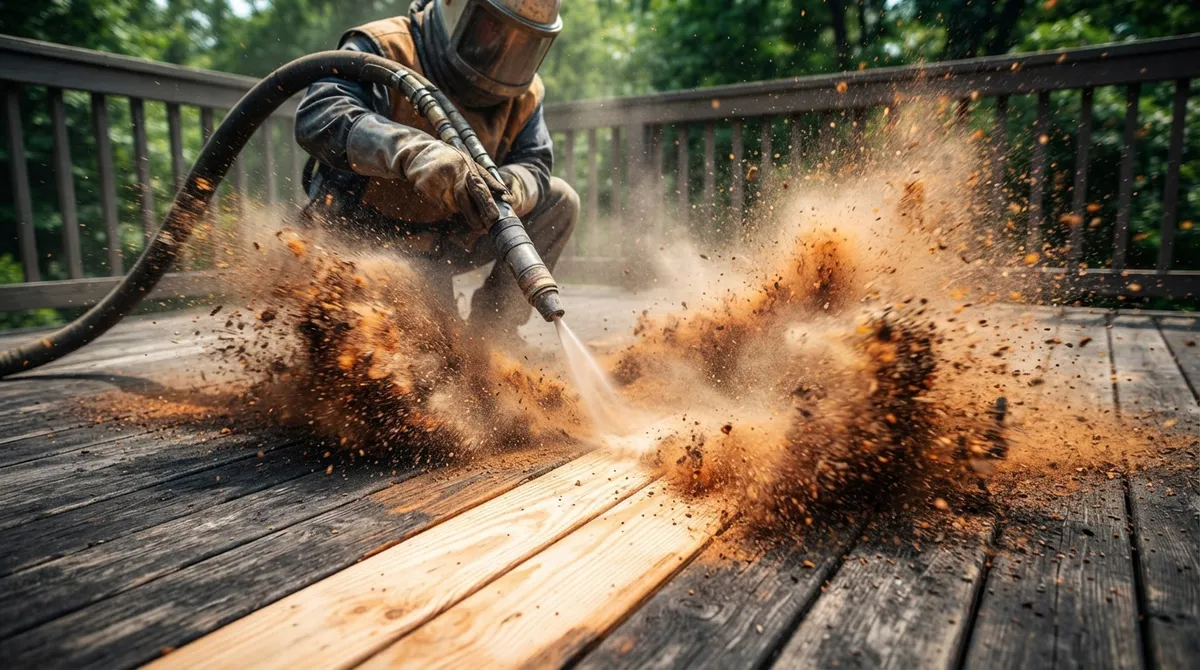
When most folks say “sandblasting,” they mean abrasive or media blasting, done right at your home. It does not mean the old-school method of firing silica sand at a surface. In fact, what is sandblasting has changed a lot over the years. Today, pros pick from many types of media, and many of them are far gentler than traditional sand.
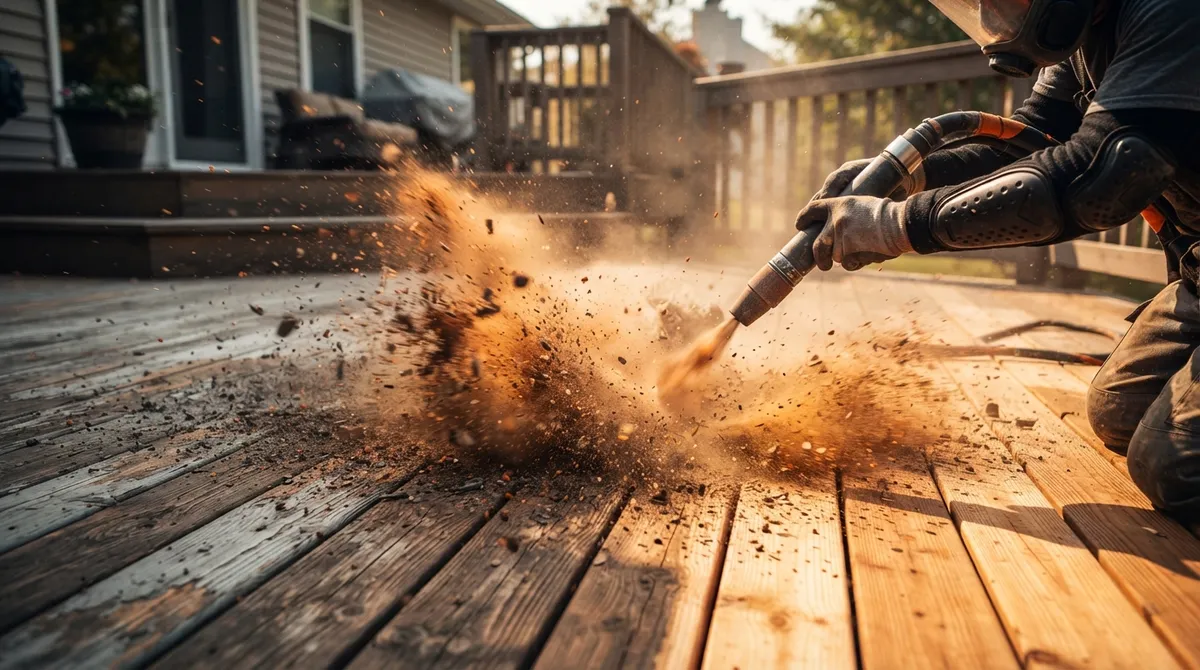
Sandblasting deck refinishing is simply the process of using blasting to remove old paint, stain, or sealer from a deck. The goal is a clean, sound surface that is ready to refinish. Blasting does the stripping. A new stain or coating goes on afterward, once the wood is clean and dry.
A Quick Word on Silica Sand
Silica sand is a real health hazard. NIOSH has recommended since 1974 that silica sand, or any blasting material with more than 1% crystalline silica, not be used as an abrasive because of the risk of silicosis. A good contractor will never use it. If someone offers to blast your deck with silica sand, politely say no thank you.
Is Blasting a Good Fit for Your Deck?
Blasting is not automatically the best choice for every deck. It works best when the wood is solid and the coating is the main problem. It is a poor choice when the boards are soft, rotted, or paper-thin.
Here is a quick look at how common situations stack up.
| Deck Situation | Is Blasting a Good Fit? | Why |
|---|---|---|
| Thick, peeling paint on solid boards | Often yes | Blasting removes stubborn coatings fast, especially in grooves and corners |
| Multiple layers of old stain | Often yes | Controlled media can lift layers without heavy sanding |
| Soft, weathered wood | Use caution | Aggressive media can erode the surface and raise the grain |
| Rotted or loose boards | No | These need repair or replacement first |
| Light gray, weathered wood with no coating | Maybe not | Washing or light sanding may be gentler and cheaper |
If you want to dig deeper, our guide on sandblasting a wood deck without damaging it covers the risks in more detail. And if you are weighing options for paint specifically, see the best way to remove paint from a wood deck.
Why Do Some Decks Get Damaged During Blasting?
Wood is softer than metal or concrete. That means it can wear away faster than the old coating on top of it if the setup is wrong. Most damage comes from a few common mistakes.
- Media that is too aggressive. Hard, sharp abrasives can cut into soft wood.
- Pressure that is too high. More pressure is not better on a deck.
- Poor technique. Holding the nozzle in one spot digs grooves into the boards.
- No test area. Skipping a small trial means you find the problem too late.
Blasting can also expose fasteners, round off board edges, and leave the grain fuzzy. None of that is a deal breaker if you know it going in. A skilled operator keeps the nozzle moving, starts gentle, and stops the moment the wood begins to erode. For a deeper look, check out these 12 facts on whether sandblasting damages wood.
Which Blasting Media Is Right for a Wood Deck?
There is no one perfect abrasive. We match the blast to your surface, not the other way around. Every media has trade-offs, and the right media for the job depends on your deck.
| Media Type | Strength | Best For | Things to Know |
|---|---|---|---|
| Soda (sodium bicarbonate) | Gentle | Delicate wood, trim, and softer boards | Leaves an alkaline residue that must be rinsed or neutralized before refinishing |
| Walnut shell | Gentle to moderate | Lifting coatings from wood without heavy cutting | Still needs a conservative approach on soft wood |
| Fine, softer abrasives | Moderate | Stubborn coatings on harder, solid wood | Needs a test patch and careful technique |
| Aggressive abrasives | Strong | Not recommended for most wood decks | Can gouge boards and expose fasteners |
Even soft media can harm wood if it is used too aggressively. Your contractor should explain what media they picked, why they picked it, and what cleanup is needed afterward. If you are curious how the options compare, our post on choosing between soda blasting and sandblasting breaks it down nicely.
What Does the Process Look Like Step by Step?
Here is how a careful sandblasting deck refinishing job usually goes. Our process is simple, and you talk to the people doing the work the whole way through.
- Walkthrough. Send us photos or we come look. We check for rot, loose boards, water damage, and thin spots. Deck boards that are badly deteriorated need repair or replacement, not surface treatment.
- Free estimate. You get a clear, written estimate the same day. The price we give is the price you pay.
- Test patch. We try the chosen media on a small, hidden area first. This shows us how your wood reacts.
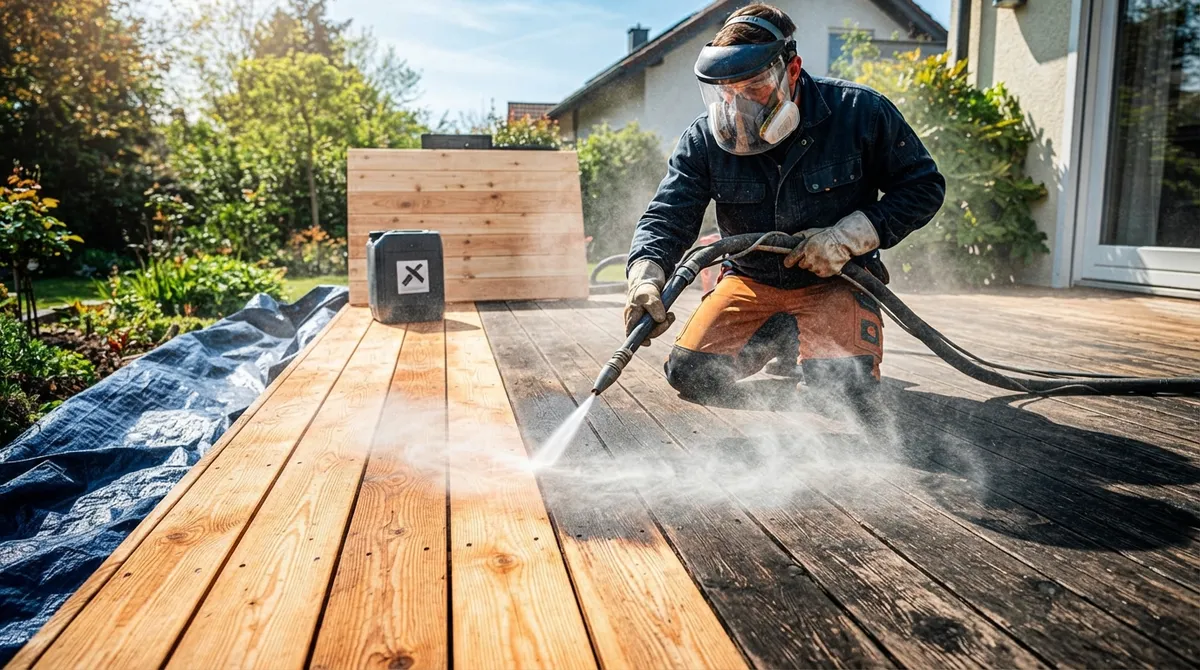
- Protect and contain. We protect the surrounding area, including landscaping, windows, and nearby surfaces. We contain the mess and collect spent media.
- Blast and strip. We start conservatively, keep the nozzle moving, and adjust as we go.
- Clean up. We remove dust and residue so the deck is ready to refinish.
We come to you. Our rig is fully mobile and self-contained, so we do not need your power or water. That makes it easy to work at a home in Tampa, Brandon, or anywhere across the central Florida corridor.
How Do Pros Handle Dust, Debris, and Waste?
Blasting makes dust, spent media, and noise. If an old coating contains lead or other hazardous material, the debris can be hazardous too. That is why containment matters so much.
Illinois EPA guidance notes that dry abrasive blasting produces substantial dust and is difficult to contain. It recommends considering alternatives where feasible and collecting waste streams, including abrasive, dust, and liquid waste, as applicable.
Here is what good containment looks like on a residential deck:
- Tarps and barriers to protect plants, pools, and windows
- Collection and proper disposal of spent media and coating debris
- Wet or low-dust methods when they suit the job
- Liquid containment, since wet methods create runoff that also needs handling
Learn more about how crews keep things tidy in our guide to handling sandblasting dust control safely. You can also read about what makes dustless blasting so effective if you want to keep the mess down.
How Much Does Deck Refinishing Cost?
Prices vary by location, deck size, condition, and scope. For a general benchmark, a 2025 Angi estimate puts professional refinishing at about $3 to $7 per square foot. That works out to an average near $980 for a 200-square-foot deck. Labor alone for that size runs roughly $600 to $1,400.
Keep in mind that repairs can add a lot to the total. Replacing rotted boards or fixing loose railings is separate from stripping and finishing.
Here is how to think about the pieces of a typical project:
- Stripping the old coating. This is the part blasting handles.
- Repairs. Rotted or loose boards need fixing before anything else.
- Refinishing. Stain or sealer is applied by you, a painter, or a refinishing crew.
One thing to know about our service: we strip and prep only. We do not apply stains or coatings. Refinishing is handled by the homeowner or a painter. That keeps us focused on what we do best. Want a deeper look at pricing? Read how much sandblasting estimates really cost.
What Happens After Blasting?
Blasting is only half the job. What goes on next decides how long your deck looks great. A coating is only as good as the surface underneath it, and a clean, bare surface helps new stain bond properly in Florida’s heat, humidity, and salt air.
Follow these steps after the blast:
- Inspect the deck. Look for missed spots, raised grain, and exposed fasteners.
- Remove residue and dust. Soda residue in particular must be cleaned off before you refinish.
- Let the wood dry. Stain or sealer should only go on a clean, sufficiently dry surface.
- Follow the finish label. Check the manufacturer’s prep and application directions for dry times and conditions.
If the grain feels fuzzy, a light sanding can smooth it before staining. Our 7 wood surface preparation tips before you refinish walks through this in plain language.
Are There Other Ways to Prep a Deck?
Yes. Blasting is not always the answer, and a good contractor will tell you so. Depending on your coating, your wood, and your site, another method might be more controllable.
- Scraping: Good for small areas of loose, peeling paint.
- Sanding: Gives you control on solid wood and smooth boards.
- Washing: Works well for dirt, mildew, and light weathering.
- Chemical stripping: Can lift thick coatings, though it brings its own cleanup and safety needs.
The best choice depends on the coating, the condition of the wood, site limits, and environmental risks. If you are comparing options, see how sandblasting stacks up against hand prep. We would rather tell you the truth than sell you the wrong service.
What About Composite or Vinyl Decking?
This one comes up a lot. Composite decking is a different story from natural wood, and a hands-on evaluation matters before anyone blasts it. Many composite and vinyl products are delicate and can scar or melt under the wrong approach. We do not blast vinyl because it is too delicate. If you have composite boards, send us photos first so we can tell you what makes sense for your product.
How Do You Choose the Right Contractor?
Not all blasting crews are equal, and wood is not forgiving. Before you hire anyone, ask a few simple questions.
- Will you inspect the deck for rot and weak boards first?
- What media will you use, and why?
- Will you test a small, hidden area before starting?
- How will you contain dust and collect waste?
- Are you fully insured?
You can also use our 5 questions to ask before you sandblast or paint strip as a handy checklist. Blastworx is an owner-operated, fully insured mobile blasting company serving Tampa Bay and the central Florida corridor. You can see our residential blasting services and browse our project gallery to see real work. Not sure if we cover your town? Check our service areas.
Want to hear from real customers? Visit us on Google — see what our customers are saying about us.
Ready to Bring Your Deck Back to Life?
Sandblasting deck refinishing can be a great way to strip old paint and stain, but only when it is done with the right media, the right pressure, and a careful hand. The best results come from a real inspection, a test patch, and a plan that fits your wood. Done right, you get a clean surface that is ready to refinish and ready to last.
If you are in Tampa Bay or anywhere across central Florida and want a straight answer about your deck, we would love to help. Reach out to get a free estimate, or give us a call at 813-380-8092. You can also text. You will talk to the people doing the work.
FAQs
Q: Can you sandblast a wood deck without damaging it?
A: Yes, but it takes the right media, low pressure, and a steady hand. A good pro tests a small hidden area first and stops if the wood starts to erode. Soft or rotted boards usually need repair rather than blasting.
Q: Is silica sand safe to use for deck blasting?
A: No, it is not. NIOSH has recommended against using silica sand, or any blasting material with more than 1% crystalline silica, since 1974 because of the risk of silicosis. A trustworthy contractor will use safer media chosen for your deck.
Q: How long after blasting should I wait before staining my deck?
A: The deck needs to be clean and sufficiently dry before any stain or sealer goes on. Dry time depends on weather, the media used, and the finish you pick, so follow the manufacturer’s label. If soda was used, rinse off any residue first.
Q: How much does professional deck refinishing cost?
A: A 2025 Angi estimate puts refinishing at about $3 to $7 per square foot, or roughly $980 for an average 200-square-foot deck. Repairs and your location can change that number. We provide a clear, written estimate for the blasting and prep portion of your project.
Q: Can composite decking be sandblasted?
A: It depends on the product, and many composite boards are delicate and can scar easily. Send us photos and we will tell you honestly whether blasting makes sense. We do not blast vinyl because it is too delicate.