
Key Takeaways
-
Mobile blasting with soft media like sodium bicarbonate removes multiple paint layers in one pass while reaching grooves and corners that hand-scraping misses, significantly reducing labor time.
-
Use 25-55 psi pressure range for wood decks (starting around 40 psi), which is much gentler than the 55-90 psi used for harder surfaces, to avoid permanent grain damage and gouges.
-
Always test on an inconspicuous area first, hold the nozzle at 45 degrees, keep it moving steadily, and avoid lingering on edges, fasteners, or end grain to prevent damage.
-
If your deck was built before 1978, test for lead paint first and ensure proper containment and HEPA dust collection during blasting, as local regulations may have strict exposure limits.
-
Allow the deck to dry completely for several days after blasting before sanding, brightening, priming, or staining, as rushing this step traps moisture and causes peeling.
-
Inspect and replace rotted or structurally damaged boards before blasting begins, as the cleaning process cannot substitute for necessary structural repairs.
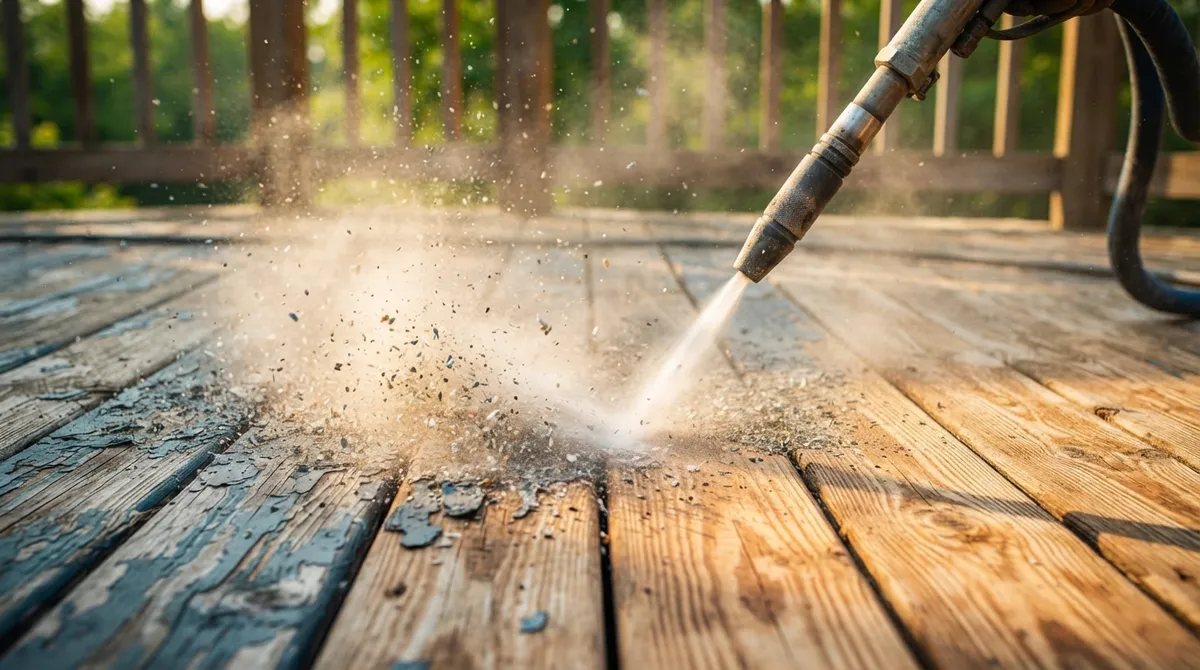
If your wood deck looks tired, peeling, and worn out, you’re not alone. Tampa’s sun, rain, and humidity are tough on outdoor wood. Old paint bubbles up, flakes off, and makes your whole backyard look neglected. The good news? There’s a faster, gentler way to fix it than spending your whole weekend on your knees with a scraper.
Mobile blasting has become one of the most reliable answers to this problem. It strips old paint, stain, and grime from wood decking without the backbreaking labor of sanding by hand. But wood is a soft, living material, so the process has to be done carefully. This guide walks you through exactly how it works, what pressure and media to use, and how to protect your deck boards from damage along the way.
Why Mobile Blasting Works So Well on Painted Decks
Scraping and sanding a deck by hand takes forever, and it rarely gets into every crack and groove. Chemical strippers can work, but they’re messy, smelly, and often need multiple applications. Mobile blasting skips both of those headaches.
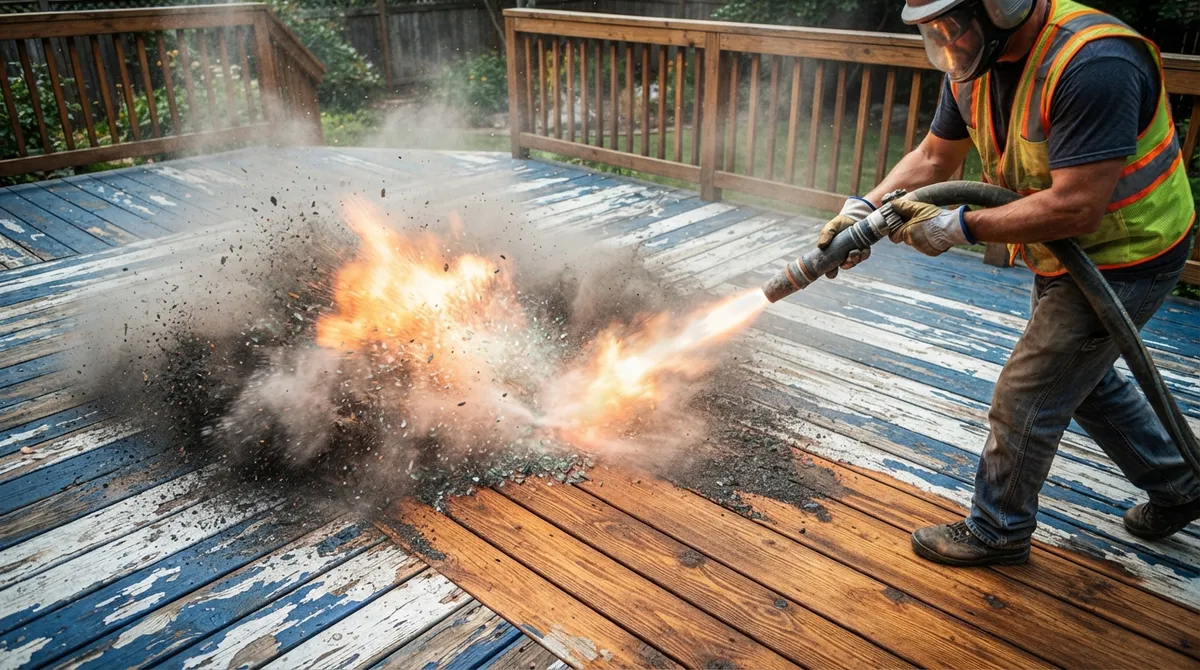
A trained operator can strip failing paint and old coatings from a deck much faster than manual methods, while still protecting the wood underneath. The key is control. It’s not about blasting as hard as possible. It’s about matching the pressure, media, and technique to your specific deck.
- Removes multiple layers of old paint or stain in one pass
- Reaches into grooves, corners, and between boards
- Cuts labor time significantly compared to hand-scraping
- Leaves a clean surface ready for repairs or refinishing
- Reduces the need for harsh chemical paint strippers

Choosing the Right Media for Wood Decking
Not all blasting media are created equal, and wood needs a gentler touch than metal or concrete. This is where soda blasting often comes into play. Sodium bicarbonate is much less aggressive than sand or mineral abrasives, which lowers the risk of gouging your boards.
Other soft media, like fine crushed glass, can also work on tougher, thicker coatings, but these need careful testing first. Every deck is different. Wood species, age, moisture level, and how many coats of paint are on there all affect which media makes sense.
| Media Type | Best For | Aggressiveness |
|---|---|---|
| Soda (sodium bicarbonate) | Most painted wood decks, softwoods | Low |
| Crushed glass (fine grade) | Thicker or stubborn old coatings | Low to moderate |
| Walnut shell | Delicate wood, light coatings | Low |
| Sand or mineral abrasives | Rarely used on wood, high risk of damage | High |
At Blastworx, we always say we match the blast to your surface, not the other way around. That’s especially true for wood decks, where the wrong media can turn a simple paint job into a costly repair.
Getting the Pressure Right
This is where a lot of DIY attempts go wrong. Wood is a soft substrate. Too much pressure, holding the nozzle too close, or lingering in one spot can tear up the grain and leave permanent scars.
General guidance from equipment manufacturers places wood and other soft-material restoration work in roughly the 25 to 55 psi range. Some soda-blasting field guidance suggests starting around 40 psi and increasing in small 10-psi increments only if needed. These numbers are starting points, not hard rules. The right setting depends on your equipment, nozzle size, media, and the condition of the wood itself.
Compare that to harder-surface cleaning jobs, which sometimes use 55 to 90 psi. That gap illustrates just how much gentler wood-deck work needs to be. If you’re curious how this compares to other materials, our article on whether sandblasting damages wood covers the science in more depth.
Steps for a Controlled Blasting Process
- Test an inconspicuous section of the deck first, using low pressure
- Hold the nozzle at roughly a 45-degree angle instead of straight down
- Keep the nozzle moving in a steady, sweeping motion
- Increase pressure gradually only if the paint isn’t lifting
- Avoid lingering on edges, fasteners, damaged boards, or end grain
- Inspect results as you go and adjust technique board by board
Preparing Your Deck Before Blasting Begins
A good mobile blasting job starts before the blasting even happens. A thorough inspection helps catch problems early and keeps the whole project on track.
- Check for rot, soft spots, or water damage in the boards
- Look for loose boards, protruding nails, or exposed screws
- Note delicate trim or railings that need extra care
- Identify areas where the paint is still firmly attached
- Flag any structurally weak sections that need replacement first
Blasting cleans the surface, but it’s not a substitute for structural repairs. Any rotted or damaged boards should be replaced before you move forward with cleaning and refinishing. Skipping this step just means redoing the work later.
Dealing With Lead Paint Safely
If your home was built before 1978, there’s a real chance your deck has old lead-based paint underneath newer layers. This isn’t something to guess about. According to the U.S. Environmental Protection Agency, high-speed paint removal methods, including abrasive blasting, require proper shrouding or containment and HEPA dust collection when used on regulated painted surfaces.
Some local regulations set strict limits on lead exposure during abrasive blasting work, including thresholds as low as 10 micrograms per cubic meter as an eight-hour average. Requirements vary by location, so it’s worth checking local rules or working with a contractor who already understands them. If you want to learn more about how abrasive methods interact with different surfaces, this overview of what is sandblasting gives good background on the process itself.
What a Professional Should Handle
- Testing for lead paint before work begins
- Setting up containment to catch dust and debris
- Using HEPA vacuum collection where required
- Protecting siding, windows, landscaping, and neighboring property
- Collecting and disposing of spent media and paint chips properly
- Explaining how dust, runoff, and waste will be controlled
What Happens After the Blasting Is Done
Once the old paint is gone and the wood is clean, patience matters. The deck needs to dry thoroughly before you move on to sanding, brightening, priming, or applying new stain or paint. Rushing this step can trap moisture under a new finish, which leads to peeling all over again.
| Step | Purpose | Typical Timing |
|---|---|---|
| Drying period | Allow moisture from blasting to fully evaporate | Usually a few days, weather dependent |
| Light sanding | Smooth any raised grain from the blasting process | After full drying |
| Wood brightener (optional) | Restore natural color before staining | Before final finish |
| Priming or staining | Seal and protect the wood for the long term | Once wood is completely dry |
Florida humidity can slow this process down, so it’s smart to check the weather forecast before scheduling your refinishing work. A few extra days of drying time now saves you from redoing the whole project later.
DIY vs. Hiring a Mobile Blasting Company
Renting equipment and trying this yourself is possible, but there’s a learning curve. One wrong pressure setting or a few seconds too long in one spot can leave permanent gouges in your deck boards.
- Cost of equipment rental versus hiring a professional crew
- Time needed to learn proper technique through trial and error
- Risk of damaging boards, siding, or landscaping without experience
- Handling of lead paint testing and containment requirements
- Disposal of used media and paint debris according to local rules
A professional mobile blasting company brings the right equipment, media, and experience to get it done correctly the first time. We come to you, we’re fully mobile and self-contained, and we protect the surrounding area while we work. That means no worrying about power hookups, water access, or cleanup afterward.
Why Tampa Bay Homeowners Choose Blastworx
We’ve worked on decks, patios, and outdoor living spaces all across the Tampa Bay area and the central Florida corridor. Whether you’re in Tampa, Clearwater, or one of the surrounding communities, we bring the same careful, controlled approach to every job.
Our residential blasting services cover fences, railings, pool decks, and yes, wood decks that need old paint stripped away. We use soft media and low pressure on delicate wood, and we always test before committing to a full pass. If you want to see examples of past work, check out our gallery of completed projects, or browse our residential blasting page for more details on what we offer.
Curious what real customers think? You can visit us on Google — see what our customers are saying about us before you decide who to trust with your deck.
Common Mistakes That Damage Deck Boards
Even with the right media and pressure, technique still matters. Here are the mistakes we see most often when homeowners attempt this themselves.
- Holding the nozzle too close to the wood surface
- Using pressure meant for metal or concrete instead of wood
- Blasting straight down instead of at an angle
- Spending too much time in one small area
- Skipping the test patch before tackling the whole deck
- Ignoring signs of rot or structural damage before starting
These mistakes usually come from rushing or guessing instead of testing. A little patience upfront saves a lot of frustration later, especially when it’s your own deck on the line.
Ready to Bring Your Deck Back to Life
Removing old paint from a wood deck doesn’t have to mean hours of scraping or a garage full of chemical strippers. With the right media, careful pressure control, and a bit of patience, mobile blasting can strip years of old paint and leave your deck ready for a fresh finish. It’s faster, thorough, and much easier on your back.
If you’re in Tampa Bay or anywhere along the central Florida corridor and your deck needs help, we’d love to take a look. You talk to the people doing the work when you call us, and we’ll walk you through exactly how we’d approach your project. Reach out today to get a free estimate, or give us a call to talk through your deck’s specific needs.





