
Key Takeaways
-
Match your compressor size to nozzle requirements and job duration; undersized compressors cause weak, inconsistent blasts and patchy finishes that waste time and abrasive.
-
Use OSHA-approved NIOSH respirators and Type CE supplied-air blasting respirators for enclosed operations or silica-sand blasting; respiratory protection is non-negotiable regardless of abrasive type.
-
Install moisture separators and air filtration systems to prevent abrasive clumping, surface contamination, and unsafe breathing air—especially critical in humid climates like Florida.
-
Select abrasive media based on surface type and desired finish: soft media for delicate surfaces, garnet/olivine for heavy rust, and avoid silica sand when safer alternatives like aluminum oxide exist.
-
Inspect hoses, couplings, nozzles, deadman controls, and the blast pot before every job; worn equipment wastes air and abrasive while creating safety hazards like pressure failures.
-
Implement dust containment and ventilation on all jobs, including outdoor work; wet or dustless blasting methods significantly reduce hazardous dust exposure and environmental concerns.
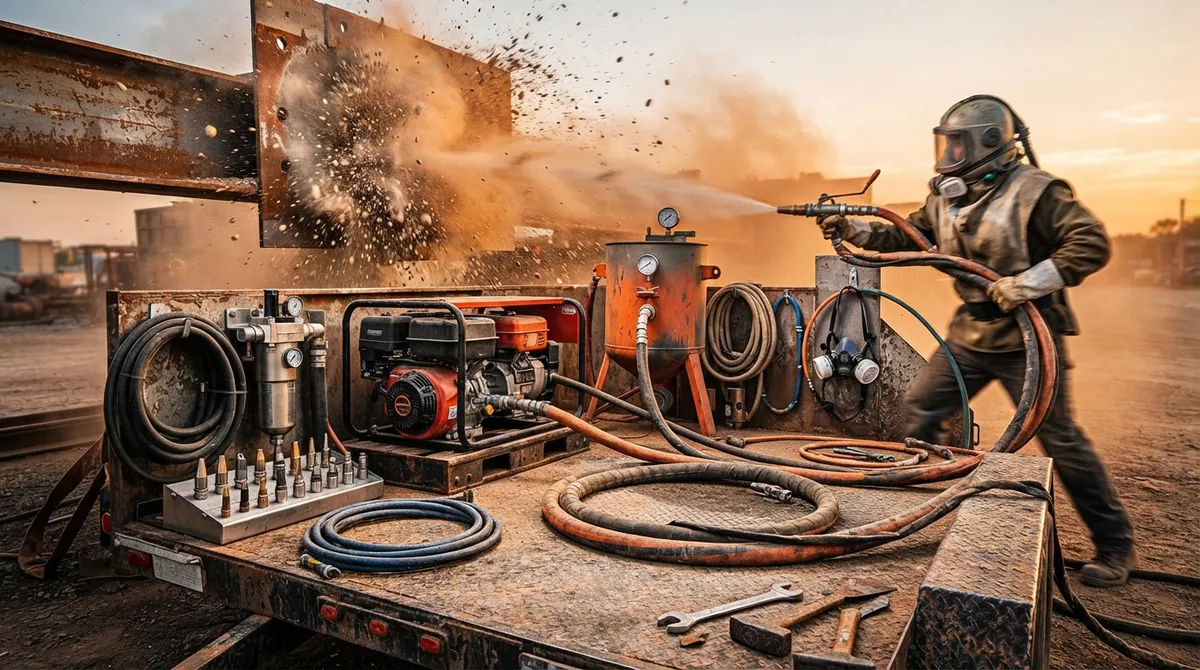
If you have ever watched a mobile blasting crew roll up and get to work, you know it looks simple. Hose out, nozzle up, and the old paint or rust is gone. But the truth is that a clean, safe, fast job depends on proper sandblasting equipment behind the scenes. The right gear protects people, saves time, and gives you a surface that is truly ready for the next step.
Whether you are a homeowner curious about what shows up in your driveway, a business owner comparing contractors, or someone thinking about doing a small job yourself, this guide walks you through the nine essentials. We will keep it friendly and simple, and we will point out where safety rules from OSHA come into play. Think of it as a peek inside the rig. Let’s dive in!
Why Proper Sandblasting Equipment Matters
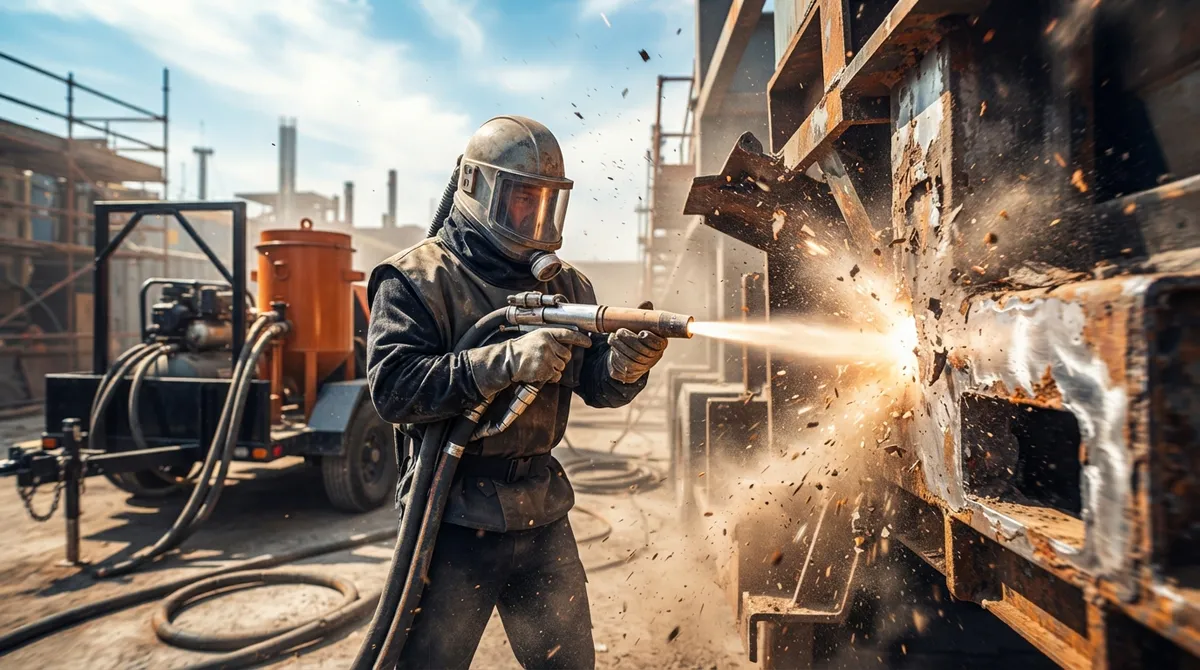
Mobile blasting is not just about pointing a nozzle at a surface. A good setup matches air supply, abrasive, controls, and safety gear to the job. When one piece is too small or worn out, the whole job suffers.
Undersized or poorly maintained equipment can slow the work and leave uneven results. That is why we say, we match the blast to your surface, not the other way around. A thin body panel and a rusty steel tank need very different setups.
Here is a quick look at what a complete mobile setup usually includes:
- An air compressor sized for the job
- A blast pot (abrasive delivery system)
- Hoses, couplings, and a nozzle
- Moisture and oil separation with air filtration
- A deadman control
- The right abrasive media
- Respiratory and body protection
- Containment and dust control when needed
- Inspection and maintenance tools
Now let’s go through them one at a time.
1. The Air Compressor
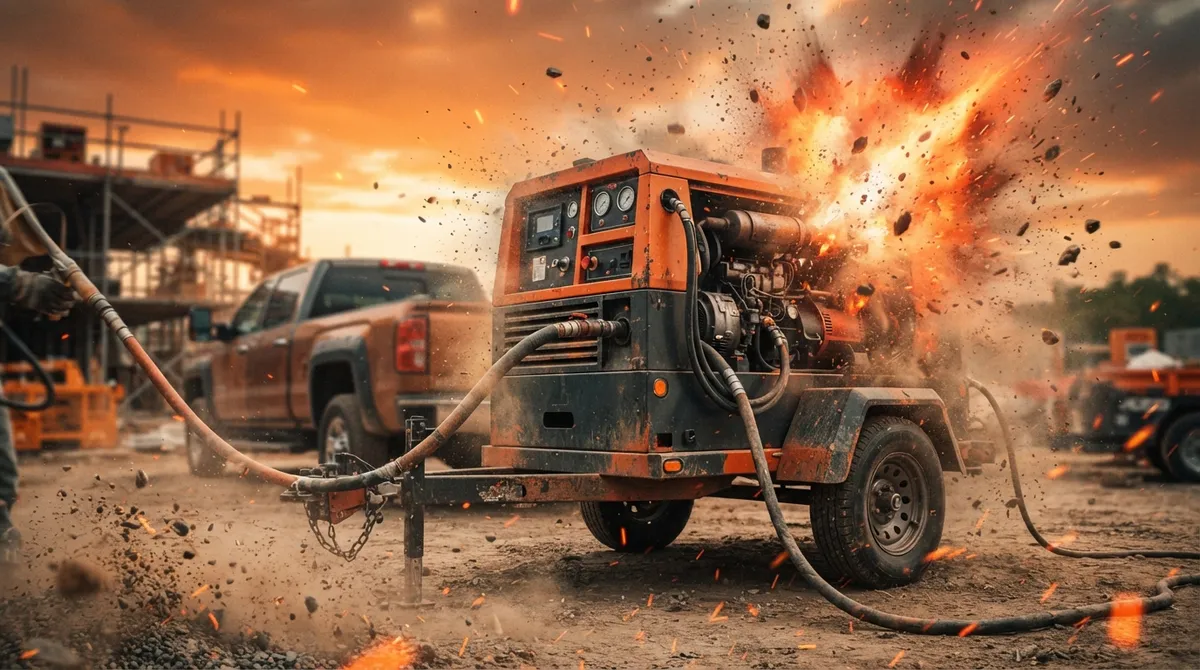
The compressor is the heart of the whole system. It must supply the pressure and airflow your nozzle needs, and it must keep that up for the entire job. If it can’t, the blast gets weak and inconsistent.
How to Think About Compressor Size
Bigger nozzles use more air. A compressor that is too small will force the crew to stop and wait for pressure to build. That wastes time and can leave a patchy finish.
A mobile contractor who owns a self-contained rig, like ours at Blastworx, brings the compressor along so you don’t have to supply power or water. That is a big part of what Tampa businesses choose mobile sandblasting for.
2. The Blast Pot
The blast pot holds the abrasive and feeds it into the air stream. It is a pressure vessel, so it must be treated with care. It needs regular inspection and must be used according to the maker’s instructions and workplace safety rules.
A good pot gives a steady, even flow of media. A bad or clogged one causes surging, which can gouge delicate surfaces. Steady flow matters most when you are working on thin metal or softer materials.
3. Blast Hose and Couplings
Blast hose carries air and abrasive at high speed, so it takes a beating. Couplings must be secure, and the hose should be checked often for wear, soft spots, or kinks.
A loose connection is more than an annoyance. It can whip around or fail under pressure. Crews should inspect hoses and couplings before every job and replace anything that looks tired.
4. The Nozzle
The nozzle shapes the blast. Its size and style affect how much air you need, how wide the pattern is, and how fast the work goes. Nozzles wear out over time, and a worn nozzle loses efficiency.
Here is why nozzle choice matters:
- Larger openings cover more area but need more air
- Smaller openings give more control for detail work
- Worn nozzles waste air, abrasive, and time
For fine work like trim, hardware, or small items, a smaller setup helps. You can see more about those jobs in our guide to small item blasting services.
5. Moisture and Oil Separation With Air Filtration
Compressed air in Florida’s humid climate carries a lot of moisture. If that water reaches the blast pot, the abrasive clumps and clogs. Oil from the compressor can also contaminate the surface you just cleaned.
That is why moisture separators and filters are part of proper sandblasting equipment, not an optional extra. Clean, dry air keeps media flowing and keeps the surface free of contamination. It also matters for any air that feeds a worker’s helmet, which must be clean and safe to breathe.
6. The Deadman Control
The deadman control is a simple but vital safety device. It lets the operator stop the blast instantly by releasing the handle. If someone slips or drops the hose, the flow shuts off.
A working deadman control is a must on every blast hose. Never bypass it, tape it down, or skip testing it. Crews should check it before each job, just like you would check your brakes before a long drive.
7. The Right Abrasive Media
Choosing the abrasive is where the art meets the science. The best media depends on the surface, the coating, and the finish you need. We call this the right media for the job.
OSHA recommends looking at safer alternatives to silica sand when a suitable option exists. Silica can create dangerous respirable dust. OSHA’s silica permissible exposure limit is 50 micrograms per cubic meter of air as an 8-hour time-weighted average, though how it applies depends on the work and the governing standard.
Common Media Choices
| Media Type | Best For | Things to Know |
|---|---|---|
| Soda | Fiberglass, gelcoat, delicate surfaces | Gentle, helps protect the surface underneath |
| Walnut shell | Softer materials, light cleaning | Soft media with low aggression |
| Garnet, olivine, staurolite | Steel, heavy rust, coatings | Often used as silica alternatives |
| Aluminum oxide | Tough prep and etching | Strong and sharp, so it needs care |
| Glass bead | Cleaning and finishing | Smoother, more polished finish |
| Steel shot or metallic abrasives | Heavy steel prep | Used for industrial work |
Keep in mind that even safer media can still make hazardous dust, especially from the old coating being removed. Always assess both the abrasive and the material you are blasting. To compare options, see our look at aluminum oxide blasting vs. sand.
8. Respiratory and Personal Protective Equipment
Safety gear is not where you cut corners. Blasting dust can be harmful, and rebounding abrasive can hurt. Protection has to match the hazard.
What OSHA Expects
OSHA requires NIOSH-approved respirators for abrasive-blasting dust. Type CE supplied-air blasting respirators are required in certain situations, including some enclosed operations and silica-sand blasting. Employers must also follow the respiratory protection program rules in 29 CFR 1910.134 when respirators are required.
A blasting helmet should shield the head, neck, and shoulders from bouncing abrasive. A full safety setup also includes:
- Eye and hearing protection
- Gloves and sturdy footwear
- Protective clothing
- Clear communication between crew members
- Protection for nearby workers and the public
For a closer look at how pros stay safe, check out how pros handle sandblasting dust control.
9. Containment, Ventilation, and Dust Control
This last piece protects everything around the blast zone. OSHA’s general-industry standard at 29 CFR 1910.94(a) requires blast-cleaning enclosures to be exhaust ventilated so air flows inward at openings. Dust-laden air should clear promptly and pass through dust-collection equipment.
For mobile work, what you need depends on the site, the process, and the rules that apply. Working outdoors does not remove the exposure risk or the environmental concerns. That is why we contain the mess and we protect the surrounding area on every job.
Wet and Dustless Options
OSHA guidance reports that wet abrasive blasting and hydroblasting produce much lower dust than dry blasting. That makes wet methods a smart pick for active job sites, tight spaces, and homes. Wet methods do not remove the need to assess hazards and controls, but they help a lot.
Curious how the two compare? Read wet sandblasting vs. dry or learn what makes dustless blasting so effective.
How to Match Equipment to Your Job
No single setup works for everything. Here is a simple way to think about it, using the kinds of jobs we see across Florida:
| Job Type | Typical Focus | Equipment Priority |
|---|---|---|
| Boat hulls and fiberglass | Protect gelcoat | Soft media, low pressure, steady flow |
| Car frames and panels | Avoid warping thin metal | Controlled pressure, cooler media |
| Structural steel and tanks | Heavy rust and coatings | Strong compressor, tougher abrasive |
| Concrete, pavers, pool decks | Clean and prep surface | Right media, dust control |
| Fences, railings, gates | Strip paint and rust | Medium media, good containment |
Each of these ties back to our marine, automotive, industrial, commercial, and residential work. You can browse real results in our gallery.
Inspection and Maintenance: The Quiet Hero
Even the best gear fails if no one looks after it. Good crews build inspection into their routine. Before each job, they should check:
- The compressor and its fluid levels
- The blast pot and its pressure-related parts
- Hoses and couplings for wear or damage
- The nozzle for signs of wear
- Filters and moisture separators
- The deadman control and respirator air supply
Follow the manufacturer’s instructions and any pressure-vessel and workplace safety rules. A few minutes of checking can prevent a costly mistake or an injury.
A Quick Word on DIY Blasting
It can be tempting to rent or buy a small setup and try it yourself. Smaller jobs may seem simple, but the safety needs are real. Dust, noise, rebounding abrasive, and surface damage are all risks, and choosing the wrong media can ruin what you are trying to save.
Not sure where to start? Our homeowner’s guide to safe blasting and our list of steps to prepare for sandblasting are good places to begin. If you want a plain-English background, here is what is sandblasting at a basic level. For official safety details, OSHA’s abrasive blasting hazards guidance and its ventilation standard are worth reading.
What to Look for in a Mobile Blasting Contractor
When you hire a pro, you are really hiring their equipment, their training, and their judgment. A few signs of a trustworthy crew:
- They are fully insured
- They bring a self-contained rig with their own power and water
- They ask about your surface before choosing media
- They explain how they will contain the mess
- You talk to the people actually doing the work
At Blastworx, we are an owner-operated mobile blasting company serving Tampa Bay and the central Florida corridor, including Tampa, Clearwater, Sarasota, Ocala, Orlando, and Fort Myers. Our process is simple: a walkthrough, a clear written estimate, the blast and strip at your location, and a surface that is back to clean, sound material and ready for the next step. You can check our service areas, and if you want to see what neighbors say, visit us on Google and see what our customers are saying about us.
Final Thoughts
Proper sandblasting equipment is more than a big compressor and a nozzle. It is a balanced system that includes clean air, the right abrasive, working controls, solid safety gear, and smart containment. When every piece fits the job, you get a cleaner surface, a safer site, and a finish that holds up in Florida’s heat, humidity, and salt air.
Ready to see it in action? Get a free estimate today, or give us a call at 813-380-8092. We come to you, and we would love to help.
FAQs
Q: What equipment is needed for mobile sandblasting?
A: A mobile setup typically includes an air compressor, a blast pot, blast hose and nozzle, moisture and oil separation with air filtration, and a deadman control. You also need the right abrasive, proper respiratory and body protection, and containment or dust control when the job calls for it.
Q: Is silica sand allowed for abrasive blasting, and what are safer options?
A: OSHA recommends evaluating safer alternatives to silica sand because it can create harmful respirable dust. Options like garnet, olivine, staurolite, and metallic abrasives are often used, but even these can create hazardous dust, so the material being blasted should always be assessed too.
Q: What respirator is required for abrasive blasting?
A: OSHA requires NIOSH-approved respirators for abrasive-blasting dust, and Type CE supplied-air blasting respirators are required in certain situations, like some enclosed operations and silica-sand blasting. Employers must also follow respiratory protection program rules when respirators are needed.
Q: Does mobile blasting require containment or dust collection?
A: It depends on the site, the process, and the rules that apply. Working outdoors does not remove exposure or environmental concerns, so good crews contain the mess and protect the surrounding area, and wet or dustless methods can help reduce dust a lot.
Q: How often should blasting hoses, couplings, and nozzles be inspected?
A: A good habit is to inspect them before every job. Check hoses for wear, make sure couplings are secure, and replace a worn nozzle so you don’t waste air and abrasive or risk a failure under pressure.





