
Key Takeaways
-
Silica sand is no longer used in professional blasting due to serious health risks from respirable crystalline silica, which can cause silicosis; OSHA limits exposure to 50 micrograms per cubic meter over 8 hours, making safer alternative media the industry standard.
-
Media blasting encompasses multiple abrasive options (crushed glass, garnet, aluminum oxide, steel grit, walnut shell, soda) selected based on substrate material, coating type, and desired surface profile—not a one-size-fits-all approach.
-
Spent blast media must be properly collected and disposed of under federal RCRA rules, as it can be classified as hazardous waste if removed coatings contain lead or other metals exceeding EPA toxicity thresholds.
-
Wet blasting suppresses dust dramatically and reduces heat buildup, making it ideal for mobile work near occupied homes and marinas, while dry blasting is faster but requires less sensitive site conditions.
-
Professional surface prep documentation should reference recognized standards like SSPC/NACE or ISO cleanliness grades and specify media type, pressure, profile achieved, and containment method to protect warranty and ensure quality.
-
Cost varies significantly based on media density, coating thickness, reusability of media, containment requirements, and substrate sensitivity; trustworthy contractors provide same-day written estimates after a project walkthrough rather than flat per-square-foot pricing.
If you’ve been searching for someone to strip rust, old paint, or grime off a surface, you’ve probably seen both terms thrown around: media blasting and sandblasting. Are they the same thing? Kind of, but not really. And picking the right one matters more than you might think, especially here in Florida’s heat and humidity, where the wrong choice can mean a ruined surface or a much bigger mess than you bargained for. Let’s clear this up together, in plain language, so you can feel confident about your next project.
At Blastworx, we get asked about this almost every single day. Folks call us up wanting a driveway cleaned, a boat hull stripped, or an old iron fence brought back to life, and they usually say “sandblasting” even when sand is the last thing we’d actually use. That’s totally normal. Let’s walk through what these terms really mean, why the media you choose matters, and how to pick the right approach for your project.
What Is Media Blasting vs Sandblasting, Really?
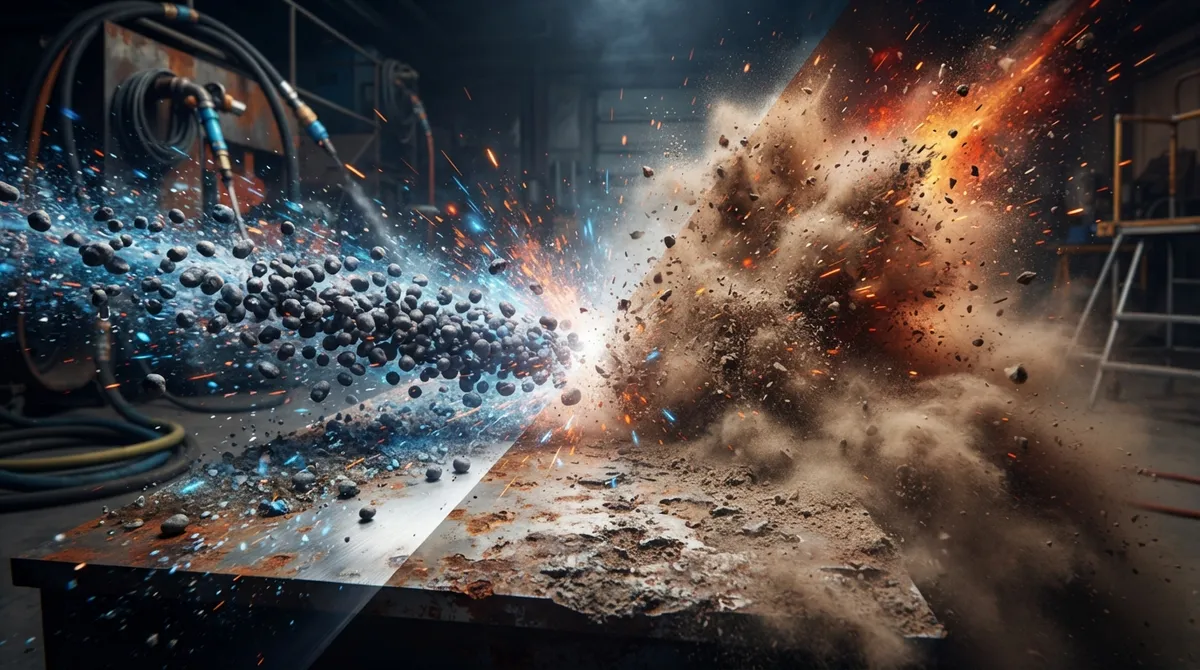
Sandblasting, technically, means blasting a surface with sand, usually silica sand. It’s the old-school term, and it’s been around for over a century. Media blasting is the newer, broader term. It covers any abrasive material propelled at a surface with compressed air or water, including sand, but also crushed glass, garnet, walnut shells, corn cob, aluminum oxide, steel grit, soda, and plastic media.
Here’s the thing: most people use these words interchangeably, even though they don’t mean the same thing anymore. In the real world of professional mobile blasting, “sandblasting” has become a catch-all phrase, kind of like calling every tissue a “Kleenex.” But the actual media used today is almost never plain sand, and there’s a good reason for that.
Why Sand Fell Out of Favor
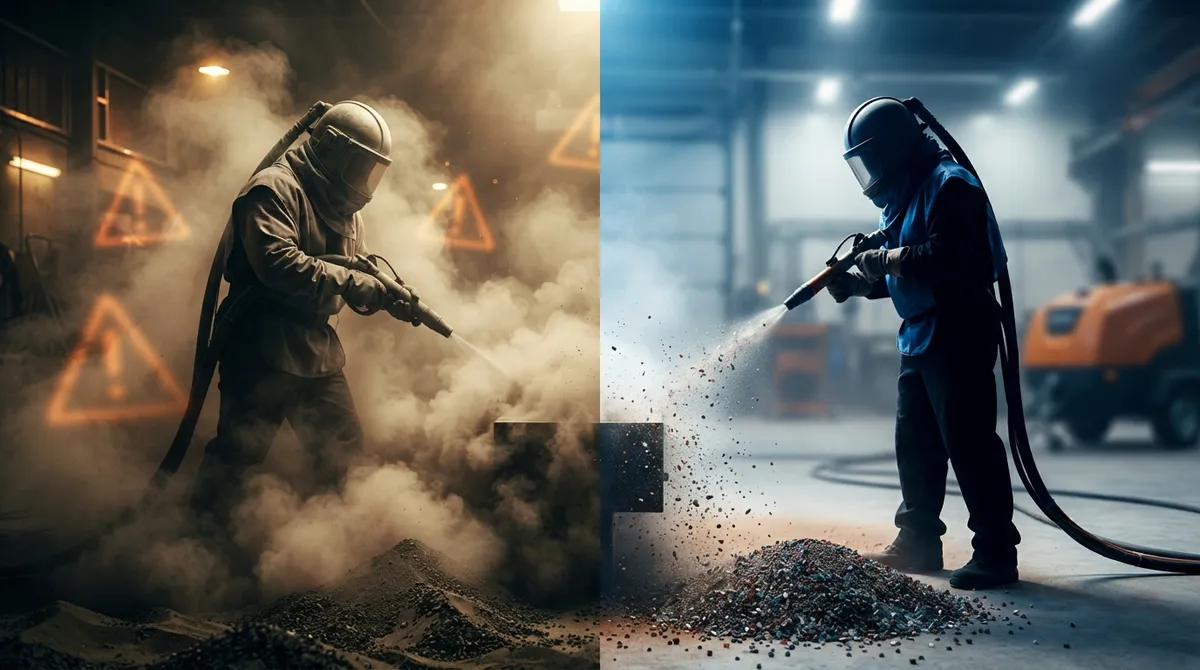
Silica sand used to be the go-to abrasive because it was cheap and easy to find. The problem is what happens when it shatters on impact. Fracturing sand releases tiny particles of respirable crystalline silica into the air, and breathing that stuff in over time can cause silicosis and other serious lung diseases. This isn’t a minor concern, it’s a well-documented, long-term health hazard.
OSHA takes this seriously. Their current standards set a permissible exposure limit of 50 micrograms per cubic meter of air over an 8-hour period, with an action level of 25 micrograms per cubic meter. That current limit is actually 80% lower than the older 100 microgram standard that used to guide the industry. NIOSH has also flagged this as a major workplace hazard, historically estimating that over 1 million U.S. workers faced silicosis risk, with more than 100,000 employed as sandblasters at the time of that research.
Because of these risks, most professional mobile blasting contractors, including us, avoid silica sand entirely. Instead, we choose from a range of safer, more effective media depending on the job.
Comparing Common Blasting Media
Not all abrasives are created equal. Some are aggressive and built for heavy rust removal. Others are gentle enough for delicate surfaces like fiberglass or wood. Here’s a quick breakdown of what we typically reach for and why.
| Media Type | Best For | Aggressiveness | Dust Level |
|---|---|---|---|
| Crushed Glass | General paint and rust removal | Medium | Moderate |
| Garnet | Efficient cutting, lower dust | Medium-High | Low-Moderate |
| Aluminum Oxide | Aggressive, precise metal prep | High | Moderate |
| Steel Grit/Shot | Heavy industrial work, reusable | High | Low (recoverable) |
| Walnut Shell/Corn Cob | Gentle cleaning, delicate surfaces | Low | Low |
| Soda | Low-profile, sensitive cleaning | Low | Low |
This is exactly why we say we match the blast to your surface, not the other way around. There’s no single “best” media for every job. A boat hull needs something completely different than a rusted steel beam or a set of iron railings.
How We Choose the Right Media for Your Job
Picking the correct abrasive isn’t guesswork. It comes down to a handful of factors we walk through with every customer:
- The substrate material (metal, wood, concrete, fiberglass, brick)
- The coating or contamination being removed (paint, rust, antifouling, graffiti)
- The desired surface profile for the next coating or finish
- How much dust or overspray control the site requires
- Whether the media needs to be recyclable or reusable
- Local disposal rules for the spent material
We’ve covered similar ground in our post on how to choose between soda blasting vs sandblasting, which digs deeper into that specific comparison if you want more detail.
Wet Blasting vs Dry Blasting for Mobile Projects
Another decision point is whether to blast wet or dry. Wet blasting, sometimes called vapor blasting, mixes water into the process to knock down airborne dust. This is a big deal for mobile work near occupied homes, businesses, or marinas.
Here’s how the two stack up:
- Dry blasting is faster, works well in most outdoor settings, and doesn’t leave wet slurry behind. It’s our go-to for many exterior jobs.
- Wet blasting suppresses dust dramatically, reduces heat buildup, and works great near sensitive sites. The tradeoff is wastewater management and a slightly higher risk of flash rust on bare steel.
- Dustless blasting (a hybrid approach) is often the sweet spot for indoor work or active job sites where dust control is critical.
We’ve written more about this tradeoff in wet sandblasting vs dry: which one fits your job, and also in what makes dustless blasting in Tampa so effective.
What Happens to the Spent Media?
Here’s something a lot of people don’t think about until it’s too late: media blasting isn’t automatically “clean” just because you swapped out the sand. Spent abrasive carries fractured particles, removed rust, and old coating residue. That waste has to be handled properly.
Under federal RCRA rules, spent blast media can be classified as hazardous waste if it shows certain characteristics, like toxicity, corrosivity, ignitability, or reactivity. Toxicity is usually tested using the EPA’s Toxicity Characteristic Leaching Procedure. If old paint contains lead, for example, the leachate threshold is 5.0 mg/L, and thresholds for other metals like cadmium, chromium, barium, and arsenic all have their own limits.
This is why a responsible contractor doesn’t just blast and walk away. We collect and properly dispose of spent media according to applicable rules, which protects you, your property, and the environment. It’s a step that’s easy to overlook, but it matters.
Does Media Blasting Damage the Surface?
This is one of the most common worries we hear, and it’s a fair one. The short answer: it depends entirely on the media, pressure, and technique. That’s exactly why we don’t use a one-size-fits-all approach.
- Soft media like soda or walnut shell won’t gouge wood, fiberglass, or gelcoat
- Harder media like aluminum oxide or steel grit is reserved for tough metal surfaces
- Lower pressure settings help prevent warping on thin body panels or delicate trim
- Surface profile can be adjusted to match what the next coating actually needs
We’ve tackled this question in detail for specific materials too, including 11 facts: does sandblasting damage concrete and 12 facts: does sandblasting damage wood. Both are worth a read if you’re on the fence about a specific surface.
Surface Prep Standards Matter Too
A trustworthy contractor won’t just tell you a surface was “sandblasted.” Professional prep work should reference a recognized standard, like SSPC/NACE or ISO cleanliness grades, and document the media type, pressure, profile achieved, and containment method used. That documentation protects you if there’s ever a warranty question down the road.
Mobile Blasting: Convenience With a Few Extra Considerations
One of the biggest perks of mobile blasting is that the equipment comes to you. No trailering your boat to a shop, no disassembling a gate to haul it somewhere. We show up fully mobile and self-contained, ready to work at your dock, driveway, or job site without needing your power or water.
That said, mobile work does require planning. Here’s what we typically account for on-site:
- Containment to protect landscaping, vehicles, and nearby structures
- Dust and overspray control, especially near occupied buildings
- Noise considerations for residential neighborhoods
- Access for our rig and equipment
- Drainage and collection of spent media
- Coordination around nearby utilities or foot traffic
We contain the mess and protect the surrounding area on every job, whether it’s a pool deck in Riverview or a steel structure out in Ocala. If you want a sense of how this plays out for homeowners specifically, check out why choose mobile sandblasting for your Tampa home.
Safety Gear and Training Aren’t Optional
Whatever media is used, proper protection is non-negotiable. Depending on the abrasive and coating involved, this can include:
- Supplied-air blasting helmets and respiratory protection
- Protective clothing rated for abrasive work
- Hearing protection for high-noise equipment
- Eye protection and heavy-duty gloves
- Proper ventilation, especially in enclosed spaces
We’re fully insured and trained on the right controls for each job, so you can relax knowing the work is being done safely, not just quickly.
Cost Comparison: Media Blasting vs Sandblasting
People often ask how much more it costs to use specialty media instead of plain sand. Honestly, the answer varies a lot, and anyone giving you a flat per-square-foot number without knowing your project is guessing. Cost depends on:
| Factor | Impact on Cost |
|---|---|
| Media density and hardness | Affects consumption rate and price per pound |
| Coating thickness | Thicker coatings need more time and media |
| Recovery capability | Reusable media (like steel grit) can lower long-term cost |
| Containment requirements | Tighter containment adds labor time |
| Substrate sensitivity | Delicate surfaces may need slower, gentler passes |
We always start with a walkthrough, either in person or from photos you send us, so we can figure out the right media and give you a clear, written estimate the same day. For more on pricing specifics, take a look at how much do sandblasting estimates really cost or 7 mobile blasting rates facts Florida owners need.
Real-World Applications Across Florida
Whether you’re in Tampa, Clearwater, Sarasota, Ocala, Orlando, or Fort Myers, the media blasting vs sandblasting question shows up constantly across different project types:
- Marine: Soft media protects fiberglass hulls while stripping old bottom paint. Learn more on our marine blasting page.
- Automotive: Frames get stronger abrasives, while thin body panels need gentler treatment. See our automotive blasting services.
- Industrial: Structural steel and tanks often call for aggressive media matched to the coating system. Check out industrial blasting.
- Commercial: Graffiti and paint removal on storefronts requires careful media selection to avoid damaging the substrate. Visit our commercial blasting page.
- Residential: Pool decks, fences, and railings each need their own approach. Browse our residential blasting options.
You can see examples of this work across the region on our gallery page, and check whether we cover your area on our service areas page.
Bringing It All Together
So, media blasting vs sandblasting really comes down to this: sandblasting is one narrow method using one specific material, while media blasting is the smarter, safer, more flexible approach that considers your actual surface, your goals, and your safety. The terms get used interchangeably in everyday conversation, but the practice behind them has evolved a lot, and for good reason.
A good contractor won’t just show up with sand and start blasting. They’ll ask questions, look at your surface, and pick the media that gets you back to clean, bare metal or clean, sound material, ready for the next step. That’s the whole philosophy behind how we operate at Blastworx, and it’s why customers across Tampa Bay keep calling us back for their next project.
Curious what people in your area are saying? You can visit us on Google and see what our customers are saying about us before you decide who to trust with your project.
Ready to Get Started?
If you’ve got rust, old paint, graffiti, or buildup that needs to go, we’d love to help. Reach out today to get a free estimate, or if you’d rather talk it through first, feel free to give us a call. You’ll always talk to the people actually doing the work, and we’ll make sure the media matches your surface, not the other way around.
FAQs
Q: Is media blasting the same thing as sandblasting?
A: Not exactly, but folks use the words interchangeably all the time, and that’s totally okay! Sandblasting technically means using sand, while media blasting covers a whole range of abrasives like glass, garnet, or soda. Most professional mobile blasting today uses media blasting techniques, even when people casually call it sandblasting.
Q: Is sandblasting with silica sand still legal or safe?
A: Silica sand isn’t illegal, but it’s widely avoided in professional mobile blasting because of serious health risks tied to respirable crystalline silica. OSHA has strict exposure limits in place, and honestly, safer alternatives work just as well without the risk. We steer clear of it entirely for your safety and ours.
Q: What is the best blasting media for removing rust and paint from metal?
A: It really depends on the metal’s thickness and how bad the rust is! For heavy steel, we often reach for aluminum oxide or steel grit. For thinner panels, we go with gentler media and lower pressure so we don’t warp anything.
Q: Which blasting media is safest for concrete, brick, wood, or fiberglass?
A: Softer media like walnut shell, corn cob, or soda work beautifully on delicate surfaces without chewing them up. We always match the media to the material, so your wood deck or fiberglass boat hull comes out clean, not damaged.
Q: How much does mobile media blasting cost compared with traditional sandblasting?
A: Great question, and the honest answer is that it varies based on your surface, coating thickness, and site conditions. We give every customer a same-day written estimate after a quick walkthrough, so there’s never any guesswork or surprise pricing.





