
Key Takeaways
-
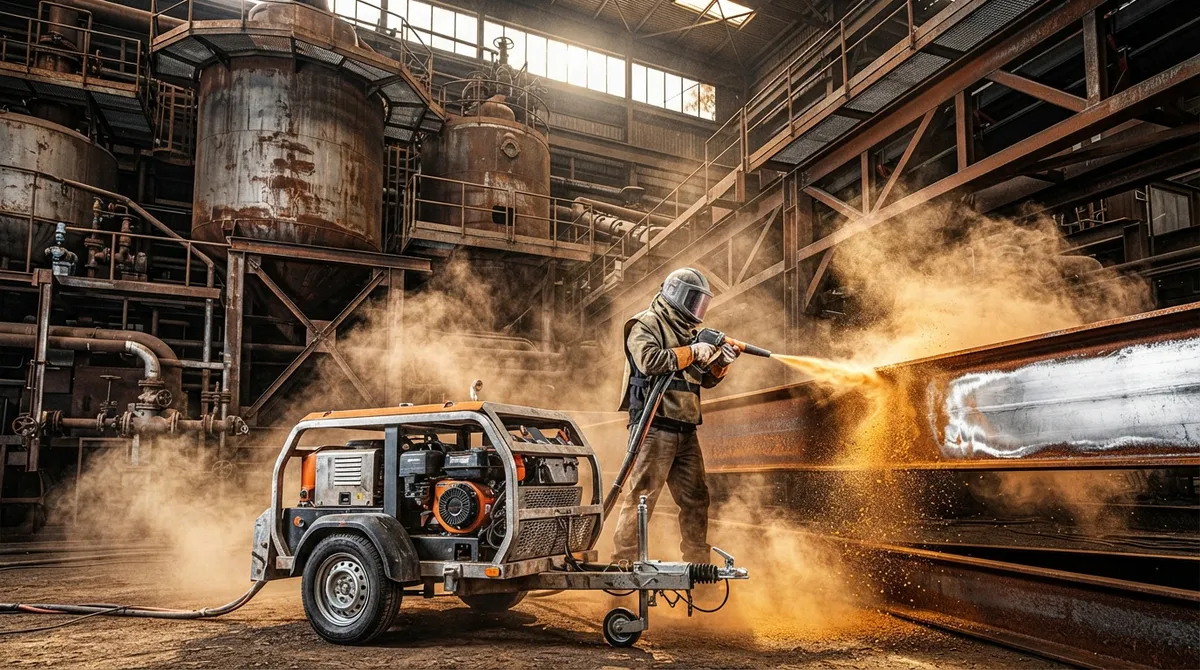
Mobile blasting eliminates equipment transportation and shop queue delays, reducing production downtime by bringing the entire setup directly to your facility instead of disassembling and hauling machinery across town.
-
Surface prep quality directly impacts coating longevity; properly blasted surfaces reach clean material in seams and joints that hand-sanding misses, resulting in coatings that last years instead of months in humid, salt-air environments.
-
Mobile blasting costs $1.50 to $7.00 per square foot or $75-$150 per hour plus a mobilization fee, making it cost-effective for large equipment while eliminating per-trip shop drop-off expenses.
-
Mobile blasting rigs are self-contained with compressors, blast pots, and recovery systems, requiring no external power or water hookups and enabling work on bolted-down equipment like tanks, conveyor frames, and welded structural steel.
-
The mobile blasting market is growing at 6.5% annually with projected values reaching $900 million by 2025, reflecting manufacturer preference for on-site surface prep over traditional fixed-shop services.
-
Safety containment using dustless blasting, vacuum recovery, and custom barriers protects nearby employees and active production areas, making on-site blasting viable even in active manufacturing facilities.
If you run a manufacturing plant in Tampa Bay or anywhere in central Florida, you already know how much surface prep affects your bottom line. Rusty machinery, old paint, and coating buildup slow down production and ruin new finishes. That’s where manufacturing sandblasting comes in, and the good news is, it doesn’t have to mean shutting down your line or shipping heavy equipment across town.
Mobile blasting brings the whole setup right to your facility. No hauling a 4,000-pound tank across the state. No waiting weeks for a shop slot to open up. We show up, protect the area, blast the surface clean, and leave it ready for the next step. It’s simple, it’s fast, and it works with your schedule instead of against it.
In this guide, we’re covering 12 facts every plant manager, fabricator, or business owner should know about manufacturing sandblasting. We’ll talk equipment, costs, safety, and which industries lean on this service the most. Let’s get into it.
1. Manufacturing Sandblasting Means Bringing the Shop to You
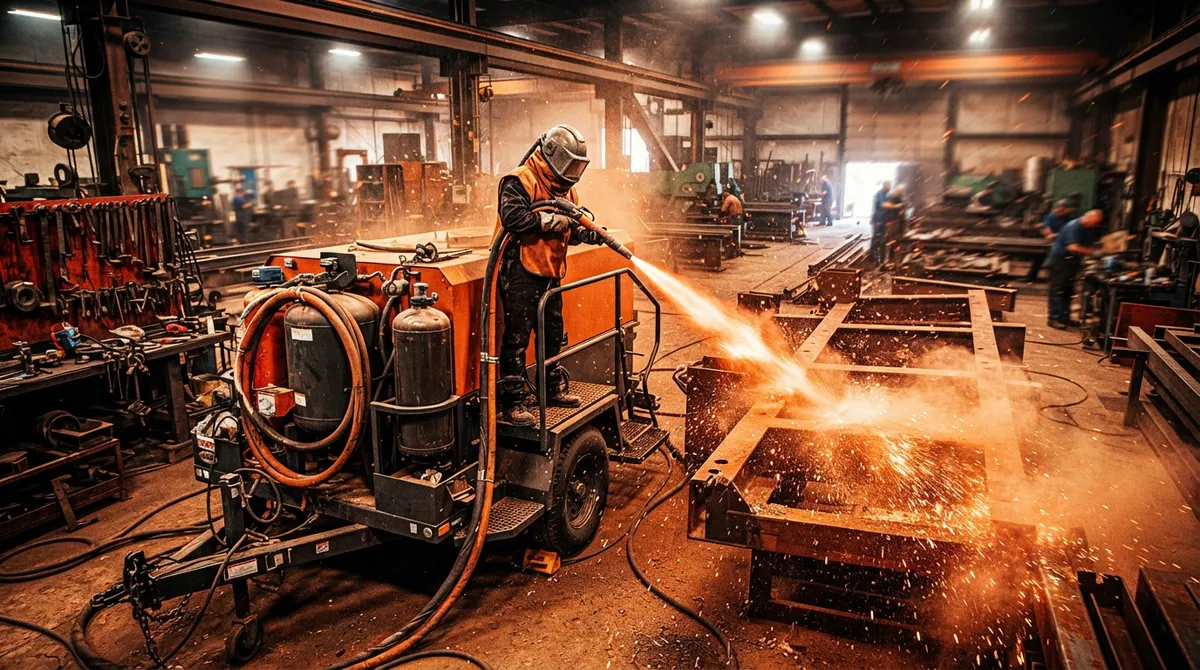
In the mobile blasting world, manufacturing sandblasting is exactly what it sounds like: cleaning, stripping, and prepping manufactured parts and equipment right where they sit. Instead of moving a tank, a conveyor frame, or a piece of structural steel to a shop, we come to you. Fully mobile and self-contained, our rig carries everything needed to get the job done on-site.
This matters a lot for manufacturing plants because so much equipment simply isn’t easy to move. Think about welded steel frames, large tanks, and fixed machinery bolted to a concrete pad. Mobile blasting skips the disassembly headache entirely.
2. Why Manufacturing Plants Choose Mobile Blasting Over Shop Drop-Off
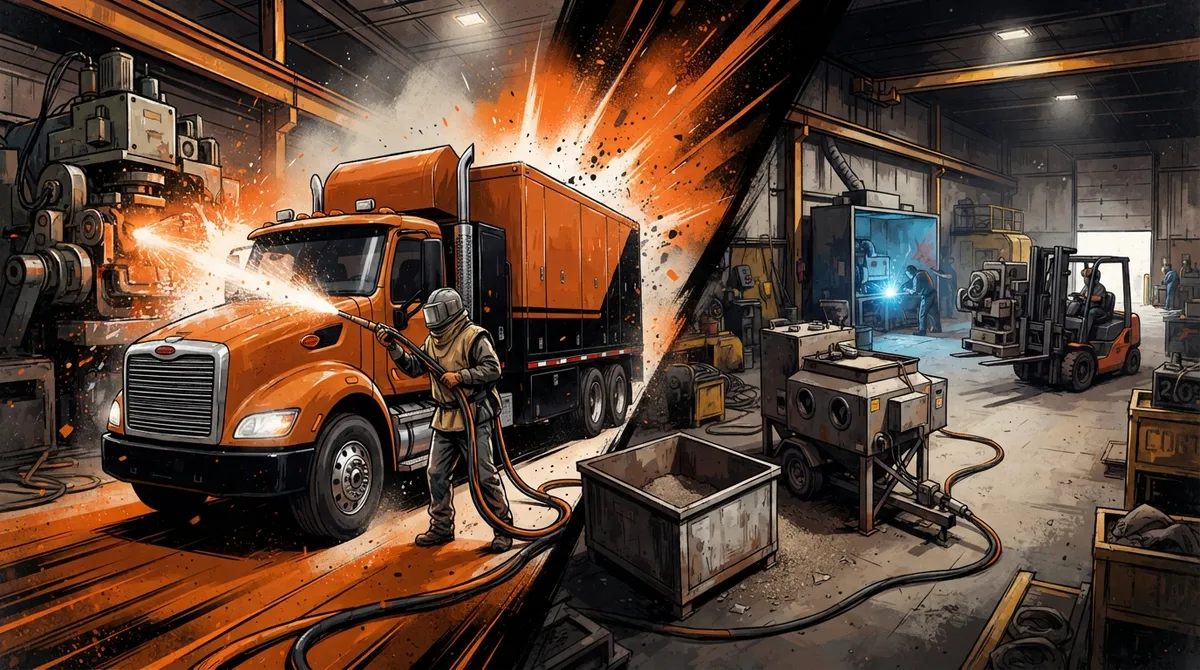
Downtime costs money. Every hour a machine sits waiting for surface prep is an hour it’s not making parts. Mobile blasting cuts that downtime way down because there’s no transport time, no loading dock scheduling, and no waiting in a shop queue behind other customers.
Here’s why more manufacturers are making the switch:
- No need to disassemble large or bolted-down equipment
- Work happens during off-hours or weekends to avoid production interruptions
- One mobilization fee covers the whole visit, not per-trip shop drop-offs
- Dustless blasting options work fine near other active equipment
- You get a written estimate before any work starts, so there are no surprises
We’ve written more about this shift in our post on why Tampa businesses choose mobile sandblasting, if you want a deeper look at the reasoning.
3. The Equipment Behind Mobile Manufacturing Sandblasting
Mobile blasting rigs aren’t small toys. They’re built to handle serious industrial work. A typical setup includes a compressor, a blast pot, abrasive media delivery lines, hoses, and specialized nozzles. Everything is trailer-mounted or truck-mounted so it can roll right up to your facility.
Because we’re self-contained, we don’t need your power or water hookups. That’s a big deal for plants where pulling extra power off the grid isn’t simple or where water access is limited.
What a Mobile Rig Typically Includes
- Air compressor sized for continuous blasting output
- Pressure-rated blast pot for holding abrasive media
- Multiple hose lengths to reach equipment in tight or elevated spots
- Interchangeable nozzles for different media types and pressures
- Containment materials like tarps, curtains, and vacuum recovery systems
4. Surfaces and Materials Common in Manufacturing Settings
Not every surface reacts the same way to blasting. Part of doing this job right is matching the media and pressure to what you’re working with. In manufacturing environments, we typically see:
- Structural steel beams and support columns
- Storage tanks and pressure vessels
- Conveyor systems and framing
- Heavy equipment housings and undercarriages
- Weld joints that need prep before coating
- Fabricated parts with rust or mill scale
We match the blast to your surface, not the other way around. That’s true whether we’re stripping mill scale off raw steel or removing decades of old paint from a tank exterior. If you want more detail on how this process works on steel specifically, check out our breakdown of how metal surface preparation blasting really works.
5. Common Uses for Sandblasting in Manufacturing Plants
Manufacturing sandblasting covers more ground than most people expect. It’s not just about rust removal. Here are the most common applications we see:
- Rust and corrosion removal from steel components
- Old paint and coating stripping before recoating
- Weld prep to create a clean bonding surface
- Surface profiling to help new coatings adhere better
- Deburring rough edges on fabricated parts
- Cleaning buildup off machinery housings and frames
Each of these jobs plays a role in keeping equipment running longer and looking better. A clean, properly profiled surface holds paint and coatings far longer than one that’s just wiped down or hand-sanded.
6. Why Surface Prep Quality Actually Matters
Here’s something worth repeating: a coating is only as good as the surface underneath it. Paint, powder coat, and protective coatings all fail early when the prep work is rushed or incomplete. Hand-sanding tends to miss rust hiding in seams, corners, and weld joints.
Blasting takes the entire surface back to clean, sound material all at once. That means whatever goes on next, whether it’s primer, paint, or a protective coating, bonds properly and holds up. In Florida’s heat, humidity, and salt air, that difference shows up fast. Poorly prepped surfaces rust again within months. Properly blasted surfaces can go years without issue.
7. Mobile Sandblasting Market Growth and What It Means
This isn’t a small niche industry anymore. According to market research, the global mobile sandblasting machine market is projected to hit around $900 million by 2025, growing at roughly 6.5% annually through 2033. Another report pegged the broader mobile sandblaster market at $0.6 billion in 2024, expecting it to climb to about $0.95 billion by 2033.
Even more telling, the mobile paint stripping and cleaning industry as a whole is valued at over $10 billion annually. That growth reflects a simple truth: manufacturers and facility managers are choosing on-site prep over hauling equipment to fixed shops.
| Market Report | 2024/2025 Value | Projected Value | CAGR |
|---|---|---|---|
| Mobile Sandblasting Machine Market | ~$900M (2025) | Growing through 2033 | ~6.5% |
| Mobile Sandblaster Market | $0.6B (2024) | ~$0.95B (2033) | 5.8% |
| Portable Blasting Equipment | $402M (2025) | $415M (2026) | N/A |
| Sandblasting Machine Market | $626.3M (2025) | $931.7M (2035) | N/A |
8. What Manufacturing Sandblasting Costs
Pricing depends on the size of the job, the media used, and how much prep and containment the site needs. Based on typical industry pricing, mobile blasting services generally run:
- $1.50 to $7.00 per square foot for most jobs
- $75 to $150 per hour for time-based work
- A mobilization fee of $150 to $500 to cover travel and setup
Bigger jobs with heavy rust or thick coatings usually land on the higher end. Smaller cleanup or touch-up jobs come in lower. The best way to know for sure is to get a walkthrough and a written estimate before work begins. That’s exactly how we handle every job at Blastworx: we look at the surface, quote a clear price, and the number we give you is the number you pay. For a deeper cost breakdown, take a look at our post on how much sandblasting estimates really cost.
9. Safety and Compliance Considerations
Sandblasting generates dust, spent media, and debris. In a manufacturing setting, that means safety and containment aren’t optional extras, they’re part of doing the job responsibly. Here’s what a professional mobile blasting crew should always handle:
- Proper respiratory protection and PPE for the crew
- Containment barriers to keep dust away from other equipment
- Vacuum recovery or dustless blasting for indoor and enclosed spaces
- Safe handling and disposal of spent abrasive media
- Protecting nearby employees, walkways, and active production areas
We contain the mess and protect the surrounding area on every job, whether that’s a small shop floor or a full industrial site. According to the what is sandblasting overview from general industry references, abrasive blasting has been used for over a century, but the safety standards around it have come a long way since then.
10. Industries That Rely on Manufacturing Sandblasting Most
Some industries lean on mobile blasting more heavily than others because of the size and complexity of their equipment. The biggest users include:
- Manufacturing plants with fixed heavy machinery
- Shipbuilding and marine repair facilities
- Automotive fabrication and restoration shops
- Heavy equipment and construction fleets
- Structural steel and fabrication yards
- Aviation maintenance operations
If your business falls into one of these categories, mobile blasting probably makes more sense than shop drop-off. We cover a lot of this ground ourselves, from Industrial blasting for tanks and structural steel, to Marine work on hulls and hardware, to Automotive frame and panel stripping.
11. Mobile Blasting vs. Shop-Based Sandblasting
So how does mobile blasting actually stack up against a traditional fixed shop? Here’s a simple comparison to help you decide what fits your situation.
| Factor | Mobile Blasting | Shop-Based Blasting |
|---|---|---|
| Equipment Movement | None needed, we come to you | Equipment must be transported |
| Downtime | Minimal, work fits your schedule | Can be longer due to transport and queue |
| Large or Fixed Equipment | Handled easily on-site | Often difficult or impossible to move |
| Containment | Custom setup per site | Fixed booth already in place |
| Best For | Large, heavy, or immovable assets | Small parts easily transported |
For most manufacturing situations involving large or bolted-down equipment, mobile blasting wins on convenience and cost. Our post comparing a mobile rig vs. drop-off shop goes into even more detail if you want to weigh the options further.
12. What to Look for in a Mobile Manufacturing Sandblasting Company
Not every blasting company handles manufacturing work the same way. Before you hire anyone, here’s a quick checklist worth running through:
- Fully insured and experienced with industrial or manufacturing sites
- Offers a written estimate before any work begins
- Uses the right media for your specific surface and coating
- Provides dustless blasting options for indoor or sensitive areas
- Communicates directly, so you talk to the people doing the work, not a call center
We built Blastworx around these exact principles. We’re owner-operated, fully insured, and small enough to give every job our full attention. Whether you’re in Tampa, Ocala, Orlando, Fort Myers, or anywhere along the central Florida corridor, we’re ready to help. You can browse examples of past work in our Gallery or check out the areas we cover on our Service Areas page.
Getting Your Manufacturing Sandblasting Project Started
Manufacturing sandblasting doesn’t have to mean disassembling equipment or waiting weeks for a shop opening. Mobile blasting brings the process to your facility, cuts downtime, and gets your equipment back to clean, sound material fast. Whether it’s rust removal, weld prep, or coating strip-off, the right approach makes all the difference in how long your next finish lasts.
If you’re curious what past clients think, you can visit us on Google — see what our customers are saying about us before reaching out. We’re proud of the reputation we’ve built across Tampa Bay and central Florida, one job at a time.
Ready to get your manufacturing equipment prepped the right way? Get a free estimate today, or give us a call to talk through your project with our team directly. We’d love to help get your facility ready for the next step.
FAQs
Q: What is manufacturing sandblasting in mobile blasting?
A: It’s the process of using portable blasting equipment to clean, strip, or prep manufactured parts and equipment right at your facility. Instead of hauling heavy machinery to a shop, we bring the rig to you, blast the surface clean, and leave it ready for the next step.
Q: How much does mobile sandblasting cost per square foot?
A: Most jobs run between $1.50 and $7.00 per square foot, or $75 to $150 per hour, plus a small mobilization fee. The exact price depends on surface size, coating thickness, and how much containment the job needs, but we always give you a written estimate first.
Q: What surfaces can be sandblasted on-site at a manufacturing plant?
A: Just about anything, from structural steel and storage tanks to conveyor frames, weld joints, and heavy equipment housings. We match the media and pressure to your specific surface so it comes out clean without damage.
Q: Is mobile sandblasting safe for use inside an active manufacturing facility?
A: Yes, especially with dustless blasting options that keep dust contained near other equipment and employees. We set up proper containment barriers and follow safety practices on every job, so production areas stay protected.
Q: How does mobile blasting compare to shop-based sandblasting?
A: Mobile blasting skips the hassle of moving heavy or bolted-down equipment, which usually means less downtime and lower overall cost. Shop-based blasting still works well for small parts that are easy to transport, but for big manufacturing jobs, on-site blasting is often the smarter choice.





