
Key Takeaways
-
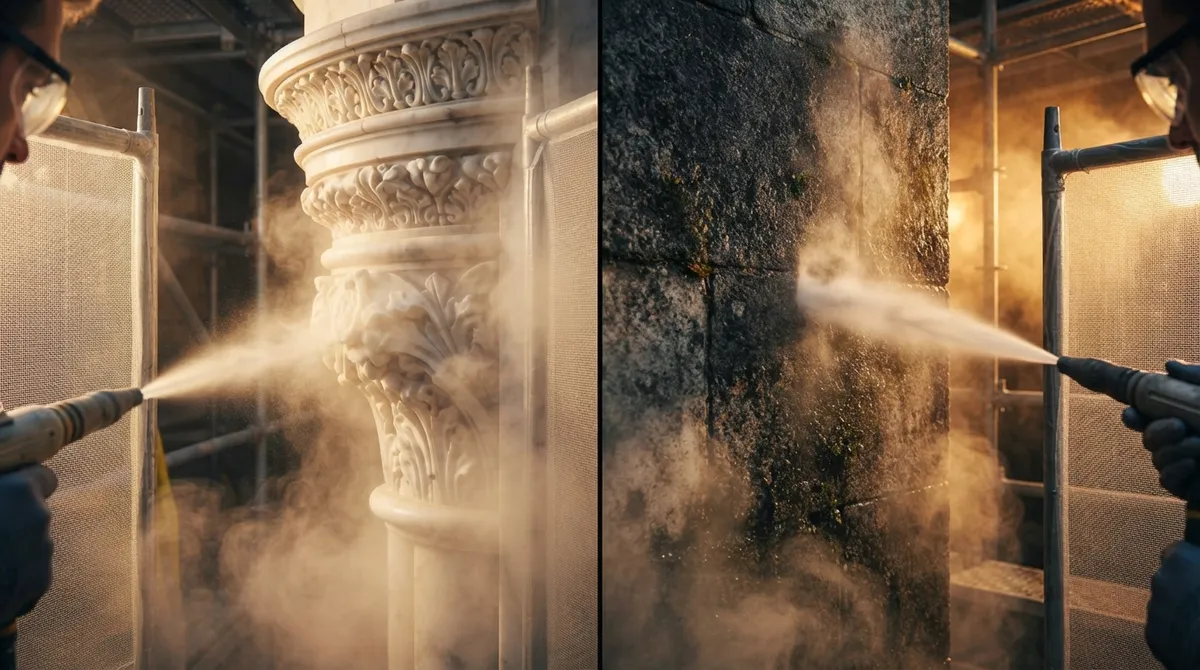
Always request a test patch on a small, hidden area before committing to blasting an entire stone surface to check for color changes, texture damage, or loss of detail.
-
Stone type determines everything: calcareous stones like marble and limestone need low-pressure blasting with fine abrasives, while harder granite and slate can tolerate more aggressive methods.
-
Never skip the assessment step—identify the stone type, porosity, condition, and what buildup needs removal before selecting pressure, media, and blasting technique.
-
Blasting stone can release respirable crystalline silica dust even when using non-sand abrasives, so professional dust control and OSHA-compliant safety measures are essential.
-
Soft, worn, or historically significant stone may be too fragile for abrasive blasting and should use gentler methods like dry cleaning, with approval from conservation experts or local authorities.
-
Mobile on-site blasting eliminates the need to transport heavy or irreplaceable stone, reducing damage risk and simplifying logistics while allowing contractors to match equipment to your specific surface.
Stone looks amazing until years of grime, algae, or old paint build up and hide its natural beauty. Maybe you have a limestone patio that’s turned green and slippery. Maybe your building’s granite entrance is covered in graffiti. Whatever the case, stone surface blasting can bring that material back to life, but only when it’s done the right way.
At Blastworx, we get calls from homeowners and business owners across Tampa Bay who want their stone looking fresh again. The good news is that mobile blasting can handle this job on-site, without hauling stone slabs anywhere. The tricky part is that stone isn’t one-size-fits-all. What works great on granite can ruin marble. This guide walks you through how it all works, so you know what to expect and what questions to ask before hiring anyone.
What Is Stone Surface Blasting, Exactly
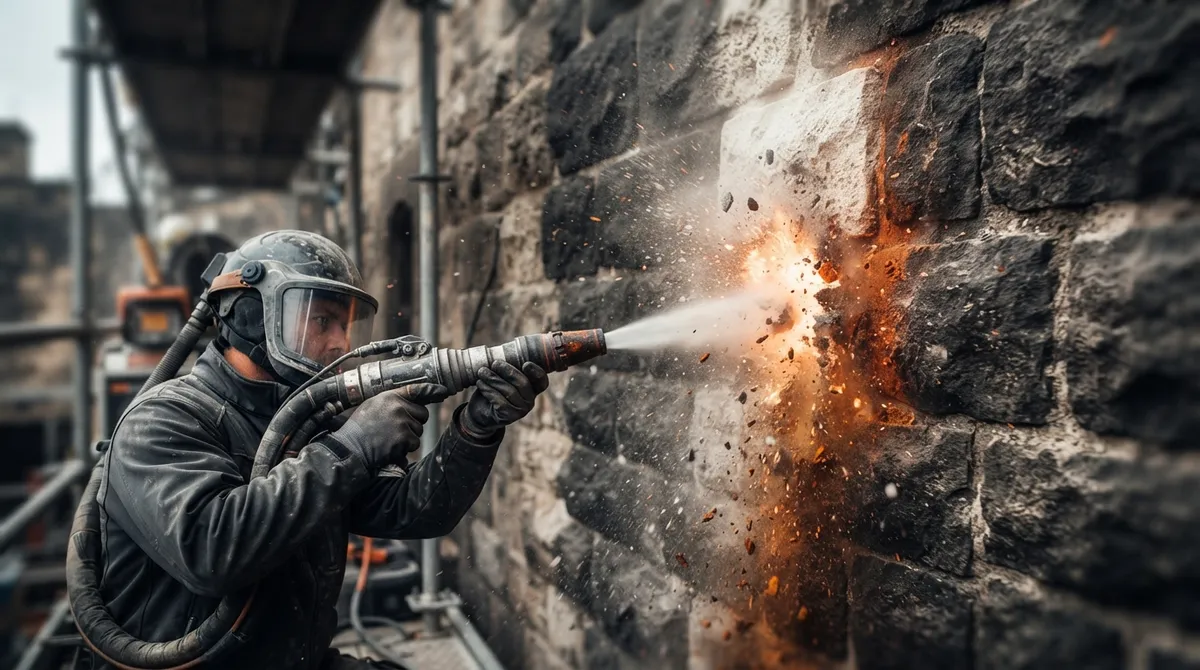
Stone surface blasting uses portable abrasive-blasting equipment, sometimes paired with water, to remove grime, biological growth, graffiti, old coatings, or other buildup from stone right where it sits. This isn’t a one-size-fits-all fix. It’s not automatically the right choice for every stone type or every cleaning job.
Think of it like this: blasting shoots a controlled stream of abrasive material at the stone’s surface. That impact knocks loose whatever doesn’t belong there. Done right, it leaves clean, sound stone behind. Done wrong, it can scar the surface or wear away detail that took decades, or centuries, to develop.
This is why any reputable mobile blasting company starts with questions, not equipment. What kind of stone is it? What’s on it? How old is it? What condition is it in? The answers shape everything that happens next.
Why Stone Type Changes Everything
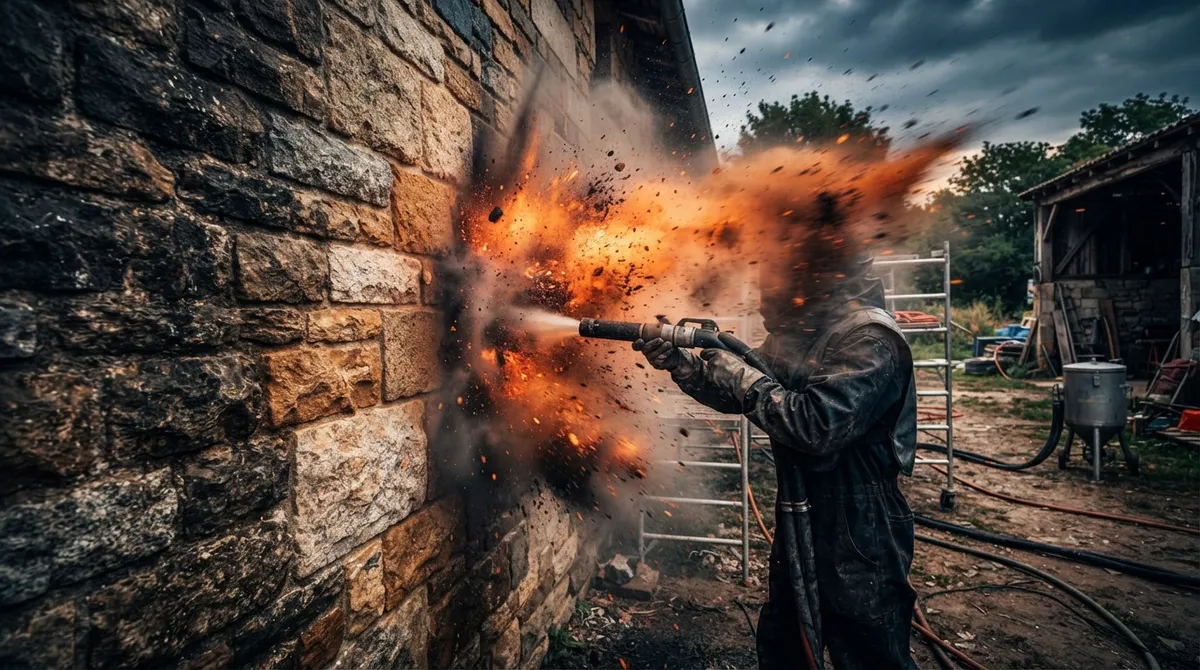
Not all stone reacts the same way to blasting. Some stone is tough and forgiving. Other stone is soft and easily damaged. Knowing the difference matters more than almost anything else in this process.
Calcareous Stone Needs a Gentle Touch
Marble, limestone, and travertine are calcareous stones. That means they’re sensitive to acid and can also be more easily marked or etched by aggressive blasting methods. These stones often show up in older homes, historic buildings, and upscale patios across central Florida.
For this kind of stone, low-pressure blasting with a fine, soft abrasive tends to work best. The goal is removing the buildup, not the stone itself.
Harder Stone Can Handle More
Granite and slate are generally more resistant to damage from cleaning methods. They can often tolerate a bit more pressure and slightly coarser media. But “more resistant” doesn’t mean bulletproof. Even hard stone can get gouged, dulled, or discolored by the wrong technique.
The bottom line: there’s no universal pressure setting or abrasive that works on every job. The abrasive type, particle size, pressure, and nozzle distance all need to match the specific stone and the result you want.
The Step-by-Step Process We Follow
Here’s how a responsible mobile blasting job on stone typically unfolds, from first phone call to finished surface:
- Assessment first. We look at the stone type, how porous it is, what condition it’s in, and what’s actually causing the discoloration or buildup.
- Identify what needs to go. Graffiti, biological growth, old paint, and mineral staining all respond differently to blasting.
- Test patch. We always try a small, hidden section first. This lets us check for color change, texture change, or damage before touching the whole surface.
- Select media and pressure. Based on the test, we choose the abrasive and settings that will work without harming the stone.
- Contain the work area. We protect landscaping, windows, pool decks, and anything nearby that shouldn’t get dusty or wet.
- Blast the surface. We work in sections, checking progress as we go rather than rushing through the whole area at once.
- Final inspection. We check the finished surface for consistency, then clean up and haul away debris.
This process matters whether we’re working on a Tampa driveway or a historic building facade. Skipping steps is how stone gets damaged.
The Test Patch: Don’t Skip This Step
If there’s one piece of advice we’d want every property owner to remember, it’s this: always ask for a test patch. A small, inconspicuous test area lets you and the contractor inspect the result before committing to the whole job.
What are you looking for in that test patch?
- Any change in color or tone
- Changes in surface texture or roughness
- Damage to mortar joints between stones
- Loss of carved detail or fine edges
- Uneven cleaning that leaves patchy spots
If something looks off in the test patch, that’s the time to adjust, not after blasting an entire patio or building front. This step protects your investment and your stone.
When Blasting Might Be Too Aggressive
Not every stone surface is a good candidate for abrasive blasting. Soft, worn, or historic stone can be damaged even by methods that seem gentle. Conservation experts generally recommend using the gentlest method that gets the job done, and sometimes that means skipping abrasive blasting altogether in favor of dry cleaning or other non-abrasive approaches.
Intricately carved stone, statuary, and delicate architectural details fall into this category too. If you’re dealing with a historic or protected structure, check with the owner, a conservator, or your local regulatory office before any blasting begins. Some buildings require approval before cleaning work can start.
Wet Blasting vs Dry Blasting for Stone
Many mobile blasting jobs use water alongside the abrasive media. This is often called wet or dustless blasting. It helps knock down airborne dust during the job, which is good for the crew, neighbors, and anyone nearby.
But water-assisted blasting isn’t a magic fix. It doesn’t eliminate every hazard, and it doesn’t guarantee damage-free results on its own. Contractors still need to think about water getting into cracks or joints, runoff heading toward storm drains or landscaping, and how the stone will dry afterward.
| Method | Best For | Key Consideration |
|---|---|---|
| Dry Blasting | Outdoor jobs away from foot traffic, less water-sensitive stone | Requires stronger dust control measures |
| Wet/Dustless Blasting | Occupied areas, indoor-adjacent work, dust-sensitive sites | Runoff and water intrusion need planning |
We use dustless blasting often across Tampa Bay because it works well for job sites near homes, businesses, and foot traffic. It’s one more tool that lets us match the approach to your specific property.
Silica Dust: A Safety Issue You Should Know About
Here’s something a lot of people don’t realize. Blasting stone can create respirable crystalline silica dust, even when the blasting media itself isn’t sand. This happens because the stone substrate itself can release silica particles during the process.
This matters because of health risks tied to long-term silica exposure. The Occupational Safety and Health Administration set clear limits on this. Under OSHA’s respirable crystalline silica standard, the permissible exposure limit is 50 micrograms per cubic meter as an 8-hour average, with an action level of 25 micrograms per cubic meter.
These aren’t just numbers on paper either. A CDC-hosted review of OSHA inspection data from 1980 through 1995 found that roughly 35% of samples across included industries exceeded the silica exposure limit. That’s historical data, not a current snapshot, but it shows why this matters and why proper controls have always been necessary.
A professional mobile blasting company should know these regulations and take steps to control dust, protect workers, and keep the site safe for everyone nearby. This is part of what you’re paying for when you hire pros instead of going the DIY route.
Common Stone Cleaning Projects We Handle
Mobile blasting covers a wide range of stone surface work. Here are some of the most common jobs we see across central Florida:
- Graffiti removal from stone walls, columns, and storefronts
- Removing algae, mold, and biological growth from patios and walkways
- Stripping old paint or sealant from stone exteriors
- Cleaning mineral stains and rust marks off stone surfaces
- Restoring stone pool decks and pavers before resealing
- Prepping stone surfaces before a new coating or sealer goes on
If graffiti is your main headache, we’ve got more detail in our guide on graffiti removal for Tampa property owners. And if your project involves pavers specifically, check out our tips on cleaning pavers before sealing.
How Kärcher’s Guidance Compares to Blasting
It’s worth noting that pressure washing and blasting are different tools for different jobs. Kärcher’s own stone facade cleaning guidance describes water-cleaning examples using impact pressure not exceeding 2 bar for certain applications, and steam cleaning around 0.5 bar surface pressure. These figures apply to water cleaning methods, not abrasive blasting pressures, which work differently and depend heavily on the media and stone type involved.
This is exactly why matching the method to the material matters so much. Sometimes pressure washing gets the job done. Other times, especially with heavy encrustation or graffiti, abrasive blasting works better. A knowledgeable contractor can tell you which approach fits your situation, rather than defaulting to whatever equipment they happen to own.
Questions to Ask Before Hiring a Stone Blasting Contractor
Before signing on with anyone for stone surface blasting, ask these questions:
- Have you worked with this specific type of stone before?
- Will you do a test patch before starting the full job?
- What media and pressure do you plan to use, and why?
- How will you protect surrounding landscaping, glass, or structures?
- Are you insured, and what happens if something goes wrong?
- How do you manage dust and silica exposure on the job site?
A contractor who answers these questions clearly and confidently is one worth trusting. If you get vague answers or pushback, that’s a sign to keep looking.
Why Mobile Blasting Makes Sense for Stone Projects
One of the best things about mobile blasting is that it comes to you. There’s no need to remove stone slabs, pavers, or architectural elements and ship them somewhere else. We show up fully equipped and self-contained, ready to work at your home, business, or job site anywhere in Tampa Bay or the central Florida corridor.
This matters a lot for stone specifically, since stone is heavy, often built into a structure, and sometimes irreplaceable if it’s historic or custom-cut. Bringing the equipment to the stone, rather than the other way around, keeps things simpler and safer.
We match the blast to your surface, not the other way around. That means every job starts with the right questions and ends with clean, sound material ready for whatever comes next, whether that’s sealing, staining, or just enjoying a clean patio again.
Ready to Bring Your Stone Back to Life
Stone surfaces deserve careful, experienced handling, not a one-size-fits-all blast job. Whether you’re dealing with graffiti on a commercial building, algae on a residential patio, or old paint on a historic facade, the right approach protects your stone while getting real results.
We’re proud to serve property owners throughout Tampa, Clearwater, Sarasota, Ocala, Orlando, Fort Myers, and communities like Brandon, Riverview, and Plant City. You talk to the people doing the work, every time. If you want to see how we’ve handled similar projects, check out our project gallery or browse our residential blasting services and commercial blasting services pages.
You can also see what our customers are saying about us on Google before you decide who to call. Ready to get your stone surface looking its best again? Get a free estimate today, or give us a call to talk through your project with our team.
FAQs
Q: What is stone surface blasting, and how does mobile blasting work?
A: Stone surface blasting uses portable abrasive-blasting equipment, sometimes with water, to remove grime, coatings, or growth from stone right on-site. Mobile blasting means we bring the whole rig to your property, so there’s no need to transport heavy stone anywhere. We’re fully mobile and self-contained, so we can work at your home or business without needing your power or water.
Q: Can abrasive blasting damage natural stone?
A: Yes, it absolutely can if the wrong method is used. Soft stone like marble, limestone, and travertine can get etched or scarred by aggressive blasting, which is exactly why we always test a small area first. We match the blast to your surface, not the other way around, so we can avoid these headaches before they happen.
Q: What blasting media is safest for limestone, marble, or granite?
A: It really depends on the stone. Calcareous stones like marble and limestone usually need a fine, soft abrasive and lower pressure since they’re more sensitive to damage. Granite and slate tend to handle more, but there’s no single safe media that works everywhere, which is why we assess each job individually.
Q: Is wet or dustless blasting safe for stone?
A: Wet and dustless blasting can help cut down on airborne dust, which is great for job sites near homes or businesses. That said, it doesn’t automatically prevent all damage, so water intrusion and runoff still need to be managed carefully. We plan for this on every job so your stone and surrounding areas stay protected.
Q: What safety precautions are required when blasting stone because of silica dust?
A: Blasting stone can release respirable crystalline silica, even if the abrasive itself isn’t sand. OSHA sets a permissible exposure limit of 50 micrograms per cubic meter over an 8-hour period, so proper dust control and safety measures matter a lot. We take these precautions seriously to protect our crew and everyone nearby.





