Key Takeaways
-
Match the blasting media to the surface: soft media like soda or walnut shell protects fiberglass, wood, and thin panels, while steel grit suits heavy rust on structural steel.
-
Before hiring, ask how the contractor will contain dust and spent media, who handles disposal, and whether they are fully insured.
-
Test old paint for lead before blasting, since lead-contaminated residue may require special handling under federal, state, and local rules.
-
Wet or dustless blasting reduces airborne dust near homes and active sites, but mist and residue still require cleanup and controls.
-
Get a clear, written estimate with details; price depends on surface area, coating thickness, media choice, access, containment, and waste handling.
-
Watch for red flags such as no proof of insurance, one media for every surface, no dust or waste plan, and no test spot on delicate materials.
Have you ever stared at a rusty trailer, a peeling fence, or a faded pool deck and thought, “Where do I even start?” You are not alone. Most people know the surface needs help. Fewer people know how to pick the right way to fix it.
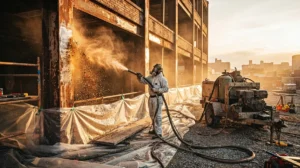
That is where media blasting services come in. A mobile crew brings the equipment to your driveway, dock, shop, or job site. They strip away rust, old paint, coatings, and buildup. Then they leave the surface clean and ready for the next step.
But not every job needs the same approach. The wrong media can scar soft materials. The wrong plan can leave dust and debris all over your property. This guide walks you through the process in plain, friendly steps so you can hire with confidence in 2026. Along the way, you will learn how to match media to surface, what safety questions to ask, and how to spot a quality contractor.
What Media Blasting Services Actually Do
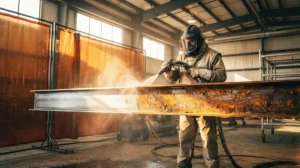
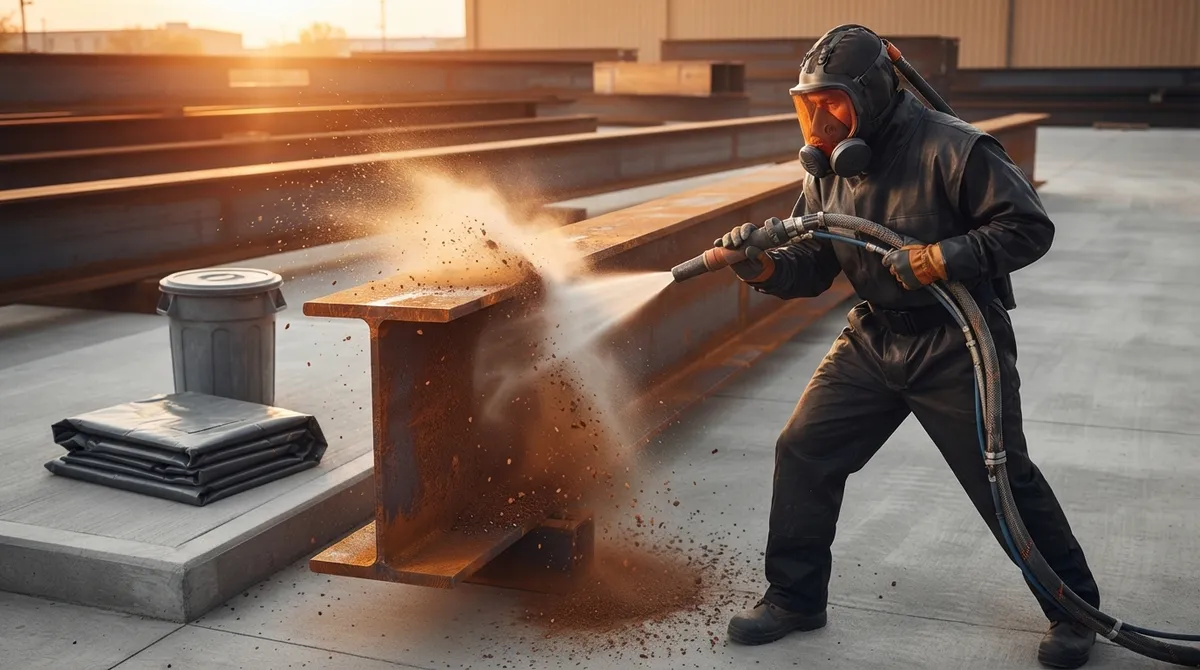
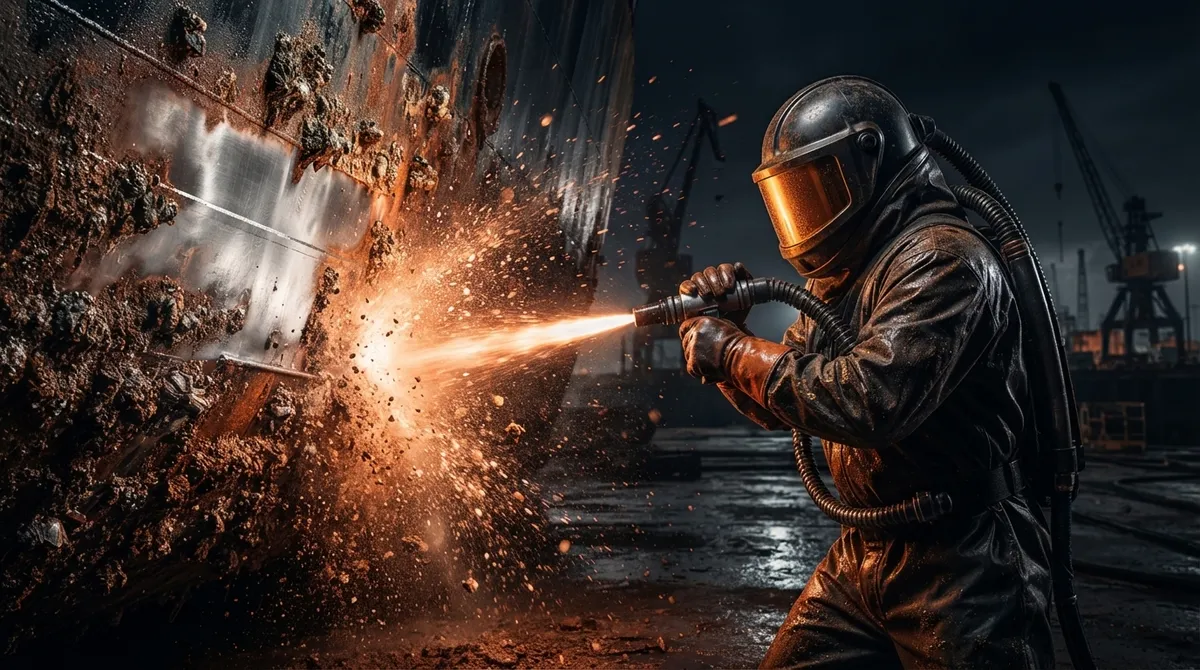
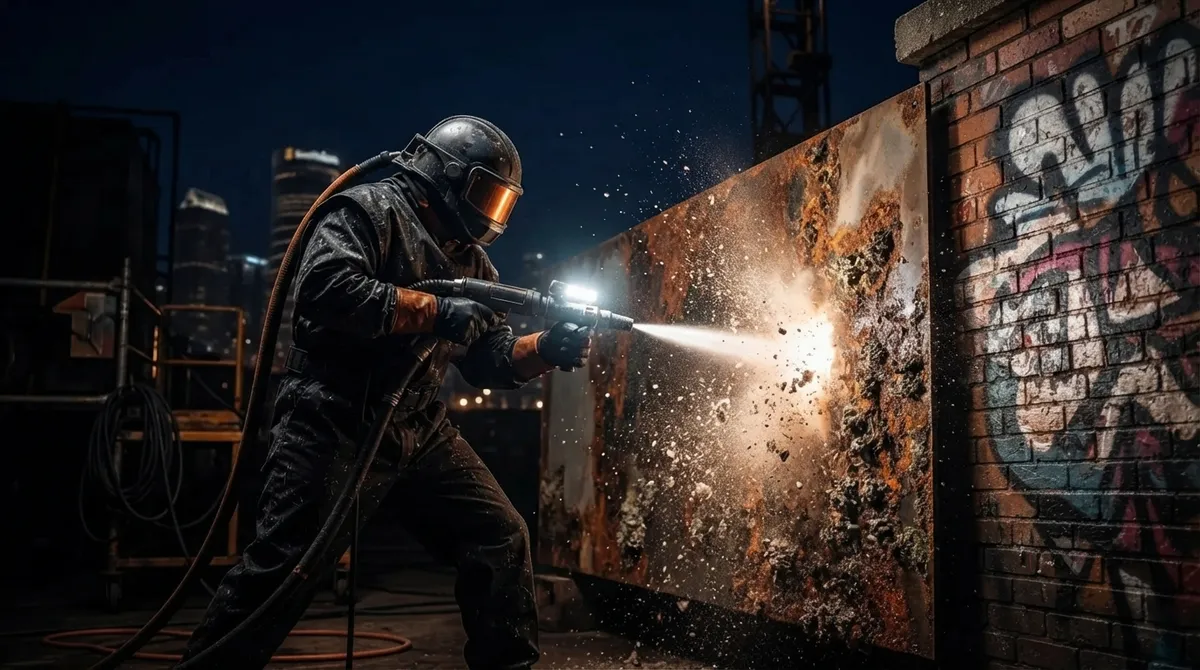
Media blasting means shooting small particles at a surface at high speed. The particles knock off paint, rust, scale, and grime. Depending on the setup, the force comes from compressed air, water, or a spinning wheel. If you want the basics, here is a quick overview of what is sandblasting and how the process started.
Mobile media blasting takes that process on the road. Instead of hauling your boat, gate, or equipment to a fixed shop, the crew comes to you. At Blastworx, our rig is fully mobile and self-contained. We work dockside, in a driveway, at a shop, or on a job site without needing your power or water.
Blasting does more than clean. It can also:
- Remove paint, rust, scale, and graffiti
- Strip old coatings and buildup
- Create a texture so new coatings bond well
- Take a surface back to clean, bare metal or clean, sound material
If you want to see how this plays out on real jobs, the 8 Facts: What Is Sandblasting in Florida? (2026) article is a helpful companion read.
Step 1: Know Your Surface and Your Goal
Before you call anyone, take a minute to size up the job. Good contractors will ask you the same questions, so you may as well be ready.
- What is the surface made of? Steel, iron, aluminum, fiberglass, wood, brick, concrete, and stone all react differently.
- What needs to come off? Rust, paint, antifouling, graffiti, grease, or old sealer each call for a different approach.
- What happens next? Painting, powder coating, sealing, or resurfacing all need a specific finish underneath.
- Where is the job? A driveway, a dock, an indoor shop, and a busy parking lot all have different needs.
Here is the big idea. A coating is only as good as the surface underneath it. Paint, powder coat, resurfacing, and antifouling will not last if the prep is bad. Hand-sanding misses rust in seams and corners. Blasting takes the whole surface back to clean, sound material at once. That helps new coatings bond properly and hold up in Florida’s heat, humidity, and salt air.
Step 2: Match the Media to the Surface
This is the part that matters most. There is no single best media. The right media for the job depends on the surface, the coating, and the finish you want. We match the blast to your surface, not the other way around.
Common media include mineral abrasives like garnet and slag, steel shot or grit, glass beads, plastic media, baking soda, and organic options like walnut shell or corn cob. OSHA also lists ice, dry ice, sponge, and sodium bicarbonate as alternatives to traditional abrasives.
| Media Type | Best For | Strength |
|---|---|---|
| Soda (baking soda) | Fiberglass, gelcoat, delicate paint, thin panels | Gentle |
| Walnut shell | Wood, soft metals, tight detail work | Gentle |
| Glass bead | Cleaning and light finishing on metal | Light to medium |
| Aluminum oxide or garnet | Rust and coating removal on metal | Medium to strong |
| Steel grit or slag | Heavy rust, thick coatings, structural steel | Strong |
Want a closer look at the gentler end of the scale? Read Why Is Soda Blasting Tampa’s Gentlest Cleaning Fix? For a side-by-side view, check out Aluminum Oxide Blasting vs. Sand: Which Wins?
It Is Not Just About the Media
Media type is only part of the story. Particle size and shape, air pressure, nozzle choice, blasting distance, angle, and dwell time all change how aggressive the blast feels. A skilled operator tunes all of these together. A good contractor will also test a small hidden area first when the surface is delicate or the finish matters.
Step 3: Choose Wet, Dry, or Dustless
Next, think about how the media is delivered. Dry blasting uses air and media. Wet or water-assisted blasting adds water to the mix. Dustless blasting is a popular version of the wet approach that cuts down on airborne dust.
- Dry blasting: Great where moisture is a problem, as long as dust and debris are contained and managed.
- Wet or dustless blasting: Helps reduce airborne dust, which is handy near homes, active job sites, and indoor work.
One honest note: wet blasting helps with dust, but it does not erase every risk. Mist, dirty water, and dried residue still need smart controls and cleanup. Dustless blasting is available for indoor work, active job sites, and areas near other equipment. To dig deeper, read Wet Sandblasting vs Dry: Which One Fits Your Job? or What Makes Dustless Blasting In Tampa So Effective?
Step 4: Ask About Safety, Dust, and Cleanup
This step separates the pros from the rest. Blasting can create hazardous dust and loud noise. Both the media and the material being removed can add risk. Old paint may contain lead. Some abrasives and some masonry can release respirable crystalline silica. OSHA’s silica standard sets a permissible exposure limit of 50 micrograms per cubic meter of air as an 8-hour average, so this is not a small detail.
OSHA points to controlling hazards at the source. That means swapping in a safer media where possible, containing the work area, and using ventilation. Proper respiratory protection and training matter too.
Here are smart questions to ask any contractor:
- How will you contain dust and spent media?
- How will you protect nearby landscaping, pools, windows, and people?
- Do you test for lead if the paint is old?
- Who handles cleanup, waste handling, and disposal?
- Are you fully insured?
That last point on waste is a big one. Spent media mixed with removed coating is not always ordinary trash. What it contains, and the rules where you live, decide how it must be handled. Lead-contaminated residue may need special controls. Always ask who is responsible for containment, cleanup, and disposal before the work starts.
For a closer look at how crews work safely, see 5 Safe Blasting Procedures Every Mobile Crew Follows and How Do Pros Handle Sandblasting Dust Control Safely?
Step 5: Pick the Service That Fits Your Project
Mobile blasting covers a wide range of work. Here is a quick guide to how it breaks down.
| Service | Typical Surfaces | What We Remove |
|---|---|---|
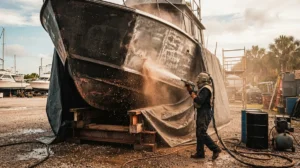
| Marine | Hulls, trailers, docks, davits, props, rails | Bottom paint, antifouling, rust, buildup |
| Automotive | Frames, body panels, wheels, undercarriages | Rust, paint, old coatings |
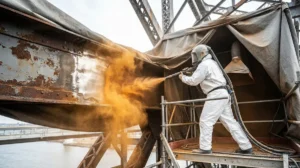
| Industrial | Structural steel, tanks, heavy equipment | Rust, scale, protective coatings |
| Commercial | Concrete, storefronts, fleets, enclosures | Graffiti, paint, rust, buildup |
| Residential | Fences, railings, pool decks, pavers, wood decks | Paint, rust, stains, old sealer |
A few examples show how the media choice shifts with the job. A fiberglass hull gets softer media like soda or walnut shell to protect the gelcoat. A steel trailer can take a stronger abrasive. Thin car body panels get lower pressure and cooler media to help prevent warping. Wood and trim need soft media and low pressure, while iron, brick, and concrete can handle more.
Some surfaces are not good candidates at all. We do not blast vinyl fencing because it is too delicate. Painted walls, glass, veneer, and cultured stone must be evaluated in person first. If you are curious about a particular surface, these reads may help: 12 Facts: Does Sandblasting Damage Wood? (2026 Guide) and 11 Facts: Does Sandblasting Damage Concrete? (2026)
Step 6: Understand What Affects the Price
Everyone wants to know the cost. The honest answer is that it depends. There is no reliable one-size price for mobile media blasting, because jobs vary so much. Here is what moves the number:
- Surface area and shape
- Coating type and thickness
- Media choice
- Access and site conditions
- Containment and dust-control needs
- Waste handling requirements
Because of all that, be wary of any quote given with no details. A clear, written estimate is a good sign. Our estimates are written, and the price we give is the price you pay. If you want to understand why quotes can differ so much, read Why Do Sandblasting Service Quotes Nearby Vary So Much? or How Much Do Sandblasting Estimates Really Cost?
Step 7: Prepare Your Site Before Blast Day
A little prep makes the day go smoother. You do not need to do much, but a few steps help.
- Clear the area of cars, furniture, planters, and loose items.
- Point out delicate spots, like windows, pool equipment, or landscaping.
- Share any history you know, such as old paint age or past repairs.
- Confirm where the rig can park and where the work will happen.
- Keep kids and pets away from the work zone.
Weather matters too, especially in Florida. Rain, wind, and heat can all affect the plan. A good crew will talk through timing with you ahead of time. For a full checklist, see 9 Steps to Prepare for Sandblasting the Right Way.
Why Mobile Beats Hauling It Away
Think about moving a boat trailer, a long iron fence, or a pool deck to a shop. You cannot. Even for movable items, hauling costs time and money. Mobile service skips the trip. We come to you, and we contain the mess and protect the surrounding area while we work.
Mobile also keeps you close to the action. When you call, you talk to the people doing the work. If you are weighing your options, Mobile vs. Shop Sandblasting: Which One Wins? lays out the trade-offs, and Why Do Tampa Businesses Choose Mobile Sandblasting? shares why local companies lean mobile.
How Our Process Works
At Blastworx, we keep things simple. Our four steps look like this:
- Walkthrough. Send photos or we come look, and we figure out the right media for the surface.
- Free estimate. You get a clear, written estimate the same day.
- Blast and strip. We protect the surrounding area, then blast the surface clean at your location.
- Ready to finish. The surface comes out clean and ready for the next step.
We are an owner-operated crew based in Tampa. We serve Tampa Bay and the central Florida corridor, including Clearwater, Sarasota, Ocala, Orlando, and Fort Myers, plus towns like Brandon, Riverview, Plant City, and Lutz. You can check our service areas or browse our project gallery to see the results. For the right job, we will travel anywhere in the state.
One note on finishing. For most of our work, we strip and prep only, and the homeowner, painter, or coating crew handles the refinish. Limited coating work may be available on certain automotive and industrial jobs, so just ask.
Curious what real customers think? Visit us on Google — see what our customers are saying about us.
Red Flags to Watch For
Hiring the wrong crew can cost you more than the job itself. Watch out for these warning signs:
- No proof of insurance
- One media for every surface
- No plan for dust, containment, or waste
- A quote with no details or walkthrough
- No test spot on delicate materials
- Pressure to skip lead testing on old paint
For more on this topic, give 7 Mistakes That Cost You a Sandblasting Service Nearby a quick read.
Ready to Get Started?
Choosing media blasting services does not have to feel stressful. Know your surface, match the media, ask about safety, and pick a crew that explains things in plain words. Do that, and you will end up with a surface that is back to clean, sound material and ready for the next step.
If you have a project in mind, get a free estimate and send us a few photos. Prefer to talk it through? Give us a call at 813-380-8092. You can text us too. We come to you, and you will always talk to the people doing the work.
FAQs
Q: What are mobile media blasting services?
A: Mobile media blasting services bring the blasting equipment to your location instead of making you haul your item to a shop. The crew strips rust, paint, coatings, and buildup on-site, then leaves the surface clean and ready for the next step. It is a handy option for boats, trailers, fences, pool decks, and job sites.
Q: Is media blasting safe for wood, brick, or delicate surfaces?
A: It can be, when the media and pressure match the surface. Soft media like soda or walnut shell paired with low pressure works well on wood and trim, while brick and concrete can handle a bit more. A good crew will test a small area first and will tell you honestly if a surface, like vinyl fencing, is not a good fit.
Q: Does mobile blasting create dust, and how is it controlled?
A: Blasting can create dust, so a good contractor plans for it. Crews use containment, dustless or wet methods, and protection for nearby landscaping, windows, and pools. Wet blasting helps a lot, but mist and residue still need cleanup.
Q: Can media blasting remove lead paint, and how is the waste handled?
A: Old paint may contain lead, so it should be tested before any blasting begins. Spent media mixed with removed coating is not always ordinary trash, and lead-contaminated residue may need special handling under federal, state, and local rules. Always ask your contractor who handles containment, cleanup, and disposal.
Q: How much do media blasting services cost?
A: The price depends on the surface area, coating thickness, media choice, site access, containment needs, and waste handling. Because every job is different, a walkthrough or photos lead to the most accurate number. We provide a clear, written estimate the same day.