Key Takeaways
-
Mobile sandblasting is usually the better choice for large, fixed, or hard-to-move surfaces like decks, fences, walls, and boat hulls, since the crew comes to your property with self-contained equipment.
-
Shop-based blasting only makes sense for small, portable parts that fit in a box and can be easily hauled in and out of a controlled booth.
-
Media choice matters: soda or walnut shell suits delicate surfaces like fiberglass and wood, while garnet or steel abrasives handle tougher rust and heavy steel prep.
-
NIOSH has recommended since 1974 that silica sand, or blasting material with more than 1% crystalline silica, not be used due to silicosis risk, so silica-free media is the safer standard.
-
A coating is only as good as the surface beneath it, so agree on a target cleanliness grade or surface profile with the coating maker and blaster before work begins.
-
Ask potential contractors whether they are fully insured, what media they use and why, how they protect surrounding areas, and what dust controls they apply before hiring.
Let’s be honest. When most people hear “professional sandblasting,” they picture a big, noisy shop with a cabinet and a pile of parts. That is one way to do it. But there is another way that is growing fast across Florida: the blaster comes to you.
So which one is right for your project? It depends on what you are blasting, how big it is, and how much hassle you want. In this guide, we will walk through both options in plain language. We will cover how each one works, where each one shines, and what to watch for on safety and surface prep.
If you want the quick background first, here is a handy explainer on what is sandblasting. For this article, we will focus on real-world jobs in Tampa Bay and central Florida. Grab a coffee, and let’s dig in.
What Does Professional Sandblasting Actually Mean?
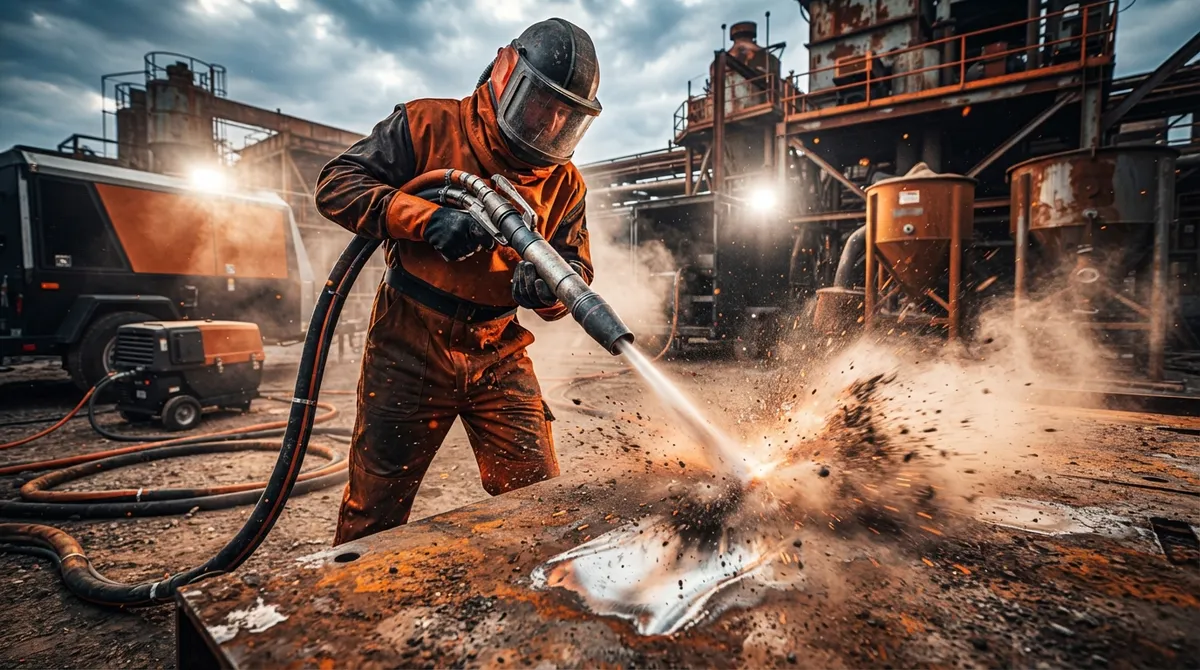
Professional sandblasting means using abrasive blasting equipment to clean a surface or get it ready for a new coating. The term is used loosely. Many jobs today do not use sand at all. Crews pick from soda, glass bead, garnet, walnut shell, steel abrasives, and more.
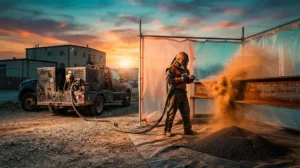
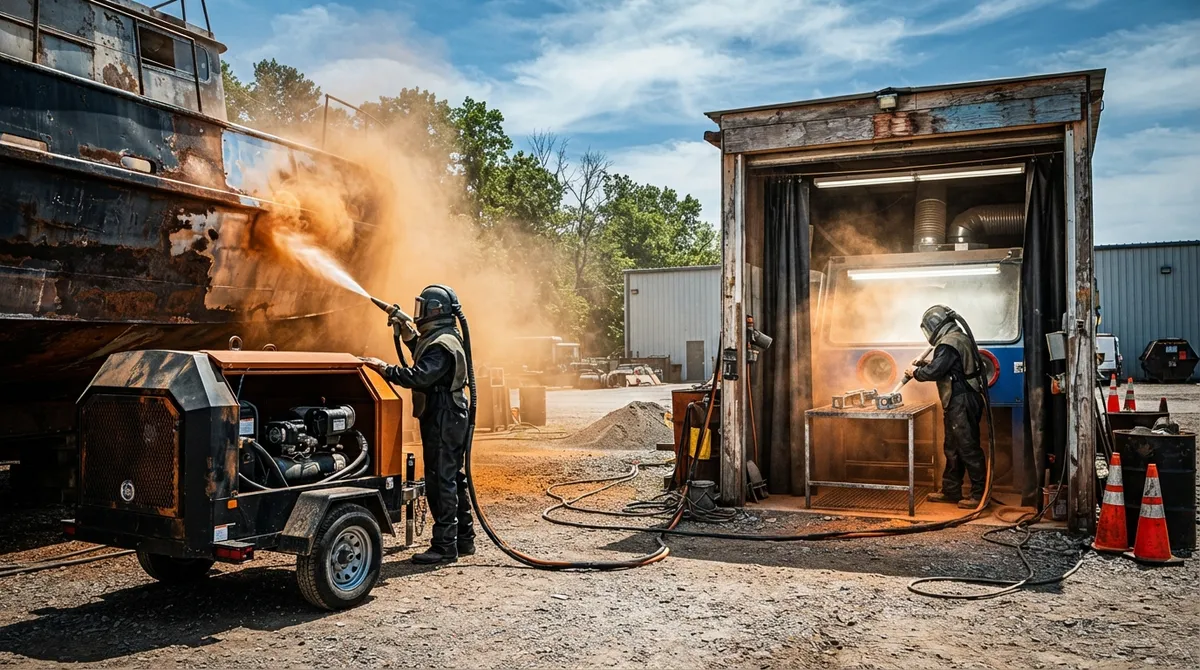
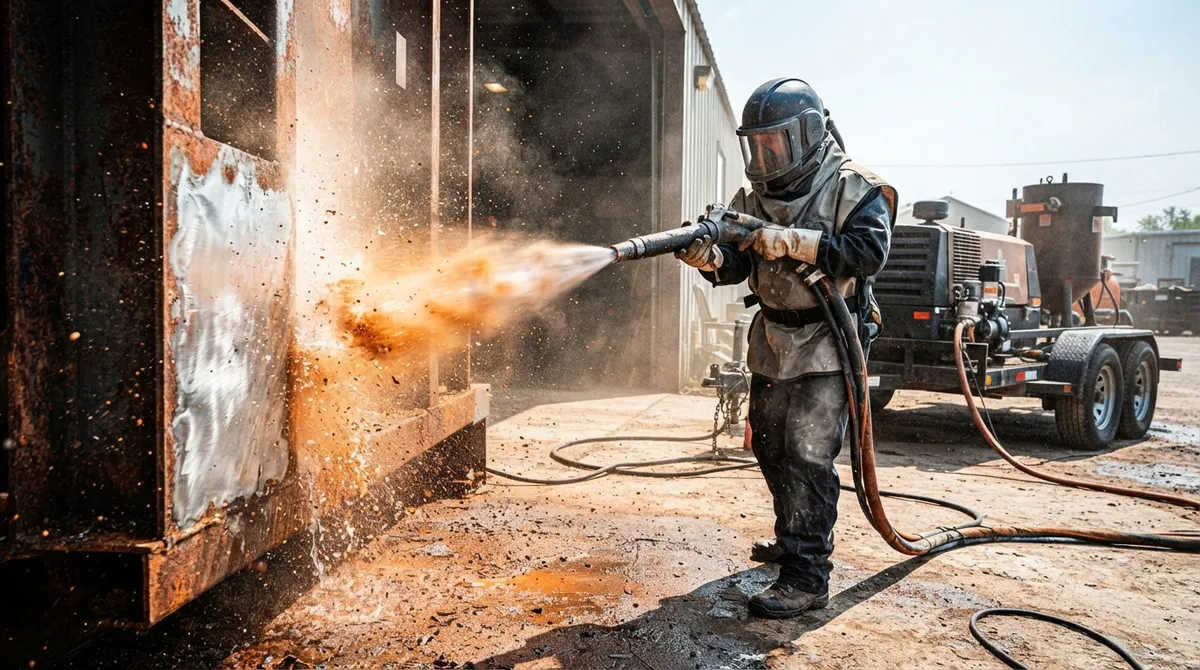
In the mobile world, the contractor brings the whole setup to your property. That means the compressor, the blast pots, the media, and the safety gear. The goal is simple: remove rust, old paint, coatings, graffiti, and buildup, then leave a clean surface ready for the next step.
A true professional also does three other things well:
- Picks the right media for your surface
- Meets the prep standard your coating needs
- Controls dust, noise, and debris around the work area
At Blastworx, our line is simple: we match the blast to your surface, not the other way around. That idea applies whether you hire a mobile crew or a shop.
How Mobile Professional Sandblasting Works
With a mobile rig, the work happens at your location. Our rig is fully mobile and self-contained, so we work dockside, in a driveway, at a shop, or on a job site without needing your power or water.
Here is how a typical mobile job goes:
- Walkthrough. You send photos or we come look. We figure out the right media for the surface.
- Free estimate. You get a clear, written estimate the same day.
- Blast and strip. We protect the surrounding area, then blast the surface clean at your location.
- Ready to finish. The surface comes out clean and ready for the next step.
That is the whole flow. No hauling a gate or a boat trailer across town. No renting a truck. No waiting a week for a shop to have room.
How Shop-Based Sandblasting Works
A shop works the opposite way. You bring the item to them. They blast it in a booth or cabinet, then you pick it up. For small parts, this can be a great fit.
Shops have a controlled setting. Dust stays inside a booth. Weather does not matter. For a box of brackets or a single engine part, dropping it off can make sense.
The catch is size and logistics. A shop cannot blast your pool deck, your fence line, a dock, or a building wall. And big items like frames, trailers, or equipment can be a pain to move. If you want a deeper look at this tradeoff, read our mobile vs. shop sandblasting breakdown.
Mobile vs. Shop: Side-by-Side Comparison
| Factor | Mobile Blasting | Shop Blasting |
|---|---|---|
| Where the work happens | At your property or job site | At the contractor’s facility |
| Best for | Large, fixed, or hard-to-move items | Small parts that are easy to transport |
| Transport needed | None | You haul it in and out |
| Fixed surfaces (decks, walls, concrete) | Yes | No |
| Dust and debris control | Containment, barriers, wet or dustless methods | Booths and cabinets |
| Downtime | Often less, since nothing leaves the site | Depends on shop schedule and pickup |
| Weather exposure | Planned around conditions | Not an issue |
Notice a pattern? If you can lift it into a pickup, a shop might work. If you cannot, mobile is usually the answer. We also wrote a related piece on mobile rigs vs. local shops if you want more detail.
Choosing the Right Media for the Job
Media is the stuff that does the cutting or cleaning. Picking the right one is the heart of professional sandblasting. Too harsh and you damage the surface. Too soft and you waste time.
Here is a quick guide to common choices:
- Soda: Gentle. Great for fiberglass, gelcoat, and delicate finishes.
- Walnut shell: Soft but effective. Good for wood and softer surfaces.
- Glass bead: Leaves a smoother, cleaner finish on many metals.
- Garnet: A strong, silica-free cutter for tougher jobs.
- Steel abrasives: Heavy duty and reusable for steel prep.
If you are weighing two common options for metal, our guide on dry blasting vs. soda blasting for metal helps you pick. And if you are on the fence about the safer path overall, see media blasting vs. sandblasting.
Safety Matters More Than Most People Think
Here is the part many folks skip, and it is the part that separates pros from amateurs. Abrasive blasting can create hazardous dust. Both the media and the old coating can carry harmful stuff.
According to OSHA, high dust and noise levels are real hazards. The abrasive and the blasted surface can both contain hazardous materials, including silica and lead. And NIOSH has recommended since 1974 that silica sand, or any blasting material with more than 1% crystalline silica, not be used because of the risk of silicosis.
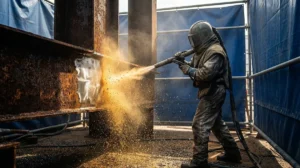
That is why professional crews lean on silica-free media and proper controls. OSHA guidance puts engineering controls first. That means substitution, isolation, containment, and ventilation. Work practices and respiratory protection come next. For blasting, OSHA points to NIOSH-approved Type CE supplied-air respirators.
For mobile work, add in a few more concerns:
- Nearby people, pets, and vehicles
- Landscaping and pools
- Weather and wind
- Access and debris cleanup
Wet and dustless methods can cut airborne dust. They do not erase the need to manage contaminants, runoff, or worker exposure, though. A good crew plans for all of it. You can read more about safe blasting procedures mobile crews follow, and about how pros handle dust control.
Surface Prep Standards: The Part That Makes Coatings Last
A coating is only as good as the surface underneath it. Paint, powder coat, resurfacing, and antifouling all fail early when the prep is bad. Hand-sanding misses rust in seams and corners. Blasting takes the whole surface back to clean, sound material at once.
Professional jobs often follow written standards. AMPP, a leading standards body, maintains guidance for dry and wet abrasive blasting, surface cleanliness, media, surface profile, and testing for hidden contaminants like soluble salts.
A few useful facts from that world:
- For steel, AMPP-style cleanliness grades include brush-off, commercial, near-white, and white-metal blast cleaning.
- For concrete, dry and wet abrasive blasting can produce surface profiles in the CSP 3 to 7 range.
- The right grade or profile depends on the coating system and the service conditions.
The smart move is to have the owner or specifier, the coating maker, and the blaster agree on the target before work starts. If you are prepping for paint, our list of sandblast painting prep steps is a nice companion read. For bigger coating work, check out surface prep steps before commercial coating.
Where Mobile Blasting Really Shines
Some jobs are made for a mobile rig. If it is attached to the ground, too big to move, or costly to shut down, mobile wins.
Residential Projects
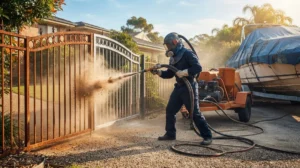
Think fences, railings, gates, pool decks, patios, pavers, and outdoor furniture. We use soft media and low pressure on delicate surfaces like wood and trim, and stronger media for iron, brick, and concrete. We contain the mess and protect the surrounding area, including landscaping, pools, and windows. Learn more about our residential blasting work, or read how pool deck blasting restores a Florida patio.
Commercial and Industrial Projects
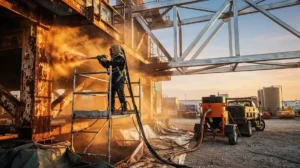
Storefronts, parking areas, graffiti, structural steel, tanks, and heavy equipment are all common. Dustless blasting is a great option for indoor work and active job sites. We can also work after hours or on weekends to keep disruption low. See our commercial blasting and industrial blasting pages, or read whether you can sandblast a storefront while it is open.
Marine and Automotive Projects
Boat hulls, trailers, docks, frames, wheels, and body panels all benefit from the right media. Fiberglass gets gentle soda or walnut shell. Heavy frames get stronger abrasives. Explore our marine blasting and automotive blasting services for more.
When a Shop Might Be the Better Fit
We are fans of mobile work, but we will be straight with you. A shop can be the right call in a few cases:
- You have a handful of small parts that fit in a box.
- The item is already off the vehicle or machine and easy to carry.
- You need a controlled booth for a very specific finish.
If that sounds like your job, do not feel bad about dropping it off. The best choice is the one that fits your project. And if you are not sure, send us a photo. We will tell you honestly which way to go.
What Affects Cost and Timeline?
Every job is different, so prices vary by location and project. Here are the main things that move the number:
- Size of the surface or item
- Type and thickness of the coating or rust
- The media needed
- Access and setup needs
- Containment and cleanup requirements
The best way to compare is to ask for a clear, written estimate that lists exactly what is included. For more on this, see how much sandblasting estimates really cost and how long sandblasting takes in Florida.
How to Pick a Pro You Can Trust
Whether you go mobile or shop, ask a few simple questions before you hire:
- Are you fully insured?
- What media will you use, and why?
- How will you protect the surrounding area?
- What dust and debris controls do you use?
- Will I talk to the people doing the work?
Clear answers are a good sign. Vague ones are a red flag. Our guide on what to look for in a sandblasting contractor goes deeper. Contractors who need help with their own marketing can also tap resources like 1 Contractor Solutions and Brain Buzz Marketing.
One more tip: read reviews. You can visit us on Google and see what our customers are saying about us before you ever pick up the phone.
The Verdict: Which One Wins?
For most real-world projects across Tampa Bay and central Florida, mobile professional sandblasting wins. It saves hauling, cuts downtime, and handles the big, fixed surfaces a shop simply cannot touch. Shops still have a place for small, portable parts.
The best pick comes down to your surface, your size, and your schedule. And whichever way you go, remember the golden rule: a coating is only as good as the surface underneath it.
Ready to get your surface back to clean, sound material and ready for the next step? Get a free estimate today, or give us a call at 813-380-8092. You can text, too. We come to you, we contain the mess, and you talk to the people doing the work.
FAQs
Q: What is professional mobile sandblasting, and how does it work?
A: It is abrasive blasting done at your location. The contractor brings the equipment and media, protects the surrounding area, and blasts the surface clean so it is ready for the next step. Nothing has to be hauled to a shop.
Q: What surfaces can a mobile blasting contractor clean or prepare?
A: Mobile crews can work on metal, concrete, brick, wood, fiberglass, and more, as long as the right media is used. Some surfaces, like painted walls, glass, and veneer, should be checked in person first, and vinyl fencing is too delicate to blast.
Q: Is sandblasting safe around homes, vehicles, and landscaping?
A: Yes, when a pro plans for it. Good crews use barriers, containment, and dust control, and they protect landscaping, pools, and windows. Wet and dustless methods can cut airborne dust even more.
Q: What is the difference between dry, wet, and dustless blasting?
A: Dry blasting uses air and abrasive with no water. Wet blasting adds water to reduce airborne dust, and dustless blasting is a wet method often used indoors or near active work. Wet methods still need runoff and contaminant planning.
Q: What affects the cost and timeline of a blasting job?
A: Size, coating thickness, rust level, media type, access, and cleanup needs all play a part. The best way to know for sure is to get a clear, written estimate after a quick walkthrough or photos.