Key Takeaways
-
Mobile sandblasting brings trained crews and a self-contained rig to your driveway, dock, or job site, so large or fixed items never need hauling or trailer rental.
-
Surface prep determines coating success: blasting removes rust and buildup evenly across the whole surface, letting new paint or coating bond and last in Florida's heat, humidity, and salt air.
-
Media must match the surface: soft media like soda or walnut shell suits fiberglass and wood, while stronger abrasives suit heavy steel rust and concrete stains.
-
Choose wet or dustless blasting for dust-sensitive jobs; OSHA's silica exposure limit is 50 micrograms per cubic meter (8-hour average), with action level at 25.
-
Cost depends on surface area, coating thickness, surface type, media, containment, access, and schedule, so get a walkthrough or photos and a written estimate before comparing quotes.
-
Before the crew arrives, clear the work zone, flag fragile nearby items, and book your painter or coater promptly, since bare metal can flash rust quickly in Florida air.
Have you ever stared at a rusty gate, a faded boat trailer, or a stubborn concrete stain and thought, “How on earth do I get that clean?” You are not alone. Many people in Florida deal with rust, peeling paint, and built-up grime. The good news is that you do not have to haul the big stuff anywhere. A mobile sandblasting service brings the work to you.
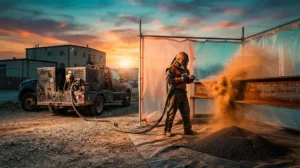
That means trained crews, a self-contained rig, and the right gear show up at your driveway, dock, or job site. No heavy lifting. No trailer rental. No guesswork.
In this guide, we walk through nine things worth knowing before you hire anyone. We will cover how it works, what it can clean, what it costs, and how to stay safe. Whether you own a home in Brandon or run a business near Orlando, you will leave with a clear plan. Let’s get into it!
1. What a Mobile Sandblasting Service Actually Does
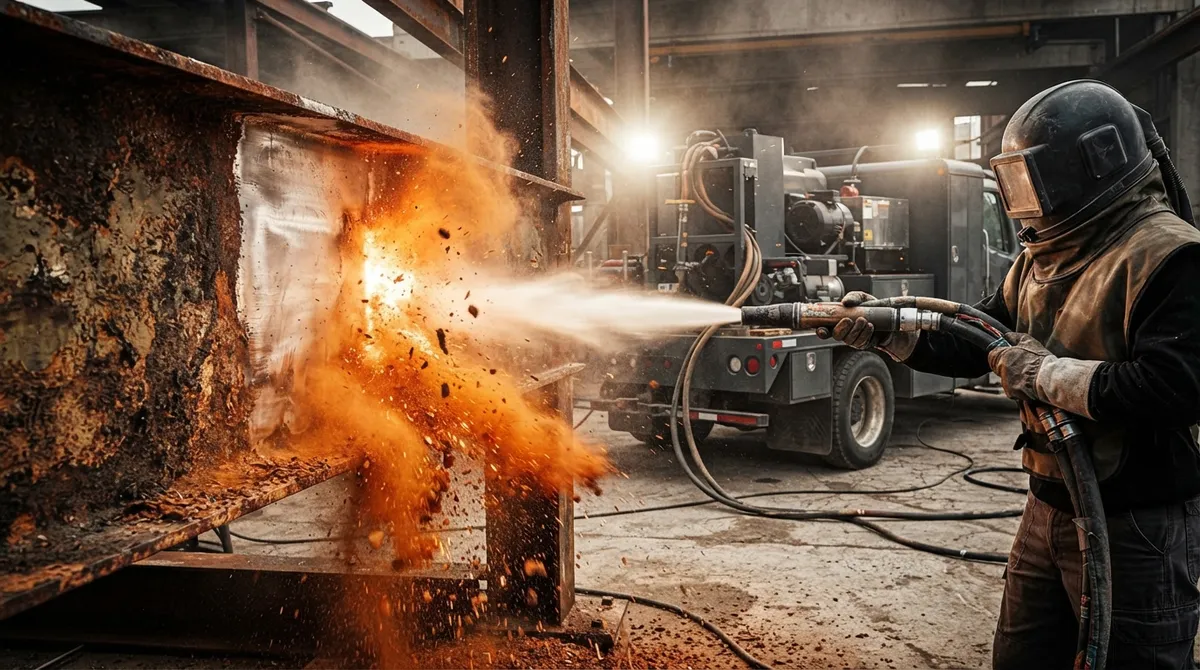
A mobile sandblasting service brings abrasive-blasting equipment and trained operators to your location. Instead of dropping off a heavy item at a shop, the shop comes to you. That is a big deal for things that are large, fixed in place, or just plain hard to move.
The word “sandblasting” is often used as a catch-all. In real life, pros may use many kinds of media, and they may use wet, dry, or dust-controlled methods. If you want a quick background on the basics, here is a helpful overview of what is sandblasting.
At Blastworx, we say it this way: we come to you. Our rig is fully mobile and self-contained, so we do not need your power or water. You can learn more about the basics in our post on what sandblasting is in Florida.
2. The Jobs It Handles Best
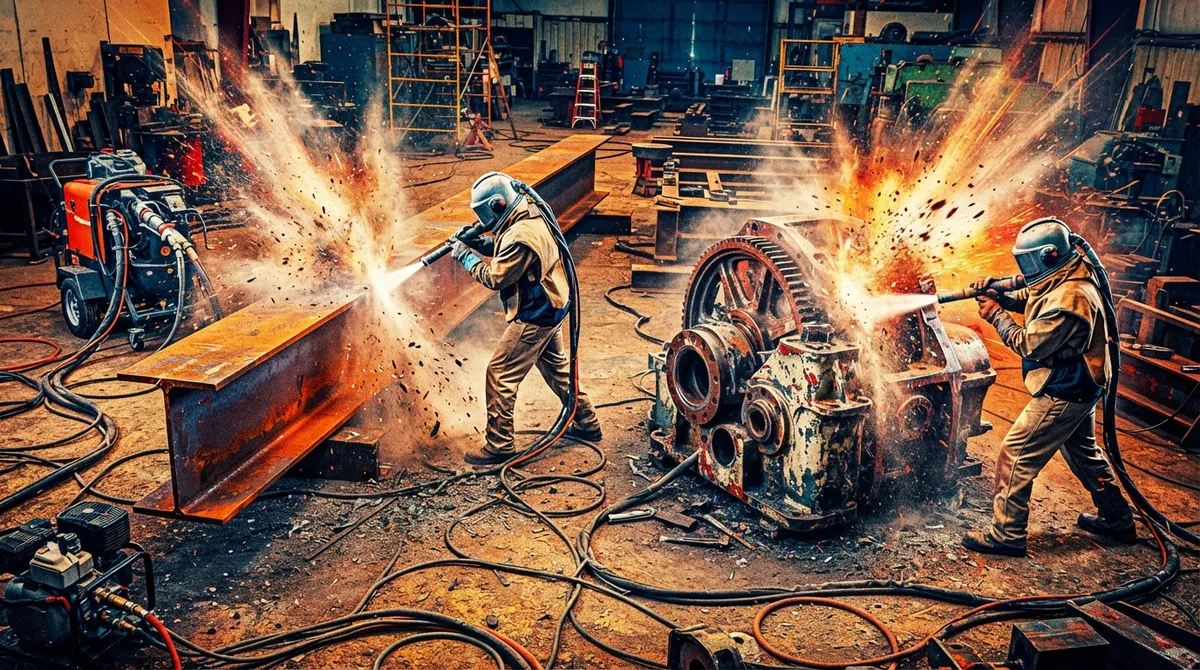
Mobile blasting shines when the item is big, bolted down, or awkward. Here are some common jobs:
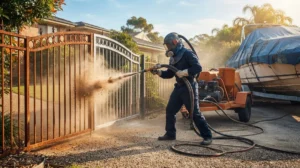
- Fences, gates, and railings that have rust or thick, peeling paint
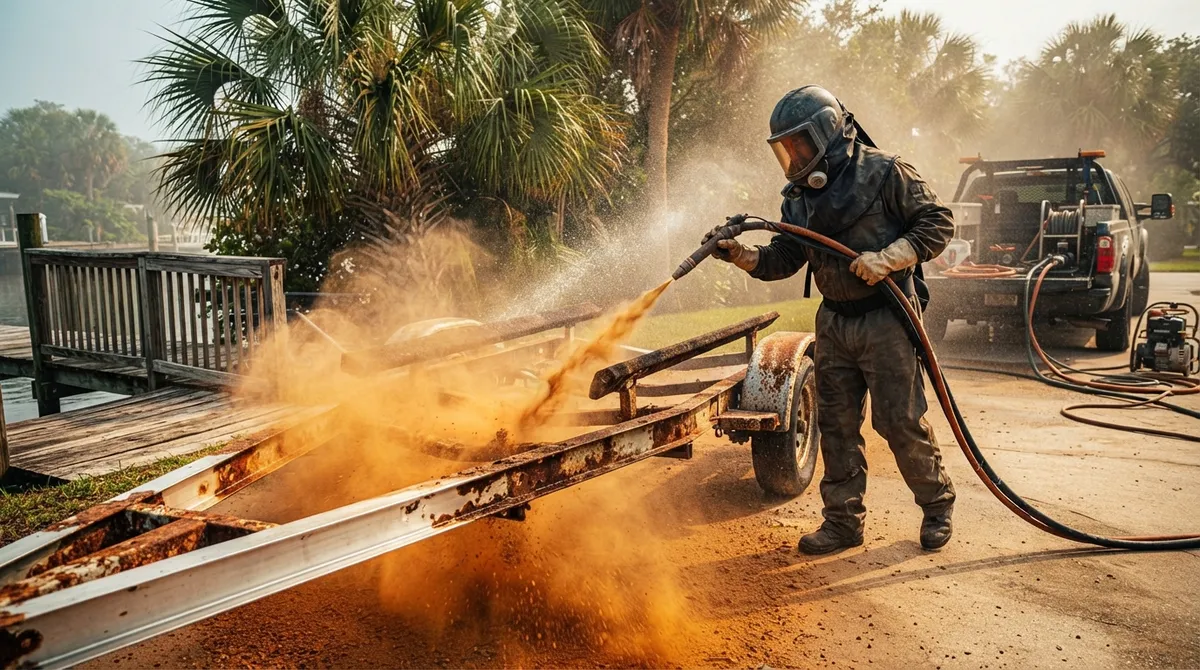
- Boat hulls, trailers, and docks that need old paint and buildup removed
- Frames, wheels, and body panels for classic car projects
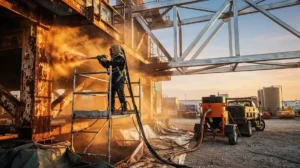
- Structural steel, tanks, and equipment at industrial sites
- Concrete, pool decks, and pavers with stains or old coatings
- Graffiti and buildup on commercial buildings
The goal is simple. Take the surface back to clean, sound material so the next step can go right. Our guide to surface preparation blasting explains why that matters so much.
3. Why Prep Matters More Than the Paint
Here is a hard truth: a coating is only as good as the surface under it. Paint, powder coat, resurfacing, and antifouling all fail when the prep is poor. Florida’s heat, humidity, and salt air make it even tougher.
Hand sanding often misses rust hiding in seams and corners. Blasting takes the whole surface back at once. Then the new coating can bond properly and last.
Curious how this plays out step by step? Check out these sandblast painting prep steps. And if you are weighing blasting against elbow grease, see when blasting beats hand prep.
4. Choosing the Right Media for Your Surface
Not every surface can handle the same abrasive. We match the blast to your surface, not the other way around. The right media for the job protects what is underneath while still removing what you want gone.
Providers may use options other than silica sand. Common choices include aluminum oxide, glass beads, slags, plastic media, soda, walnut shell, and even carbon-dioxide pellets. Each one changes the removal speed, the surface profile, and the dust level.
| Surface | Typical Media Approach | Why It Fits |
|---|---|---|
| Fiberglass and gelcoat | Soda or walnut shell | Soft media protects the hull |
| Heavy rust on steel | Stronger abrasive | Cuts rust and scale fast |
| Thin car body panels | Low pressure, cooler media | Helps prevent warping |
| Wood decks and trim | Soft media, low pressure | Protects delicate grain |
| Concrete and brick | Stronger media | Lifts stains and coatings |
Want to dig deeper? Read about aluminum oxide versus sand or glass bead blasting.
5. Dry, Wet, and Dustless Blasting Explained
You will hear three terms a lot. Here is the simple version:
- Dry blasting uses compressed air to push abrasive at the surface. It is fast and strong, but it makes more dust.
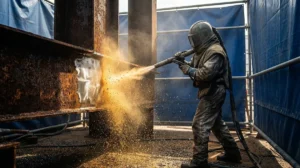
- Wet blasting adds water to the mix. This cuts dust and helps with delicate or dusty jobs.
- Dustless blasting is a wet method built to keep dust way down. It works well near other equipment or in tight spaces.
Each has a place. The best pick depends on the surface, the coating, and where you are working. For a side-by-side look, see wet versus dry sandblasting and learn what makes dustless blasting so effective.
6. Safety and Dust Control Are Non-Negotiable
This part matters. Blasting can create dust, and some dust is harmful. In the United States, OSHA has rules for respirable crystalline silica when exposures may occur. The permissible exposure limit is 50 micrograms per cubic meter as an 8-hour average. The action level is 25 micrograms per cubic meter.
OSHA points to wet methods, local exhaust ventilation, and enclosures as ways to control dust. It also stresses exposure checks and proper respiratory protection. Requirements vary by work setting and materials, so a good crew plans ahead.
Here is what a careful crew should do:
- Pick low-dust methods when they make sense
- Protect people, pets, and nearby property
- Contain and collect spent media and removed coatings
- Wear the right respiratory gear
- Clean up fully before leaving
We contain the mess and protect the surrounding area on every job. For more detail, read how pros handle dust control and the safe blasting procedures mobile crews follow.
7. What Affects the Cost of a Mobile Sandblasting Service
Everyone wants a number. The honest answer is that there is no one-size-fits-all price. A fair quote comes from looking at your actual job, ideally through a walkthrough or clear photos.
These factors usually drive the price:
- Surface area: more square footage means more time
- Coating thickness and condition: thick, stubborn layers take longer
- Surface type: steel, wood, fiberglass, and concrete all differ
- Media and method: some options cost more to run
- Containment and cleanup: tighter sites need more setup
- Access and travel distance: hard-to-reach spots and long drives add time
- Schedule: rush jobs or after-hours work can change the price
Be cautious of a quote that skips the details. Our posts on why quotes vary so much and sandblasting cost facts can help you compare fairly. At Blastworx, you get a clear, written estimate the same day, and the price we give is the price you pay.
8. How to Prepare Your Site Before the Crew Arrives
A little prep makes the day go smoothly. You do not need to do much, but these steps help:
- Clear the area. Move cars, furniture, planters, and toys away from the work zone.
- Share the details. Tell us about the surface, any old coatings, and anything fragile nearby.
- Point out sensitive spots. Windows, pools, gardens, and nearby equipment may need extra protection.
- Plan for access. Make sure the rig can park close to the job.
- Line up your next step. If painting or coating follows, book that crew soon so the clean surface does not sit.
That last point is a big one. Bare metal can start to flash rust quickly in Florida air. Get your coating plan ready ahead of time. For a deeper checklist, see these steps to prepare for sandblasting.
9. How to Pick the Right Provider
Not every crew is the same, so ask good questions. A trustworthy mobile sandblasting service should be happy to answer them. Here is a simple checklist:
- Are they fully insured?
- Do they assess the job before quoting?
- Can they explain which media they will use and why?
- How do they contain dust and spent material?
- Will you speak with the people doing the work?
- Do they explain what they will and will not do, such as coating or recoating?
Reviews help too. You can visit us on Google and see what our customers are saying about us. For more buying tips, check out how to choose an industrial sandblasting company and mobile versus shop sandblasting.
Blastworx is an owner-operated company serving Tampa Bay and the central Florida corridor, including Tampa, Clearwater, Sarasota, Ocala, Orlando, and Fort Myers. For the right job, we will travel anywhere in the state. If you need help getting your word out as a local business, the team at Brain Buzz Marketing knows local marketing well.
What Not to Blast
A good pro also knows when to say no. Some surfaces are too delicate for blasting. For example, we do not blast vinyl fencing because it is too fragile. Painted walls, glass, veneer, and cultured stone need an in-person look first. Honest advice up front saves you money and heartache later.
Ready for the Next Step?
A mobile sandblasting service saves you time, hauling, and headaches. The right crew matches the blast to your surface, protects your property, and leaves you with a clean, sound base that is ready to prime and coat. Our simple four-step process is a walkthrough, a free written estimate, the blast and strip, and then a surface that is ready to finish.
Got a project in mind? Whether it is a rusty rail, a boat trailer, or a stained pool deck, we would love to help. Get a free estimate today, or give us a call at 813-380-8092. You can also text. You will talk to the people doing the work, and we will get you back to clean, bare metal or clean, sound material in no time.
FAQs
Q: What is a mobile sandblasting service, and how does it work?
A: A mobile sandblasting service brings trained operators and abrasive-blasting equipment right to your location. They match the media and method to your surface, protect the area around it, and blast away rust, paint, or buildup on site. No hauling needed!
Q: How much does mobile sandblasting cost?
A: There is no single price, because every job is different. Cost depends on surface area, coating thickness, the surface type, the media used, containment needs, travel distance, and schedule. The best way to get a real number is a walkthrough or photos, followed by a clear written estimate.
Q: Is sandblasting safe for delicate surfaces like wood or fiberglass?
A: It can be, when the crew uses the right media and low pressure. Softer options like soda or walnut shell protect wood and gelcoat. Some surfaces, like vinyl fencing, are just too delicate and should not be blasted at all.
Q: How do mobile blasting crews control dust and protect nearby property?
A: Good crews use wet or dustless methods when they fit the job, contain the work area, and collect spent media and removed coatings. They also protect landscaping, windows, pools, and nearby equipment. Proper respiratory gear keeps the crew safe, too.
Q: What should I do to get ready for a mobile sandblasting visit?
A: Clear the work area of cars, furniture, and loose items, and make sure the rig can park close by. Tell your crew about any fragile spots nearby. It also helps to line up your painter or coating crew so the clean surface does not sit for long.